Only rarely in publishing history has the ideal edition of a literary work been created, where text, typography, and illustrations complement one another perfectly. Among the few examples are the Kelmscott Chaucer, Baskerville's Milton, and Beardsley's Salome. Another such book is the 1896 edition of Pope's The Rape of the Lock, illustrated by Aubrey Beardsley.
Beardsley's elaborate drawings for The Rape of the Lock were created during the last phase of his brief career. This nearly Romantic period, characterized by rich, brilliantly imagined decoration and ornamentation and by high textual contrasts, was perfectly suited to the blend of mock-heroic, satire, and delicate fancy of Pope's poems. As Beardsley's biographer R. A. Walker wrote, "These drawings show a verve, a wit and appreciation of the poem than can scarcely be matched in English literature." Using his unique line and "black blot" technique, Beardsley created a masterpiece of design and mood.
This Dover edition reproduces the first edition: the complete text of the five-canto poem, notes, seven full-page drawings, two half-page drawings, and the original cover design by Beardsley.

- 80 pages
- English
- ePUB (mobile friendly)
- Available on iOS & Android
eBook - ePub
The Rape of the Lock
About this book
Information
Topic
ArtSubtopic
Artist Monographs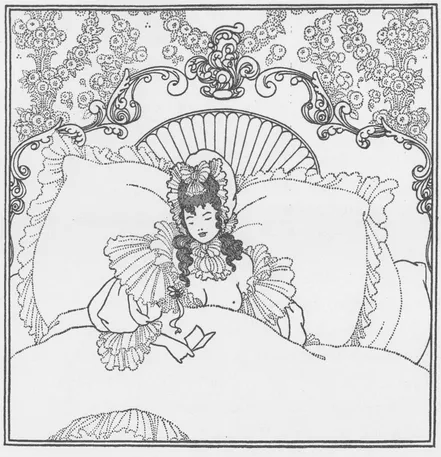
THE RAPE OF THE LOCK
CANTO I
WHAT dire Offence from am’rous Causes springs, What mighty Contests rise from trivial Things, I sing—This verse to CARYL, Muse ! is due ;
This, ev’n Belinda may vouchsafe to view :
Slight is the Subject, but not so the Praise,
If She inspire, and He approve, my Lays.
Slight is the Subject, but not so the Praise,
If She inspire, and He approve, my Lays.
Say what strange Motive, Goddess ! cou’d compel
A well-bred Lord t’ assault a gentle Belle?
Oh say what stranger Cause, yet unexplor’d,
Cou’d make a gentle Belle reject a Lord ?
In tasks so bold, can little Men engage,
And in soft Bosoms, dwell such mighty Rage ?
A well-bred Lord t’ assault a gentle Belle?
Oh say what stranger Cause, yet unexplor’d,
Cou’d make a gentle Belle reject a Lord ?
In tasks so bold, can little Men engage,
And in soft Bosoms, dwell such mighty Rage ?
Sol through white Curtains shot a tim‘rous Ray,
And ope’d those Eyes that must eclipse the Day :
Now Lap-dogs give themselves the rouzing Shake,
And sleepless Lovers, just at Twelve, awake :
Thrice rung the Bell, the Slipper knock’d the Ground,
And the press’d Watch return’d a silver sound,
Belinda still her downy Pillow prest,
Her guardian Sylph prolong’d the balmy rest.
’Twas he had summon’d to her silent Bed
The Morning Dream that hover’d o‘er her Head.
A Youth more glitt’ring than a Birth-night Beau
(That ev’n in slumber caus’d her Cheek to glow)
Seem’d to her Ear his winning Lips to lay,
And thus in Whispers said, or seemed to say.
And ope’d those Eyes that must eclipse the Day :
Now Lap-dogs give themselves the rouzing Shake,
And sleepless Lovers, just at Twelve, awake :
Thrice rung the Bell, the Slipper knock’d the Ground,
And the press’d Watch return’d a silver sound,
Belinda still her downy Pillow prest,
Her guardian Sylph prolong’d the balmy rest.
’Twas he had summon’d to her silent Bed
The Morning Dream that hover’d o‘er her Head.
A Youth more glitt’ring than a Birth-night Beau
(That ev’n in slumber caus’d her Cheek to glow)
Seem’d to her Ear his winning Lips to lay,
And thus in Whispers said, or seemed to say.
Fairest of Mortals, thou distinguish’d Care
Of thousand bright Inhabitants of Air!
If e‘er one Vision touch’d thy infant Thought,
Of all the Nurse and all the Priest have taught,
Of airy Elves by Moonlight Shadows seen,
The silver Token, and the Circled Green,
Or Virgins visited by Angel-pow’rs
With Golden Crowns and Wreaths of heav‘nly Flow’rs ;
Hear and believe! thy own Importance know,
Nor bound thy narrow Views to things below.
Of thousand bright Inhabitants of Air!
If e‘er one Vision touch’d thy infant Thought,
Of all the Nurse and all the Priest have taught,
Of airy Elves by Moonlight Shadows seen,
The silver Token, and the Circled Green,
Or Virgins visited by Angel-pow’rs
With Golden Crowns and Wreaths of heav‘nly Flow’rs ;
Hear and believe! thy own Importance know,
Nor bound thy narrow Views to things below.
Some secret Truths, from Learned Pride conceal’d,
To Maids alone and Children are reveal’d :
What tho’ no Credit doubting Wits may give ?
The Fair and Innocent shall still believe.
Know then, unnumber’d Spirits round thee fly,
The light Militia of the lower sky :
These, tho’ unseen, are ever on the Wing,
Hang o’er the Box, and hover round the Ring.
To Maids alone and Children are reveal’d :
What tho’ no Credit doubting Wits may give ?
The Fair and Innocent shall still believe.
Know then, unnumber’d Spirits round thee fly,
The light Militia of the lower sky :
These, tho’ unseen, are ever on the Wing,
Hang o’er the Box, and hover round the Ring.
Think what an Equipage thou hast in Air,
And view with scorn Two Pages and a Chair.
As now your own, our Beings were of old,
And once inclos’d in Woman’s beauteous Mold ;
Thence, by a soft Transition, we repair
From earthly Vehicles to these of Air.
Think not, when Woman’s transient Breath is fled,
That all her Vanities at once are dead.
And view with scorn Two Pages and a Chair.
As now your own, our Beings were of old,
And once inclos’d in Woman’s beauteous Mold ;
Thence, by a soft Transition, we repair
From earthly Vehicles to these of Air.
Think not, when Woman’s transient Breath is fled,
That all her Vanities at once are dead.
Succeeding Vanities she still regards,
And tho’ she plays no more, o’erlooks the Cards.
Her Joy in gilded Chariots, when alive,
And love of Ombre, after Death survive.
For when the Fair in all their Pride expire,
To their first Elements the Souls retire :
The Sprites of fiery Termagants in Flame
Mount up, and take a Salamander’s name.
Soft yielding Minds to Water glide away,
And sip, with Nymphs, their elemental Tea.
The graver Prude sinks downward to a Gnome,
In search of Mischief still on Earth to roam.
The light Coquettes in Sylphs aloft repair,
And sport and flutter in the Fields of Air.
And tho’ she plays no more, o’erlooks the Cards.
Her Joy in gilded Chariots, when alive,
And love of Ombre, after Death survive.
For when the Fair in all their Pride expire,
To their first Elements the Souls retire :
The Sprites of fiery Termagants in Flame
Mount up, and take a Salamander’s name.
Soft yielding Minds to Water glide away,
And sip, with Nymphs, their elemental Tea.
The graver Prude sinks downward to a Gnome,
In search of Mischief still on Earth to roam.
The light Coquettes in Sylphs aloft repair,
And sport and flutter in the Fields of Air.
Know further yet; Whoever fair and chaste
Rejects Mankind, is by some Sylph embrac’d :
For Spirits, freed from mortal Laws, with ease
Assume what Sexes and what Shapes they please.
What guards the Purity of melting Maids,
In Courtly Balls, and Midnight Masquerades,
Safe from the treach’rous Friend, the daring Spark,
The Glance by Day, the Whisper in the Dark ;
When kind Occasion prompts their warm Desires,
When Music softens, and when Dancing fires ?
Rejects Mankind, is by some Sylph embrac’d :
For Spirits, freed from mortal Laws, with ease
Assume what Sexes and what Shapes they please.
What guards the Purity of melting Maids,
In Courtly Balls, and Midnight Masquerades,
Safe from the treach’rous Friend, the daring Spark,
The Glance by Day, the Whisper in the Dark ;
When kind Occasion prompts their warm Desires,
When Music softens, and when Dancing fires ?
‘Tis but their Sylph, the wise Celestials know,
Tho’ Honour is the Word with Men below.
Tho’ Honour is the Word with Men below.
Some Nymphs there are, too conscious of their Face,
For Life predestin’d to the Gnomes’ Embrace.
Who swell their Prospects and exalt their Pride,
When Offers are disdain’d, and Love deny’d.
Then gay Ideas crowd the vacant Brain,
While Peers and Dukes, and all their sweeping Train,
And Garters, Stars, and Coronets appear,
And in soft sounds, Your Grace salutes their Ear.
’Tis these that early taint the Female Soul,
Instruct the eyes of young Coquettes to roll,
Teach Infant Cheeks a bidden Blush to know,
And little Hearts to flutter at a Beau.
For Life predestin’d to the Gnomes’ Embrace.
Who swell their Prospects and exalt their Pride,
When Offers are disdain’d, and Love deny’d.
Then gay Ideas crowd the vacant Brain,
While Peers and Dukes, and all their sweeping Train,
And Garters, Stars, and Coronets appear,
And in soft sounds, Your Grace salutes their Ear.
’Tis these that early taint the Female Soul,
Instruct the eyes of young Coquettes to roll,
Teach Infant Cheeks a bidden Blush to know,
And little Hearts to flutter at a Beau.
Oft when the World imagine Women stray,
The Sylphs through Mystic mazes guide their Way.
Thro’ all the giddy Circle they pursue,
And old Impertinence expel by new.
What tender Maid but must a Victim fall
To one Man’s Treat, but for another’s Ball ?
When Florio speaks, what Virgin could withstand,
If gentle Damon did not squeeze her Hand ?
With varying Vanities, from ev’ry Part,
The Sylphs through Mystic mazes guide their Way.
Thro’ all the giddy Circle they pursue,
And old Impertinence expel by new.
What tender Maid but must a Victim fall
To one Man’s Treat, but for another’s Ball ?
When Florio speaks, what Virgin could withstand,
If gentle Damon did not squeeze her Hand ?
With varying Vanities, from ev’ry Part,
They shift the moving Toyshop of their Heart ;
Where Wigs with Wigs, with Sword-knots Sword-knots strive,
Beaux banish Beaux, and Coaches Coaches drive.
This erring Mortals Levity may call,
Oh blind to Truth ! the Sylphs contrive it all.
Where Wigs with Wigs, with Sword-knots Sword-knots strive,
Beaux banish Beaux, and Coaches Coaches drive.
This erring Mortals Levity may call,
Oh blind to Truth ! the Sylphs contrive it all.
Of these am I, who thy Protection claim,
A watchful Sprite, and Ariel is my Name.
Late, as I rang’d the crystal Wilds of Air,
In the clear Mirror of thy ruling Star
I saw, alas ! some dread Event impend,
Ere to the Main this morning’s Sun descend,
But Heav’n reveals not what, or how, or where:
Warn’d by thy Sylph, oh pious Maid beware!
This to disclose is all thy Guardian can.
Beware of all, but most beware of Man !
A watchful Sprite, and Ariel is my Name.
Late, as I rang’d the crystal Wilds of Air,
In the clear Mirror of thy ruling Star
I saw, alas ! some dread Event impend,
Ere to the Main this morning’s Sun descend,
But Heav’n reveals not what, or how, or where:
Warn’d by thy Sylph, oh pious Maid beware!
This to disclose is all thy Guardian can.
Beware of all, but most beware of Man !
He said : when Shock, who thought she slept too long,
Leap’d up, and wak’d his Mistress with his Tongue.
’Twas then, Belinda! if Report say true,
Thy Eyes first open’d on a Billet-doux;
Wounds, Charms, and Ardors, were no sooner read,
But all the Vision vanish’d from thy Head.
Leap’d up, and wak’d his Mistress with his Tongue.
’Twas then, Belinda! if Report say true,
Thy Eyes first open’d on a Billet-doux;
Wounds, Charms, and Ardors, were no sooner read,
But all the Vision vanish’d from thy Head.
And now, unveil’d, the Toilet stands display’d,
Each Silver Vase in mystic Order laid.
Each Silver Vase in mystic Order laid.
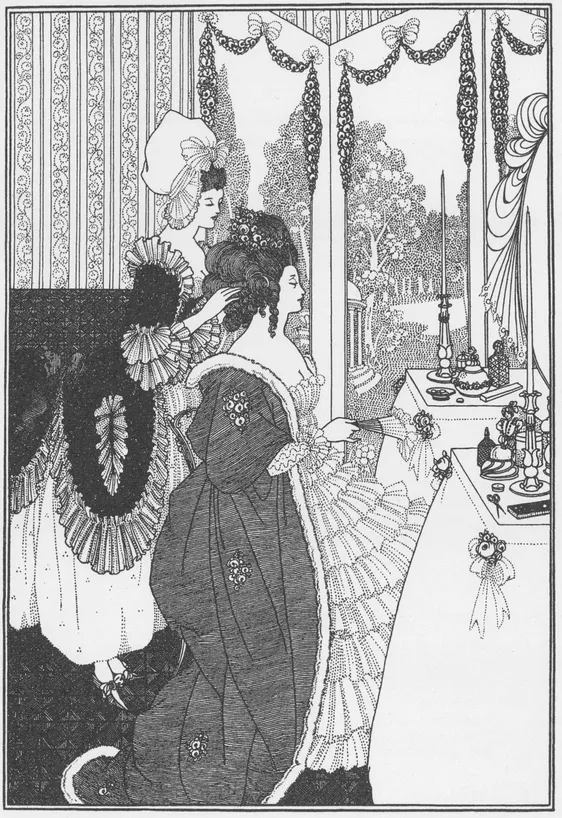
First, rob’d in White, the Nymph intent adores
With Head uncover’d, the Cosmetic Pow‘rs.
A heav’nly Image in the Glass appears,
To that she bends, to that her Eyes she rears ;
Th’ inferior Priestess, at her Altar’s side,
Trembling, begins the sacred Rites of Pride.
Unnumber’d Treasures ope at once, and here
Th...
With Head uncover’d, the Cosmetic Pow‘rs.
A heav’nly Image in the Glass appears,
To that she bends, to that her Eyes she rears ;
Th’ inferior Priestess, at her Altar’s side,
Trembling, begins the sacred Rites of Pride.
Unnumber’d Treasures ope at once, and here
Th...
Table of contents
- DOVER BOOKS ON LITERATURE AND DRAMA
- Title Page
- Copyright Page
- Table of Contents
- Dedication
- ADVERTISEMENT
- To MRS. ARABELLA FERMOR
- THE RAPE OF THE LOCK
- Notes
Trusted by 375,005 students
Access to over 1.5 million titles for a fair monthly price.
Study more efficiently using our study tools.
Frequently asked questions
Yes, you can cancel anytime from the Subscription tab in your account settings on the Perlego website. Your subscription will stay active until the end of your current billing period. Learn how to cancel your subscription
No, books cannot be downloaded as external files, such as PDFs, for use outside of Perlego. However, you can download books within the Perlego app for offline reading on mobile or tablet. Learn how to download books offline
Perlego offers two plans: Essential and Complete
- Essential is ideal for learners and professionals who enjoy exploring a wide range of subjects. Access the Essential Library with 800,000+ trusted titles and best-sellers across business, personal growth, and the humanities. Includes unlimited reading time and Standard Read Aloud voice.
- Complete: Perfect for advanced learners and researchers needing full, unrestricted access. Unlock 1.5M+ books across hundreds of subjects, including academic and specialized titles. The Complete Plan also includes advanced features like Premium Read Aloud and Research Assistant.
We are an online textbook subscription service, where you can get access to an entire online library for less than the price of a single book per month. With over 1.5 million books across 990+ topics, we’ve got you covered! Learn about our mission
Look out for the read-aloud symbol on your next book to see if you can listen to it. The read-aloud tool reads text aloud for you, highlighting the text as it is being read. You can pause it, speed it up and slow it down. Learn more about Read Aloud
Yes! You can use the Perlego app on both iOS and Android devices to read anytime, anywhere — even offline. Perfect for commutes or when you’re on the go.
Please note we cannot support devices running on iOS 13 and Android 7 or earlier. Learn more about using the app
Please note we cannot support devices running on iOS 13 and Android 7 or earlier. Learn more about using the app
Yes, you can access The Rape of the Lock by Aubrey Beardsley,Alexander Pope, Alexander Pope in PDF and/or ePUB format, as well as other popular books in Art & Artist Monographs. We have over 1.5 million books available in our catalogue for you to explore.