The well-known patriot and leader of the Green Mountain Boys was arrested by the British in 1775 during a failed attempt to capture Montreal. Imprisoned aboard Royal Navy ships, paroled in New York City, and finally released in a 1778 prisoner exchange, Ethan Allen offers a stirring firsthand account of the early years of the Revolutionary War.
eBook - ePub
A Narrative of Ethan Allen's Captivity
Containing His Voyages and Travels
- 176 pages
- English
- ePUB (mobile friendly)
- Available on iOS & Android
eBook - ePub
A Narrative of Ethan Allen's Captivity
Containing His Voyages and Travels
About this book
Information
Subtopic
Early American HistoryIndex
HistoryA Narrattive
OF
COLONEL ETHAN ALLEN’S
OBSERVATIONS DURING HIS CAPTIVITY
EVER since I arrived to a state of manhood, and acquainted myself with the general history of mankind, I have felt a sincere passion for liberty. The history of nations doomed to perpetual slavery, in consesequence of yielding up to tyrants their natural born liberties, I read with a sort of philosophical horror; so that the first systematical and bloody attempt at Lexington, to enslave America, thoroughly electrified my mind, and fully determined me to take part with my country: And while I was wishing for an opportunity to signalize myself in its behalf, directions were privately sent to me from the then colony (now state) of Connecticut, to raise the Green Mountain Boys; (and if possible) with them to surprise and take the fortress Ticonderoga. This enterprise I cheerfully undertook; and, after first guarding all the several passes that led thither, to cut off all intelligence between the garrison and the country, made a forced march from Bennington, and arrived at the lake opposite to Ticonderoga, on the evening of the ninth day of May, 1775, with two hundred and thirty valiant Green Mountain Boys; and it was with the utmost difficulty that I procured boats to cross the lake: However, I landed eighty-three men near the garrison, and sent the boats back for the rear guard commanded by col. Seth Warner; but the day began to dawn, and I found myself under a necessity to attack the fort, before the rear could cross the lake; and, as it was viewed hazardous, I harangued the officers and soldiers in the manner following; “Friends and fellow soldiers, you have, for a “number of years past, been a scourge and ter-“ror to arbitrary power. Your valour has been “famed abroad, and acknowledged, as appears “by the advice and orders to me (from the general assembly of Connecticut) to surprise and “take the garrison now before us. I now propose “to advance before you, and in person conduct “you through the wicket-gate; for we must this “morning either quit our pretensions to valour, “or possess ourselves of this fortress in a few min-”utes; and, in as much as it is a desperate attempt, “ (which none but the bravest of men dare under-”take) I do not urge it on any contrary to his “will. You that will undertake voluntarily, poise “your firelocks.”
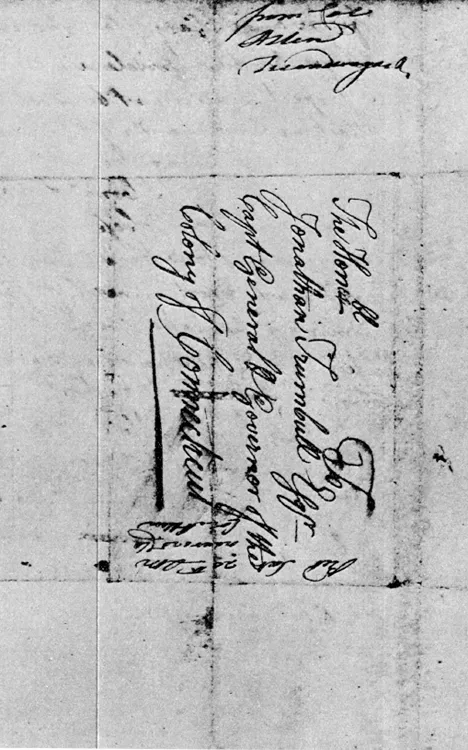
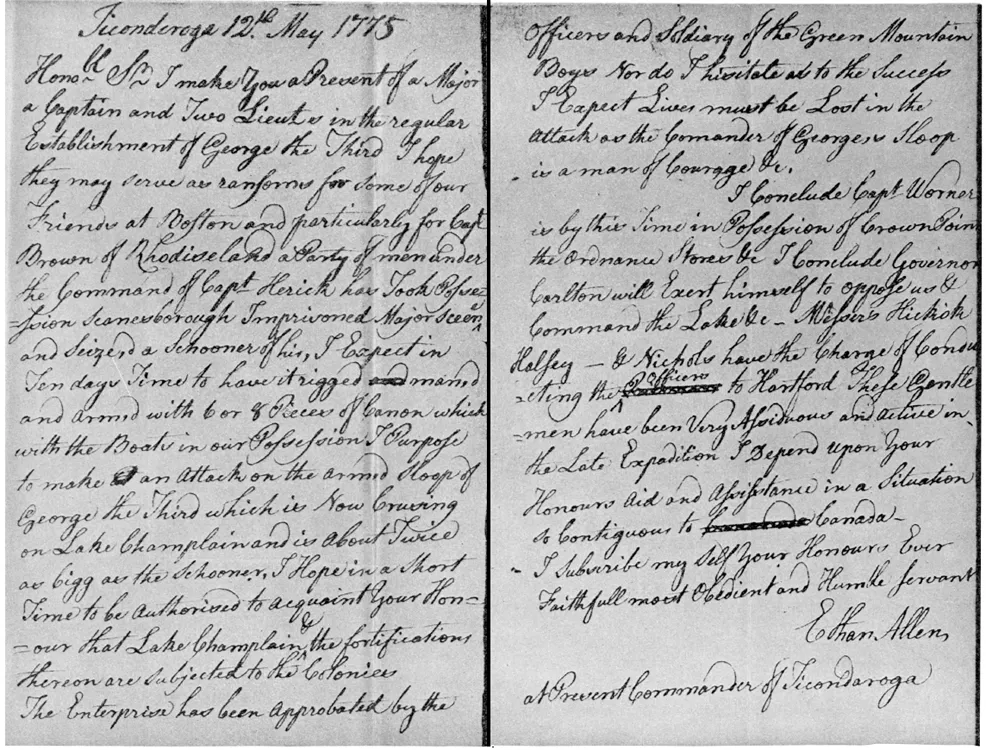
The men being (at this time) drawn up in three ranks, each poised his firelock. I ordered them to face to the right; and, at the head of the centre-file, marched them immediately to the wicket gate aforesaid, where I found a centry posted, who instantly snapped his fusee at me; I ran immediately toward him, and he retreated through the covered way into the parade within the garrison, gave a halloo, and ran under a bomb-proof. My party who followed me into the fort, I formed on the parade in such a manner as to face the two barracks which faced each other. The garrison being asleep, (except the centries) we gave three huzzas which greatly surprised them. One of the centries made a pass at one of my officers with a charged bayonet, and slightly wounded him: My first thought was to kill him with my sword; but, in an instant, altered the design and fury of the blow to a slight cut on the side of the head; upon which he dropped his gun, and asked quarter, which I readily granted him, and demanded of him the place where the commanding officer kept; he shewed me a pair of stairs in the front of a barrack, on the west part of the garrison, which led up to a second story in said barrack, to which I immediately repaired, and ordered the commander (capt. Delaplace) to come forth instantly, or I would sacrifice the whole garrison; at which the capt. came immediately to the door with his breeches in his hand, when I ordered him to deliver to me the fort instantly, who asked me by what authority I demanded it; (The authority of the Congress being very little known at that time) he began to speak again; but I interrupted him, and with my drawn sword over his head, again demanded an immediate surrender of the garrison; to which he then complied, and ordered his men to be forthwith paraded without arms, as he had given up the garrison; in the mean time some of my officers had given orders, and in consequence thereof, sundry of the barrack doors were beat down, and about one third of the garrison imprisoned, which consisted of the said commander, a lieut. Feltham, a conductor of artillery, a gunner, two Serjeants, and forty four rank and file; about one hundred pieces of cannon, one 13 inch mortar, and a number of swivels. This surprise was carried into execution in the gray of the morning of the 10th day of May, 1775. The sun seemed to rise that morning with a superior lustre; and Ticonderoga and its dependencies smiled on its conquerors, who tossed about the flowing bowl, and wished success to Congress, and the liberty and freedom of America. Happy it was for me (at that time) that the then future pages of the book of fate, which afterwards unfolded a miserable scene of two years and eight months imprisonment, was hid from my view: But to return to my narration; col. Warner, with the rear guard crossed the lake, and joined me early in the morning, whom I sent off, without loss of time, with about one hundred men, to take possession of Crown Point, which was garrisoned with a serjeant and twelve men; which he took possession of the same day, as also upwards of one hundred pieces of cannon. But one thing now remained to be done, to make ourselves complete masters of lake Champlain: This was to possess ourselves of a sloop of war, which was then laying at St. John’s; to effect which, it was agreed in a council of war, to arm and man out a certain schooner, which lay at South Bay, and that capt. (now general) Arnold should command her, and that I should command the bat-teaux. The necessary preparations being made, we set sail from Ticonderoga, in quest of the sloop, which was much larger, and carried more guns and heavier metal than the schooner. General Arnold, with the schooner sailing faster than the batteaux, arrived at St. John’s; and by surprise possessed himself of the sloop, before I could arrive with the batteaux: He also made prisoners of a serjeant and twelve men, who were garrisoned at that place. It is worthy remark, that as soon as general Arnold had secured the prisoners on board, and had made preparation for sailing, the wind which but a few hours before was fresh in the south, and well served to carry us to St. John’s, now shifted, and came fresh from the north; and in about one hours time, general Arnold sailed with the prize and schooner for Ticonderoga: When I met him with my party, within a few miles of St. John’s, he saluted me with a discharge of cannon, which I returned with a volley of small arms: This being repeated three times, I went on board the sloop with my party, where several loyal Congress healths were drank. We were now masters of lake Champlain, and the garrisons depending thereon. This success I viewed of consequence in the scale of American politics; for if a settlement between the then colonies and Great Britain, had soon taken place, it would have been easy to have restored these acquisitions; but viewing the then future consequences of a cruel war, (as it has really proved to be) and the command of that lake, garrisons, artillery, &c. must be viewed to be of signal importance to the American cause, and it is marvellous to me, that we ever lost the command of it. Nothing but the taking a Burgoyne, with a whole British army, could (in my opinion) atone for it; and notwithstanding such an extraordinary victory, we must be obliged to regain the command of that lake again, be the cost what it will: By doing this, Canada will easily be brought into union and confederacy with the United States of America. Such an event would put it out of the power of the western tribes of Indians to carry on a war with us, and be a solid and durable bar against any further inhuman barbarities committed on our frontier inhabitants, by cruel and blood thirsty savages: for it is impossible for them to carry on a war, except they are supported by the trade and commerce of some civilized nation; which to them would be impracticable, did Canada compose a part of the American empire.
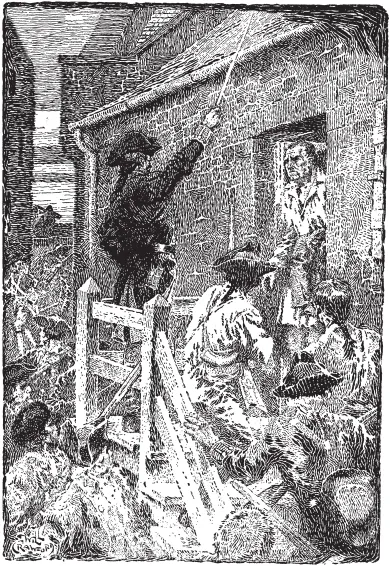
I answered, “In the “name of the great Jehovah, and the Continental “Congress.”
Early in the fall of the year, the little army, under the command of the generals Schuyler and Montgomery, were ordered to advance into Canada. I was at Ticonderoga, when this order arrived; and the general with most of the officers, requested me to attend them in the expedition; and though at that time, I had no commission from Congress, yet they engaged me, that I should be considered as an officer the same as though I had a commission; and should, as occasion might require, command certain detachments of the army. This I considered as an honourable offer, and did not hesitate to comply with it, and advanced with the army to the isle Auix Noix: from whence I was ordered (by the general) to go in company with major Brown, and certain interpreters, through the woods into Canada, with letters to the Canadians, and to let them know, that the design of the army was only against the English garrisons, and not the country, their liberties, or religion; And having, through much danger negociated this business, I returned to the isle Auix Noix in the fore part of September, when general Schuyler returned to Albany; and in consequence the command devolved upon general Montgomery, whom I assisted in laying a line of circumvallation round the fortress St. John’s: After which I was ordered by the general, to make a second tour into Canada, upon nearly the same design as before; and withal to observe the disposition, designs and movement of the inhabitants of the country; This reconnoitre I undertook with reluctance, chusing rather to assist at the siege of St. John’s, which was then closely invested; but my esteem for the general’s person, and opinion of him as a politician and brave officer, induced me to proceed.
I passed through all the parishes on the river Sorrel, to a parish at the mouth of the same, which is called by the same name, preaching politics; and went from thence across the Sorrel to the river St. Lawrence, and up the river through the parishes to Longale, and so far met with good success as an itinerant. In this round, my guard was Canadians, (my interpreter and some few attendants excepted). On the morning of the 24th day of September, I set out with my guard of about eighty men, from Longale, to go to Lapraier; from whence I determined to go to general Montgomery’s camp; but had not advanced two miles before I met with major Brown, (who has since been advanced to the rank of a” Col.) who desired me to halt, saying that he had something of importance to communicate to me and my confidents; upon which I halted .the party, and went into an house, and took a private room with him and several of my associates, where colonel Brown proposed, that “Provided I would return to Longale, and procure some canoes, so as to cross the river St. Lawrence a little north of Montreal, he would cross it a little to the south of the town, with near two hundred men, as he had boats sufficient; and that we would make ourselves masters of Montreal.” . . . This plan was readily approved by me and those in council; and in consequence of which I returned to Longale collected a few canoes, and added about thirty English Americans to my party, and crossed the river in the night of the 24th, agreeable to the before proposed plan. My whole party, at this time, consisted of about one hundred and ten men, near eighty of whom were Canadians. We were the most of the night crossing the river, as we had so few canoes that they had to pass and re-pass three times, to carry my party across. Soon after day break, I set a guard between me and the town, with special orders, to let no person whatever pass or re-pass them, and another guard on in the other end of the road, with like directions; the mean time, I reconnoitered the best ground to make a defence expecting colonel Brown’s party was landed on the other side of the town, he having (the day before) agreed to give three huzzas with his men early in the morning, which signal I was to return, that we might each know that both parties were landed; but the sun by this time being near two hours high, and the sign failing, I began to conclude myself to be in a premunire, and would have crossed the river back again, but I knew the enemy would have discovered such an attempt; and as there could not more than one third part of my troops cross at one time, the other two thirds would of course fall into their hands. This I could not reconcile to my own feelings as a man, much less as an officer: I therefore concluded to maintain the ground, (if possible) and all to fare alike. In consequence of this resolution, I dispatched two messengers, one to Lapraire, (to col. Brown) and the other to Lasumprion, (a French settlement) to Mr. Walker, who was in our interest, requesting their speedy assistance; giving them at the same time, to understand my critical situation: In the mean time, sundry persons came to my guards, pretending to be friends, but were by them taken prisoners and brought to me. These I ordered to confinement, ‘till their friendship could be further confirmed; for I was jealous they were spies, as they proved to be afterwards: One of the principal of them making his escape, exposed the weakness of my party, which was the final cause of my misfortune; for I have been since informed that Mr. Walker, agreeable to my desire, exerted himself, and had raised a considerable number of men for my assistance, which brought him into difficulty afterwards; but upon hearing of my misfortune, disbanded them again.
The town of Montreal was in a great tumult. Gen. Carlton and the royal party made every preparation to go on board their vessels of force, (as I was afterwards informed) but the spy escaping from my guard to the town, occasioned an alteration in their policy, and emboldened Gen. Carlton to send the force, which he had there collected, out against me. I had previously chosen my ground, but when I saw the number of the enemy, as they sallied out of the town, I perceived it would be a day of trouble, if not of rebuke; but I had no chance to fly, as Montreal was situated on an island, and the river St. Lawrence cut off my communication to Gen. Montgomery’s camp. I encouraged my soldiery to bravely defend themselves, that we should soon have help, and that we should be able to keep the ground, if no more. This, and much more I affirmed with the greatest seeming assurance, and which in reality I thought to be in some degree probable.
The enemy consisted of not more than forty regular troops, together with a mixed multitude, chiefly Canadians, with a number of English who lived in the town, and some Indians; in all to the number of 500.
The reader will notice that most of my party were Canadians; indeed it was a motley parcel of soldiery which composed both parties. However, the enemy began the attack from woodpiles, ditches, buildings, and such like places, at a considerable distance, and I returned the fire from a situation more than equally advantageous. The attack began between two and three of the clock in the afternoon, just before which I ordered a volunteer, by the name of Richard Young, with a detachment of nine men as a flank guard, which, under the cover of the bank of the river, could not only annoy the enemy, but at the same time, serve as a flank guard to the left of the main body.
The fire continued for some time on both sides; and I was confident that such a remote method of attack, could not carry the ground, (provided it should be continued till night): but near half the body of the enemy began to flank round to my right: upon which I order...
Table of contents
- Cover Page
- Title Page
- Copyright Page
- Contents
- Illustrations
- Introductory Note by John Pell
- Preface to the Walpole edition
- Introduction by Ethan Allen
- A Narrative, &c.
- Bibliography : Writings of Ethan Allen
- List of Editions of the Narrative
Trusted by 375,005 students
Access to over 1.5 million titles for a fair monthly price.
Study more efficiently using our study tools.
Frequently asked questions
Yes, you can cancel anytime from the Subscription tab in your account settings on the Perlego website. Your subscription will stay active until the end of your current billing period. Learn how to cancel your subscription
No, books cannot be downloaded as external files, such as PDFs, for use outside of Perlego. However, you can download books within the Perlego app for offline reading on mobile or tablet. Learn how to download books offline
Perlego offers two plans: Essential and Complete
- Essential is ideal for learners and professionals who enjoy exploring a wide range of subjects. Access the Essential Library with 800,000+ trusted titles and best-sellers across business, personal growth, and the humanities. Includes unlimited reading time and Standard Read Aloud voice.
- Complete: Perfect for advanced learners and researchers needing full, unrestricted access. Unlock 1.5M+ books across hundreds of subjects, including academic and specialized titles. The Complete Plan also includes advanced features like Premium Read Aloud and Research Assistant.
We are an online textbook subscription service, where you can get access to an entire online library for less than the price of a single book per month. With over 1.5 million books across 990+ topics, we’ve got you covered! Learn about our mission
Look out for the read-aloud symbol on your next book to see if you can listen to it. The read-aloud tool reads text aloud for you, highlighting the text as it is being read. You can pause it, speed it up and slow it down. Learn more about Read Aloud
Yes! You can use the Perlego app on both iOS and Android devices to read anytime, anywhere — even offline. Perfect for commutes or when you’re on the go.
Please note we cannot support devices running on iOS 13 and Android 7 or earlier. Learn more about using the app
Please note we cannot support devices running on iOS 13 and Android 7 or earlier. Learn more about using the app
Yes, you can access A Narrative of Ethan Allen's Captivity by Ethan Allen,Will Crawford, John Pell, Will Crawford in PDF and/or ePUB format, as well as other popular books in History & Early American History. We have over 1.5 million books available in our catalogue for you to explore.