We have made huge progress in understanding the biology of mental illnesses, but comparatively little in interpreting them at the psychological level. The eminent philosopher Jonathan Glover believes that there is real hope of progress in the human interpretation of disordered minds.
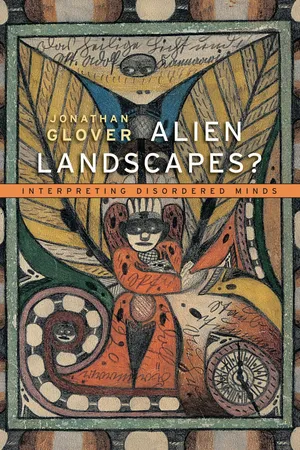
The challenge is that the inner worlds of people with psychiatric disorders can seem strange, like alien landscapes, and this strangeness can deter attempts at understanding. Do people with disorders share enough psychology with other people to make interpretation possible? To explore this question, Glover tackles the hard cases—the inner worlds of hospitalized violent criminals, of people with delusions, and of those diagnosed with autism or schizophrenia. Their first-person accounts offer glimpses of inner worlds behind apparently bizarre psychiatric conditions and allow us to begin to learn the "language" used to express psychiatric disturbance. Art by psychiatric patients, or by such complex figures as van Gogh and William Blake, give insight when interpreted from Glover's unique perspective. He also draws on dark chapters in psychiatry's past to show the importance of not medicalizing behavior that merely transgresses social norms. And finally, Glover suggests values, especially those linked with agency and identity, to guide how the boundaries of psychiatry should be drawn.
Seamlessly blending philosophy, science, literature, and art, Alien Landscapes? is both a sustained defense of humanistic psychological interpretation and a compelling example of the rich and generous approach to mental life for which it argues.
- 434 pages
- English
- ePUB (mobile friendly)
- Available on iOS & Android
eBook - ePub
About this book
Information
Topic
MedicineSubtopic
Psychiatry & Mental HealthPART ONE
“Antisocial Personality,” Values, Psychiatry
That girls are raped, that two boys knife a third,
Were axioms to him, who’d never heard
Of any world where promises were kept,
Or one could weep because another wept.
—W. H. Auden, “The Shield of Achilles”
I and the public know
What all schoolchildren learn,
Those to whom evil is done
Do evil in return.
—W. H. Auden, “September 1, 1939”
1
Socratic Questions in Broadmoor
“Psychopaths” are at the extreme. The tool most used to diagnose “antisocial personality disorder” is the Hare Psychopathy Checklist, a scale devised by the Canadian psychologist Robert D. Hare. There is a cutoff score above which the test taker is given the diagnosis of antisocial personality disorder. Being a “psychopath” is widely considered to be an extreme version of this. Something often said about those called psychopaths, and by extension about the others within the broader category, is that they lack a conscience.
This claim is intriguing. Are there really people who completely lack a conscience? If so, how does this come about? Are they born with something missing? Or does something happen to them that destroys their conscience? Most fundamentally, what does it mean to say that they lack a conscience?
I have spent a lot of my life teaching ethics, which is still taught by the method invented by Socrates. This starts by asking people what they think is right or wrong, pressing them to state their views with maximum clarity and explicitness. Then they are challenged to defend their beliefs in the face of counterexamples and opposing argument. The student is pushed into a journey of self-exploration, rather than being given “the answers” by the teacher. Some students, those who think being taught is being given information or conclusions to take away, are baffled by this and doubt that they are being taught properly. Be that as it may, the teacher learns a lot about the students and about the very different structures and styles of moral belief and thinking that people have. There are very different views about what conscience is.
To say that people with antisocial personality disorder lack a conscience could mean one or more of several things. It could mean that they lack any empathy for other people: that they cannot imagine how other people feel. Or it could mean that they lack sympathy: that they can imagine the feelings of, for instance, those they hurt, but do not care about them. It might mean that they do not feel guilt. It could be that they lack certain moral concepts, such as “cruel,” “unfair,” “dishonest,” “right,” or “selfish.” Or it might mean that they lack a sense of moral identity: a conception of the sort of person they are, or of the sort of person they hope to be, together with a set of values guiding those hopes. The conscience or lack of conscience of people with this diagnosis seemed a promising field to investigate.
Dr. Gwen Adshead, a psychiatrist at Broadmoor Hospital, has many patients with the diagnosis of antisocial personality disorder. She and I found that we shared an interest in their morality or lack of it, and we jointly devised a project to investigate these questions in some of those patients in Broadmoor.
My part of the project used a series of interviews with men who had a diagnosis of antisocial personality disorder. The aim was to probe their morality and values by asking questions about ethics. Partly in homage to the inventor of the approach, but perhaps with a touch of pretentiousness, I called this series “the Socratic interviews.” The following account reports on these “Socratic” interviews. To introduce them, I will say a bit about antisocial personality disorder and then outline briefly the content of the interviews and the guiding questions behind them.
Antisocial Personality Disorder
There are many questions, to be raised later, about the general category “personality disorders.” The particular diagnosis of antisocial personality disorder—including psychopathy at the severe end—is heir to a tangled history of moral, legal, and psychiatric concepts. They include those marked out by the nineteenth-century term “moral insanity” and the early twentieth-century terms “constitutional psychopathic inferiority” and “sociopath.”1 The modern conception of a psychopath has been greatly influenced by Hervey Cleckley, who in the mid-twentieth century was a professor of psychiatry at the University of Georgia Medical School. He reported on the psychopaths among his patients in The Mask of Sanity.2
Cleckley’s hunch (though he knew he lacked evidence to support it) was that psychopaths were born that way: “Increasingly I have come to believe that some subtle and profound defect in the human organism, probably inborn but not hereditary, plays the chief role in the psychopath’s puzzling and spectacular failure to experience life normally and to carry on a career acceptable to society.”3 His book has two sides, one influencing popular stereotypes and legends about psychopaths and the other influencing psychiatric thinking.
Cleckley had many of the prejudices of his time and place. His book attacks modern “permissiveness,” and “intellectuals and esthetes” for their liking of “what is generally regarded as perverse, dispirited or distastefully unintelligible.” What they liked included the writings of Gide (who “openly insists that pederasty is the superior and preferable way of life for adolescent boys”) and Joyce (“a collection of erudite gibberish indistinguishable to most people from the familiar word salad produced by hebephrenic patients on the back wards of any state hospital”).4 In his description of one male patient who had had oral sex with four black men, Cleckley’s disapproval focuses, not on whether the men’s consent was genuine, but mainly on the choice of partners. The man “hit upon the notion of picking up four Negro men who worked in the fields not far from his residence. In a locality where the Ku Klux Klan (and its well-known attitudes) at the time enjoyed a good deal of popularity, this intelligent and in some respects distinguished young man showed no compunction about taking from the field these unwashed laborers whom he concealed in the back of a pickup truck, with him into a well-known place of amorous rendezvous … Although he expressed regret and said his prank was quite a mistake, he seemed totally devoid of any deep embarrassment.”5
Cleckley helped create the popular stereotype of the psychopath as not really human, a satanic monster hiding behind the mask of sanity—“the exquisitely deceptive mask of the psychopath,” who uses extraordinary facility and charm to pose as a normal person.
We are dealing here not with a complete man at all but with something that suggests a subtly constructed reflex machine which can mimic the human personality perfectly. This smoothly operating psychic apparatus reproduces consistently not only specimens of good human reasoning but also appropriate simulations of normal human emotion in response to nearly all the varied stimuli of life. So perfect is the reproduction of a whole and normal man that no-one who examines him in a clinical setting can point out in scientific or objective terms why, or how, he is not real.… The psychopath, however perfectly he mimics man theoretically, that is to say, when he speaks for himself in words, fails altogether when he is put into the practice of actual living.6
Cleckley’s influence on psychiatrists lay not in his image of the monster behind the mask but in his powerful descriptions of the behavior of some of his psychopathic patients.
One memorable case was “Milt,” who was 19 when he arrived at the hospital. He had done a lot of antisocial things. When criticized for them, he made charming apologies, but he never seemed really to appreciate the seriousness of what he had done, and he continued to carry on in the same way. Here is one example: Once he was driving his mother back from the hospital after she had major surgery. The car broke down in the middle of a very long bridge. With darkness falling, Milt set out to walk to a garage half a mile away to get a fuse. He said he would get a ride and be back in less than fifteen minutes. After an hour his distraught mother managed to get a ride home. She called hospitals to see if Milt had had an accident.
On the way to the garage, Milt had stopped at a cigar store for ten to fifteen minutes to check football results. Then he called on a girl living nearby and chatted casually for an hour. All this time he remembered his mother was waiting. When he finally collected the car and came home, he was cross with his mother for not having waited. He showed “a bland immunity to any recognition that he had behaved irresponsibly or inconsiderately.”7
Cleckley used this and other case descriptions to draw up a list of the distinguishing characteristics of psychopaths. These included superficial charm, unreliability, insincerity, lack of remorse, egocentricity, emotional poverty, and a failure to follow any life plan. This “Cleckley psychopath” is the origin of current diagnosis, including the Hare Psychopathy Checklist.8
In the Psychopathy Checklist, Robert Hare distinguishes two factors that are highly correlated with each other but have different patterns of intercorrelations with other variables. Factor One represents personality traits typical of the syndrome: “selfish, callous and remorseless use of others.” Factor Two reflects socially deviant behavior: “chronically unstable, antisocial and socially deviant lifestyle.” If the diagnosis of being a psychopath is supposed to explain antisocial behavior, Factor One does the work, as Factor Two hardly gets beyond listing the behavior to be explained. And Factor One is more relevant to questions about conscience. It includes glibness and superficial charm, a grandiose sense of self-worth, pathological lying, being conning and manipulative, lack of remorse or guilt, shallow emotions, being callous and lacking empathy, and failure to accept responsibility for one’s own actions.
Hare himself sees psychopathy in terms of Factor One, and sees the diagnosis of antisocial personality disorder (based on both factors) as being of limited use. He claims that the personality traits of Factor One have predictive value, whereas a diagnosis of antisocial personality disorder catches a mixed bag and predicts little.9
There are questions about how people end up with a diagnosis of antisocial personality disord...
Table of contents
- Cover
- Half Title
- Title Page
- Copyright
- Dedication
- Epigraphs
- Contents
- Preface
- Prologue
- Part One: “Antisocial Personality,” Values, Psychiatry
- Part Two: On Human Interpretation
- Part Three: Human Interpretation in Psychiatry
- Part Four: The Boundaries of Psychiatry
- Part Five: Agency, Control, and Responsibility
- Part Six: Identity
- Epilogue
- Notes
- Acknowledgments
- Index
Trusted by 375,005 students
Access to over 1.5 million titles for a fair monthly price.
Study more efficiently using our study tools.
Frequently asked questions
Yes, you can cancel anytime from the Subscription tab in your account settings on the Perlego website. Your subscription will stay active until the end of your current billing period. Learn how to cancel your subscription
No, books cannot be downloaded as external files, such as PDFs, for use outside of Perlego. However, you can download books within the Perlego app for offline reading on mobile or tablet. Learn how to download books offline
Perlego offers two plans: Essential and Complete
- Essential is ideal for learners and professionals who enjoy exploring a wide range of subjects. Access the Essential Library with 800,000+ trusted titles and best-sellers across business, personal growth, and the humanities. Includes unlimited reading time and Standard Read Aloud voice.
- Complete: Perfect for advanced learners and researchers needing full, unrestricted access. Unlock 1.5M+ books across hundreds of subjects, including academic and specialized titles. The Complete Plan also includes advanced features like Premium Read Aloud and Research Assistant.
We are an online textbook subscription service, where you can get access to an entire online library for less than the price of a single book per month. With over 1.5 million books across 990+ topics, we’ve got you covered! Learn about our mission
Look out for the read-aloud symbol on your next book to see if you can listen to it. The read-aloud tool reads text aloud for you, highlighting the text as it is being read. You can pause it, speed it up and slow it down. Learn more about Read Aloud
Yes! You can use the Perlego app on both iOS and Android devices to read anytime, anywhere — even offline. Perfect for commutes or when you’re on the go.
Please note we cannot support devices running on iOS 13 and Android 7 or earlier. Learn more about using the app
Please note we cannot support devices running on iOS 13 and Android 7 or earlier. Learn more about using the app
Yes, you can access Alien Landscapes? by Jonathan Glover in PDF and/or ePUB format, as well as other popular books in Medicine & Psychiatry & Mental Health. We have over 1.5 million books available in our catalogue for you to explore.