"Whatever happens, the flame of French resistance must not and will not go out." As Charles de Gaulle ended his radio address to the French nation in June 1940, listeners must have felt a surge of patriotism tinged with uncertainty. Who would keep the flame burning through dark years of occupation? At what cost?
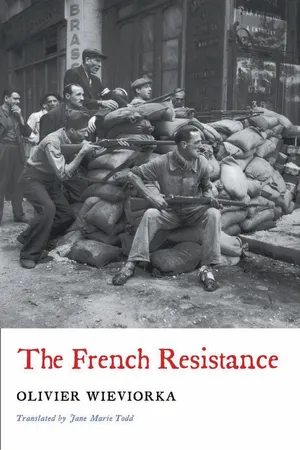
Olivier Wieviorka presents a comprehensive history of the French Resistance, synthesizing its social, political, and military aspects to offer fresh insights into its operation. Detailing the Resistance from the inside out, he reveals not one organization but many interlocking groups often at odds over goals, methods, and leadership. He debunks lingering myths, including the idea that the Resistance sprang up in response to the exhortations of de Gaulle's Free French government-in-exile. The Resistance was homegrown, arising from the soil of French civil society. Resisters had to improvise in the fight against the Nazis and the collaborationist Vichy regime. They had no blueprint to follow, but resisters from all walks of life and across the political spectrum formed networks, organizing activities from printing newspapers to rescuing downed airmen to sabotage. Although the Resistance was never strong enough to fight the Germans openly, it provided the Allies invaluable intelligence, sowed havoc behind enemy lines on D-Day, and played a key role in Paris's liberation.
Wieviorka shatters the conventional image of a united resistance with no interest in political power. But setting the record straight does not tarnish the legacy of its fighters, who braved Nazism without blinking.
- 569 pages
- English
- ePUB (mobile friendly)
- Available on iOS & Android
eBook - ePub
The French Resistance
About this book
Information
Chapter 1
The Call
BY WHAT MEANS might resistance come into being? The army of shadows could have emerged from the depths of French society, which, shocked by the defeat and wishing to do battle with the Nazi occupier, would then have drawn the necessary resources from within itself to lead the struggle. But it could also have resulted from an external appeal: the volunteers might have responded to the instructions formulated by General de Gaulle or by the British authorities. In the first case, resistance would have an endogenous origin, marking the muffled roar of a people who rejected the inevitability of the disaster. In the second case, it would be exogenous, resulting from the appeal de Gaulle launched on June 18, 1940.
“By the will of its author and because of the growing authority he acquired, the Appeal is said to have been a founding act, and doubly so. The founding act of the Resistance, since all the resistance movements and all the acts of autochthonous resistance stemmed, in de Gaulle’s view, from June 18. And the founding act of a regime, though it would not come into being for another twenty years,” notes historian Jean-Louis Crémieux-Brilhac.1 The Gaullists propagated that version, believing that the internal resistance could not have developed without the assistance provided by Free France. “In reality, when [Jean Moulin, de Gaulle’s envoy,] arrived in France [in January 1942], everything, or nearly everything, remained to be done,” claims André Dewavrin (Colonel Passy), head of the secret services of Free France. “Even the goals of the resistance movements were still poorly defined by their leaders, and the means necessary to obtain results were practically nonexistent. Everything had to be organized. That is, well-controlled troops and forces had to be created from whole cloth and charged with precise tasks or functions, with the assistance of more or less hesitant, more or less disciplined, more or less selfless personalities. Efforts had to be made to methodically introduce order into a heterogeneous mass, where everyone, in order to fight the languor, cowardice, or betrayal of the attentistes (the watch-and-wait faction), the collaborators, or the enemy’s agents, thought they had to concern themselves with everything at the same time.”2 That view, though quick to glorify the Gaullist legend, does not tally with reality.
Charles de Gaulle set out to keep France as such in the war. That ambition obliged him, first, to do battle with the Vichy regime, guilty in his eyes of having concluded a shameful armistice, a judgment from which he would not deviate. In addition, it impelled him to construct a state entity capable of embodying the legitimacy that Philippe Pétain was arrogating to himself, an imperative that led de Gaulle to rally part of the French empire behind him, so as to acquire the territorial base he was lacking. The term “Free France” came into being on August 29, 1940, after French Equatorial Africa (FEA) and Cameroon joined with de Gaulle. His goal prompted him, finally, to build an army that, fighting on behalf of France and not merely as a legion engaged alongside the United Kingdom, would attest that the country was participating fully in the Allied effort. These imperatives explain why the Appeal of June 18 was addressed in the first place to specialists, French officers and soldiers, engineers, and professional workers in the armaments industries, whom de Gaulle invited to come to England. In reality, few answered the call. By late August 1940, Free France had rallied to its cause only eleven thousand volunteers—excluding colonials.3 But despite the small numbers, de Gaulle did not consider mobilizing the population of captive France by forging the terms of civilian resistance or by providing the general outlines for armed struggle, for example, a form of guerilla warfare. Far from theorizing the “small war,” whose importance had been posited by Carl von Clausewitz, de Gaulle confined himself to re-creating a traditional army on the British archipelago. It would therefore be an exaggeration to consider him the creator, or even the inspiration, for an internal resistance. At least initially, the interest of such a resistance eluded him. But two qualifications need to be added: first, as of June 1940, de Gaulle sought to influence public opinion by broadcasting through the British Broadcasting Corporation (BBC); and second, he created his secret services, headed by Colonel Passy, which encouraged the development of the underground struggle.
Radio as Weapon
The role of propaganda, especially over the airwaves, had not escaped the rulers of democracies any more than those of totalitarian countries. In the early twentieth century, both relied increasingly on that powerful medium. For de Gaulle, radio constituted the most reliable instrument for popularizing his actions, for undermining the legitimacy of the Vichy regime, and for giving instructions to the population. Through the magic of the airwaves, he was able to reach millions of French people in real time, an influence to which the underground press could not aspire. But though it was imperative for de Gaulle to use the BBC, he also ran into formidable problems.
In the first place, not everyone in France owned a radio set. In autumn 1939, the administration counted 5 million radios, to which some 1.5 million undeclared sets can probably be added.4 France was therefore not as well-equipped as the United Kingdom (9 million radios) or Nazi Germany, amply provided by Joseph Goebbels’s Ministry of Propaganda (13.7 million radio sets in 1939).5 Although not a luxury item, a radio was far from being a presence in every household. From the start, that situation limited the impact of de Gaulle’s words—even though, at the time, people often listened in groups.
Second, the British authorities sought to control their airwaves closely, to keep dissonant, if not discordant, voices from contradicting the policy determined by Winston Churchill. Granted, the British prime minister supported the leader of Free France. He acknowledged de Gaulle on June 28, 1940, as the “leader of all Free Frenchmen, wherever they may be, who rally to him in support of the allied cause,”6 even before an accord, concluded on August 7, established the legal terms of that acknowledgment. Churchill had no intention, however, of letting de Gaulle do as he liked, an eventuality that might have impeded the British prime minister’s strategy toward the Vichy regime. De Gaulle therefore did not have free access to English radio: his communications were subject to prior censorship, and he did not enjoy a monopoly on French speech.
In fact, the BBC offered three types of programs. Until the end of the hostilities, the British had a regular news broadcast (French News). In addition, on June 24, the station created a daily thirty-minute program called Ici la France (France Here), assigned to Pierre Maillaud (Pierre Bourdan), a journalist by training. A few weeks later, it organized a new team of announcers, which Michel Saint-Denis (Jacques Duchesne), a nephew of the actor Jacques Copeau, was responsible for recruiting. Duchesne surrounded himself with brilliant companions: Jacques Cottance (Jacques Borel, who broadcast under the name Brunius); Maurice Van Moppès, Yves Morvan (Jean Marin), a London correspondent for the Agence Havas before the war; and Jean Oberlé. James Darsie Gillie, former Warsaw correspondent for the Manchester Guardian and the Morning Post, was in charge of the entire French branch of the BBC from 1941 to 1944. This programming debuted on July 14, 1940; on September 6, it was baptized Les Français parlent aux Français (French Speaking to the French). The broadcasts made no claim to be speaking for Free France.7 For though Morvan, Van Moppès, and Oberlé were Gaullists, Maillaud and Saint-Denis most certainly were not.
De Gaulle, then, had only a modest slot. In the wake of the British attack against the French fleet at Mers-el-Kébir in Algiers (July 3, 1940), Churchill offered him five minutes a day, to which de Gaulle agreed. De Gaulle assigned Maurice Schumann, a journalist for Agence Havas and an editorialist in several periodicals associated with the Christian Democrats before the war, to be the spokesman for Free France. The first broadcast, on July 18, 1940, opened with the words, “Liberté, égalité, fraternité, this is the voice of the Free French.” It took the name Honneur et Patrie (Honor and Nation) in late August 1940. From December 9 on, those five minutes were rebroadcast during the noon news, and, in that time slot, de Gaulle obtained five additional minutes in 1941. The Gaullists, then, did not dominate the airwaves. Although the length of the broadcasts in French continued to grow, from thirty minutes in 1939 to two and a half hours in 1940, finally reaching four hours in 1941, de Gaulle had a restricted niche for a long time. In addition, Honneur et Patrie had to submit the text of its program eight hours before the broadcast and obtain a stamp of approval from the permanent secretary of the Foreign Office, or from Anthony Eden, secretary of state for dominion affairs, or from Churchill in person. And the English authorities did not refrain from exercising their right of censorship. Although de Gaulle refused to treat Pétain with kid gloves, London avoided frontal attacks, in view of the popularity of the victor of Verdun. For example, the British blocked an editorial by Maurice Schumann on October 30, 1940, which cited “the unconstitutionality” of the Vichy government.8 That order to exercise caution vis-à-vis the French State was not lifted until May 24, 1941. Likewise, tensions in the Levant led the British authorities temporarily to ban de Gaulle from the air in September 1941. On the whole, however, “between spring 1941 and autumn 1942, de Gaulle and Schumann, despite frequent recriminations (or because of these recriminations), were ultimately free to say what they liked at the BBC microphone, in exchange for a rare correction of a few words.”9
Finally, the Vichy and German powers limited the audience for English radio by every means possible. At first, they attempted to jam the broadcasts, but to no avail, since the English were sending out signals on one longwave frequency, one medium-wave frequency, and between three and six shortwave frequencies.10 The enemy powers also used threats. On May 10, 1940, a German order threatened with prison, hard labor, or even death anyone who listened to non-German radio broadcasts or who peddled radio news hostile to the Reich.11 That ban was formalized on October 10 by the Militärbefehlshaber in Frankreich (MbF), the military authority in France. In Alsace-Lorraine, those listening publicly to foreign stations were subject to capital punishment beginning in 1941. In the free zone, listening to English radio in public was banned on October 28, 1940, and the ban was extended to the private sphere a year later. Any violation could be punished by a three-month prison sentence and a stiff fine, a sanction increased to two years of detention in October 1941. These threats were sometimes carried out. In January 1941, sixty-two people were arrested in Paris on charges of having listened to a foreign radio station; and in February, twenty-seven were detained on the same grounds. Furthermore, the authorities had no qualms about confiscating radio sets, citing all sorts of reasons. On October 31, 1941, for example, 1,641 radios were seized in the single city of Évreux, in Normandy.12 Finally, Vichy responded to the pernicious attraction of the BBC by broadcasting entertainment shows on national radio; these were supposed to capture the attention of listeners and provide a distraction, in both the literal and figurative senses of the word.
These measures were insufficient to prevent people from listening, though it is difficult to quantify how many tuned in. One estimate is that 3 million French people listened to de Gaulle in 1942, and that between 70 and 75 percent of the population was receiving the BBC occasionally or regularly by spring 1944.13 In any event, the authorities complained loudly. For example, the prefect of Ille-et-Vilaine, in Brittany, pointed out “the clear susceptibility of the population to English propaganda” (December 1940). The collaborationists lashed out, accusing “General Micro,” as the Vichy regime dubbed de Gaulle, of being in the pay of the Jews or of “Perfidious Albion.” In a column in Le Matin (July 30, 1941), Paul Allard’s humor was heavy-handed: “Dengaulle Fever is caught primarily through the auditory organs. It is usually the result of chronic intoxication by shortwaves. Some patients cannot do without their usual drug and get up at night to drink a cup of ‘stupefactive’ messages from Radio Londres. It attacks weak natures by preference: nervous women, prepubescent schoolgirls, old men unfit for the new living conditions, uprooted émigrés, and the idle from the unoccupied zone.”14 But these countermeasures were not sufficient to curb the fascination exerted by the BBC in general and by the Gaullist broadcasts in particular.
It is true that, by providing information to the French, English radio lit a backfire in the fight against German and Vichy propaganda. In 1940, the BBC revealed the expulsion of tens of thousands of Alsace-Lorrainians to the free zone and reported the demonstration of November 11, 1940, which had mobilized hundreds of French young people in Paris seeking to commemorate the World War I victory. These reports were meant to be as honest as possible, and not only from a sense of high moral purpose, as Colonel Maurice Buckmaster, head of the French branch of the British Special Operations Executive (SOE), explained after the war: “We needed to instill confidence in the BBC, so that French patriots would accept without question or complaint any directive launched over its airwaves.”15 In the dark night of occupation, the BBC offered a source of comfort, especially since the news was often funny and entertaining. Jean Oberlé distinguished himself by the quality of his caustic slogans (“Radio-Paris lies, Radio-Paris deceives, Radio-Paris is Germendacious”). Reports, sketches, and songs followed one after another, giving the broadcasts a lively and whimsical tone. The BBC also addressed orders to civilians to fight, though it always took an extremely cautious line: “Stand mobilized, act without exposing yourself too much, and support the Allies.”16
The Gaullist forces were also circumspect in that regard. They refrained from launching an appeal to demonstrate on July 14, 1940. Only René Cassin, a Free France jurist and World War I veteran, invited his comrades to commemorate November 11, 1940, in front of the monuments to the dead. A line was crossed, however, on December 23, 1940. At that time, de Gaulle urged French people to desert the streets on New Year’s Day, between 2 P.M. and 3 P.M. in the free zone, and between 3 P.M. and 4 P.M. in the occupied zone: “Everywhere things must be done discreetly and firmly, so that the mute protest of the crushed Nation may take on enormous scope.” That appeal, reiterated many times between December 24 and January 1, was no doubt heeded, though the streets were traditionally not very busy on that day. In January, British radio sent out a musical appeal to “stash pennies” (planquer les sous), sung to the tune of “Savez-vous planter les choux?” (“Do You Know How to Plant Cabbages?”). The aim was to keep the Germans from seizing metal coins for their war production.
The first real battle began in that winter of 1941. On January 14, Victor de Laveleye, the Belgian announcer at the BBC, asked his compatriots to conduct a graffiti campaign, propagating the letter V, the symbol of victory (victoire/Vrijheid). The campaign was so successful in Belgium, in the Netherlands, and in the French regions of Nord and Normandy, that the French branch of the BBC suggested disseminating the same signs to honor King Peter of Yugoslavia, who in 1941 had resisted the German ultimatum. On May 16, the British formed a V-Committee to coordinate action in the occupied territories.
The success of the campaign surpassed all expectations. V’s blossomed throughout occupied Europe. On March 28, 1941, the police in Lille counted—and erased—5,500 V’s, 300 Crosses of Lorrain ...
Table of contents
- Cover
- Title Page
- Copyright
- Dedication
- Contents
- Abbreviations
- Introduction
- 1. The Call
- 2. Parties and Labor Unions
- 3. Birth of the Movements
- 4. Engagement
- 5. Game Change
- 6. Rallying behind de Gaulle
- 7. Fighting the Same Battle?
- 8. Responses to Persecution of the Jews
- 9. The Internal Resistance in 1943
- 10. The Long Road to Unity
- 11. Caluire and Its Repercussions
- 12. Power Struggles in Algiers and Their Consequences
- 13. In Order of Battle
- 14. Formez vos Bataillons!
- 15. Social Components
- 16. The Repression
- 17. Incomplete Victory
- 18. A Divided Memory
- Conclusion
- Notes
- Chronology
- Selected Bibliography
- Acknowledgments
- Index
Trusted by 375,005 students
Access to over 1.5 million titles for a fair monthly price.
Study more efficiently using our study tools.
Frequently asked questions
Yes, you can cancel anytime from the Subscription tab in your account settings on the Perlego website. Your subscription will stay active until the end of your current billing period. Learn how to cancel your subscription
No, books cannot be downloaded as external files, such as PDFs, for use outside of Perlego. However, you can download books within the Perlego app for offline reading on mobile or tablet. Learn how to download books offline
Perlego offers two plans: Essential and Complete
- Essential is ideal for learners and professionals who enjoy exploring a wide range of subjects. Access the Essential Library with 800,000+ trusted titles and best-sellers across business, personal growth, and the humanities. Includes unlimited reading time and Standard Read Aloud voice.
- Complete: Perfect for advanced learners and researchers needing full, unrestricted access. Unlock 1.5M+ books across hundreds of subjects, including academic and specialized titles. The Complete Plan also includes advanced features like Premium Read Aloud and Research Assistant.
We are an online textbook subscription service, where you can get access to an entire online library for less than the price of a single book per month. With over 1.5 million books across 990+ topics, we’ve got you covered! Learn about our mission
Look out for the read-aloud symbol on your next book to see if you can listen to it. The read-aloud tool reads text aloud for you, highlighting the text as it is being read. You can pause it, speed it up and slow it down. Learn more about Read Aloud
Yes! You can use the Perlego app on both iOS and Android devices to read anytime, anywhere — even offline. Perfect for commutes or when you’re on the go.
Please note we cannot support devices running on iOS 13 and Android 7 or earlier. Learn more about using the app
Please note we cannot support devices running on iOS 13 and Android 7 or earlier. Learn more about using the app
Yes, you can access The French Resistance by Olivier Wieviorka, Jane Marie Todd in PDF and/or ePUB format, as well as other popular books in History & French History. We have over 1.5 million books available in our catalogue for you to explore.