Molecular and Cellular Physiology of Neurons: Second Edition is a comprehensive, up-to-date introduction to essential concepts of cellular neuroscience. Emphasizing experimental approaches and recent discoveries, it provides an in-depth look at the structure and function of nerve cells, from protein receptors and synapses to the biochemical processes that drive the mammalian nervous system.
Starting with the basics of electrical current flow across cell membranes, Gordon Fain covers voltage gating and receptor activation in the context of channel diversity, excitatory and inhibitory synaptic transmission, neuromodulation, and sensory transduction. Emphasizing long-term processes of synaptic potentiation and depression involved in memory, consciousness, and attention, he demonstrates how cells produce neural signals and regulate signal flow to enhance or impede cell-to-cell communication. Fain also addresses the relation of molecular and cellular mechanisms to evolving theories of neurological disease and addiction.
Enhanced by more than two hundred illustrations, Molecular and Cellular Physiology of Neurons: Second Edition is intended for anyone who seeks to understand the fundamentals of nerve cell function, including undergraduate and graduate students in neuroscience, students of bioengineering and cognitive science, and practicing neuroscientists who want to deepen their knowledge of recent discoveries in molecular and cellular neurophysiology.
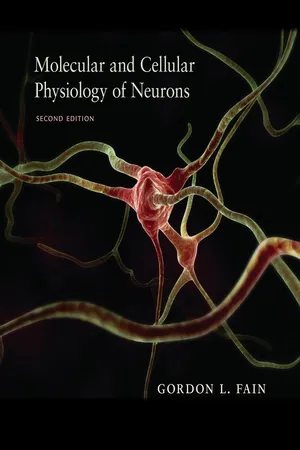
eBook - PDF
Molecular and Cellular Physiology of Neurons
Second Edition
- 766 pages
- English
- PDF
- Available on iOS & Android
eBook - PDF
About this book
Information
Table of contents
- Contents
- Preface
- 1. Introduction
- Part One: Electrical Properties of Cells and Homeostasis
- Part Two: Active Propagation of Neural Signals
- Part Three: Synaptic Transmission and Ligand-Gated Channels
- Part Four: Metabotropic Transmission and Neuromodulation
- Part Five: Sensory Transduction
- Appendix: Symbols Used
- References
- Index
- Color Illustrations
Trusted by 375,005 students
Access to over 1.5 million titles for a fair monthly price.
Study more efficiently using our study tools.
Frequently asked questions
Yes, you can cancel anytime from the Subscription tab in your account settings on the Perlego website. Your subscription will stay active until the end of your current billing period. Learn how to cancel your subscription
No, books cannot be downloaded as external files, such as PDFs, for use outside of Perlego. However, you can download books within the Perlego app for offline reading on mobile or tablet. Learn how to download books offline
Perlego offers two plans: Essential and Complete
- Essential is ideal for learners and professionals who enjoy exploring a wide range of subjects. Access the Essential Library with 800,000+ trusted titles and best-sellers across business, personal growth, and the humanities. Includes unlimited reading time and Standard Read Aloud voice.
- Complete: Perfect for advanced learners and researchers needing full, unrestricted access. Unlock 1.5M+ books across hundreds of subjects, including academic and specialized titles. The Complete Plan also includes advanced features like Premium Read Aloud and Research Assistant.
We are an online textbook subscription service, where you can get access to an entire online library for less than the price of a single book per month. With over 1.5 million books across 990+ topics, we’ve got you covered! Learn about our mission
Look out for the read-aloud symbol on your next book to see if you can listen to it. The read-aloud tool reads text aloud for you, highlighting the text as it is being read. You can pause it, speed it up and slow it down. Learn more about Read Aloud
Yes! You can use the Perlego app on both iOS and Android devices to read anytime, anywhere — even offline. Perfect for commutes or when you’re on the go.
Please note we cannot support devices running on iOS 13 and Android 7 or earlier. Learn more about using the app
Please note we cannot support devices running on iOS 13 and Android 7 or earlier. Learn more about using the app
Yes, you can access Molecular and Cellular Physiology of Neurons by Gordon L. Fain,Margery J. Fain in PDF and/or ePUB format, as well as other popular books in Biological Sciences & Neuroscience. We have over 1.5 million books available in our catalogue for you to explore.