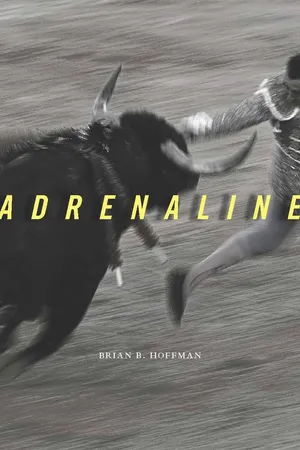
Inducing highs of excitement, anger, and terror, adrenaline fuels the extremes of human experience. A rush empowers superhuman feats in emergencies. Risk-taking junkies seek to replicate this feeling in dangerous recreations. And a surge may literally scare us to death. Adrenaline brings us up to speed on the fascinating molecule that drives some of our most potent experiences.
Adrenaline was discovered in 1894 and quickly made its way out of the lab into clinics around the world. In this engrossing account, Brian Hoffman examines adrenaline in all its capacities, from a vital regulator of physiological functions to the subject of Nobel Prize–winning breakthroughs. Because its biochemical pathways are prototypical, adrenaline has had widespread application in hormone research leading to the development of powerful new drugs. Hoffman introduces the scientists to whom we owe our understanding, tracing the paths of their discoveries and aspirations and allowing us to appreciate the crucial role adrenaline has played in pushing modern medicine forward.
Hoffman also investigates the vivid, at times lurid, place adrenaline occupies in the popular imagination, where accounts of its life-giving and lethal properties often leave the realm of fact. Famous as the catalyst of the "fight or flight" response, adrenaline has also received forensic attention as a perfect poison, untraceable in the bloodstream—and rumors persist of its power to revive the dead. True to the spirit of its topic, Adrenaline is a stimulating journey that reveals the truth behind adrenaline's scientific importance and enduring popular appeal.
eBook - ePub
Adrenaline
About this book
Information
[ONE]
The Goldilocks Principle
When Kristen Gilbert killed them, she used the perfect poison.
ASSISTANT U.S. ATTORNEY ARIANE VUONO, 2001
In the fairy tale about the three bears, Goldilocks tastes Papa Bear’s porridge and finds it far too hot, while Mama Bear’s porridge proves much too cold. Happily for Goldilocks, Baby Bear’s porridge is just right. This represents an example of what’s often known as the Goldilocks Principle, reflecting the desirability of an appropriate balance that avoids extremes. As we will see, the Goldilocks Principle applies as much to adrenaline as it does to porridge. In this chapter, as we begin our multifaceted discussion of adrenaline, we concentrate on the dire effects of too much or too little adrenaline, along with analogous extreme effects associated with the sympathetic nervous system.
In some nineteenth-century versions of the tale, Goldilocks herself became a meal when the bears returned; however, as the story has been retold again and again over the years, the outcome has become much more favorable for her. Analogously, diseases involving adrenaline-related extremes that were once fatal now have much better endings as a consequence of advances in biomedical research. Nonetheless, we start our tale with a story that should alarm children of all ages.
Murder She Did
Kristen Gilbert grew up in Fall River, Massachusetts, the town where Lizzie Borden was accused (but not convicted) of murdering her parents with an ax in 1892. In 1989, Gilbert began her career as a young nurse at a federal hospital near Northampton in western Massachusetts. Gilbert’s colleagues noticed that patients had cardiac arrests unusually frequently during her shifts. This pattern, initially attributed to sheer bad luck, gave Gilbert a macabre reputation as an “angel of death.” Over time, however, the continued association between Gilbert and sudden deaths on her ward led to concern that more than just bad luck might be involved.
Colleagues began noticing unaccounted-for empty vials of adrenaline in the trash following some of the deaths. Other patients on Gilbert’s ward experienced strange and dramatic increases in heart rate and blood pressure—changes that could be brought on by adrenaline. A few coworkers started to suspect that Gilbert was injecting unsuspecting patients with adrenaline, and a criminal investigation eventually led to her arrest and prosecution for multiple murders. Her motives were never fully understood, but some suggested that she committed the crimes to bring her lover, an unwitting policeman who also worked at the hospital, to her ward as alarms sounded, while others believed Gilbert sought to generate her own adrenaline highs from the frantic resuscitation efforts undertaken at the scene of each cardiac arrest.
Adrenaline is a two-edged sword for the heart. Sudden cardiac arrest kills hundreds of thousands of people each year, but some people are saved by cardiac resuscitation, which often includes adrenaline injections to increase the chance of restarting the heart. On the other hand, a large dose of adrenaline can overstimulate a normal heart, leading to fast and erratic beating that may culminate in cardiac arrest.
Using adrenaline as a murder weapon has a certain bloodless elegance, for the deaths it causes may initially appear natural. The short delay between a potentially fatal adrenaline injection and stoppage of the heart allowed Gilbert to slip out of patients’ rooms before automated cardiac monitors triggered alarms. As a poison, adrenaline presents many challenges for police, toxicologists, and prosecutors, challenges that were heightened by the hospital setting of the deaths Gilbert was charged with. The stress of illness may itself cause a copious release of adrenaline from the adrenal glands, which leads to very high concentrations in the blood. Plus, patients often receive large doses of adrenaline during cardiac resuscitation. Consequently, it is very difficult to produce compelling forensic evidence that an illicit injection of adrenaline was what stopped the heart in the first place. In Gilbert’s case, the prosecution won without directly demonstrating that the dead patients had excessive quantities of adrenaline in their bodies.
During her trial, a cardiologist serving as an expert witness for the prosecution testified that he believed the deaths had been caused by illicit injections of adrenaline. This testimony, along with other evidence more typically exploited in murder trials, provided sufficient grounds for the prosecution to convince the jury that Gilbert had murdered the patients. In March 2001, Gilbert received a life sentence for the murder of four patients and attempted murder of two others. She may have caused dozens more deaths.1
Pheochromocytomas: Deadly Chemical Factories inside the Body
In 1884, eighteen-year-old Minna Roll died in southeastern Germany about a year after developing a set of unusual symptoms. Her illness began on a winter evening when she suddenly noticed heart palpitations followed by a severe headache and feelings of intense anxiety; the episode lasted only a few minutes. She had two similar attacks over the next six months but otherwise felt well. She then developed frequent headaches, vomiting, and difficulty seeing; she soon became too sick to continue her farm work. She was admitted to a hospital, where physicians noted a rapid heart rate that episodically increased to 160–180 beats per minute. Her arteries felt tense and were hard to compress; these changes suggest severe hypertension, but her blood pressure is unknown since blood pressure was not routinely measured in clinical settings until at least ten years later. Ophthalmological examination demonstrated bleeding in the back of her eyes and swollen optic nerves, signs that in retrospect were likely due to severe hypertension. In a matter of weeks she was dead. The autopsy demonstrated damage in multiple organs, including her heart and kidneys; these findings, too, likely represent the consequences of severe hypertension. The pathologist unexpectedly found a tumor in each adrenal gland. Dr. Felix Fränkel published a detailed case record; he did not know the explanation for Minna Roll’s symptoms and could only speculate about a possible connection with the tumors found at autopsy.2
Over the next several decades many physicians published case reports describing similar patients who had recurrent attacks of rapid heart rate, headaches, intense perspiration, and other symptoms, coupled with adrenal tumors found at autopsy. These tumors, often less than two inches in diameter, typically arose from chromaffin cells in the adrenal medulla. The tumors soon became known as pheochromocytomas.3 However, the possible connection between the symptoms and the tumors remained obscure. In 1922, Marcel Labbé and colleagues in Paris focused attention on the connection between attacks of symptoms and simultaneous rises in blood pressure in patients who had pheochromocytomas found at autopsy; they proposed that the tumors caused the sharp rises in blood pressure.
In 1926, Charles Mayo—one of the founders of the Mayo Clinic in Rochester, Minnesota—became the first surgeon in the United States to remove a pheochromocytoma from a living patient.4 He operated on Mother Mary Joachim, a thirty-year-old Roman Catholic nun from Ontario, Canada. For more than a year the nun had had troubling attacks of headaches, shortness of breath, and rapid heart rate. These spells occurred frequently, lasting from thirty minutes to several hours; her baffled general physician referred her to the Mayo Clinic for further evaluation. At the onset of an attack, Mother Mary’s systolic blood pressure suddenly jumped from a normal value of 120 millimeters of mercury (mm Hg) to 320 mm Hg or more, sometimes associated with transient heart failure. The attacks ebbed spontaneously, with her blood pressure returning to normal until the next paroxysm.
Mayo wondered if periodic overactivity of the sympathetic nervous system caused the attacks, as activation of the sympathetic nervous system was known to raise blood pressure. In the 1920s, the absence of effective antihypertensive drugs made severe hypertension both dangerous and exceedingly difficult to treat; surgeons sometimes operated to cut sympathetic nerves in a desperate effort to lower blood pressure. Because Mother Mary also had intermittent abdominal pain, Mayo decided to cut the sympathetic nerves in her abdomen. After opening her abdomen, however, Mayo unexpectedly found a large tumor pressing against the top of her left kidney; he focused the operation on removing the tumor—later identified as a pheochromocytoma—and then closed the incision. Remarkably, after removal of the tumor, Mother Mary Joachim had no further episodes of high blood pressure, and lived for another eighteen years without experiencing another attack. Removing the pheochromocytoma had cured her.
In 1929, Maurice Pincoffs in Baltimore likely made the first preoperative diagnosis of a pheochromocytoma. His patient was a twenty-five-year-old woman with increasingly severe paroxysms of a racing pulse that had started ten years earlier. Aside from these attacks, her health was excellent. Pincoffs detected no abnormalities in his initial physical examination, and he noted that her blood pressure was a perfectly normal 120/80 mm Hg. He later examined her during several attacks; on those occasions her systolic blood pressure was at least 260 mm Hg. She looked very anxious and tremulous, and her blood sugar became abnormally high during attacks. Although X-rays of the abdomen were normal and he had no laboratory tests to guide him, Pincoffs astutely diagnosed a pheochromocytoma.
The patient was referred to the Baltimore surgeon Arthur Shipley, who decided to operate even though he could not be sure that she had a pheochromocytoma or in which adrenal gland the tumor might be located. He decided against opening the middle of her abdomen with a large incision, even though this approach would allow access to a tumor in either the left or right adrenal gland, as he was not confident that the patient would survive such a major procedure. Instead, he decided to make a small incision on one side; if he guessed wrong about the location of the tumor, he planned to allow her to recover for several weeks and then repeat the surgery on the other side.
Shipley made an incision on her left side and identified the normal left adrenal gland. However, sliding his arm through the incision, he felt a tumor in the right adrenal gland. At the second operation weeks later, he successfully removed the pheochromocytoma from the right adrenal gland; the patient’s blood pressure dropped precipitously after the tumor was removed, but she survived the surgery. Extracts of this tumor subsequently were shown to contain considerable amounts of adrenaline (the discovery of adrenaline three decades earlier is described in Chapters 3 and 4).
By 1930, several investigators had reported that other pheochromocytomas obtained at autopsy contained large amounts of adrenaline. In 1937, investigators in New York demonstrated the presence of a blood-pressure-raising chemical similar to adrenaline in the blood of a patient with pheochromocytoma.5 Over the next decade, new diagnostic tests facilitated the diagnosis of pheochromocytoma and helped avoid futile major surgery in patients who did not actually harbor a tumor.6 Nonetheless, at the beginning of the 1950s, diagnosing a pheochromocytoma remained difficult, and localizing the tumor prior to surgery was often impossible, as routine X-rays were normal in most patients. Moreover, surgery could be dangerous due to wild swings in blood pressure and heart rate on the operating table.
Since that time, numerous advances have transformed care of patients with suspected pheochromocytoma. In the first place, making a diagnosis of pheochromocytoma has become much easier thanks to the development of increasingly sensitive and specific assays for adrenaline, noradrenaline, and their breakdown products. Innovative tests can now confirm or exclude the diagnosis of pheochromocytoma with considerable reliability. And because these tumors can run in families, sometimes in syndromes associated with tumors in other glands, modern genetic evaluations can be very useful in predicting the risk of pheochromocytoma in members of a family based on information involving mutations in a small number of genes. In 2007, in fact, scientists reported success in tracking down descendants in Minna Roll’s extended family more than a hundred years after her death and determined that some of these relatives had inherited a mutation in a single gene that causes pheochromocytomas.7
In about 90 percent of cases, pheochromocytomas are found in one adrenal or the other. Modern CT or MRI scans localize tumors with considerable precision with images unavailable to physicians for much of the twentieth century. Tumors outside the adrenal glands, which can be in the neck, chest, abdomen, or pelvis, can also be tracked down using radioactive substances that are preferentially taken up by pheochromocytomas. A deeper understanding of the physiological consequences of excess adrenaline and noradrenaline has made anesthesia of these patients much safer, leading to improved outcomes. Moreover, highly specific drugs that prevent many of adrenaline’s effects have improved the treatment of high blood pressure and rapid heart rate prior to surgery.
Despite these enormous advances in the biological and clinical understanding of pheochromocytoma, patients often have symptoms for months or years before a clinician makes the correct diagnosis—or the undiagnosed patient dies of a complication. Because this tumor is so rare, it is often missed. A typical general physician might only diagnose a few cases during his or her career; indeed, many physicians encounter substantially more patients with odd spells that are suggestive of pheochromocytoma but who do not have this tumor. This syndrome, incidentally, has been called pseudo-pheochromocytoma, and it represents a diagnosis of exclusion that is sometimes associated with panic or repressed emotional responses. Even more puzzling and challenging are individuals who pretend to have a pheochromocytoma. People have faked the symptoms, injecting themselves with adrenaline or surreptitiously added it to their urine to falsify laboratory tests. Some of these people have even willingly undergone surgery intended to remove a tumor they don’t have. This behavior constitutes a form of Munchausen’s syndrome, a disorder in which affected people feign illness for no apparent reason.8
Two well-known people who died with an undiagnosed pheochromocytoma are Pauline Hemingway, the second wife of Ernest Hemingway, and Dwight D. Eisenhower.
Pauline Pfeiffer married Ernest Hemingway in 1927; their union produced two sons, Patrick and Gregory, before they divorced in 1940. Gregory had a turbulent life, even by Hemingway standards. In 1951, Pauline telephoned Ernest to tell him that Gregory had been arrested. The conversation devolved into angry accusations. Some hours later, Pauline developed severe abdominal pain. She died shortly afterward during emergency surgery. Ernest blamed Gregory and his troublesome behavior for his mother’s death. Years later, Gregory attended medical school and read the report of his mother’s autopsy: she had died of a pheochromocytoma. He believed that her final argument with his father set off a crisis in which the tumor spilled excessive amounts of adrenaline into her system, causing her death.
Dwight D. Eisenhower, the supreme commander of Allied forces in Europe during World War II and president of the United States from 1953 to 1961, had the first of at least six heart attacks in 1955, and died almost fourteen years later from severe heart failure. Eisenhower’s autopsy at Walter Reed Army Medical Center revealed a major surprise: his left adrenal gland harbored a pheochromocytoma. Eisenhower had had hypertension for many years and apparently had headaches associated with increases in blood pressure. In the last years of his life, Eisenhower had spikes in blood pressure up to 200/120 mm Hg. These changes in blood pressure suggest that his pheochromocytoma had been active, releasing adrenaline that ...
Table of contents
- Cover
- Half Title
- Title Page
- Copyright
- Dedication
- Contents
- Prologue
- 1. The Goldilocks Principle
- 2. Ruled by Glands
- 3. A Country Doctor’s Remarkable Discovery
- 4. Finding a Needle in a Haystack
- 5. Adrenaline Zips from Bench to Bedside
- 6. Mind the Gap: Chemical Transmission from Sympathetic Nerves to Organs
- 7. How Adrenaline Stimulates Cells
- 8. Lock and Key: Receptors for Adrenaline
- 9. New Drugs from Old Molecules
- 10. Adrenaline Junkies
- Appendix: Adrenaline’s Nobel Connections: An Extended Cast of Characters
- Notes
- Glossary
- Further Reading
- Acknowledgments
- Credits
- Index
Trusted by 375,005 students
Access to over 1.5 million titles for a fair monthly price.
Study more efficiently using our study tools.
Frequently asked questions
Yes, you can cancel anytime from the Subscription tab in your account settings on the Perlego website. Your subscription will stay active until the end of your current billing period. Learn how to cancel your subscription
No, books cannot be downloaded as external files, such as PDFs, for use outside of Perlego. However, you can download books within the Perlego app for offline reading on mobile or tablet. Learn how to download books offline
Perlego offers two plans: Essential and Complete
- Essential is ideal for learners and professionals who enjoy exploring a wide range of subjects. Access the Essential Library with 800,000+ trusted titles and best-sellers across business, personal growth, and the humanities. Includes unlimited reading time and Standard Read Aloud voice.
- Complete: Perfect for advanced learners and researchers needing full, unrestricted access. Unlock 1.5M+ books across hundreds of subjects, including academic and specialized titles. The Complete Plan also includes advanced features like Premium Read Aloud and Research Assistant.
We are an online textbook subscription service, where you can get access to an entire online library for less than the price of a single book per month. With over 1.5 million books across 990+ topics, we’ve got you covered! Learn about our mission
Look out for the read-aloud symbol on your next book to see if you can listen to it. The read-aloud tool reads text aloud for you, highlighting the text as it is being read. You can pause it, speed it up and slow it down. Learn more about Read Aloud
Yes! You can use the Perlego app on both iOS and Android devices to read anytime, anywhere — even offline. Perfect for commutes or when you’re on the go.
Please note we cannot support devices running on iOS 13 and Android 7 or earlier. Learn more about using the app
Please note we cannot support devices running on iOS 13 and Android 7 or earlier. Learn more about using the app
Yes, you can access Adrenaline by Brian B. Hoffman in PDF and/or ePUB format, as well as other popular books in Biological Sciences & Medical Theory, Practice & Reference. We have over 1.5 million books available in our catalogue for you to explore.