Between 1793 and 1794, thousands of French citizens were imprisoned and hundreds sent to the guillotine by a powerful dictatorship that claimed to be acting in the public interest. Only a few years earlier, revolutionaries had proclaimed a new era of tolerance, equal justice, and human rights. How and why did the French Revolution's lofty ideals of liberty, equality, and fraternity descend into violence and terror?
"By attending to the role of emotions in propelling the Terror, Tackett steers a more nuanced course than many previous historians have managed…Imagined terrors, as…Tackett very usefully reminds us, can have even more political potency than real ones."
—David A. Bell, The Atlantic
"[Tackett] analyzes the mentalité of those who became 'terrorists' in 18th-century France…In emphasizing weakness and uncertainty instead of fanatical strength as the driving force behind the Terror…Tackett…contributes to an important realignment in the study of French history."
—Ruth Scurr, The Spectator
"[A] boldly conceived and important book…This is a thought-provoking book that makes a major contribution to our understanding of terror and political intolerance, and also to the history of emotions more generally. It helps expose the complexity of a revolution that cannot be adequately understood in terms of principles alone."
—Alan Forrest, Times Literary Supplement
- 468 pages
- English
- ePUB (mobile friendly)
- Available on iOS & Android
eBook - ePub
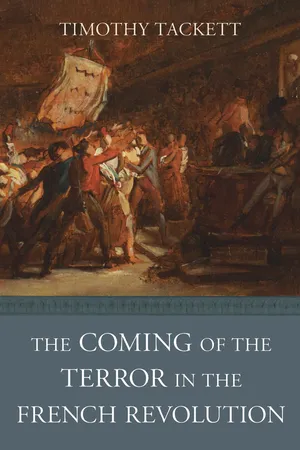
The Coming of the Terror in the French Revolution
About this book
Information
1
The Revolutionaries and Their World in 1789
COULD they have known? Did they even suspect—the great Revolutionary conflagration that would soon sweep over France and over much of the western world? The Old Regime testimonies of our future Revolutionaries suggest that they did not. Most had passed comfortable lives before 1789. While a few had been nobles or clergymen, the great majority were “Third Estate” commoners: lawyers or judges, doctors or government officials, merchants or manufacturers.1 The majority were also townsmen, who firmly embraced the culture and pace of life of the eighteenth-century urban world. For some this meant the city of Paris itself, the immense metropolis on the river Seine with well over 600,000 people; or the smaller regional cities—like Lyon, Marseille, Bordeaux, or Nantes—with populations of around 100,000. The greatest number, however, resided in the smaller universes of provincial capitals and market towns dispersed across the kingdom: towns with only a few thousand people, serving the legal, administrative, and commercial needs of the surrounding countryside.
Few of our Revolutionaries-to-be were truly wealthy. A significant number were younger men just beginning their careers, still awaiting family inheritance and struggling to find their way in life. Pierre Vergniaud, the future Girondin leader, had taken several years to choose a profession, beginning in a Catholic seminary before switching to law. By 1789 he had discovered his talents as a plea lawyer in Bordeaux, but he still had to budget carefully to set up his law office and library and maintain the standard of dress requisite for attracting clients. Much the same could be said of Vergniaud’s future political rival, Maximilien Robespierre. Raised by relatives in Arras after his mother had died and his father had disappeared, he too was just establishing himself in a modest provincial law practice when the Revolution broke out. Robespierre’s school friend, the future Jacobin journalist Camille Desmoulins, found it even more difficult to enter a profession because of a persistent stutter. He was forced to borrow heavily from his father, as he struggled to pursue a career as a writer in Paris. Indeed, several of the young men who had encountered particular frustrations or difficulties finding their way in life—Antoine Barnave, Lazare Carnot, Jean-Louis Prieur, Jean-Paul Marat, and Jacques Brissot, to name a few—would embrace the ideals of 1789 with particular fervor and would rapidly move toward a more radical version of Revolution.2
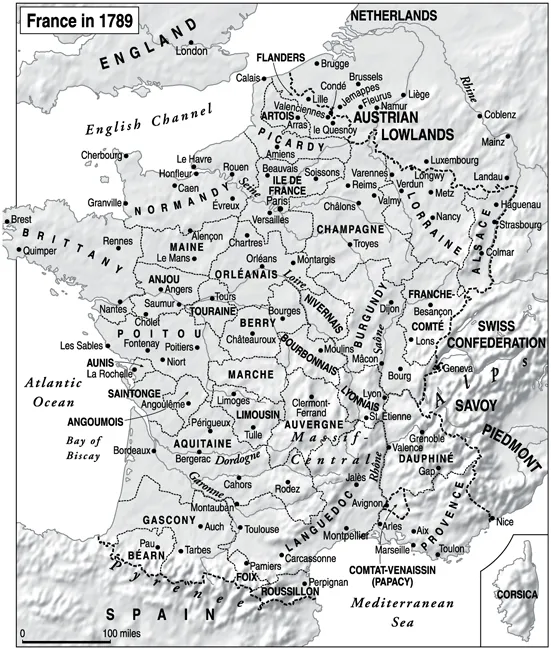
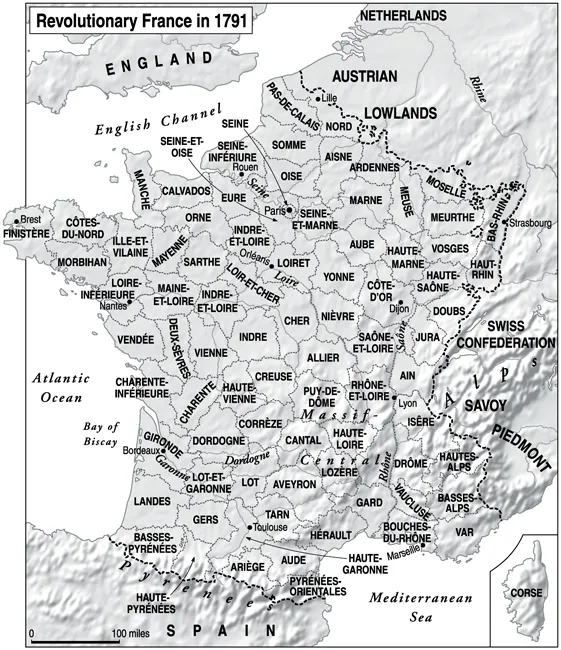
Yet economic realities alone cannot explain radical commitment. Most of the future Revolutionary elites were, in fact, already well established in 1789.3 A few were merchants directly profiting from the great expansion in colonial trade that brought such wealth to eighteenth-century France. But even the nonmerchants, the majority, possessed lands, investments, and professional incomes that kept them abreast of inflation and helped them maintain a comfortable standard of living. The future Jacobins Bertrand Barère, Félix Faulcon, François-Marie Ménard de la Groye, Jean-François Gaultier de Biauzat, and Jacques Pinet—to name only a few—stood among the principal notables of their local communities, following professions similar to those of their fathers and grandfathers and sharing in the family’s accumulated wealth. None, to be sure, was immune to the threats of disease and childbirth that struck with such unpredictable force, carrying away spouses and children and other loved ones in the prime of life. In general, however, they were sheltered from the periodic economic crises that brought suffering and anxiety to the great mass of the population. Even the least wealthy could participate in the consumer revolution at the end of the Old Regime that allowed their acquisition of stylish clothing and an ever-greater profusion of household furnishings. They invariably wore the powdered wigs, the knee-breeches, the silver-buckled shoes that were the markers of their elite social standing.
The future Revolutionary leaders were also bound together by their education. With rare exceptions they were among that exclusive group—only 1 or 2 percent of the population—who had followed the full cycle of instruction in the French secondary schools.4 The humanist education, devised by the Society of Jesus in the sixteenth century, continued to prevail—even after the expulsion of the Jesuits in the 1760s. At the core of their studies was the reading and translation of the Latin classics, which boys were compelled to learn by heart and recapitulate during their six or seven years of courses. Immersion in the texts of Caesar, Cicero, Horace, Plutarch, and Tacitus was essential. The future Conventionnel, Louis-Sébastien Mercier, left a graphic description of his upbringing: “As soon as I began my studies,” he wrote, “I was told stories of Romulus and his wolf, of the Capitol and the Tiber. The names of Brutus and Cato and Scipio pursued me in my sleep; the letters of Cicero were piled into my memory.… And it was only several years later that I came to realize I was actually French and a resident of Paris.”5
While young women from families of such elites, the wives and daughters of the future Revolutionaries, would rarely advance so far, they too might receive substantial instruction in the classics through tutoring at home or in convent schools. Both Marie-Jeanne Roland and Rosalie Jullien, soon to be fervent supporters of the Jacobins, salted their correspondence with references to the Ancients. Indeed, the stories and quotations from the classics that had been “piled into” their memories would create a common vocabulary among all Revolutionaries, women and men, a reservoir of references that they could readily recognize and insert into their speeches and pamphlets. Of course, the classics, like the Bible, could be cited in support of widely contradictory positions. Such training could never provide the Revolutionary generation with a systematic ideology. But it is significant that in speeches and newspapers during the Revolution Cicero would be cited ten times more frequently than the contemporary philosopher Jean-Jacques Rousseau.6
And if they had all been immersed in the classics, a great many of the Revolutionary elite had also received training in the law. In most cases, this entailed a university degree in one of France’s law faculties, followed by some form of apprenticeship in a law office or a royal court. A substantial proportion of the Revolutionaries was among the 1 percent of the population who had attended the university.7 All of the future deputy lawyers and magistrates and most government officials had pursued such studies.8 An attestation of legal studies represented a kind of status marker, even for individuals who later pursued careers in commerce or journalism or agriculture. A number of deputies in the first three Revolutionary assemblies had not only practiced law but also produced legal treatises. Of all the future deputies who published before the Revolution, those writing in the field of legal studies were perhaps the most distinguished. Armand-Gaston Camus, Merlin de Douai, Durand de Maillane, Jean-Denis Lanjuinais, Jacques Brissot, and Emmanuel Pastoret—all important Revolutionary leaders—had written nationally known legal texts. Others who had acquired considerable local or national reputations as trial lawyers included such future radicals as Vergniaud, Robespierre, Target, Guadet, Gensonné, Gaultier de Biauzat, and Vernier. Clearly, a legal turn of mind would be one of the most characteristic features of the culture of Revolutionary leadership.
Yet if the future Revolutionary leaders seemed bound together by similar economic, social, and educational backgrounds, to what extent did they self-consciously think and speak of themselves as members of a single group? To what extent did they feel some sense of cohesion within a greater imagined community of commoner elites? In point of fact, there was no generally agreed-upon expression of common identity. When pushed to make distinctions, they might refer to themselves as “respectable people” or “the right sort.” Once the Revolutionary period had begun, they would increasingly identify with the “Third Estate,” although many would be quick to specify “the upper Third,” to distinguish themselves from the masses of the population. Sometimes they also called themselves “bourgeois.” However, this term had multiple meanings in the eighteenth century. In some towns it signified any legally recognized citizen, enjoying municipal tax privileges and capable of participating in municipal elections. Once the Revolution began the expression “bourgeois” would rapidly change its meaning and become, for a time, an expression of opprobrium, tantamount to “counterrevolutionary.” Yet prior to 1789 the term was also used more or less in the modern sense to designate a non-noble, nonclerical member of “the comfortable class” within a town or a city. The Parisian publishers Mercier and Nicolas Ruault frequently made use of the word and clearly identified with the city’s bourgeoisie. Ruault would recount his delight in celebrating Epiphany at the home of a family of “honest bourgeois.” Such Parisians, he modestly announced, “are the best people in France and consequently the best on earth.” And he would clearly distinguish the bourgeois segment of society, to whom he belonged, from the city’s artisan and working classes.9
A sociologist might well describe the future Revolutionary elites as belonging to the “middle class.” In fact, such a term was never used in the eighteenth century and in certain respects it is misleading. Unlike the middle class of the contemporary world, the social group to which the leaders belonged was not in the “middle” of the general distribution of wealth in society. In a chart of the spread of incomes under the Old Regime, we would find them situated far to one side, with revenues well above the vast majority of the population. Numerically, moreover, they represented only a small proportion of the 28 million people living in France in 1789, perhaps some 10 percent of the urban inhabitants and an even smaller proportion of those living in the countryside.10 In most towns the group of future leaders was so small that all would have known one another, sometimes as friends and relatives, sometimes as bitter rivals.
Yet in another sense our future Revolutionary leaders did indeed see themselves in the “middle.” In reflecting on their place in the world, they invariably separated themselves from two other elements above and below them in society: the nobility, on the one hand, and the teeming masses of the common people, on the other.11
The Nobility
The nobility was ultimately a social caste, whose existence and privileges were defined by law and based, in theory, on the paternal bloodline. Legally one either was or was not a noble, and individuals devoted considerable time and money documenting their genealogy as far back in time as possible. Yet in Old Regime France the nobility was not a closed caste. With enough money and the right connections it was possible for a commoner to enter its ranks, usually by purchasing a specific office that conferred noble status. Several hundred families had done just that over the last two centuries before the Revolution.12 But in reality the desirability of such social advancement was diminished by the contempt and condescension with which the newly ennobled were treated by “aristocrats”—those whose families had been nobles for several centuries. Nothing was more typical of Old Regime society than the “cascading scorn” conveyed by the superior ranks in the status hierarchy toward their “inferiors.” In any case, for the vast majority of our future Revolutionaries, the expense of obtaining a patent of nobility would have been utterly beyond their means.13
There were, in fact, many levels and gradations within the French nobility. They ranged in prestige and wealth from the great courtiers who frequented the king’s entourage in Versailles—princes of the blood, peers of the realm, dukes, and counts—to the minor untitled nobles living in the countryside, sometimes in relatively humble conditions. To the end of the Old Regime, the majority of noblemen, regardless of wealth, saw themselves as members of a warrior class. Virtually every noble family attempted to send at least one son into the army or navy, where a significant number lost their lives in France’s numerous wars during the eighteenth century. A smaller subgroup of families had acquired property in office as royal judges. These nobles of the “robe”—referring to the dress they wore in the courtroom—held politically influential positions in the Parlements, the dozen or so major appellate courts of the kingdom, or in other lower-level royal courts.
Careerwise, the French nobility held significant advantages over the commoners. Many of the most important positions in government and society were largely restricted to members of their caste. The bishops and abbots and other great churchmen, most officers in the military, the highest-level administrators in the bureaucracy (ministers and intendants), and most of the parlementary magistrates: all came exclusively from the nobility. The greatest advantages in the acquisition of such positions were usually given to those who could claim a noble pedigree over many generations, and who might thus be considered “aristocrats.”
While the incomes of noble families differed substantially, the great majority were wealthier and often vastly more wealthy than the majority of commoner families. Their revenues came in part from their “seigneurial rights,” a myriad of fees and dues—varying enormously from village to village—levied on the populations living within the boundaries of their seigneuries. Most nobles also derived substantial incomes from personal landholdings, which they often leased out to local farmers. And despite laws that forbade their participation in commercial activities, many profited from indirect involvement in the grain trade, in mines and manufacturing, or in colonial plantations and the sale of slaves. The wealthier nobles, no less than the middle class, were fully engaged in capitalist strategies for increasing their revenues. In addition they also benefited from a variety of tax privileges. While all nobles paid some royal taxes, they invariably escaped many of the most onerous burdens weighing on the mass of the population. Thus, despite considerable variations among individual families, the nobility as a whole was a distinctly wealthy and privileged class. Within the Estates General of 1789, the revenues of the average noble deputy were some ten to fifteen times greater than those of the average commoner in the Third Estate.14
Given their considerable wealth, prestige, and connections, the nobles played a key role in the patron-client system that remained characteristic of French society to the end of the Old Regime. At one time or another, virtually all of our future Revolutionaries would have found themselves, hat in hand, seeking the assistance of noble “protectors”—whether seigneurial lords, royal administrators, or aristocratic churchmen—to obtain a position or advance their careers in other ways. Félix Faulcon had relied heavily on various noble contacts to procure his position as a magistrate in Poitiers. Maximilien Robespierre obtained a scholarship to study in Paris through the assistance of a noble abbot. Both Gilbert Romme and Marc-Antoine Jullien had served for a time as...
Table of contents
- Cover
- Title Page
- Copyright
- Contents
- List of Illustrations
- List of Maps
- Epigraphs
- Introduction: The Revolutionary Process
- 1. The Revolutionaries and Their World in 1789
- 2. The Spirit of ’89
- 3. The Breakdown of Authority
- 4. The Menace of Counterrevolution
- 5. Between Hope and Fear
- 6. The Factionalization of France
- 7. Fall of the Monarchy
- 8. The First Terror
- 9. The Convention and the Trial of the King
- 10. The Crisis of ’93
- 11. Revolution and Terror until Victory
- 12. The Year II and the Great Terror
- Conclusion: Becoming a Terrorist
- Abbreviations
- Notes
- Sources and Bibliography
- Acknowledgments
- Index
Trusted by 375,005 students
Access to over 1.5 million titles for a fair monthly price.
Study more efficiently using our study tools.
Frequently asked questions
Yes, you can cancel anytime from the Subscription tab in your account settings on the Perlego website. Your subscription will stay active until the end of your current billing period. Learn how to cancel your subscription
No, books cannot be downloaded as external files, such as PDFs, for use outside of Perlego. However, you can download books within the Perlego app for offline reading on mobile or tablet. Learn how to download books offline
Perlego offers two plans: Essential and Complete
- Essential is ideal for learners and professionals who enjoy exploring a wide range of subjects. Access the Essential Library with 800,000+ trusted titles and best-sellers across business, personal growth, and the humanities. Includes unlimited reading time and Standard Read Aloud voice.
- Complete: Perfect for advanced learners and researchers needing full, unrestricted access. Unlock 1.5M+ books across hundreds of subjects, including academic and specialized titles. The Complete Plan also includes advanced features like Premium Read Aloud and Research Assistant.
We are an online textbook subscription service, where you can get access to an entire online library for less than the price of a single book per month. With over 1.5 million books across 990+ topics, we’ve got you covered! Learn about our mission
Look out for the read-aloud symbol on your next book to see if you can listen to it. The read-aloud tool reads text aloud for you, highlighting the text as it is being read. You can pause it, speed it up and slow it down. Learn more about Read Aloud
Yes! You can use the Perlego app on both iOS and Android devices to read anytime, anywhere — even offline. Perfect for commutes or when you’re on the go.
Please note we cannot support devices running on iOS 13 and Android 7 or earlier. Learn more about using the app
Please note we cannot support devices running on iOS 13 and Android 7 or earlier. Learn more about using the app
Yes, you can access The Coming of the Terror in the French Revolution by Timothy Tackett in PDF and/or ePUB format, as well as other popular books in History & Early Modern History. We have over 1.5 million books available in our catalogue for you to explore.