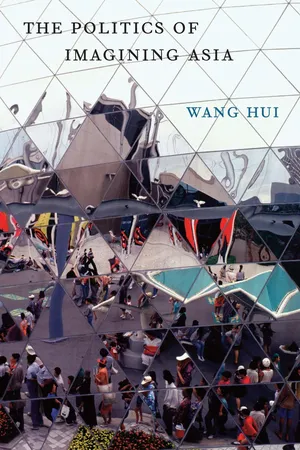
In this bold, provocative collection, Wang Hui confronts some of the major issues concerning modern China and the status quo of contemporary Chinese thought.
The book's overarching theme is the possibility of an alternative modernity that does not rely on imported conceptions of Chinese history and its legacy. Wang Hui argues that current models, based largely on Western notions of empire and the nation-state, fail to account for the richness and diversity of pre-modern Chinese historical practice. At the same time, he refrains from offering an exclusively Chinese perspective and placing China in an intellectual ghetto. Navigating terrain on regional language and politics, he draws on China's unique past to expose the inadequacies of European-born standards for assessing modern China's evolution. He takes issue particularly with the way in which nation-state logic has dominated politically charged concerns like Chinese language standardization and "The Tibetan Question." His stance is critical—and often controversial—but he locates hope in the kinds of complex, multifaceted arrangements that defined China and much of Asia for centuries.
The Politics of Imagining Asia challenges us not only to re-examine our theories of "Asia" but to reconsider what "Europe" means as well. As Theodore Huters writes in his introduction, "Wang Hui's concerns extend beyond China and Asia to an ambition to rethink world history as a whole."
- 369 pages
- English
- PDF
- Available on iOS & Android
eBook - PDF
The Politics of Imagining Asia
About this book
Information
Table of contents
- Contents
- Introduction
- 1. The Politics of Imagining Asia
- 2. How to Explain “China” and Its “Modernity”: Rethinking The Rise of Modern Chinese Thought
- 3. Local Forms, Vernacular Dialects, and the War of Resistance against Japan: The “National Forms” Debate
- 4. The “Tibetan Question” East and West: Orientalism, Regional Ethnic Autonomy, and the Politics of Dignity
- 5. Okinawa and Two Dramatic Changes to the Regional Order
- 6. Weber and the Question of Chinese Modernity
- Notes
- Credits
- Index
Trusted by 375,005 students
Access to over 1.5 million titles for a fair monthly price.
Study more efficiently using our study tools.
Frequently asked questions
Yes, you can cancel anytime from the Subscription tab in your account settings on the Perlego website. Your subscription will stay active until the end of your current billing period. Learn how to cancel your subscription
No, books cannot be downloaded as external files, such as PDFs, for use outside of Perlego. However, you can download books within the Perlego app for offline reading on mobile or tablet. Learn how to download books offline
Perlego offers two plans: Essential and Complete
- Essential is ideal for learners and professionals who enjoy exploring a wide range of subjects. Access the Essential Library with 800,000+ trusted titles and best-sellers across business, personal growth, and the humanities. Includes unlimited reading time and Standard Read Aloud voice.
- Complete: Perfect for advanced learners and researchers needing full, unrestricted access. Unlock 1.5M+ books across hundreds of subjects, including academic and specialized titles. The Complete Plan also includes advanced features like Premium Read Aloud and Research Assistant.
We are an online textbook subscription service, where you can get access to an entire online library for less than the price of a single book per month. With over 1.5 million books across 990+ topics, we’ve got you covered! Learn about our mission
Look out for the read-aloud symbol on your next book to see if you can listen to it. The read-aloud tool reads text aloud for you, highlighting the text as it is being read. You can pause it, speed it up and slow it down. Learn more about Read Aloud
Yes! You can use the Perlego app on both iOS and Android devices to read anytime, anywhere — even offline. Perfect for commutes or when you’re on the go.
Please note we cannot support devices running on iOS 13 and Android 7 or earlier. Learn more about using the app
Please note we cannot support devices running on iOS 13 and Android 7 or earlier. Learn more about using the app
Yes, you can access The Politics of Imagining Asia by Hui Wang,Theodore Huters,Wang Hui, Theodore Huters in PDF and/or ePUB format, as well as other popular books in Politics & International Relations & Chinese History. We have over 1.5 million books available in our catalogue for you to explore.