Winner of the Bancroft Prize
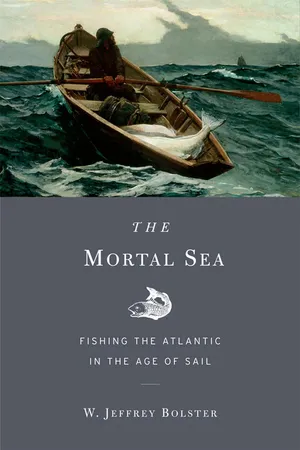
A sweeping environmental history of the North Atlantic, The Mortal Sea reveals how centuries of fishing turned a rich ocean into an "exhausted sea" and offers a powerful cautionary tale about our precarious relationship with the natural world.
Since the Viking ascendancy in the Middle Ages, the Atlantic has shaped the lives of people who depend upon it for survival. And just as surely, people have shaped the Atlantic. In his innovative account of this interdependency, W. Jeffrey Bolster, a historian and professional seafarer, takes us through a millennium-long environmental history of our impact on one of the largest ecosystems in the world.
While overfishing is often thought of as a contemporary problem, Bolster reveals that humans were transforming the sea long before factory trawlers turned fishing from a handliner's art into an industrial enterprise. The western Atlantic's legendary fishing banks, stretching from Cape Cod to Newfoundland, have attracted fishermen for more than five hundred years. Bolster follows the effects of this siren's song from its medieval European origins to the advent of industrialized fishing in American waters at the beginning of the twentieth century.
Blending marine biology, ecological insight, and a remarkable cast of characters, from notable explorers to scientists to an army of unknown fishermen, Bolster tells a story that is both ecological and human: the prelude to an environmental disaster. Over generations, harvesters created a quiet catastrophe as the sea could no longer renew itself. Bolster writes in the hope that the intimate relationship humans have long had with the ocean, and the species that live within it, can be restored for future generations.
- English
- ePUB (mobile friendly)
- Available on iOS & Android
eBook - ePub
About this book
Information
One
DEPLETED EUROPEAN SEAS AND THE DISCOVERY OF AMERICA
The Native Staple of each Country is the Riches of the Country, and is perpetual and never to be consumed; Beasts of the Earth, Fowls of the Air, and Fishes of the Sea, Naturally Increase.
—Nicholas Barbon, A Discourse of Trade, 1690
Renaissance seafarers and cartographers confronted the “great and marvelous things of the Ocean Sea” in astonishing ways after 1522, when the remnant of Ferdinand Magellan’s tattered fleet arrived in Seville following their unprecedented circumnavigation. Within a few years Antonio Pigafetta, the most literary of the survivors, produced a memorable account of that Ocean Sea’s immensity and exotic variety, a tantalizing tale of “contrary winds, calms, and rains” in the equatorial doldrums, “large fish with fearsome teeth called tiburoni” in the South Atlantic, and incomprehensibly gigantic shellfish near Borneo—“the flesh of one which weighed twenty-six pounds and the other forty-four.” As similar reports by other explorers trickled back to Europe along far-flung sea routes from the West Indies to the Straits of Magellan and Asian archipelagos, the ocean frontier and its web of life appeared ever more mysterious and provocative.1
Meanwhile Basque, Breton, Portuguese, and English West Country fishermen quietly crossed the Atlantic each spring to fish near Newfoundland and in the Gulf of St. Lawrence. There they encountered a familiar marine ecosystem that was “new” only in the sense that it had not been systematically harvested for centuries by fishermen using sophisticated technologies to catch, preserve, and market sea fish. This was distinct from the Philippine Seas, where Magellan’s men had seen “large sea snails, beautiful in appearance,” probably chambered nautilus (Nautilus pompilius); or from the American tropics, where oysters improbably grew on mangrove trees, and where crystal-clear waters prompted European newcomers such as Christopher Columbus to startle readers with depictions of fish “so unlike ours that it is amazing,” fish “of the brightest colors in the world—blue, yellow, red, multi-colored, colored in a thousand ways.” Gonzalo Fernández de Oviedo’s Natural History of the West Indies, available in London in English translation as early as 1555, reinforced the Caribbean’s bizarre allure. It introduced English readers to an ecosystem populated by “manatee and murene and many other fishes which have no names in our language.” The experience of Magellan, Columbus, and Oviedo could not have been more different from that of the Englishman Anthony Parkhurst, who found himself in the midst of a reassuringly familiar sea near Newfoundland in 1578. “As touching the kindes of Fish beside Cod,” he wrote,” there are Herrings, Salmons, Thorneback [skates], Plase, or rather wee should call them Flounders, Dog fish … Oisters, and Muskles.” Customers of English fishmongers would not flinch from such fare or need to cultivate a taste for the exotic. The living ocean along the northeast coast of America mirrored Englishmen’s coastal ecosystem at home.2
Riveted to a land-centered geography, modern people have difficulty imagining the meaningful oceanic areas that were second nature for experienced mariners at the birth of the Atlantic world, or how areas of the coastal ocean had already been changed by human influences. Sixteenth-century voyages such as Sir Humphrey Gilbert’s reconnoitering of Newfoundland in 1583 have almost always been presented as a passage from the Old World to the New World rather than as an episode occurring in a single oceanic region. But the experienced men aboard Gilbert’s small ship saw it both ways: what English sailors called the “New-found-land” was surrounded by a familiar sort of sea, albeit one swarming with fish.3
A pamphlet published by Robert Hitchcock in 1580 suggests how contemporaries understood the fishing banks of Newfoundland as something like an extension of the Irish Sea. Lobbying his countrymen to build 400 “fishyng Shippes: after manner of Flemmish Busses,” as Dutch herring boats were then known, Hitchcock, a military strategist, veteran of wars on the Continent, and fisheries promoter, envisioned that in “March, having victuals for five months, with hooks, lines, and salt,” each town’s fleet could “set out to fish for Cod and Ling where … the Town liketh best; or else to Newfoundland.” Hitchcock’s Elizabethan rendering of the North Atlantic crossing as commonplace not only puts fishermen back into the story of American beginnings where they belong, but, more importantly, illuminates the boreal North Atlantic as a single ecosystem linking the coast of Lancashire with the banks of Newfoundland—a system being affected by human activities at different rates in different places.4
When Hitchcock and his contemporaries advocated expanding England’s fisheries, they did not imagine an “Atlantic Ocean” separating Europe from America. The sailors working in what we call the northwest Atlantic, whether English, Basque, French, Spanish, or Portuguese, understood that they were fishing on the periphery of a body of water called variously the “Western Ocean,” “Mar Del Nort,” or “Great Ocean Sea.” During the 1520s, when the colonization and importance of North America still lay far in the future, ocean basins were neither named nor conceptualized in the constant ways that seem natural today. The term Atlantic, for instance, did not become commonplace until the seventeenth century; it was not used consistently until the eighteenth century. By then, of course, the Atlantick Sea (or Atlantic Ocean) was understood to separate Europe from America. During the sixteenth century, however, when whale oil from the Gulf of St. Lawrence illuminated European lamps and lubricated primitive European bearings, when dried cod from the coasts of Newfoundland filled the bellies of European soldiers, artisans, and town-dwellers, and when thousands of transient European mariners frequented those distant shores each year, the North American mainland remained vague at best beyond the distance of a harquebus shot from the shore. The outline of Newfoundland itself was not even accurately mapped until 1612, when Samuel de Champlain turned his considerable cartographic skills to the challenge. And for a century beforehand, Renaissance seafarers saw the real action as neither in “America” nor in the “Atlantic Ocean,” but on the shallow extremities of the “Great Ocean Sea.”5
From the standpoint of those sixteenth-century European fishermen more familiar with tarred hemp rope and leather fishing aprons than with charts of the world, and more comfortable talking about seasonal baits and favorable bottom conditions than about global geography, the cold, gray waters lapping the coast of Newfoundland were rather routine. Every time fishermen working the waters of the North Sea or the English Channel had hauled a net, responded to a tug on their lines, or examined the stomach contents of a recently caught fish to see what it had been eating, they studied the sea’s creatures. By the time some of those fishermen began to harvest the waters around Newfoundland and in the Gulf of St. Lawrence during the early sixteenth century, the similarities with home waters were striking. Whether in the Irish Sea or on the Grand Banks of Newfoundland, fishermen watched fulmars wheeling overhead, eager for bits of “gurry,” the entrails and bits of flesh discarded when cleaning fish. At night, when conditions were right for dinoflagellates and other bioluminescent organisms, disturbances in the water lingered as a ghostly green trace, whether prompted by the splash of a lead line or by a dolphin’s sinuous track. Shoals of silvery herring rose to the surface after sunset. Cod took bait by day; hake, by night. Most of the starfish, anemones, lobsters, and whelks looked the same. So did toothless, filter-feeding basking sharks as they plowed slowly through nutrient-rich waters with their oversized mouths agape. Some of those sharks were longer than the stoutly planked shallops from which men fished. Other sea monsters, such as the ninety-footer that washed ashore at Tynemouth in 1532 (probably a blue whale) or “the piercing serpent … that is in the sea” (referred to in the book of Isaiah), were regarded as portents or supernatural prodigies—glimpses of the inexplicable that struck fishermen with fear and reinforced the skimpiness of their understanding of the world beneath their keels.6 As they cleared kelp from their anchors and peered over the side at the fish on their lines, fishermen could not help but see the northwest Atlantic ecosystem as biologically and geologically akin to the northeast Atlantic they had left behind.
Oceanographers refer to that great arc of ocean stretching westward from the British Isles to Newfoundland as the North Atlantic boreal region. It includes the North Sea, the Irish Sea, the English Channel, the Norwegian Sea, the waters south of Iceland and Greenland, and the large marine ecosystem from the north coast of Cape Cod to Newfoundland and southern Labrador. With its eastern and western edges sculpted by the Pleistocene glaciations; its similarities in ocean temperature, productivity, food supplies, and predator-prey relationships; and its relatively uniform populations of boreal fish, including herring, cod, and salmon, the historic North Atlantic boreal region was characterized by defining unities; in fact the European and American boreal coasts share many identical animals and plants, and many others that are very similar.
Biogeography, or the correspondence of organisms to place, is the basis for contemporary oceanographers’ division of the oceans into natural regions. Seawater temperature is the single most important factor in defining those regions. Sixteenth- and seventeenth-century seamen understood the basic relationship between ocean temperature and resident species. They understood in an elemental way that the Mediterranean was a separate biogeographical region from the North Atlantic boreal region, and that each was separate from the Arctic Sea. The warm, saline Gulf Stream served as the southern boundary to the entire North Atlantic boreal region; icy subarctic waters created its northern boundary. While some species such as bluefin tuna, swordfish, and humpback whales migrated from one distinct oceanic region to another, most species thrived within a certain range of water temperatures. A sixteenth-century mariner leaving the English Channel for the Bay of Biscay would have confronted albacore, anchovy, pilchards, and conger eel. Sailing north through the Celtic Sea toward the Faroe Islands, he would have found ling, herring, and harbor seals. Temperature mattered. “Greenland” was the “slaughtering house” of the world, according to Daniel Pell in 1659, because of its vast population of “the great and warlike Horses of the Sea,” now known as walrus, a temperature-sensitive marine mammal. Walrus, like most other creatures, congregated in specific regions of the sea. Sixteenth- and seventeenth-century voyages to Newfoundland from northern France and the British Isles sometimes took place entirely within the North Atlantic boreal region. More commonly, outbound shipmasters encountering prevailing westerlies on a starboard tack were forced to the southwest into warmer waters, where “the strange fish which we there saw,” according to Christopher Levett in 1623, included “some with wings flying above the water.” Flying fish, along with the blunt-headed and multihued dorado, denizens of the tropics and temperate Atlantic drift current, were strangers to boreal seas.7
European fishermen’s complacent familiarity with the northwest Atlantic’s marine ecosystem during the sixteenth century has not fitted well with the dominant narrative of America as a New World. Romantic national histories of the sort that flowered during the nineteenth century, and which still have many readers in their grip, had a desperate need for colonial beginnings, such as the voyage of the Mayflower or the settlement of Quebec. Nationalist historians regarded the ocean as a non-place, an apparently eternal source of fish and whales, an inscrutable testing ground, and a dangerous, if necessary, means of conveyance. The eventual colonization of North America by Europeans, and the subsequent creation of nations there, however, overshadowed the fact that for more than a century the familiar coastal marine ecosystem was the only part of North America of consistent interest to Europeans. Sixteenth- and early-seventeenth-century maps of what are now Atlantic Canada and New England delineated the sea from the shore with a single line, revealing little detail of the interior landmass, but highlighting the shoals, islands, ocean basins, and river mouths in which European mariners encountered right whales, haddock, mackerel, and herring. For more than a century before permanent settlements took root, transient fishermen were amphibious denizens of the North American coastal environment, fully at home neither on the inhospitable shore nor on its off-lying fishing grounds. Long after European colonization of the region commenced, ocean harvesting remained central to coastal people’s economic development and cultural elaboration.
ECOSYSTEMS IN TIME
European fishermen familiar with the North Sea, the English Channel, and the Irish Sea had learned their trade in one of the world’s most productive fishing grounds, a set of ecosystems in which humans had been players to varying degrees for millennia. Ecosystems can be imagined as functional units consisting of all of their organisms (including humans) interacting with one another and their physical environment through time. Ecosystems are natural, but never timeless. In both terrestrial and marine ecosystems, “natural” does not equate with “static,” and the complicated functioning of an ecosystem, in which fluctuations are inherent, can be shifted significantly by nonhuman natural events, such as storms or climate change, or by intensive human pressure, such as overharvesting or habitat alteration. A schematic presentation of ecosystems’ functioning can all too easily convey the impression of consistency, but attention to timescales and changes over time are especially germane when one is examining the living ocean.
The ocean is an extraordinarily changeable environment, much more so than many terrestrial ones. Seasonal and annual variations exist, as on shore, along with cyclical variations and gradual trends in species composition, ecosystem productivity, and other characteristics. The sea itself is sharply divided in places by thermoclines, layers of water that separate areas differing in temperature. It is anything but immutable. The ocean changes daily, seasonally, and historically, as well as over evolutionary and geological time.8
Ecological timescales in the sea vary from those on land. The primary producers at the base of the marine food chain are phytoplankton, microscopic plants that live only for days. The primary producers on land, by contrast, include perennial grasses and trees with life spans measurable in decades or centuries. Marine systems are thus much more responsive than terrestrial ones to modest climate changes. Rising or falling atmospheric temperatures can influence ocean waters in a specific locale, affecting the distribution of phytoplankton, zooplankton (microscopic animals), and ichthyoplankton (larval fish and eggs), which in turn can lead to shifts in the fish communities sought by humans.
For people interested in historical ecosystems and the way humans have affected them, determining some sort of baseline from which to chart change is necessary. However, this is a challenge: research increasingly shows that there has never been an absolute steady baseline marine community—a pristine or natural system. Fluctuations are the norm, and temporary alternative stable states are possible. Human impacts on the system must be assessed against constantly occurring natural change in which, as one biologist puts it, virtually “imperceptible environmental fluctuations may be associated with biological changes of great economic impact.”9 Likewise, economic impacts, such as overfishing or habitat destruction, can lead to substantive biological changes, which may push a coastal ecosystem into an alternative stable state.
Distinguishing between human and nonhuman causes of change in marine ecosystems requires some understanding of the role of environmental variability, including long-term climate change and periodic fluctuations. The North Atlantic Oscillation (NAO) has been one of the primary weathermakers in Europe for millennia, a phenomenon that affected when armies could march, when ships could sail, and whether a given winter would be bearable. Relative differences in atmospheric pressure between Iceland and the Azores create the NAO. Strong westerly winds and relatively mild winters in Europe lead to a high NAO index. Conversely, a low NAO index corresponds to weak westerlies, which allow colder Siberian air to dominate coastal Europe, creating more severe winter weather conditions.
Those oscillations determined more than which harbors would freeze or how many baskets of faggots and turf were needed to withstand a winter. They influenced the availability of herring, that staff of life in Christian Europe on the numerous meatless days of the Roman Catholic liturgical calendar. Herring was the most widely eaten fish in medieval Europe. Smoked, salted, or pickled, it appeared at meal after meal for both people of means and the common sort. Observant Catholics were not the only consumers of herring. After the Reformation, Protestants from England to Scandinavia sustained their appetite for the silvery little fish. But herring were not universally available. Periods of robust herring landings in the English Channel, the Bay of Biscay, and waters east of Sweden corresponded, it turns out, with severe winter conditions in western Europe, intense sea ice off Iceland, and relatively weak w...
Table of contents
- Cover
- Half Title
- Title Page
- Copyright
- Dedication
- Contents
- Preface
- Maps
- Prologue: The Historic Ocean
- 1. Depleted European Seas and the Discovery of America
- 2. Plucking the Low-Hanging Fruit
- 3. The Sea Serpent and the Mackerel Jig
- 4. Making the Case for Caution
- 5. Waves in a Troubled Sea
- 6. An Avalanche of Cheap Fish
- Epilogue: Changes in the Sea
- Illustrations
- Appendix: Figures
- Notes
- Glossary
- Acknowledgments
- Index
Trusted by 375,005 students
Access to over 1.5 million titles for a fair monthly price.
Study more efficiently using our study tools.
Frequently asked questions
Yes, you can cancel anytime from the Subscription tab in your account settings on the Perlego website. Your subscription will stay active until the end of your current billing period. Learn how to cancel your subscription
No, books cannot be downloaded as external files, such as PDFs, for use outside of Perlego. However, you can download books within the Perlego app for offline reading on mobile or tablet. Learn how to download books offline
Perlego offers two plans: Essential and Complete
- Essential is ideal for learners and professionals who enjoy exploring a wide range of subjects. Access the Essential Library with 800,000+ trusted titles and best-sellers across business, personal growth, and the humanities. Includes unlimited reading time and Standard Read Aloud voice.
- Complete: Perfect for advanced learners and researchers needing full, unrestricted access. Unlock 1.5M+ books across hundreds of subjects, including academic and specialized titles. The Complete Plan also includes advanced features like Premium Read Aloud and Research Assistant.
We are an online textbook subscription service, where you can get access to an entire online library for less than the price of a single book per month. With over 1.5 million books across 990+ topics, we’ve got you covered! Learn about our mission
Look out for the read-aloud symbol on your next book to see if you can listen to it. The read-aloud tool reads text aloud for you, highlighting the text as it is being read. You can pause it, speed it up and slow it down. Learn more about Read Aloud
Yes! You can use the Perlego app on both iOS and Android devices to read anytime, anywhere — even offline. Perfect for commutes or when you’re on the go.
Please note we cannot support devices running on iOS 13 and Android 7 or earlier. Learn more about using the app
Please note we cannot support devices running on iOS 13 and Android 7 or earlier. Learn more about using the app
Yes, you can access The Mortal Sea by W. Jeffrey Bolster in PDF and/or ePUB format, as well as other popular books in History & Military & Maritime History. We have over 1.5 million books available in our catalogue for you to explore.