Tips, Tricks, Foreclosures, and Flips of a Millionaire Real Estate Investor
eBook - ePub

Tips, Tricks, Foreclosures, and Flips of a Millionaire Real Estate Investor

  1. English
  2. ePUB (mobile friendly)
  3. Available on iOS & Android
eBook - ePub

Tips, Tricks, Foreclosures, and Flips of a Millionaire Real Estate Investor

About this book

Want to cash in on real estate investing? A millionaire tells you how.

Tips, Tricks, Foreclosures, & Flips of a Millionaire Real Estate Investor features ideas and techniques from millionaire real estate investor, Aaron Adams. Inside, he details the strategies he's repeatedly used to make money—and shows you how to do the same.

Incorporating advice from Adams's mentors and experienced investors who taught him the pros and cons of investing, he details how he learned to pick an individualized strategy based on where he was living... so that you can do the same.

•Harness the techniques that have made Aaron Adams millions

•Discover insiders' tips on real estate investment

•Implement proven strategies with cash rewards

•Get started right away with confidence

For those with real estate investing experience, this book offers new ways to use old ideas in the contemporary market—backed by Adams's experience purchasing hundreds of properties over the years.

Frequently asked questions

Yes, you can cancel anytime from the Subscription tab in your account settings on the Perlego website. Your subscription will stay active until the end of your current billing period. Learn how to cancel your subscription.
No, books cannot be downloaded as external files, such as PDFs, for use outside of Perlego. However, you can download books within the Perlego app for offline reading on mobile or tablet. Learn more here.
Perlego offers two plans: Essential and Complete
  • Essential is ideal for learners and professionals who enjoy exploring a wide range of subjects. Access the Essential Library with 800,000+ trusted titles and best-sellers across business, personal growth, and the humanities. Includes unlimited reading time and Standard Read Aloud voice.
  • Complete: Perfect for advanced learners and researchers needing full, unrestricted access. Unlock 1.4M+ books across hundreds of subjects, including academic and specialized titles. The Complete Plan also includes advanced features like Premium Read Aloud and Research Assistant.
Both plans are available with monthly, semester, or annual billing cycles.
We are an online textbook subscription service, where you can get access to an entire online library for less than the price of a single book per month. With over 1 million books across 1000+ topics, we’ve got you covered! Learn more here.
Look out for the read-aloud symbol on your next book to see if you can listen to it. The read-aloud tool reads text aloud for you, highlighting the text as it is being read. You can pause it, speed it up and slow it down. Learn more here.
Yes! You can use the Perlego app on both iOS or Android devices to read anytime, anywhere — even offline. Perfect for commutes or when you’re on the go.
Please note we cannot support devices running on iOS 13 and Android 7 or earlier. Learn more about using the app.
Yes, you can access Tips, Tricks, Foreclosures, and Flips of a Millionaire Real Estate Investor by Aaron Adams in PDF and/or ePUB format, as well as other popular books in Business & Leadership. We have over one million books available in our catalogue for you to explore.

Information

Publisher
Wiley
Year
2019
Print ISBN
9781119625919
eBook ISBN
9781119625971
Edition
1
Subtopic
Leadership

1
Using Public Records to Find Home Run Deals

A couple of years ago, I went down to our city offices and pulled up the tax records on an apartment complex. Tax records are public records, and anyone can access them. In fact, most realtors have access to tax records online through the MLS service—available only to licensed real estate professionals—and the system is quite easy to search. I noticed the mailing address for this apartment complex was different than the address of the apartment complex itself. This made sense to me because I assumed the apartment complex owner was not living at his own property. I also figured the owner would not want his tax bills mailed to the apartment complex because he wanted to receive them at his own house.
Next, I took a look at how long the investor had owned the apartment complex. In this case, he and his wife had owned it for over 35 years! This was very interesting to me, as it suggested that these owners could be interested in selling the property if someone offered them the right amount. I knew that often investors who own multi-family properties think the properties need to be in pristine condition or completely full if they are going to be able to sell them. I was hoping these owners had interest in selling, but needed someone to drop an offer right into their lap.
After deciding to write an offer on this property, I had to figure out how much to offer the owner. If I offered too much, I would leave money on the table; offering too low would guarantee the owner would throw my offer in the garbage. This particular property was in a highly distressed condition. I knew it would need a couple hundred thousand dollars’ worth of work to get it back up to great shape. I also knew that if the owner listed the property on the market, they would probably be able to get between $75k and $100k for it. Gambling first that the property was in bad shape, and second that the owner would think it was worth less money than it actually was, I sent them a letter (shown in Figure 1.1).
The figure shows a letter, inscribed in a rectangular box, offering to buy a piece of property.
Figure 1.1 A letter offering to buy a piece of property.
The letter went out on a Monday. By Tuesday it was delivered, and on Wednesday I received a phone call. One week later, the owner had his check, and I had an apartment complex for $35,000. However, in that week before closing, I had a tough dilemma to solve: I was tempted to call several investors I knew and offer them the chance to buy the property for $50,000 to $75,000. When the seller and I signed the Purchase Agreement, I gave him $1,000 earnest money. But imagine I had flipped this deal to another investor for $75,000! I would have made $40,000 just for being willing to go to the city offices and search the tax records and to commit $1,000 of my money.
People ask me all the time, “How do you define a great deal?” A great deal is one that gives you multiple options—each equally attractive. In this case, I could have made a quick $40k within weeks of purchasing this apartment complex—something I decided not to do—or I could have taken on the biggest parts of the rehab work: Re-wire and re-plumb the building, put on a new roof, and then sell it with only cosmetic work remaining (I didn’t do that, either); or what I ultimately decided to do, which was to take 12 months, comprehensively rehab the property, fill all the apartments with tenants, and sell it to an investor. The point is that at any stage in the game, I had fantastic options to make huge returns on my money. That is what I would call an A+ grand-slam home run great deal!
This is a perfect example of how to generate tens of thousands of dollars by being proactive. Investors who think “in the box” wait for a deal to come up on the market. But millionaires know the best deals are waiting to be found by proactive, positive, and polite inquiries.
Key Points to Remember
  • Public tax records can reveal a lot about a property.
  • Search records to find addresses that are different from the physical address and the mailing address.
  • Search records to find owners who have owned properties for a long time.
  • Politely and proactively reach out to these owners and offer them a specific amount for their property.
  • Consider going by the investor’s home and leaving a hand- written note so your letter isn’t viewed as junk mail.
  • Develop a network of investors who you can flip deals to for a quick profit.

2
Using Hand-Delivered Letters to Get Deals

In 2002, I found a website that charged a small monthly fee to give information on properties in foreclosure. This website tracked lenders who filed foreclosure proceedings against homeowners more than 60 days behind on their mortgage payments. I quickly learned that many investors, like myself, would send a letter of interest to homeowners who were in pre-foreclosure stage in order to see if a deal could be worked out to buy the home before the property was foreclosed by the bank and sold at auction.
I wracked my brain trying to think of a way to distinguish my letters from the ones other investors sent to homeowners in pre-foreclosure. I decided the best method would be to attempt to contact the homeowners personally. If I could connect with them, I could convince them to work with me in selling their homes.
Three Stages of Foreclosure
  • Pre-Foreclosure: Owner is behind on his mortgage payments.
  • Foreclosure: Property is auctioned off at public auction.
  • REO: Property is not sold at auction, goes back to the bank (Real Estate Owned) and is usually listed with an REO broker.
In today’s real estate market, most homeowners who are in pre-foreclosure stage are upside down on their homes. This means they owe more for their mortgage than what their home is worth. But in California in 2002, market value was going up at a record pace. There were some areas of Riverside County, where I lived, where the values were increasing 4 to 6% per month. I knew that all I had to do was get a deal under contract, and the rapid appreciation in the market would handle the rest for me.
Searching the foreclosure website I paid a subscription to, I found a home near me on which the homeowners had a $60,000 balance owed for their mortgage. They had borrowed about $70,000 originally (payment of about $765/month) and had paid it down to $60,000. They were two months behind on payments, and there was a good chance they would lose the home in a couple more months. I drove by the home and could tell, from the exterior and from the neighborhood it was in, that it was worth over $100,000.
The next day I put together a letter similar to the one I outlined in Chapter 1. But instead of mailing the letter, I took it to the house. When I knocked on the door, a 6’2”, 300-pound Hispanic man answered. He did not look happy to see me. Drawing on my experience of the two years I spent in Venezuela as a missionary, I cleared my throat and said, “Hello, I am sorry to bother you . . . my name is Aaron Adams, and I wanted to come by and offer you $60,000 cash for this house.” Somewhat surprised, he stared at me for a good ten seconds and said (in broken English), “You are not selling nothing?” I immediately switched to Spanish and repeated my offer. Within five minutes I was invited into the house, seated, drinking a soda, and outlining my terms.
One of the first questions I was dying to ask was why they hadn’t just thrown the house on the market for $70k and listed it for a quick sale. They explained that even after losing their jobs, they believed they were going to get caught up on the mortgage. Furthermore, by the time they starting going through all the mail they had received from other investors like me, they were confused. Thinking they were going to be scammed, they decided to let the bank auction the property. This decision was reinforced by some friends from their church who had lost a home to foreclosure and had actually been sent a check after the auction, because the home had sold for even more than they owed for the payoff plus penalties plus fees. They figured it would be the least complicated way to get out of the whole situation.
Over the next week, I met with this family no less than ten times. Although they agreed to sell me the house for $65,000, they also hit me up for money to rent a U-Haul, to hire someone to help them load up the truck, an...

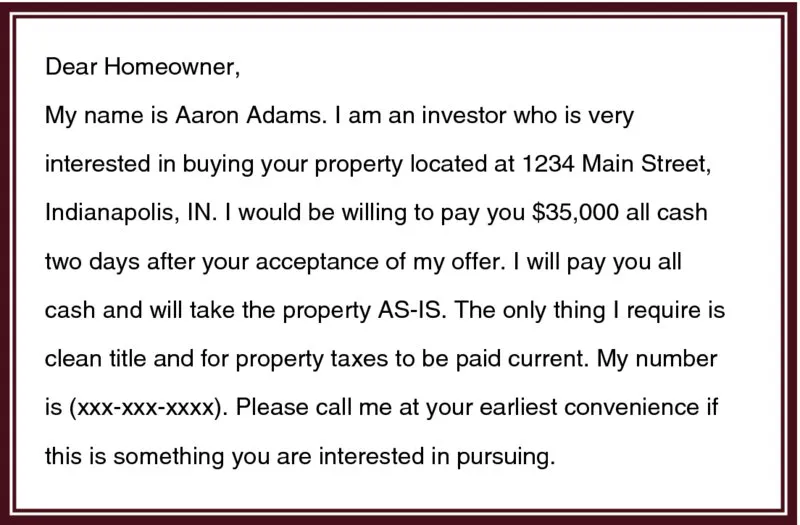
Table of contents

  1. Cover
  2. Praise for Tips, Tricks, Foreclosures, & Flips of a Millionaire Investor
  3. Titlepage
  4. Copyright
  5. Dedication
  6. From Employee to Investor
  7. 1 Using Public Records to Find Home Run Deals
  8. 2 Using Hand-Delivered Letters to Get Deals
  9. 3 Using Yard Signs to Find Motivated Sellers
  10. 4 Finding Where All the Real Investors Hang Out (It’s Not at Real Estate Investing Clubs!)
  11. 5 Using Property Management Companies to Find Deals
  12. 6 Creatively Selling Properties to Other Investors
  13. 7 Finding Motivated Buyers
  14. 8 Selling to Tenants: Working Backward to Find a Buyer
  15. 9 Selling to the Tenants Be the Bank
  16. 10 How to Get Money to Invest When You Are Broke
  17. 11 Buying Properties in the U.S. at Foreclosure Auctions
  18. 12 Flipping Properties to Homeowners
  19. 13 Active vs. Passive, High Value vs. Low Value
  20. 14 Understanding the Four Cs of Real Estate Investing
  21. 15 Four Factors That Make a Great Market
  22. 16 The Five Fs
  23. 17 PPP
  24. 18 Key Points for the International Investor
  25. 19 Five Glass Ceilings
  26. 20 Glass Ceiling #1: Finding and Supplying a Product to Sell
  27. 21 Glass Ceiling #2: Selling a Product
  28. 22 Glass Ceiling #3: Building a Team of Employees and Partners
  29. 23 Glass Ceiling #4: Raising Capital to Fund and Grow Your Business
  30. 24 Glass Ceiling #5: Developing Systems to Accelerate Growth
  31. 25 Finding, Flipping, and Financing Mobile Homes for Quick Cash
  32. Acknowledgments
  33. About the Author
  34. Index
  35. End User License Agreement