At the Paris Peace Conference of 1919, the international community came together to find a way forward in the aftermath of the First World War. The conference is often judged a failure, as the resulting Treaty of Versailles did not bring long-term peace with Germany. By following the activities of British delegate and wartime Minister of Blockade Lord Robert Cecil, this book examines the struggles and successes of the conference, as delegates from around the world grappled with the economic, political and humanitarian catastrophes overwhelming Europe in 1919.
After the Great War describes, for the first time, the significant role of economic warfare at the Peace Conference and in the post-war settlement. Lord Cecil's sometimes difficult partnership with US President Woodrow Wilson forged a new, permanent, international diplomatic organization – the League of Nations – and supplied it with the power to create collective blockades against aggressive states. Leaders of the Allied economic war before the Armistice became, in Paris, leaders of humanitarian-minded international outreach to their former enemies in Germany and Austria. After the Great War promotes a new understanding of these underappreciated internationalists in Paris, many of whom transitioned into leading the League of Nations even before the Peace Conference ended. Often derided as an idealistic fantasy, international peace enforced by economic sanctions appeared a realistic possibility when the Treaty was signed at the end of June 1919.
eBook - ePub
After the Great War
Economic Warfare and the Promise of Peace in Paris 1919
- 312 pages
- English
- ePUB (mobile friendly)
- Available on iOS & Android
eBook - ePub
About this book
Information
1
Bringing Baggage to Paris
After more than four years of punishing combat, the fighting in Europe finally stopped with the armistice on November 11, 1918. During the Great War, Europeans bled more than during any previous war in the continent’s long history, even as they drew in allies and expended resources from around the world. Facing the unprecedented carnage of industrialized warfare, soldiers and civilians from all countries had grown increasingly disgruntled and brutalized by the end of 1918. Many placed the blame for the slaughter on the fundamental failure of politics and existing leaders. Revolution threatened everywhere, and the Russian Tsar, German Kaiser, and Austro-Hungarian Emperor all fell.1 By November 1918, much of the map of Europe had been erased through years of war between empires that no longer existed. With more than a million soldiers dying in the armies of each of the primary European combatants, and the fear of famine and starvation gripping many European peoples, unprecedented difficulties faced the leaders of western civilization. Over the course of the 1800s, the people and rulers of Britain, France, Germany, and the United States had grown accustomed to global dominance. Yet as their representatives met in Paris in early 1919 to craft a peace treaty, even the victors, some of them awash in wartime debts, faced the stark possibility of their own financial and moral bankruptcy.
And yet many who came to Paris perceived significant hope for the future. They wanted to revitalize and reconstruct political and economic institutions across the world. They looked to create new countries that embodied national identities, which were expected to satisfy national desires and move the world toward a permanent peace.2 They felt entrusted with fulfilling the aims of many of the millions of returning soldiers of all nations, whose feelings were well summarized by the novelist Henri Barbusse’s mud-soaked and exhausted French infantrymen after a night of horrific bombardment by German artillery: “There must be no more war after this one.”3
Despite much public talk of war aims and more secret official planning for the post-war world throughout 1917 and 1918, the Paris Peace Conference opened with all of the leading nations seemingly unsure where to start. For the participants, there was a lengthy list of possible issues to cover, and an unprecedentedly broad, indeed global, array of constituencies that demanded servicing. President Woodrow Wilson’s Fourteen Points, unveiled in his speech to the US Congress on January 8, 1918, included only some of his own hopes for the future shape of the relationship between the various nations of the world. However it remained uncertain throughout the Conference, both in the mind of the President and among the Allies he negotiated with in Paris, as to whether the United States Senate would go along with whatever they created. Without Senate ratification, no treaty could become law in the United States. Without the United States, could any peace actually work?
In January 1919, David Lloyd George, the British prime minister, was more securely in charge of his country’s parliamentary government. His electoral mandate had just been secured by the overwhelming victory of his “coupon” candidates in the December 1918 election, although to maintain a majority for his coalition with the Conservatives in the House of Commons, he sliced what turned out to be a lethal stroke through the middle of his own Liberal Party. Lloyd George’s belief in the critical importance of nurturing a peaceful Germany was tempered by the hopes of many British people (at home and across the British Empire) for a punitive, or at least a paying, peace with Germany. Both Lloyd George and Wilson came to Paris recognizing and yet straining against the need to placate the citizens of deeply wounded France, whose aging Premier, Georges Clémenceau, had earned his reputation over the previous four and a half decades as the “Tiger” of French politics. Together the three leaders faced critical and unprecedented international problems: how to support the newly forming “national” states in the tattered remnants of the empires of the Habsburgs, Romanovs, and Ottomans; how to treat the Marxist regime that had gained control of much of war-ravaged Russia; and most obviously, what to do about the defeated enemy, Germany. Finally, these three statesmen, and an unquantifiable but likely overwhelming bulk of the people in their countries, looked to address the most fundamental question posed by the very existence of such wide-ranging peace talks, namely, how to avoid a similar or even more devastating war in the future.
There were no lack of opinions and ideas about all of these issues, and each of the Allied nations and many others who wished to get a hearing sent their best and brightest, and most politically and socially connected, to the Paris Conference. Delegations from places like Poland and Czechoslovakia, countries that had not existed before the war, were led by important men expected to create new governments in new countries.4 Other countries sent small delegations appointed by their Foreign Ministries. For example, Brazil’s Foreign Minister Domicio da Gama picked Epitácio Pessoa, an old Senator with extensive experience of living in France. In Britain, conference attendees were appointed by a variety of ministries and by the Prime Minister. The five official British delegates represented each of the main political factions in Britain, but they were complimented by a wide array of career and temporary bureaucrats, leading politicians, and anyone the Prime Minister or his staff believed capable of creating useful ideas and making wise decisions.
In this final capacity, Lloyd George asked Lord Robert Cecil on December 3 to head the League of Nations section of the British delegation.5 Even though Cecil had resigned from Lloyd George’s government less than a fortnight earlier, he could not turn down the chance to build a new world. The Prime Minister knew that Wilson wanted a League of Nations as part of the peace, and he recognized that no one understood the issue better than Cecil. Over the previous three years, Cecil had become the most important advocate in Britain for a League.
The Eclipse of the Old Diplomacy
Cecil arrived in Paris on January 6, a Monday, in better shape than most of the rest of the British delegation, although probably characteristically slouched and rumpled. The train was only an hour and a half late, which “means we were very lucky,” Cecil wrote to his wife the next day.6 The lack of fanfare for the arrival of men like Cecil to the Conference contrasted sharply with the incredible outpouring of affection from the cheering throngs and the jubilant press that followed Woodrow Wilson everywhere he went since his arrival in Europe on December 13, 1918.7 But Cecil’s arrival at Paris was noted by the British press as a sure signal that the Allied delegations were massing in Paris.8 Cecil was expected to play a big role in the talks.
Crossing the Channel by steamer, followed by transferring to the Paris-bound trains, remained a chaotic process. Cecil had done it many times as a child traveling to his family’s holiday villa, the “Châlet Cecil,” along the coast near Dieppe every August and September.9 He had also made the journey in less pleasant circumstances during the war on a number of occasions. Soon after the war began he went to France to look for his missing nephew, an officer in the British Expeditionary Force lost during the Battle of the Marne. At that time Cecil stayed for nearly five months, creating the “Wounded and Missing Enquiry Department” of the British Red Cross Society in the process.10 Later, as an undersecretary at the Foreign Office (FO) and then as Minister of Blockade, Cecil journeyed to Paris for various interallied meetings related to the economic war against Germany. As these wartime meetings often took place in Paris, Cecil knew the city, at least slightly. Like most British men of his privileged background, he also understood its language, if somewhat clumsily.
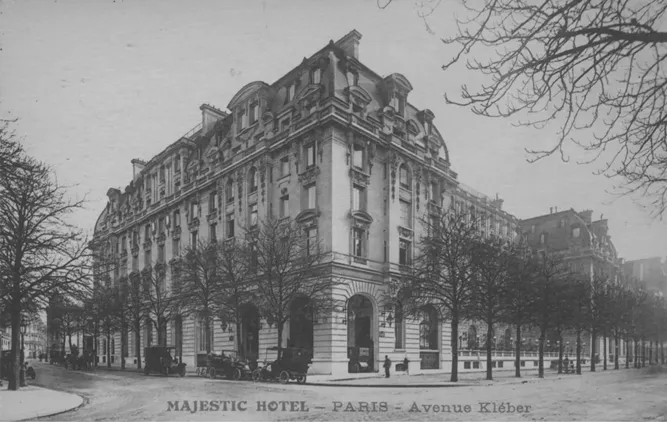
Figure 1.1 Postcard of the Hotel Majestic, 19 Avenue Kléber. Author’s collection.
Few in the British delegation were better prepared for both the surface opulence and the organizational chaos that awaited them in Paris. Cecil had grown up in rarified circumstances at Hatfield, the palace north of London that belonged to his family ever since it was built by his namesake Robert Cecil, the First Earl of Salisbury, in 1611. He recognized that the Hotel Majestic, where most of the British delegation was staying, was a fine establishment, even if it was buzzing and overcrowded with British officials trying to figure out what was going on (see Figure 1.1). Cecil brought with him a small entourage, including his secretary Frank Walters and the young FO hand Philip Baker, who had been a Quaker conscientious objector, ambulance corps founder, and champion British runner at 800 and 1,500 meters in the Olympics. Amid the chaos of personnel trying to figure out what was going on, a number of others detailed from the FO to the Conference quickly clustered around Lord Robert’s rooms.
Cecil, after all, had been one of their chiefs since May 1915, when as a Conservative Member of Parliament he joined the wartime coalition government and entered the FO as its Parliamentary Undersecretary. After his arrival at the FO, Cecil quickly grasped control of Britain’s economic war, eventually becoming the first Minister of Blockade in February 1916. On his first day at the Conference he ran into Eyre Crowe, who as the Assistant Undersecretary and the head of the Contraband Department during the war had been a critical subordinate to Cecil over the previous three years.11 Looking on it years later, it might have seemed that all the advisors from the government, military, and industry, “all the best brains,” were “specially summoned from England,” efficiently shuttling in and out throughout the Conference.12 But like virtually all of the best brains roaming the Majestic in early January, Crowe was unsure of what he was supposed to be doing. Many among the British delegation reveled in their superfluity during the January days before the Conference really kicked into gear, taking advantage of the opportunity to revel in the end of war, to dance and socialize through the drizzly Parisian winter evenings. But like Cecil, Crowe itched to get to work immediately. Cecil took advantage of the nebulousness of the organizational situation and put Crowe to work on writing a paper to present to the Americans rejecting mandatory arbitration of international disputes. “Of course it was quite admirable,” Cecil explained to his wife.13 Since at least November 1916, the two men had spent much time debating the possibilities of international treaties to uphold peace, and on the issue of mandatory arbitration, Cecil had long since come around to Crowe’s view.
Cecil was only one of a number of leading British delegates scooping up assistants as they presented themselves in Paris, but his office came together and got to work faster than most.14 According to James Headlam-Morley, one of the FO advisors who traveled to Paris with Crowe, at the middle of January most people were simply hanging out in the Majestic’s lounge, but everyone was abuzz with the knowledge the League of Nations people were working in “a separate flat in the Majestic where Cecil, Percy, (Lionel) Curtis and Baker are evolving elaborate schemes.”15 Soon Cecil’s office was the only one other than Balfour’s in the first floor of the nearby Hotel Astoria that was fully furnished, many others remaining completely bare (see Figure 1.2).16
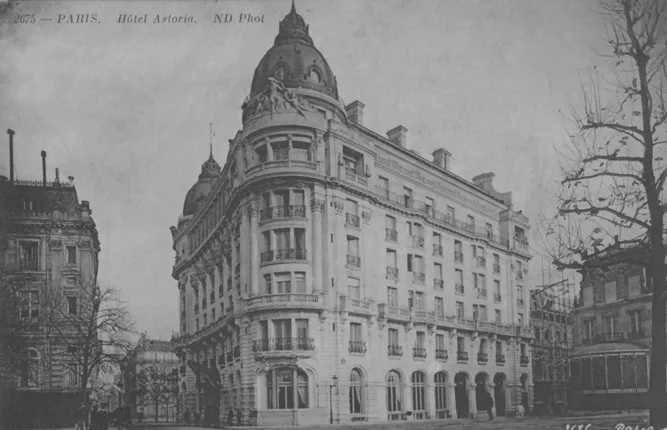
Figure 1.2 Postcard of the Hotel Astoria, 133 Avenue des Champs-Élysées. Author’s collection.
Crowe and Cecil were not the only ones distressed by the disarray within the British delegation in those early days of January.17 Like many others, Cecil immediately blamed Lord Hardinge, the Permanent Undersecretary at the FO, for failing to plan sufficiently for the Conference. Hardinge “appears to have surpassed himself in incompetence.” Staffers and clerks had no idea what to do, and critical papers were slow to arrive from London.18 It took a number of days before he even procured enough wood for the fireplaces of the delegation’s offices in the Astoria.19
Hardinge’s difficulties in January provide a perfect example of the transformative nature of this Peace Conference, where precedents of the old ways of doing diplomacy were immediately overturned. Cecil had long thought little of Hardinge, the former Viceroy of India. During the war, the two men jousted over a variety of issues.20 Cecil had been among those in the FO pushing for a wholesale reassessment of the ministry’s duties, particularly aiming for it to take on permanent new duties pushing British trade. Hardinge followed a traditionalist vision of an unbridgeable division between diplomacy and commerce.21 In the words of Cecil’s biographer Gaynor Johnson, “the enmity between Cecil and Hardinge was intense, petty and sometimes personal.”22 Hardinge had resented the newcomer...
Table of contents
- Cover
- Halftitle Page
- Dedication Page
- Also available from Bloomsbury
- Title Page
- Contents
- Illustrations
- Acknowledgments
- Introduction
- 1 Bringing Baggage to Paris
- 2 Getting Down to Business: January
- 3 Fashioning the Covenant: February 1–14
- 4 Feeding Germany: Mid-February through March
- 5 Impending Catastrophe: April
- 6 Ending the Economic War: May
- 7 The Mentality of Appeasement? June
- 8 After Paris: July to December
- Conclusion
- Notes
- Bibliography
- Index
- Copyright Page
Trusted by 375,005 students
Access to over 1.5 million titles for a fair monthly price.
Study more efficiently using our study tools.
Frequently asked questions
Yes, you can cancel anytime from the Subscription tab in your account settings on the Perlego website. Your subscription will stay active until the end of your current billing period. Learn how to cancel your subscription
No, books cannot be downloaded as external files, such as PDFs, for use outside of Perlego. However, you can download books within the Perlego app for offline reading on mobile or tablet. Learn how to download books offline
Perlego offers two plans: Essential and Complete
- Essential is ideal for learners and professionals who enjoy exploring a wide range of subjects. Access the Essential Library with 800,000+ trusted titles and best-sellers across business, personal growth, and the humanities. Includes unlimited reading time and Standard Read Aloud voice.
- Complete: Perfect for advanced learners and researchers needing full, unrestricted access. Unlock 1.5M+ books across hundreds of subjects, including academic and specialized titles. The Complete Plan also includes advanced features like Premium Read Aloud and Research Assistant.
We are an online textbook subscription service, where you can get access to an entire online library for less than the price of a single book per month. With over 1.5 million books across 990+ topics, we’ve got you covered! Learn about our mission
Look out for the read-aloud symbol on your next book to see if you can listen to it. The read-aloud tool reads text aloud for you, highlighting the text as it is being read. You can pause it, speed it up and slow it down. Learn more about Read Aloud
Yes! You can use the Perlego app on both iOS and Android devices to read anytime, anywhere — even offline. Perfect for commutes or when you’re on the go.
Please note we cannot support devices running on iOS 13 and Android 7 or earlier. Learn more about using the app
Please note we cannot support devices running on iOS 13 and Android 7 or earlier. Learn more about using the app
Yes, you can access After the Great War by Phillip Dehne in PDF and/or ePUB format, as well as other popular books in History & 20th Century History. We have over 1.5 million books available in our catalogue for you to explore.