The Case Against Socialism
eBook - ePub

The Case Against Socialism

  1. 368 pages
  2. English
  3. ePUB (mobile friendly)
  4. Available on iOS & Android
eBook - ePub

The Case Against Socialism

About this book

A recent poll showed 43% of Americans think more socialism would be a good thing. What do these people not know?

Socialism has killed millions, but it's now the ideology du jour on American college campuses and among many leftists. Reintroduced by leaders such as Bernie Sanders and Alexandria Ocasio-Cortez, the ideology manifests itself in starry-eyed calls for free-spending policies like Medicare-for-all and student loan forgiveness.

In The Case Against Socialism, Rand Paul outlines the history of socialism, from Stalin's gulags to the current famine in Venezuela. He tackles common misconceptions about the "utopia" of socialist Europe. As it turns out, Scandinavian countries love capitalism as much as Americans, and have, for decades, been cutting back on the things Bernie loves the most.

Socialism's return is only possible because many Americans have forgotten the true dangers of the twentieth-century's deadliest ideology. Paul reveals the devastating truth: for every college student sporting a Che Guevara T-shirt, there's a Venezuelan child dying of starvation. Desperate refugees flee communist Cuba to escape oppressive censorship, rationed food and squalid hospitals, not "free" healthcare. Socialist dictatorships like the People's Republic of China crush freedom of speech and run massive surveillance states while masquerading as enlightened modern nations. Far from providing economic freedom, socialist governments enslave their citizens. They offer illusory promises of safety and equality while restricting personal liberty, tightening state power, sapping human enterprise and making citizens dependent on the dole.

If socialism takes hold in America, it will imperil the fate of the world's freest nation, unleashing a plague of oppressive government control. The Case Against Socialism is a timely response to that threat and a call to action against the forces menacing American liberty.

Trusted by 375,005 students

Access to over 1.5 million titles for a fair monthly price.

Study more efficiently using our study tools.

Information

Year
2019
Print ISBN
9780062954862
eBook ISBN
9780062954879

Part I
Because Eating Your Pets Is Overrated—Socialism Creates Poverty

Chapter 1
Socialism Destroyed Venezuela’s Once-Vibrant Economy

Socialism’s great. Just ask Oliver Stone.
Oliver Stone has composed not one but two biopics glorifying the socialism of Hugo Chavez. Wonder if it’ll become a trilogy with the finale showing images of Venezuelans eating their pets and burning their currency for warmth?
Doubt it. Remorse and honest regret are not found in any great quantity in Hollywood.
How did Oliver Stone, Michael Moore, and Sean Penn get it so wrong when observing the Venezuelan “miracle”?
Venezuela was so rich with oil that it took some time for socialism to completely destroy its once-vibrant economy. Even to this day Venezuela still has the largest oil reserves in the world, even greater than Saudi Arabia’s. They just can’t get it out of the ground because socialism has destroyed the pricing system, and endless government spending and debt caused hyperinflation that has destroyed its currency.
Some blame Chavez for this disaster. Some blame Maduro. But really, could any one man take a country with more oil reserves than Saudi Arabia and screw it up so badly that hundreds of thousands of citizens would flee the country? Could one man take the richest country in South America and turn it into a hellhole where citizens literally starve in the streets?
Chavez and Maduro alone didn’t lay waste to Venezuela. Rather, it was the terrible constellation of ideas called socialism that reached its pinnacle under Chavez and Maduro that devastated Venezuela.
Some like to point to the Castro-loving Hugo Chavez as the beginning of socialism in Venezuela, but the roots of its government owning the means of production started decades before Chavez. State control over Venezuela’s oil industry dates back to the 1970s.
According to freelance writer JosĂ© Niño, “in the 1950s, . . . Venezuela was at its peak, with a fourth-place ranking in terms of per capita GDP worldwide.”1 In the 1950s, when the Perez Jimenez government ruled, there were no extensive price controls. At that time, Venezuela was neither democratic nor a completely free market economy but rather a military regime with aspects of crony capitalism. For the most part, prices were not controlled and a limited marketplace allowed supply and demand to intersect and work their magic.
As Niño describes it: “A combination of a relatively free economy, an immigration system that attracted and assimilated laborers from Italy, Portugal, and Spain and a system of strong property rights, allowed Venezuela to experience unprecedented levels of economic development from the 1940s up until the 1970s.”2
Daniel Lahoud is a professor at the Universidad CatĂłlica AndrĂ©s Bello, a Catholic university, and at the Universidad Central de Venezuela (UCV). Lahoud describes Venezuela’s long path to socialism:
“Before 1973 our government did not own any companies and Venezuela grew 6.5 percent year-on-year. In contrast, between 1974 and 1998 we experimented with democratic socialism and brought GDP growth to 1.9 percent year-on-year. Since 1999 we are experimenting with scientific socialism and the rhythm is 0.0 percent or negative.”3 (Today, Venezuela’s GDP is contracting at 10 percent.)
In contrast, consider another South American country, Chile, which abandoned its flirtation with socialism back in 1973. At that time, Chilean income was about 36 percent of Venezuela’s. Operating under free markets and capitalism, Chilean incomes have increased by 228 percent, while Venezuelan incomes have declined by 21 percent. Capitalism has left Chileans 51 percent richer than their Venezuelan counterparts, who now starve despite the vast resources of their country.4
Lahoud thinks it is very important that people understand not only the enormity of Venezuela’s disaster but the root cause:
“I have known the reality of the failure of socialism in my own flesh. And as I live in Venezuela, I want to show that this is an absolute failure always and everywhere. Socialism, whatever form it may take, only brings economic destruction and worsening of the conditions of human life.”
Lahoud admits that “Venezuela was never a country of economic freedoms. But when we had less public spending, we grew more. . . .”5
In the late 1950s, military rule was replaced with “democracy.” Romulo Betancourt (1959–64), an ex-communist, assumed the reins of power and made a significant turn away from a market economy. Niño describes Betancourt as adopting a “more gradualist approach of establishing socialism,” as he was “part of a generation of intellectuals and student activists that aimed to fully nationalize Venezuela’s petroleum sector and use petroleum rents to establish a welfare state. . . .” So, socialism in Venezuela was not a new program created by Chavez, but rather Chavez simply took socialism to another level.
Niño tells us that Betancourt’s government tripled income taxes and generated massive fiscal deficits that “would become a fixture in Venezuelan public finance during the pre-ChĂĄvez era.”6
Betancourt was succeeded by Carlos Andres Perez, who nationalized the entire petroleum sector in 1975.
As Niño puts it:
The nationalization of Venezuela’s oil industry fundamentally altered the nature of the Venezuelan state. Venezuela morphed into a petrostate, in which the concept of the consent of the governed was effectively turned on its head.
Instead of Venezuelans paying taxes to the government in exchange for the protection of property and similar freedoms, the Venezuelan state would play a patrimonial role by bribing its citizens with all sorts of handouts to maintain its dominion over them.7
If socialism means that the state owns the means of production, then 1975 was a significant milestone in Venezuela’s descent into socialism. With enormous oil reserves and a steady flow of cash, it would take a decade or two for socialist policies in the form of price controls and currency controls to completely ravage the economy.
Chavez didn’t just arrive unannounced on the scene. He first came to prominence in a failed coup in 1992 against the Andres Perez regime. Chavez was imprisoned for two years. Upon his release, he decided this time to take power through the political process. He founded the Fifth Republic Movement and was ultimately elected president of Venezuela in 1998.
Leftists in America heralded Chavez’s election. Bernie Sanders, Noam Chomsky, and others pointed with glee to data showing a decline in poverty. When socialism finally strangled the economy and Chavez resorted to violent means to quell protests, many on the left went radio silent on Venezuela.
Some leftists, however, stuck with Chavez and put an interesting spin on their defense of state violence against the people. George Ciccariello-Maher is a writer and activist who supported Venezuela’s Bolivarian Revolution led by Chavez. He taught political science at Drexel University until being consumed by a Twitter storm over his tweet: “All I want for Christmas is White Genocide.” When prompted to clarify his comments, he tweeted: “when the whites were massacred during the Haitian revolution, that was a good thing.”8
Commenting on Chavez’s crackdown on protesters, Ciccariello-Maher wrote: “If we are against unnecessary brutality, there is nevertheless a radically democ...
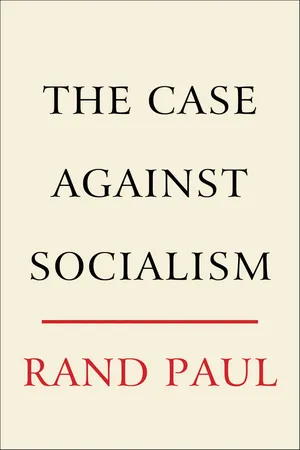
Table of contents

  1. Dedication
  2. Contents
  3. Introduction
  4. Part I: Because Eating Your Pets Is Overrated—Socialism Creates Poverty
  5. Chapter 1: Socialism Destroyed Venezuela’s Once-Vibrant Economy
  6. Chapter 2: Socialism Rewards Corruption
  7. Chapter 3: Interfering with Free Markets Causes Shortages
  8. Chapter 4: Capitalism Is the More Moral System
  9. Chapter 5: Capitalism Benefits the Middle Class
  10. Chapter 6: Income Inequality Does Not Ruin the Economy or Corrupt Government
  11. Chapter 7: Under Capitalism, the 1 Percent Is Always Changing
  12. Chapter 8: The Poor Are Better Off Under Capitalism
  13. Part II: Capitalism Makes Scandinavia Great
  14. Chapter 9: Bernie’s Socialism Also Includes Praise for Dictators
  15. Chapter 10: Today’s American Socialists Don’t Know What Socialism Means
  16. Chapter 11: Bernie Sanders Is Too Liberal to Get Elected in Denmark
  17. Chapter 12: No, Bernie, Scandinavia Is Not Socialist
  18. Chapter 13: Sweden’s Riches Actually Came from Capitalism
  19. Chapter 14: The Nordic Model Is Welfarism, Not Socialism
  20. Chapter 15: Sweden Is Shrinking Taxes and Welfare
  21. Chapter 16: Welfarism Requires High Middle-Class Taxes
  22. Chapter 17: American Scandinavians Have It Better Here Than in Scandinavia
  23. Chapter 18: Swedish College Is Free, but It’s Not Cheap or Universal
  24. Part III: A Boot Stamping on the Human Face Forever—Socialism and Authoritarianism
  25. Chapter 19: Socialism Becomes Authoritarianism
  26. Chapter 20: Hitler Was a Socialist
  27. Chapter 21: The Nazis Hated Capitalism
  28. Chapter 22: The Nazis Didn’t Believe in Private Property
  29. Chapter 23: Socialism Encourages Eugenics
  30. Chapter 24: Your Degree of Enthusiasm for Socialism May Decide Whether You Live or Die
  31. Part IV: Socialism Doesn’t Create Equality
  32. Chapter 25: Socialism Promises Equality and Leads to Tyranny
  33. Chapter 26: All Aspects of Culture Eventually Become Targets for the Planners
  34. Chapter 27: If No One Has to Work, No One Will
  35. Chapter 28: The Cure for Failed Socialism Is Always More Socialism
  36. Chapter 29: Poetry Can Be Dangerous Under Socialism
  37. Chapter 30: It’s Not Socialism Without Purges
  38. Part V: Where Are These Angels? The Philosophy of Socialism
  39. Chapter 31: Socialism Expects Selfless Rulers and Citizens
  40. Chapter 32: Progress Comes from Rebels and Dreamers
  41. Chapter 33: Freedom Is Not the Inevitable Outcome of History and Must Be Protected
  42. Part VI: Never Let a Crisis Go to Waste: Socialism and Alarmism
  43. Chapter 34: Socialism Leads to Cronyism
  44. Chapter 35: If Socialists Can’t Find a Crisis, They Will Create One
  45. Chapter 36: Socialism and Climate Change Alarmism Go Together
  46. Chapter 37: Socialist Green New Deal Allows for No Dissent
  47. Chapter 38: Fake News and Propaganda on the Rise in America
  48. Chapter 39: Welcome to the Panopticon: FaceCrime, PreCrime, and the Surveillance State
  49. Afterword: Finding Common Ground
  50. Acknowledgments
  51. Notes
  52. Index
  53. About the Authors
  54. Also by Rand Paul
  55. Copyright
  56. About the Publisher

Frequently asked questions

Yes, you can cancel anytime from the Subscription tab in your account settings on the Perlego website. Your subscription will stay active until the end of your current billing period. Learn how to cancel your subscription
No, books cannot be downloaded as external files, such as PDFs, for use outside of Perlego. However, you can download books within the Perlego app for offline reading on mobile or tablet. Learn how to download books offline
Perlego offers two plans: Essential and Complete
  • Essential is ideal for learners and professionals who enjoy exploring a wide range of subjects. Access the Essential Library with 800,000+ trusted titles and best-sellers across business, personal growth, and the humanities. Includes unlimited reading time and Standard Read Aloud voice.
  • Complete: Perfect for advanced learners and researchers needing full, unrestricted access. Unlock 1.5M+ books across hundreds of subjects, including academic and specialized titles. The Complete Plan also includes advanced features like Premium Read Aloud and Research Assistant.
Both plans are available with monthly, semester, or annual billing cycles.
We are an online textbook subscription service, where you can get access to an entire online library for less than the price of a single book per month. With over 1.5 million books across 990+ topics, we’ve got you covered! Learn about our mission
Look out for the read-aloud symbol on your next book to see if you can listen to it. The read-aloud tool reads text aloud for you, highlighting the text as it is being read. You can pause it, speed it up and slow it down. Learn more about Read Aloud
Yes! You can use the Perlego app on both iOS and Android devices to read anytime, anywhere — even offline. Perfect for commutes or when you’re on the go.
Please note we cannot support devices running on iOS 13 and Android 7 or earlier. Learn more about using the app
Yes, you can access The Case Against Socialism by Rand Paul in PDF and/or ePUB format, as well as other popular books in Politics & International Relations & Macroeconomics. We have over 1.5 million books available in our catalogue for you to explore.