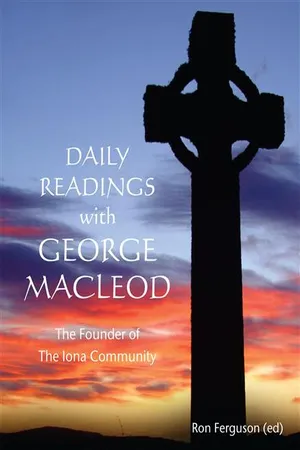
- 100 pages
- English
- ePUB (mobile friendly)
- Available on iOS & Android
eBook - ePub
Information
Topic
Theology & ReligionSubtopic
Christian Rituals & Practice
Text copyright © 1991 George MacLeod
Compilation © 1991 Ronald Ferguson
Compilation © 1991 Ronald Ferguson
First published 1991 by Fount Paperbacks
This new edition published 2001 by
Wild Goose Publications, 4th floor, Savoy House, 140 Sauchiehall St., Glasgow G2 3DH
the publishing division of the Iona Community. Scottish Charity No. SCO03794.
Limited Company Reg. No. SCO96243.
website: www.ionabooks.com
This new edition published 2001 by
Wild Goose Publications, 4th floor, Savoy House, 140 Sauchiehall St., Glasgow G2 3DH
the publishing division of the Iona Community. Scottish Charity No. SCO03794.
Limited Company Reg. No. SCO96243.
website: www.ionabooks.com
ePub:ISBN 978-1-84952-055-3
Mobipocket:ISBN 978-1-84952-056-0
PDF:ISBN 978-1-84952-057-7
Mobipocket:ISBN 978-1-84952-056-0
PDF:ISBN 978-1-84952-057-7
Cover design © 2001 Wild Goose Publications
Celtic cross photograph © Larry Rasmussen
Celtic cross photograph © Larry Rasmussen
All rights reserved. Apart from the circumstances described below relating to non-commercial use, no part of this publication may be reproduced in any form or by any means, including photocopying or any information storage or retrieval system, without written permission from the publisher.
Non-commercial use: The material in this book may be used non-commercially for worship and groupwork without written permission from the publisher. Small sections of the book may be photocopied for such use, in which case please make full acknowledgement of the source, i.e. cite title, author, publisher, address and date of publication.
Where a large number of copies are made a donation may be made to the Iona Community via Wild Goose Publications, but this is not obligatory.
Non-commercial use: The material in this book may be used non-commercially for worship and groupwork without written permission from the publisher. Small sections of the book may be photocopied for such use, in which case please make full acknowledgement of the source, i.e. cite title, author, publisher, address and date of publication.
Where a large number of copies are made a donation may be made to the Iona Community via Wild Goose Publications, but this is not obligatory.
Ronald Ferguson has asserted his right in accordance with the Copyright, Designs and Patents Act, 1988, to be identified as the editor of this compilation.
A catalogue record for this book is available from the British Library.
Contents
Introduction
Prescript
1. The Way to God
2. The Mercy of God
3. The Spiritual and the Material
4. Principalities and Powers
5. Holy Obedience
6. The Redeemed Community
Postscript
Index
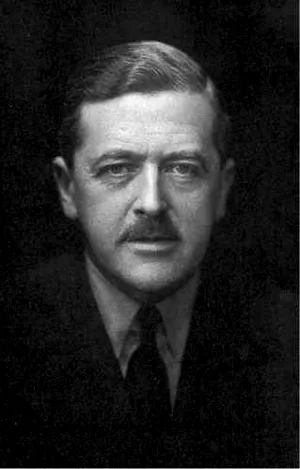
Introduction
The Revd Dr George Fielden MacLeod (Very Revd Lord MacLeod of Fuinary) was one of the great figures in the tempestuous history of the Church of Scotland.
He was born in 1895 into Scotland’s most notable ecclesiastical dynasty. The MacLeods of Fuinary in Morvern have given more than 550 years of ordained service to the Church. His great-grandfather was one of the great Gaelic scholars of his generation, and his grandfather, the Revd Dr Norman MacLeod of the Barony Church in Glasgow, was a confidant of Queen Victoria, friend of David Livingstone and Florence Nightingale, and one of the best known Scots of his day.
George’s father was a Unionist MP, and his mother the daughter of a wealthy Lancashire cotton merchant. Sir John MacLeod, MP, sent his son to Winchester to learn to be an ‘English’ gentleman. The time at Winchester, where he was a contemporary of Oswald Mosley – ‘a dull chap’ was his verdict on the man who was to found the British Union of Fascists – reinforced his sense of privilege. He was confirmed as an Anglican. In 1913 he went to Oxford to study law.
With the outbreak of the First World War in 1914, George enlisted as an officer in the Argyll and Sutherland Highlanders. He saw service in Salonika and at the Western Front, winning the Military Cross and the Croix de Guerre for bravery. His war record was particularly pleasing to his father, who had been the head recruiter of young men in the West of Scotland.
The war had a profound effect on the young officer who had witnessed the slaughter of so many of his friends and companions. He had a conversion experience in a railway carriage on his way back to the Front. He later recounted that he had been gambling a great deal and was going through half a bottle of whisky and fifty cigarettes a day. Realising that he was ‘going to hell in a hurry’, he had knelt down in the railway compartment and yielded his life to Christ.
After the war, he decided to train for the ministry of the Church of Scotland. Following theological study in Edinburgh and America, and a short spell as a missionary in Canada, he became assistant minister of the prestigious St Giles’ Cathedral in Edinburgh’s Royal Mile. The handsome, aristocratic young Presbyterian-turned-Anglican-turned-Presbyterian was an immediate hit, and a bright future was predicted by the experienced spotters of future Moderators of the Kirk.
George left St Giles’ to become first full-time Scottish padre of Toc H, the post-war Christian fellowship established by Tubby Clayton. MacLeod had met Clayton in New York, and had been greatly impressed by his drive and vision. Impatient to see new forms of church life which would provide dynamic post-war spiritual leadership, George was disappointed by Toc H’s refusal to celebrate intercommunion amongst its members. He disagreed profoundly with its view that they should respect the disciplines of each church – George argued vigorously that the old disciplines were precisely what was hindering the spiritual renewal of the country. Finding himself heavily outvoted, he left the fulltime service of the movement. Toc H had been formative for his thinking as he grappled with the implications of the post-war situation.
In 1926 he became associate minister of St Cuthbert’s Church in the West End of Edinburgh. The charismatic and dashing young minister soon had people queuing up to hear him preach. The new darling of the ecclesiastical establishment established a reputation as an orator – a reputation enhanced by his frequent radio broadcasts to Britain and the Empire.
While in Edinburgh, he was disturbed by his increasing awareness of ‘two nations’, the rich and the poor. The St Cuthbert’s Church mission in a poor area of the city brought him into daily contact with grinding poverty and hardship, and he became disillusioned with the post-war rhetoric about a land ‘fit for heroes’. In 1930 he shocked many of his admirers – who expected him to graduate to the Moderator’s chair by way of another prestigious Edinburgh charge – by becoming minister of Govan Parish Church in Glasgow.
Govan, well known as a shipbuilding area, suffered from severe unemployment in the Hungry Thirties. People crowded into the slums, and George MacLeod was touched by their plight. The poverty and depression caused him to review the privileged assumptions with which he had grown up, and also to question the basis of the First World War. The son of the Tory MP and war recruiter moved inexorably towards socialism and pacifism in the Depression years. He also moved from the straightforward high Presbyterianism of the MacLeod dynasty towards a more mystical and cosmic and even political theology.
The major turning point came in April 1933. Overwork, and the realisation that the old foundations of his life were crumbling, had led to a breakdown of health in Govan. He went out to Jerusalem to recover, and while there he took part in the Russian Orthodox early morning Easter service. He had intended to go for half an hour, and stayed for three and a half hours.
‘Only eight priests took part,’ he noted breathlessly in his journal, ‘and a hidden choir, but they were all quite perfect. They have the supreme gift of drama, and all had perfect voices. It was really the same service as at the Sepulchre, but done by perfect artists. When the Patriarch was heard arriving, the gates of the sanctuary were flung open and two young priests, with flowing hair and beards, rushed out to meet him – the choir sang Responses – Actions – they all entered the sanctuary – they all rushed out – Christ is Risen – candles! Quick procession – every movement was sprightly. Out of the church we all ran behind them – lighted candle in our hands – round the church three times singing, in the crisp star-laden night. Here was the answer to modern criticism! Of course Christ had risen!
‘Levitation? … Physical? Subjective? … Objective? These were all meaningless words. Christ has risen was the sheer obvious fact! Back into the church, the two young people sang to the Patriarch. He replied in song and beautiful movements of hand and head – the two priests took the incense and swept through the congregation (not a large one) censing us and telling each one that Christ had risen – back to the centre – whenever a priest finished his part, out rang the heavenly choir, while some new “formation” was taken up by the priests. Not one had a book, not one took a “cue”, and yet for three and a half hours it went on without a pause in the centre of the church.’
The service changed his view of worship.
‘For sheer worship I have never seen anything like it – nor shall see again on earth. We can never touch it in the West; not even Rome could do it. It was the devotional presentation of the New Life, beyond ‘Acting’ and beyond ‘Lesson’ – simply Worship. It was the earnest that Bolshevism must pass. There was more Reality in the Patriarch’s little finger than in Stalin’s whole council assembled.’
Walking back to his hotel in the early morning, George told his companions that he had discovered worship for the first time. He said he had found the worship utterly evangelical, producing in people’s eyes ‘such a light as Moody and Sankey might produce after saying “Jesus saves” sixty times.’
It is worth quoting at length from that Jerusalem Easter journal, because it provides a key to the understanding of George MacLeod’s deep sense of worship. Back in grimy Govan, rejuvenated, he searched around for theological resources to help him understand what was happening to him. As a romantic conservative radical, he found Celtic theology, as exemplified in Saint Columba of Iona, to be very illuminating. In a speech to a symposium on youth, he argued that some answers for the plight of Presbyterian Scotland could be found ‘back where Scottish worship first began, in the Celtic Church of St Columba’.
Pleading for symbol, beauty and ritual in public worship, he argued that he was being true to the intention of the founding fathers of the Reformation.
‘If we would be patient, we can discover here the link that saves the chain,’ he said. ‘For it was a return to the simple primitive Catholic Church which was the desire and purpose of the first Reformers. How many who today evoke the name of John Knox really know the things for which he stood? – frequent communion; read prayers from a liturgy; daily service in the churches; the reciting of the Apostles’ Creed in worship; the response of the people to prayers; the offering of praise from the Communion Table; the pronouncing of the Benediction from the Communion Table.
‘How many of these acts today – when they are enacted in a Scottish church – are called “mere aping of another church”? And yet they are in reality the things which John Knox practised in his endeavour to recover for Scotland her ancient primitive faith. Perhaps the first Reformers are to be vindicated at last, in coming days, by a return to what they sought.’
These were bold words from a Scottish Presbyterian minister in 1934. He ...
Table of contents
- Cover
- Begin reading
Trusted by 375,005 students
Access to over 1.5 million titles for a fair monthly price.
Study more efficiently using our study tools.
Frequently asked questions
Yes, you can cancel anytime from the Subscription tab in your account settings on the Perlego website. Your subscription will stay active until the end of your current billing period. Learn how to cancel your subscription
No, books cannot be downloaded as external files, such as PDFs, for use outside of Perlego. However, you can download books within the Perlego app for offline reading on mobile or tablet. Learn how to download books offline
Perlego offers two plans: Essential and Complete
- Essential is ideal for learners and professionals who enjoy exploring a wide range of subjects. Access the Essential Library with 800,000+ trusted titles and best-sellers across business, personal growth, and the humanities. Includes unlimited reading time and Standard Read Aloud voice.
- Complete: Perfect for advanced learners and researchers needing full, unrestricted access. Unlock 1.5M+ books across hundreds of subjects, including academic and specialized titles. The Complete Plan also includes advanced features like Premium Read Aloud and Research Assistant.
We are an online textbook subscription service, where you can get access to an entire online library for less than the price of a single book per month. With over 1.5 million books across 990+ topics, we’ve got you covered! Learn about our mission
Look out for the read-aloud symbol on your next book to see if you can listen to it. The read-aloud tool reads text aloud for you, highlighting the text as it is being read. You can pause it, speed it up and slow it down. Learn more about Read Aloud
Yes! You can use the Perlego app on both iOS and Android devices to read anytime, anywhere — even offline. Perfect for commutes or when you’re on the go.
Please note we cannot support devices running on iOS 13 and Android 7 or earlier. Learn more about using the app
Please note we cannot support devices running on iOS 13 and Android 7 or earlier. Learn more about using the app
Yes, you can access Daily Readings with George MacLeod by in PDF and/or ePUB format, as well as other popular books in Theology & Religion & Christian Rituals & Practice. We have over 1.5 million books available in our catalogue for you to explore.