NEW EDITION, REVISED AND UPDATEDThe Power of Appreciative Inquiry describes the internationally embraced approach to organizational change that dramatically improves performance by engaging people to study, discuss, and build upon what's working – strengths – rather than trying to fix what's not. Diana Whitney and Amanda Trosten-Bloom, pioneers in the development and practice of Appreciative Inquiry (AI), provide a menu of eight results-oriented applications, along with case examples from a wide range of organizations to illustrate Appreciative Inquiry in action. A how-to book, this is the most authoritative and accessible guide to the newest ideas and practices in the field of Appreciative Inquiry since its inception in 1985.The second edition includes new examples, tools, and tips for using AI to create an enduring capacity for positive change, along with a totally new chapter on award-winning community applications of Appreciative Inquiry.
eBook - ePub
The Power of Appreciative Inquiry
A Practical Guide to Positive Change
- 304 pages
- English
- ePUB (mobile friendly)
- Available on iOS & Android
eBook - ePub
The Power of Appreciative Inquiry
A Practical Guide to Positive Change
About this book
Information
CHAPTER 1
What Is Appreciative Inquiry?
We are no longer surprised when clients ask, “Appreciative what? What do you mean by Appreciative Inquiry?” After all, the words are a somewhat unusual, if not paradoxical, addition to a business vocabulary that revolves around strategy, structure, problems, and profits. After learning more about the power and potential of Appreciative Inquiry, however, our clients declare, “We want to do Appreciative Inquiry, but we will definitely have to call it something different for it to catch on in our organization.”
Appreciative Inquiry is the study of what gives life to human systems when they function at their best. This approach to personal change and organization change is based on the assumption that questions and dialogue about strengths, successes, values, hopes, and dreams are themselves transformational. In short, Appreciative Inquiry suggests that human organizing and change at its best is a relational process of inquiry, grounded in affirmation and appreciation. The following beliefs about human nature and human organizing are the foundation of Appreciative Inquiry:

Words create worlds, and the words Appreciative Inquiry are no exception. Clients have named their Appreciative Inquiry initiatives The Zealots Program, The Power of Two, Value-Inspired People, and in the case of Hunter Douglas, Focus 2000. In each case the company brand has endured—along with the words Appreciative Inquiry. As people understand more about the principles of Appreciative Inquiry and begin to experiment with its practices, they realize how radically positive and subtly different it is from business as usual. To fully describe and understand Appreciative Inquiry, consider the meaning of each of the two words.
Appreciation: Recognition and Value Added
Appreciation has to do with recognition, valuing, and gratitude. The word appreciate is a verb that carries a double meaning, referring to both the act of recognition and the act of enhancing value. Consider these definitions:
1. To recognize the best in people and the world around us.
2. To perceive those things which give life, health, vitality, and excellence to living human systems.
3. To affirm past and present strengths, successes, assets, and potentials.
4. To increase in value, as in “the investment has appreciated in value.”
Indeed, organizations, businesses, and communities can benefit from greater appreciation. Around the globe, people hunger for recognition. They want to work from their strengths on tasks they find valuable. Executives and managers long to lead from their values. They seek ways to integrate their greatest passions into their daily work. And organizations strive regularly to enhance their value to shareholders, employees, and the world. But Appreciative Inquiry is about more than appreciation, recognition, and value enhancement. It is also about inquiry.
Inquiry: Exploration and Discovery
Inquiry refers to the acts of exploration and discovery. The spirit of inquiry is the spirit of learning. It implies a quest for new possibilities, being in a state of unknowing, wonder, and willingness to learn. It implies an openness to change. The verb inquire means:
1. To ask questions.
2. To study.
3. To search, explore, delve into, or investigate.
Inquiry is a learning process for organizations as well as for individuals. Seldom do we search, explore, or study what we already know with certainty. We ask questions about areas unfamiliar to us. The act of inquiry requires sincere curiosity and openness to new possibilities, new directions, and new understanding. We cannot “have all the answers,” “know what is right,” or “be certain” when we engage in inquiry.
To continue to succeed, organizations need more inquiry. They need less command and control by a few and more exploration of possibilities among many. They need less certainty in their usual plans and strategies and a greater capacity to sense and adapt quickly as their world changes. They need leaders who can acknowledge what they don’t know and who will enthusiastically ask provocative and inspiring questions.
For Appreciative Inquiry to be effective, however, not just any questions will do. Questions must be affirmative, focused on topics valuable to the people involved, and directed at topics, concerns, and issues central to the success of the organization. When appreciation sets the direction for inquiry, the power of Appreciative Inquiry is released.
The Catalytic Effect of Appreciative Inquiry
Like the elements hydrogen and oxygen—which combine to make water, the most nurturing substance on earth—appreciation and inquiry combine to produce a vital, powerful, and catalytic effect on leadership and organization change. By tapping into accounts of organizations that are functioning at their best, Appreciative Inquiry unleashes information and commitment that together create energy for positive change.
Hierarchies all too often exclude those people most significantly impacted. Appreciative Inquiry turns those hierarchies into knowledge-rich, relationally inclusive, self-organizing enterprises. This change is powerfully illustrated by British Airways. After September 11, 2002, most airlines needed to cut costs and reduce headcount as demand for air travel declined drastically. British Airways Customer Service in North America was no exception. However, their prior experience using Appreciative Inquiry led them to involve people in determining how best to reduce the workforce. People explored one another’s career hopes and dreams, suggested options, and volunteered for sabbaticals, job sharing, and part-time positions. Appreciative Inquiry created a context for people to be included and heard throughout the difficult and challenging time.
Appreciative Inquiry turns command-and-control cultures into communities of discovery and cooperation. For example, a year into our work with one long-term client, we asked an employee to tell what had happened. This is what he said:
Before Appreciative Inquiry if the R&D group wanted to run a prototype on my machine, they would go to my supervisor, who would review the schedule and tell me when to do it. Now, they come to me directly and together we work out the best time to do it.
This organization moved beyond authoritarian styles of management, liberating people to create together what they knew was best for their customers, the business, and themselves.
When we began working with GTE, an organization that had earlier laid off thousands of employees, morale was at an all-time low. Conversations at all levels in the organization were about “ain’t it awful,” “what’s wrong around here,” and “why it won’t get any better.” We created a process that invited employees to use Appreciative Inquiry to make the organization a better place to work—and they did. Thousands of employees were trained in the Foundations of Appreciative Inquiry, Front-Line Leadership Using Appreciative Inquiry, and Appreciative Union-Management Relations. After their training, front-line employees at GTE self-organized a wide range of initiatives, including changes in customer satisfaction surveys, studies of call center best practices, and appreciative processes for employee recruitment, orientation, and retention. After the many organic changes that took place, GTE won the American Society for Training and Development Excellence in Practice Award (Managing Change) in 1997.
Finally, Appreciative Inquiry renews leaders as well as organizations and communities. Rick Pellett, president and general manager of Hunter Douglas Window Fashions Division, describes profound personal shifts in perception as a result of leading the Hunter Douglas initiative:
The work I did here began to change me, almost right away. It got me asking questions—not just about the company but about my life.
The questions we were asking and the dreams we were dreaming opened doors for me. They invited me to consider where I was heading, and whether it was the future I really wanted to live. They compelled me to take action to correct things that I’d simply chosen to live with for years and years and years.
I recognize that this experience wouldn’t create the same kind of “awakening” in everybody that it touched. But for me, it was revolutionary. And for many of the other hard-core, quick-deciding, bottom-line leaders that rise to the top in corporate America, it just might be life changing, for the better.
The 4-D Cycle
How does Appreciative Inquiry work? The process used to generate the power of Appreciative Inquiry is the 4-D Cycle—Discovery, Dream, Design, and Destiny (Figure 1). It is based on the notion that human systems, individuals, teams, organizations, and communities grow and change in the direction of what they study. Appreciative Inquiry works by focusing the attention of an organization on its most positive potential—its positive core—and unleashing the energy of the positive core for transformation and sustainable success. This is the essential nature of the organization at its best—people’s collective wisdom about the organization’s tangible and intangible strengths, capabilities, resources, and assets.
The 4-D Cycle can be used to guide a conversation, a large group meeting, or a whole-system change effort. It can serve as a framework for personal development or coaching, partnership or alliance building, and large-scale community or organization development. Whatever the purpose, the Appreciative Inquiry 4-D Cycle serves as the foundation on which change is built.
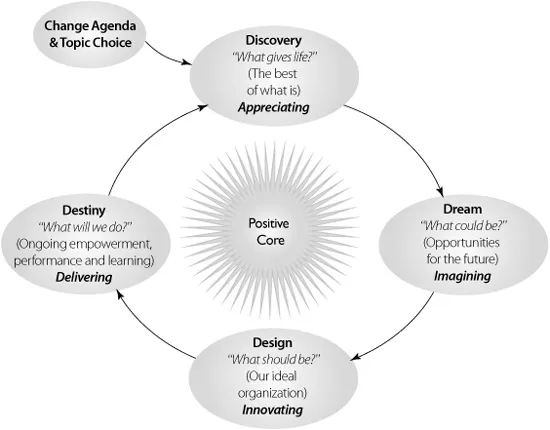
Figure 1. The Appreciative Inquiry 4-D Cycle
Affirmative Topic Choice
The 4-D Cycle begins with the thoughtful identification of what is to be studied—Affirmative Topics. Because human systems move in the direction of what they study, the choice of what to study—what to focus organizational attention on—is fateful. The topics that are selected become the organization’s agenda for learning and innovation.
Affirmative Topics are subjects of strategic importance to the organization. They may be aspects of the organization’s positive core that if expanded would further the organization’s success. They may be problems that if stated in the affirmative and studied would improve organizational performance. Or they may be competitive success factors the organization needs to learn about in order to grow and change.
Once selected, these affirmative topics guide the 4-D Cycle of Discovery, Dream, Design, and Destiny. A thorough explanation of how to choose affirmative topics, criteria for good topics, and many sample topics can be found in Chapter 6, “Affirmative Topic Choice.”
Discovery
Discovery is an extensive, cooperative search to understand the “best of what is and what has been.” It is typically conducted via one-on-one interviews, though it may also include focus groups and large-group meetings. In any form, Discovery involves purposefully affirmative conversations among many or all members of an organization, including external stakeholders, “best-in-class” benchmark organizations, and members of the organization’s local community. A detailed description and comprehensive guide for the Discovery
phase is provided in Chapter 7, “Discovery: Appreciative Interviews and More.”
The Discovery process results in:
Dream
Dream is an energizing exploration of “what might be.” This phase is a time for people to collectively explore hopes and dreams for their work, their working relationships, their organization, and the world. It is a time to envision possibilities that are big, bold, and beyond the boundaries of what has been in the past. The Dream phase is both practical and generative. It amplifies the positive core and challenges the status quo by helping people envision more valuable and vital futures, better bottom-line results, and contributions to a better world. Typically conducted in large-group forums, Dream activities result in alignment around creative images of the organization’s most positive potentials and strategic opportunities, innovative strategic visions, and an elevated sense of purpose. A detailed description and comprehensive guide for the Dream phase is provided in Chapter 8, “Dream: Visions and Voices of the Future.”
Design
Design is a set of Provocative Propositions, which are statements describing the ideal organization, or “what should be.” Design activities are conducted in large-group forums or within a small team. Participants draw on discoveries and dreams to select high-impact design elements, then craft a set of provocative statements that list the organizat...
Table of contents
- Cover Page
- Title Page
- Copyright Page
- Contents
- Tables, Figures, Exhibits
- Foreword
- Preface
- Acknowledgments
- Chapter 1 What Is Appreciative Inquiry?
- Chapter 2 A Menu of Approaches to Appreciative Inquiry
- Chapter 3 Eight Principles of Appreciative Inquiry
- Chapter 4 Appreciative Inquiry in Action:
- Chapter 5 Getting Started with Appreciative Inquir
- Chapter 6 Affirmative Topic Choice
- Chapter 7 Discovery: Appreciative Interviews and More1
- Chapter 8 Dream: Visions and Voices of the Future
- Chapter 9 Design: Giving Form to Values and Ideals
- Chapter 10 Destiny: Inspired Action and Improvisation
- Chapter 11 Appreciative Inquiry: A Process for
- Chapter 12 Why Appreciative Inquiry Works
- Notes
- Index
- About the Authors
Trusted by 375,005 students
Access to over 1.5 million titles for a fair monthly price.
Study more efficiently using our study tools.
Frequently asked questions
Yes, you can cancel anytime from the Subscription tab in your account settings on the Perlego website. Your subscription will stay active until the end of your current billing period. Learn how to cancel your subscription
No, books cannot be downloaded as external files, such as PDFs, for use outside of Perlego. However, you can download books within the Perlego app for offline reading on mobile or tablet. Learn how to download books offline
We are an online textbook subscription service, where you can get access to an entire online library for less than the price of a single book per month. With over 1.5 million books across 990+ topics, we’ve got you covered! Learn about our mission
Look out for the read-aloud symbol on your next book to see if you can listen to it. The read-aloud tool reads text aloud for you, highlighting the text as it is being read. You can pause it, speed it up and slow it down. Learn more about Read Aloud
Yes! You can use the Perlego app on both iOS and Android devices to read anytime, anywhere — even offline. Perfect for commutes or when you’re on the go.
Please note we cannot support devices running on iOS 13 and Android 7 or earlier. Learn more about using the app
Please note we cannot support devices running on iOS 13 and Android 7 or earlier. Learn more about using the app
Yes, you can access The Power of Appreciative Inquiry by Diana D. Whitney,Amanda Trosten-Bloom in PDF and/or ePUB format, as well as other popular books in Business & Decision Making. We have over 1.5 million books available in our catalogue for you to explore.