Pyrrhic Progress analyses over half a century of antibiotic use, regulation, and resistance in US and British food production. Mass-introduced after 1945, antibiotics helped revolutionize post-war agriculture. Food producers used antibiotics to prevent and treat disease, protect plants, preserve food, and promote animals' growth. Many soon became dependent on routine antibiotic use to sustain and increase production. The resulting growth of antibiotic infrastructures came at a price. Critics blamed antibiotics for leaving dangerous residues in food, enabling bad animal welfare, and selecting for antimicrobial resistance (AMR) in bacteria, which could no longer be treated with antibiotics. Pyrrhic Progress reconstructs the complicated negotiations that accompanied this process of risk prioritization between consumers, farmers, and regulators on both sides of the Atlantic. Unsurprisingly, solutions differed: while Europeans implemented precautionary antibiotic restrictions to curb AMR, consumer concerns and cost-benefit assessments made US regulators focus on curbing drug residues in food. The result was a growing divergence of antibiotic stewardship and a rise of AMR. Kirchhelle's comprehensive analysis of evolving non-human antibiotic use and the historical complexities of antibiotic stewardship provides important insights for current debates on the global burden of AMR.
eBook - ePub
Pyrrhic Progress
The History of Antibiotics in Anglo-American Food Production
- English
- ePUB (mobile friendly)
- Available on iOS & Android
eBook - ePub
About this book
Information
Publisher
Rutgers University PressYear
2020Print ISBN
9780813591476
9780813591483
eBook ISBN
9780813591490
1
The Sound of Coughing Pigs
In winter 2015, a door unexpectedly opened on a group of pigs. Where a moment before the room had been filled with the sound of grunts, squeals, and squeaks, the author and his wife were greeted by an expectant silence as sixty healthy-looking pigs turned toward the door, sat down on their behinds—and coughed. The surprisingly human sound of sixty coughing pigs has stayed with us to this day. For the purposes of this book, the sound is doubly significant because these coughing pigs had not received any antibiotics. Instead, they were part of an experiment by the pig farmer, who was giving us an impromptu two-hour tour of the farm’s facilities.
Having heard of my research, the farmer insisted that I get an inside look at how conventional agriculture really works. The family farm specializes in fattening piglets and selling them for slaughter. While its capacity of 4,000 pigs is small compared to US concentrated animal feeding operations, the farm we were touring is a fairly typical example of pig production in northern Europe. One of only two surviving farms in the village, it had formerly also produced crops, raised cattle, and bred horses. However, following the 1960s, it had heeded the maxim of “get big or get out” and specialized in pig production. While it still grows cereals to feed its pigs, the farm’s cattle have long since gone and horses are now mostly kept as lodgers paid for by wealthy urbanites. As part of a fine-tuned just-in-time production system, the farmer starts the day by checking international commodity prices on the Chicago Board of Trade’s website. If the price is right, pigs are bought and sold with a click. Despite ingrained agricultural pessimism about market outlooks, business is going well. The farmer is a well-respected member of the local community and has just built another high-tech pig sty. And yet, the farm’s future seems uncertain.
One of our farmer’s main concerns is the increasing political focus on husbandry practices in conventional agriculture. Getting planning permission for the new sty was challenging enough because of local complaints about the smell. However, in an accurate premonition, the farmer is most concerned about mounting pressure on European Union (EU) regulators to restrict routine antibiotic use on farms. And this is where we come back to our coughing pigs: caught between competing expert narratives, the coughing pigs are the farmer’s own DIY experiment to gauge whether antibiotics are really necessary for the farm’s mode of production. It seems that they are. Although no costly disease diagnosis was made, the other piglets reaching the farm on the same lorry received antibiotics prophylactically and did not fall ill. In a business where the difference between profit and loss is decided by the length of time and the amount of feed it takes to produce an animal, coughing pigs are a problem. So what is the farmer to do? Sacrifice a business model that has worked for more than forty years or support lobbying efforts to delay the implementation of stricter antibiotic regulations? This was the dilemma the pig farmer posed to us. What follows is the history of how this antibiotic dilemma came about.
The Antibiotic Dilemma
Antibiotics are part of a wider family of antimicrobial drugs with activity against a variety of microorganisms, including bacteria, viruses, fungi, and other eukaryotic parasites. Revolutionizing the medical marketplace from the early twentieth century onwards, modern antimicrobials comprise synthetic antimicrobials (e.g., sulfonamides), biological antibiotics—substances produced by microorganisms to act against other microorganisms (e.g., penicillin), and semisynthetic or modified biological antimicrobials (e.g., methicillin).1 In public discourse, the terms antibiotic and antimicrobial are frequently conflated. For the sake of simplicity, this book uses the most well-known term: antibiotic.
The modern prominence of antibiotics is hard to exaggerate. In schools, children learn the story of Alexander Fleming’s 1928 discovery of the antibacterial qualities of the Penicillium notatum mold, museums feature exhibitions on “yellow magic,” and patients and doctors routinely take and prescribe antibiotics for various ailments. So common and important have antibiotics become that recent books even talk of an “antibiotic era”2 in human medicine from the 1930s onward. What is, however, often forgotten is that antibiotics have also come to play a significant role in food production. In fact, more than 50 percent of global antibiotic production is not destined for human use.3
The origins of non-human antibiotic use lie in the interwar period. Starting during this time, dramatic changes began to transform livestock production. Over the following decades, sizes and animal concentrations grew rapidly while new breeds and production systems changed the biological rhythms of livestock production. Although there were significant variations between different sectors and regions, growing numbers of animals disappeared into confined high-input housing systems or mixed indoor-outdoor systems. Breeding programs and fierce competition resulted in the dominance of a small number of animal breeds that were particularly efficient at converting feed into meat. Meanwhile, concentration processes increased both the productivity of animal husbandry and the investments necessary to survive oversaturated markets. In a process known as vertical integration, many producers now contract or work directly for larger corporations, which often control not only animal production but also feed production, slaughtering, and processing.4 Changes were particularly impressive in the poultry industry. Whereas a meat-producing broiler chicken took 112 days to reach an average market weight of 2.8 pounds in 1935, it only needed 47 days to reach a live market weight of 4.7 pounds in 1995.5 Chickens’ bodies changed accordingly. Starting in the 1950s, heavier broiler chickens began to replace older varieties like the Rhode Island Red.6 Since then, poultry meat has become a cheap and popular food with a small number of companies dominating international production.7 Pig and cattle production have also become more concentrated—although the process was often more fragmented and confinement slower to develop.8 In the twenty-first century, the intensive (confined and concentrated) and industrial (integrated) production of animals is fast becoming the global norm.9
One of the most formidable obstacles faced by expanding animal production is infectious disease. Prior to the interwar period, farmers had already attempted to increase herd densities. However, despite the use of antibacterial compounds like organoarsenics, infectious disease remained a serious threat. This situation changed during the 1940s. Within a decade, cheap antibiotics became routine components of the agricultural fight against bacterial infection.10 Farmers soon found that antibiotics could also be used prophylactically to prevent infections from spreading in the first place. A significant third factor contributing to agriculture’s antibiotic adoption was that even small doses of some antibiotics—if fed regularly—allegedly enabled animals to metabolize feedstuffs more efficiently. The mechanics behind the so-called antibiotic growth effect remain unclear. While postwar researchers believed that antibiotics optimized the microbial flora in animals’ digestive systems,11 contemporary theories posit (1) that by inhibiting bacterial digestion, antibiotics maximize the amount of available sugar, (2) that feeding antibiotics favors vitamin-producing bacteria and combats toxin-producing bacteria, and (3) that antibiotics favorably change the acidity of animals’ stomachs.12
Although the past seven decades have seen consistent controversies over the mechanisms, extent, and very existence of the antibiotic growth effect,13 antibiotics’ tripartite function of combating and preventing infection and saving feedstuffs was a winning combination. Alongside other similarly important interventions like new vaccines, improved housing, nutrition, and breeds,14 antibiotics aided a significant reduction of animal mortality. Whereas mortality in US broiler production was 10 percent in 1945, it sank to 8 percent in 1950, 6 percent in 1960, and 4.8 percent in 2015. Meanwhile, feed efficacy improved from 4 pounds of feed consumed to produce one pound of meat in 1945 to 2.5 pounds in 1960 and 1.82 pounds in 2018.15 Then as now, the boundaries between therapeutic, prophylactic, and growth promotional antibiotic use frequently blurred. Antibiotics also entered other areas of food production. In addition to a brief career as food preservatives, they are still used to combat bacterial infections of crops and fruit and to protect bees.16 While it is important to note that agricultural industrialization would have occurred with or without their discovery,17 cheap antibiotics thus greatly facilitated the monoculture-like concentration of organisms and the substitution of human labor in modern livestock production. Over time, antibiotics’ extensive use created significant infrastructure-like physical and cultural dependencies in global food production.18
While antibiotic infrastructures continue to influence contemporary husbandry and disease management systems, the resulting chemical cornucopia has also come at a price. Agricultural antibiotics face three different strands of criticism. First, according to some critics, antibiotics have enabled a neglect of animal welfare and allow inhumane factory farms to profit from animals’ suffering. Second, many consumers and health authorities are also concerned about drug residues in food, water, and the environment. Some antibiotics are allergenic and can either sensitize individuals or trigger existing antibiotic allergies.19 Allergic reactions can range from stomach irritations to the eruption of painful hives on the skin. In the worst case, allergies can trigger a life-threatening anaphylactic shock when antibiotics are administered in higher doses. A third and increasingly vocal group of critics focuses on antibiotics’ selection for antimicrobial resistance (AMR).20
Although agriculture’s exact contribution to the global AMR burden remains contested, bacteria’s increasing ability to “resist” antibiotics is now widely held to be one of the most pressing global health challenges of the twenty-first century. The causes of AMR are complex. Bacteria can be either intrinsically resistant to an antibiotics or acquire resistance to it. In the case of intrinsic resistance, the natural characteristics of a bacterium’s biology (e.g., cell wall or metabolism) can make it “immune” to certain antibiotics. For example, the iconic penicillin G is ineffective against most gram-negative bacteria, which possess double cell walls. Other bacteria may also already “naturally” possess the mechanisms with which to “resist” antibiotics, such as enzymes that deactivate antibiotics, the ability to modify antibiotic target sites, or efflux pumps with which to pump antibiotics out of the bacterial cell. By contrast, acquired resistance arises from spontaneous bacterial mutations and the acquisition of resistance-conferring mobile genes. Increased tolerance to an antibiotic will give a bacterium an evolutionary advantage over its peers the next time it is exposed to the respective antibiotic or to substances with similar effects (co-selection).21
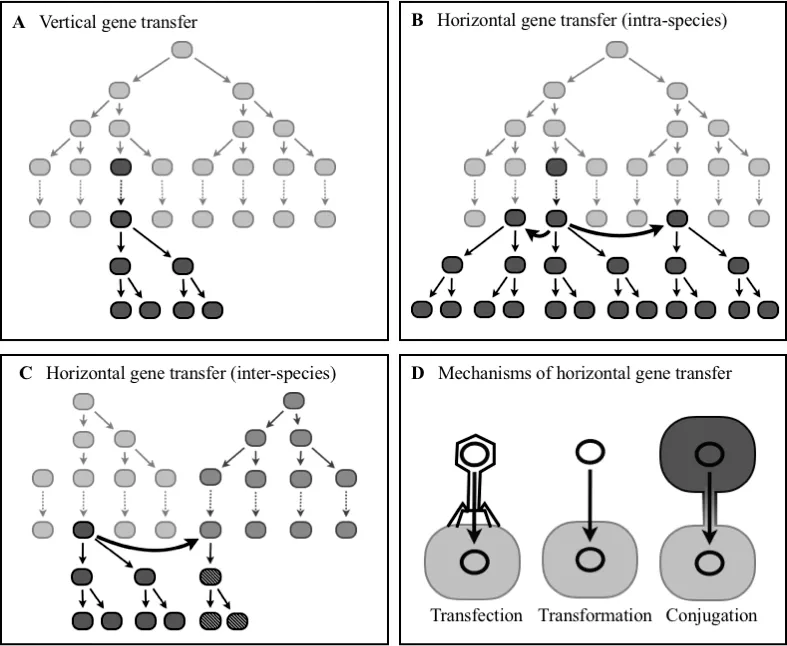
FIGURE A.1 Modes and mechanisms of AMR transfer.
Intrinsic and acquired resistance can pass from one bacteria generation to the next (vertical gene transfer). However, bacteria also possess the remarkable ability to “communicate” information on how to resist antibiotics among each other in a process called horizontal gene transfer. Whereas mutations bring new AMR genes into the world, horizontal gene transfer is the major force spreading these genes across the globe. Horizontal gene transfer can either occur as a result of transduction, during which resistance genes (R-factors) are inserted into the bacterial genome by viral bacteriophages; transformation, during which bacteria absorb free-floating resistance-encoding DNA sequences; and as a result of conjugation (“bacterial sex”), during which bacteria exchange small circular DNA strands called plasmids, which encode R-factors.22
It is difficult to exaggerate the implications of horizontal gene transfer. Because genetic information can be exchanged between bacteria of different species, an antibiotic-resistant yet innocuous Escherichia coli (E. coli) bacterium can pass on its resistance to a pathogenic Salmonella bacterium. Significantly, it is often not just resistance against one but against several antibiotics that is transferred en bloque. This en bloque transfer occurs because resistance genes tend to be stockpiled in mobile regions of the bacterial genome that are more easily transferred to other bacteria—the mobilome—such as plasmids and integrons. Any bacterium receiving such a genomic island via horizontal gene transfer can immediately resist multiple antibiotics. Exposing this bacterium to one of these antibiotics or related substances will automatically co-select for all of the other resistance information encoded on the genomic island.23 Even sublethal concentrations of antibiotics, such as diluted antibiotics in rivers or in animal feeds and medicines, can select for clinically relevant resistance genes.24
Once established, resistant organisms and genes routinely cross geographic and species borders. With approximately 60 percent of all infectious diseases (and 75 percent of emerging infectious diseases) affecting humans shared by other vertebrate animals, the selection of resistant pathogens in one population can have serious consequences for the other.25 This is not only true for established zoonotic pathogens but also for seemingly harmless bacteria. In the case of livestock-asso...
Table of contents
- Cover
- Series Page
- Title Page
- Copyright
- Dedication
- Contents
- List of Abbreviations
- 1. The Sound of Coughing Pigs
- Part I. USA: From Industrialized Agriculture to Manufactured Hazards, 1949–1967
- Part II. Britain: From Rationing to Gluttony, 1945–1969
- Part III. USA: The Problem of Plenty, 1967–2013
- Part IV. Britain: From Gluttony to Fear, 1970–2018
- Acknowledgments
- Notes
- Bibliography
- Index
- About the Author
- Series List
Trusted by 375,005 students
Access to over 1.5 million titles for a fair monthly price.
Study more efficiently using our study tools.
Frequently asked questions
Yes, you can cancel anytime from the Subscription tab in your account settings on the Perlego website. Your subscription will stay active until the end of your current billing period. Learn how to cancel your subscription
No, books cannot be downloaded as external files, such as PDFs, for use outside of Perlego. However, you can download books within the Perlego app for offline reading on mobile or tablet. Learn how to download books offline
Perlego offers two plans: Essential and Complete
- Essential is ideal for learners and professionals who enjoy exploring a wide range of subjects. Access the Essential Library with 800,000+ trusted titles and best-sellers across business, personal growth, and the humanities. Includes unlimited reading time and Standard Read Aloud voice.
- Complete: Perfect for advanced learners and researchers needing full, unrestricted access. Unlock 1.5M+ books across hundreds of subjects, including academic and specialized titles. The Complete Plan also includes advanced features like Premium Read Aloud and Research Assistant.
We are an online textbook subscription service, where you can get access to an entire online library for less than the price of a single book per month. With over 1.5 million books across 990+ topics, we’ve got you covered! Learn about our mission
Look out for the read-aloud symbol on your next book to see if you can listen to it. The read-aloud tool reads text aloud for you, highlighting the text as it is being read. You can pause it, speed it up and slow it down. Learn more about Read Aloud
Yes! You can use the Perlego app on both iOS and Android devices to read anytime, anywhere — even offline. Perfect for commutes or when you’re on the go.
Please note we cannot support devices running on iOS 13 and Android 7 or earlier. Learn more about using the app
Please note we cannot support devices running on iOS 13 and Android 7 or earlier. Learn more about using the app
Yes, you can access Pyrrhic Progress by Claas Kirchhelle in PDF and/or ePUB format, as well as other popular books in Technology & Engineering & Global Development Studies. We have over 1.5 million books available in our catalogue for you to explore.