This unique book considers the concept of quality as it relates to the provision of dental care. For the author's purposes, quality is defined in relation to the process of care, the service given, the people delivering the care, and the environment in which the care is provided. In each of these various facets of dental care, the author considers the process of measuring, assessing, improving, and monitoring quality and its impact on the way we work and live.
- 176 pages
- English
- ePUB (mobile friendly)
- Available on iOS & Android
eBook - ePub
Quality Matters
About this book
Information
Chapter 1
Introduction
Aim
The aim of this chapter is to provide an overview of the meaning and interpretation of quality in the broadest sense and to highlight some of the key benefits of a commitment to quality.
Outcome
The reader will have an understanding of how the meaning of quality can vary in relation to its context and the relevance of the various interpretations in everyday dental practice.
Introduction
Healthcare quality has been on the agenda of scholars, policy analysts, providers and patients for many decades. By the 1970s, Avedis Donabedian had established his model for assessing quality on the basis of structure, process and outcome. A decade later, patient safety, risk management and appropriateness of care were added to the common list of measurement variables.
Many practice websites, leaflets and marketing materials make references to quality, but few are explicit about its meaning and interpretation.
“Quality … you know what it is, yet you don’t know what it is. But that’s self-contradictory. But some things are better than others, that is, they have more quality. But when you try to say what the quality is, apart from the things that have it, it all goes poof! There’s nothing to talk about ...” So wrote Robert M. Pirsig in his book, Zen and the Art of Motorcycle Maintenance (p.163). In his PhD thesis “On Quality of Dental Care”, Poorterman makes a similar point that: “A person generally is able to make an image of the meaning of that particular word and recognises it when in contact, but it is difficult to give the exclusive right description.”
The meaning of quality is explored further in Chapter 2.
In general dental practice, quality is the measure of how good dental health outcomes are, and can be evaluated for at least two components. The technical element of quality care looks at the components of clinically appropriate diagnostic decision-making, treatment planning and execution and any required follow-up.
The personal element includes the degree to which the patient perceives being cared for – confidence, compassion, trust – and an overall sense of satisfaction from the practice as a whole. While the technical element of quality is relatively objective, and the personal relatively subjective, both are measurable.
Writing in the British Dental Journal in 1996, Mindak points out that: “Patients judge the dental service they receive by the interaction with the service providers – the dentist and his or her staff – as they are unable to judge the technical quality of the service.”
The interactive and organisational elements make us unique; we may know the recipe for quality in general practice but the way we choose to apply it results in a blend that is unique to each and every practice.
The Dutch National Council for Public Health has developed a framework that describes quality in clinical practice (Fig 1-1).
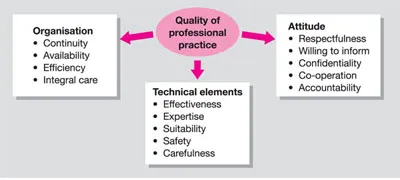
Fig 1-1 The Dutch National Council for Public Health framework for quality in clinical practice.
A quality clinical outcome will result from a combination of the aspects under each of the three domains, some of which will be more important than others for each patient experience (Fig 1-2).
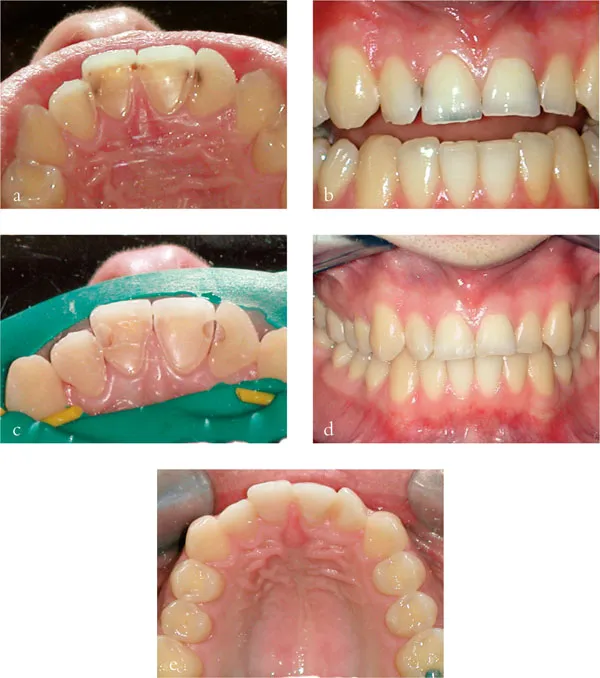
Fig 1-2 Quality outcome (a–e) Teeth suitable for direct build-up with resin composite featuring caries and tooth wear. (b) Unaesthetic anterior view due to tooth wear, resulting in translucent incisal edges. (c) Split rubber-dam isolation. (d) Completed treatment (anterior view). (e) Completed treatment (palatal view).
Challenges
We live in the age of the mixed economy and there are challenges in managing quality in this context. Many practices choose to provide care and services through private and public sector funding. These practices must satisfy the meaning of quality as defined by the stakeholders of all the parties. Who is the customer in the public sector – the commissioner or the patient? Is there shared status? Equity is the priority in many public sector services. The requirement to maintain a balance between the needs of the individual and the needs of the community means that a particular person cannot always have everything. Is it then possible for the provider to satisfy both the patient and the commissioner? A patient who is denied a service because it is not available through the public sector is unlikely to consider the public service in terms of quality, but another patient who is able to access the service at a time of acute need will have the opposite view.
The definition of quality in a public service is based upon the values and expectations of key stakeholders. There is a requirement on the part of the commissioners to deliver value and the need to use public funds in a clinically and cost-effective way. All members of a caring profession would be willing to jump the hurdles of quality, patient safety and clinical efficacy, but not all feel able to accept the funding provided to tackle these challenges. It is the fourth hurdle of health economics that presents the real challenge for many dentists (Fig 1-3).
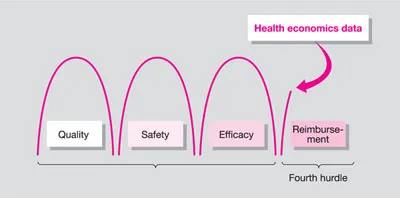
Fig 1-3 The challenge of the fourth hurdle.
In contrast, the private sector is able to address needs, aspirations and demands at an individual patient level which may be consistent with those at population level. The private sector service can be totally patient-focused because “the customer is king”, although there may be a shared status where third party payers are involved.
The context of care delivery is further complicated by the fact that patients receive some types of care funded through the public sector and other services funded by private contract. The provider of these services now faces a further challenge – meeting and satisfying the varying regulatory requirements and satisfying the interpretation of quality imposed by all parties.
In the UK, this scenario is common where many practices provide services under the terms of the National Health Service (NHS) and private contract – so-called “mixing” of treatment.
A Changing Landscape
The approach to quality has changed over the years. Today’s approach focuses on continuous quality improvement (CQI) and recognises evolving standards and the need for patient empowerment and involvement (Table 1-1).
| Level of commitment | Yesterday’s approach | Today’s approach |
| Leadership commitment | Occasional review | Total quality management involving the entire practice |
| Emphasis of effort | Retrospective analysis | Proactive approach. Continuous quality improvement |
| Focus of effort | Retrospective inspection to catch error | Ongoing identification and improvement of faulty processes |
| Timing of effort | Retrospective analysis of quality indicators | Concurrent management of processes of care with built-in measures |
| Outcomes | Measure to acceptable standard | Measure against evolving standards |
The aim of today’s approach is to shift the mean standard of care over a period of time by a process of CQI (Fig 1-4 and Chapter 5).
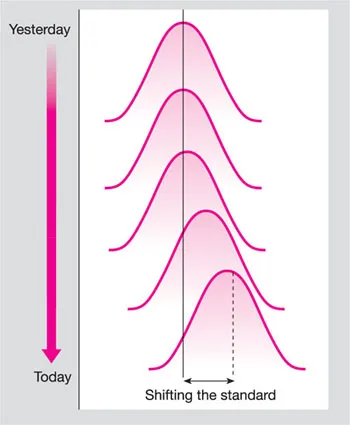
Fig 1-4 Shifting the mean standard of care.
Clinical Aspects
The meaning of quality is not only dependent on the observer’s perspective, but also influenced by evolving standards, scientific advancements and changing societal values. Quality markers and indicators are time-sensi...
Table of contents
- Cover
- Title Page
- Copyright Page
- Table of Contents
- Foreword
- Preface
- Acknowledgement
- Chapter 1: Introduction
- Chapter 2: The Meaning of Quality
- Chapter 3: Quality Concepts
- Chapter 4: The Challenge of Measurement
- Chapter 5: Continuous Quality Improvement
- Chapter 6: Clinical Audit
- Chapter 7: Clinical Governance
- Chapter 8: Evidence-based Dentistry
- Chapter 9: Service Quality
- Chapter 10: Business Implications
Trusted by 375,005 students
Access to over 1.5 million titles for a fair monthly price.
Study more efficiently using our study tools.
Frequently asked questions
Yes, you can cancel anytime from the Subscription tab in your account settings on the Perlego website. Your subscription will stay active until the end of your current billing period. Learn how to cancel your subscription
No, books cannot be downloaded as external files, such as PDFs, for use outside of Perlego. However, you can download books within the Perlego app for offline reading on mobile or tablet. Learn how to download books offline
Perlego offers two plans: Essential and Complete
- Essential is ideal for learners and professionals who enjoy exploring a wide range of subjects. Access the Essential Library with 800,000+ trusted titles and best-sellers across business, personal growth, and the humanities. Includes unlimited reading time and Standard Read Aloud voice.
- Complete: Perfect for advanced learners and researchers needing full, unrestricted access. Unlock 1.5M+ books across hundreds of subjects, including academic and specialized titles. The Complete Plan also includes advanced features like Premium Read Aloud and Research Assistant.
We are an online textbook subscription service, where you can get access to an entire online library for less than the price of a single book per month. With over 1.5 million books across 990+ topics, we’ve got you covered! Learn about our mission
Look out for the read-aloud symbol on your next book to see if you can listen to it. The read-aloud tool reads text aloud for you, highlighting the text as it is being read. You can pause it, speed it up and slow it down. Learn more about Read Aloud
Yes! You can use the Perlego app on both iOS and Android devices to read anytime, anywhere — even offline. Perfect for commutes or when you’re on the go.
Please note we cannot support devices running on iOS 13 and Android 7 or earlier. Learn more about using the app
Please note we cannot support devices running on iOS 13 and Android 7 or earlier. Learn more about using the app
Yes, you can access Quality Matters by Raj Rattan in PDF and/or ePUB format, as well as other popular books in Medicine & Dentistry. We have over 1.5 million books available in our catalogue for you to explore.