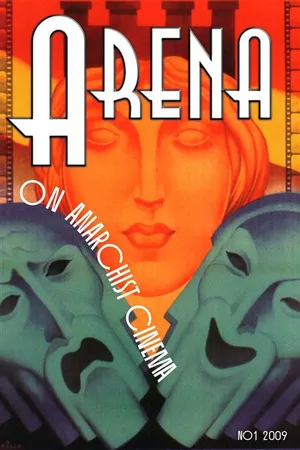
- 157 pages
- English
- ePUB (mobile friendly)
- Available on iOS & Android
eBook - ePub
Information
Subtopic
Film History & CriticismTHE CINEMA DU PEOPLE COOPERATIVE VENTURE
Eric Jarry
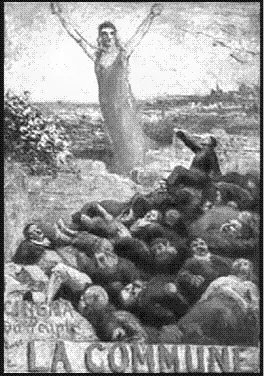
Maximilien Luce poster for the coopérative du Cinéma du Peuple, Paris 1913
“ I say, you know you should make a movie?”
“ I have done, Les Misères de l’aiguille.”
“ Oh, what’s that about then?”
“It’s a short movie produced by a cooperative known as the ‘Cinéma du Peuple’“
“Really? Never heard tell of it.”
“Of course not! It’s a group of libertarian artistes encouraged by Sébastien Faure and Jean Grave. Movies are made in the service of the workers’ cause and they are screened in the Maisons du peuple and at trade union gatherings..”
“But what are you doing in among all those anarchists?”
“You forget that I am the daughter of Jacques Roques, the founder of L’Idéal social, the very first newspaper ever written entirely by women.”
“Oh yes! Now I remember: sexual equality, votes for women, the whole suffragette thing!”
“Come now, Monsieur Navarre. The reason I sat for my certificate when I was fifteen was so that I could stand up to misogynists like you!”
This imagined exchange between the actors Musidora and Navarre, lifted from the 1973 film Musidora was Jean-Christophe Averty’s way of bringing up Musidora’s introduction to the movies.
For some months in 1913 and 1914 the Cinéma du Peuple represented a novel propaganda weapon for libertarians, the very first militant use of the new-born medium of film. Completely forgotten by the anarchists, including its founders, it is mentioned only by a few film historians such as Sadoul. Laurent Mandoni’s article (“1913 in France”) in the magazine 1895 and Tangui Perron’s piece in Le Mouvement social (No 172) helped revive the memory of it.
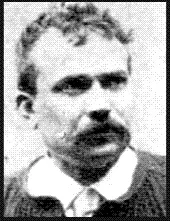
Jean Grave
(1854 —1839)
(1854 —1839)
Initially anarchists were chary of the cinema. Hadn’t the forces of law and order used it to identify rioters during labour disputes? One of the first people to have used it for projection purposes was the Marseilles anarchist Gustave Cauvin. His anti-alcohol, birth control and anti-militarist campaigns were closely monitored by the police. Here we have the evidence of Jean Calandri as reported bny Henry Poulaille in Mon ami Calandri:
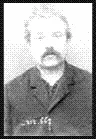
Jean Grave
(Police mugshot)
(Police mugshot)
“My friend Gustave Cauvin was the official speaker and I his willing assistant in making the actual arrangements for his illustrated talks. It was my role to fetch the gear from the nearest suburban railay station to the lecture room, gear consisting of - in addition to the projector - a large bottle of acetylene gas for projecting the films because electricity had yet to take over from town gas, and then, I turned the crank handle to advance the slides as Cauvin gave his talk. We had practically toured Paris like that and later the same with Lyon.”
By 1913, Paris had nearly 200 cinemas with a million spectators a year. The congress of the Revolutionary Anarchist-Communist Federation took place in the Maison des syndiqués at 18, Rue Cambronne, Paris on 15, 16 and 17 August 1913. A memo was drawn up on 18 August by the prefecture of police:
“At the conclusion of the anarchist-communist congress, the announcement was made that a committee was to be set up for the purpose of securing a film camera for anarchist propaganda purposes.“
The Cinéma du peuple, a limited liability cooperative company with varying capital and personnel resources, was formally established in front of a notary on 28 October 1913. Article 6 of its foundation charter discloses its libertarian principles: the company would shun all electioral activity and propaganda; none of its members would be allowed to use its name or his office to seek elected office, on pain of expulsion. The company would strive to improve the intellectual levels of the people. It would remain in ongoing like-minded communion with whatever sections of the proletariat that made their stand on the basis of class struggle and whose aim was to do away with wage slavery by means of an economic transformation of society.
The founders were nearly all libertarians: Sébastien Faure (founder of Le Libertaire), Jean Grave (administrator of Les Temps nouveaux), Pierre Martin (Le Libertaire editorial staff), André Girard (editor with Les Temps nouveaux), Charles-Ange Laisant, anarchist mathematician, Gustave Cauvin (already mentioned), Robert Guérard (revolutionary songwriter), Félix Chevalier (hairdresser), Jane Morand, Henriette Tilly, Emile Rousset, Paul Benoist, Louis Oustry (lawyer). Yves-Marie Bidamant (trade union activist on the railways) became its secretary.
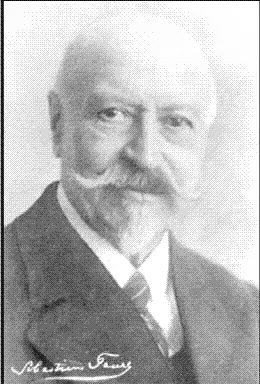
Sébastien Faure
(1858 —1942)
(1858 —1942)
The work of the Cinéma du peuple was made known chiefly through the articles that its steering committee had published in Le Libertaire, La Guerre Sociale, Les Temps nouveaux and, above all, La Bataillesyndicaliste, which was a daily newspaper. Here is one of the most interesting articles, a summing-up carried by Le Libertaire on 30 May 1914:
A Venture Worthy of Support
Some months ago, when the Cinéma du peuple announced its inception to the public, a single cry went up: ‘Not another still-born venture!’
Actually, militants have become rather weary of such ventures that come to a wretched end. In fact, why back a venture that we know is doomed to failure? This, however, is one effort that appears to give the lie to the doom-sayers.
The Cinéma du peuple, founded some eight months ago, lives on! And, better yet, it means to grow! Launched into this world on 28 October 1913 with a capital of 1,000 francs, its general meeting on 17 May 1914 has just increased its capital holding to 3,000 francs by issuing 600 shares at 50 francs a time. And do you know what the Cinéma du peuple has done with these modest beginnings and meagre resources?
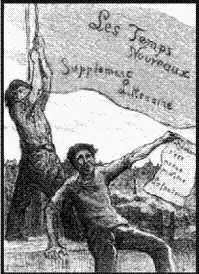
Les TempsNouveaux Literary Supplement
For a start we have Les Misères de l’aiguille, a touching drama showing a woman grappling with life’s difficulties, a woman who is rescued only thanks to solidarity from the workers. And then there is La Commune du 18 au 28 March1871, a film screened with the success of which we all know at the Palais des Fêtes at the end of the month of March this year. Finally there is Le Vieux docker and Victimes des exploiteurs, two highly poignant drama bringing a glimpse of the sadness of two workers’ lives to the screen.
The Cinéma du peuple filmed Pressensé’s funeral. Not one bourgeois cinema sent a camewraman to ‘Shoot’ the funeral rites of that great socialist and honest man.
Since its launch, the Cinéma du peuple has printed 895 metres of footage. It has correspondents in Belgium, the Netherlands, Luxembourg, Italy, North America and Havana. This is a venture on its way to becoming international.
A number of screenplays are ready to be shot. Francisco Ferrer! The title will call to mind Ferrer’s splendid life and the dark tragedy of Montjuich. The founder of Barcelona’s Modern School will be gflorified on the screen so that generations to come may remember the man shot by religious intolerance.
Biribi covers the Aernoult-Rousset affair which is to be reconstructed as a moving and accurate screen projection, a drama wherein the working folk can shudder at the sight of the tortures inflicted upon a man of their own class [...]
None of this can be achieved without money —at its 17 May gathering, the general meeting decided to issue a number of 5 franc ‘loan bonds’, repayable by means of a draw to be held after July 1915.
The steering committee which has a mandate to proceed with the printing of these films so that they can be offered to the public from the start of the autumn onwards, believes that its call will be heard and that the ‘loan bonds’ will be issuing non-stop to avant-gard groups and a number of personalities in sympathy with the educational endeavours of the Cinéma du peuple. It calls upon organisations and citizens to do whatever they can to take up these bonds themselves or have them taken up by persons within their orbit. It is a good propaganda move to ensure that the people’s cinema can carry on with its good work.
May we help the Cinéma du peuple to offer an antidote to the trashy cinemas which, in town and country alike, foster with their unwholesome productions a propaganda that stultifies the worker and peasant class.
The steering committee.”
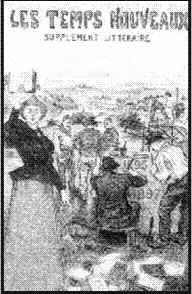
Les Temps Nouveaux 1895-1914 (900 issues) Edited by Jean Grave
The Cinéma du peuple’s premises at 67 Rue Pouchet in Paris’s 17th arrondissement was one of the great CGT halls known as the Maison des syndiqués. Built in 1909 by a range of trades bodies, its internal walls were covered in frescoes painted by Jules Granjouan and glorifying the proletariat. A screening room with a capacity for 600 seats had been built on the second floor.
Gustave Cauvin rented his own projection equipment to the Cinéma du peuple. As for the camera and cameramen, recourse was had to Bernard Natan’s Rapid Films company, based at 6, Rue Ordener, in the 18th arrondissement. In the late 1920s, Natan entered into an alliance with Pathé (which thereby became Pathé-Natan), but the 1929 crash created problems for this company which had su...
Table of contents
- COVER PAGE
- TITLE PAGE
- COPYRIGHT PAGE
- CONTENTS
- INTRODUCTION
- ABOUT THE AUTHORS
- 1 ERIC JARRY
- 2 ARMAND GUERRA
- 3 ISABELLE MARINONE
- 4 EMETERIO DIEZ
- 5 ANDREW H. LEE
- 6 DAN GEORGIAKAS
- 7 PIETRO FERRUA
- 8 RUSSELL CAMPBELL
- 9 RICHARD MODIANO
- 10 ANDREW HEDDEN
Trusted by 375,005 students
Access to over 1.5 million titles for a fair monthly price.
Study more efficiently using our study tools.
Frequently asked questions
Yes, you can cancel anytime from the Subscription tab in your account settings on the Perlego website. Your subscription will stay active until the end of your current billing period. Learn how to cancel your subscription
No, books cannot be downloaded as external files, such as PDFs, for use outside of Perlego. However, you can download books within the Perlego app for offline reading on mobile or tablet. Learn how to download books offline
Perlego offers two plans: Essential and Complete
- Essential is ideal for learners and professionals who enjoy exploring a wide range of subjects. Access the Essential Library with 800,000+ trusted titles and best-sellers across business, personal growth, and the humanities. Includes unlimited reading time and Standard Read Aloud voice.
- Complete: Perfect for advanced learners and researchers needing full, unrestricted access. Unlock 1.5M+ books across hundreds of subjects, including academic and specialized titles. The Complete Plan also includes advanced features like Premium Read Aloud and Research Assistant.
We are an online textbook subscription service, where you can get access to an entire online library for less than the price of a single book per month. With over 1.5 million books across 990+ topics, we’ve got you covered! Learn about our mission
Look out for the read-aloud symbol on your next book to see if you can listen to it. The read-aloud tool reads text aloud for you, highlighting the text as it is being read. You can pause it, speed it up and slow it down. Learn more about Read Aloud
Yes! You can use the Perlego app on both iOS and Android devices to read anytime, anywhere — even offline. Perfect for commutes or when you’re on the go.
Please note we cannot support devices running on iOS 13 and Android 7 or earlier. Learn more about using the app
Please note we cannot support devices running on iOS 13 and Android 7 or earlier. Learn more about using the app
Yes, you can access Arena: On Anarchist Cinema by in PDF and/or ePUB format, as well as other popular books in Media & Performing Arts & Film History & Criticism. We have over 1.5 million books available in our catalogue for you to explore.