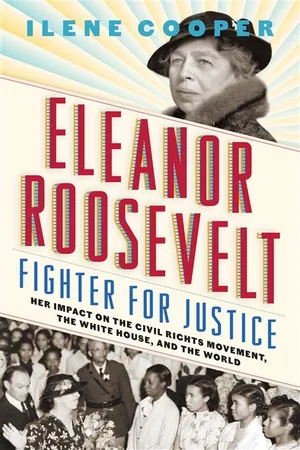
- 192 pages
- English
- ePUB (mobile friendly)
- Available on iOS & Android
eBook - ePub
Information
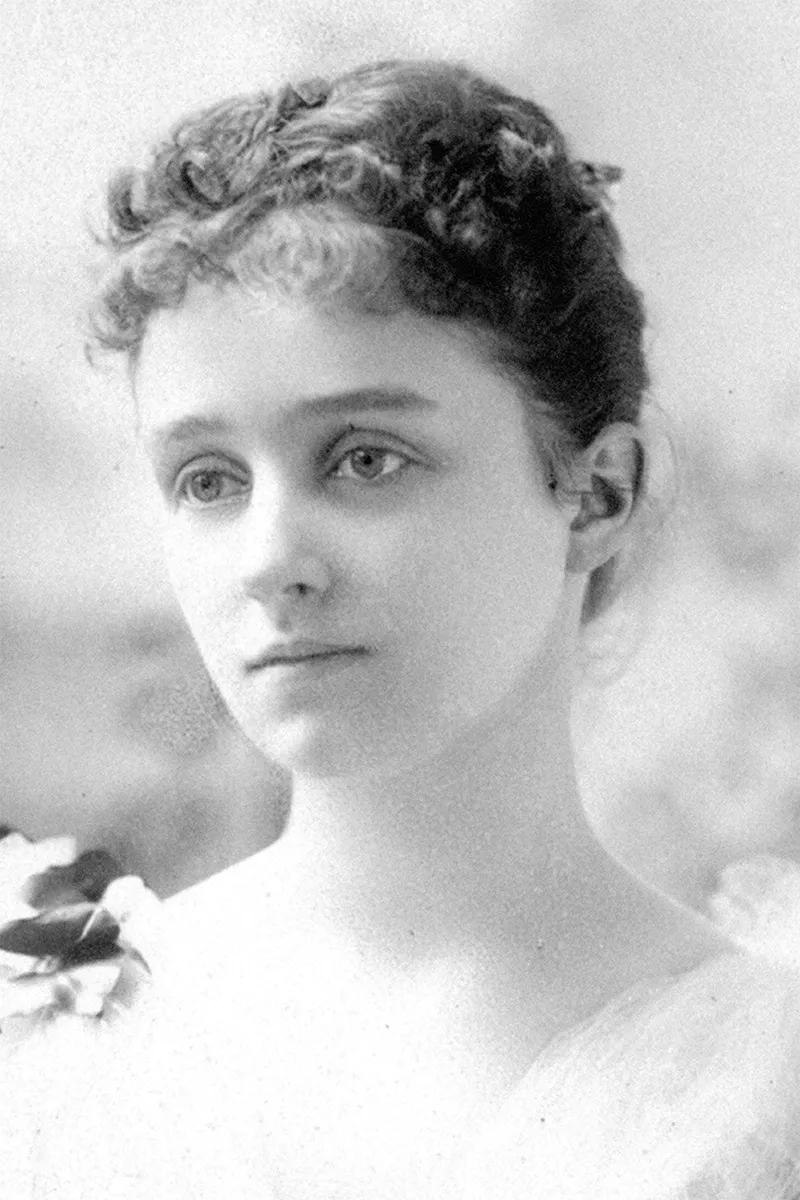
Anna Hall was the belle of her debutante season.
1
GRANNY
Poor little rich girl. If ever a child fit that description, it was young Eleanor Roosevelt.
She was born on October 11, 1884 into a very privileged world. Her mother, Anna Hall, and her father, Elliott Roosevelt, came from wealthy families that were pillars of New York society. Eleanor’s early years were lived in city town houses with fashionable addresses and country homes on expansive grounds. She was surrounded by servants and wore dresses made of velvet and lace. There were sea voyages, pony cart rides, plenty of dolls and toys. But one thing Eleanor didn’t have: her mother’s affection.
“My mother was one of the most beautiful women I have ever seen,” wrote Eleanor as the opening sentence of her autobiography. This was not just the opinion of an impressionable little girl. Anna Hall Roosevelt, graceful and with striking patrician features, was considered to be one of the great beauties of her day.
Anna’s family was among the early arrivals in the country that would eventually become the United States of America. One relative helped draft the Declaration of Independence. Another, in 1787, signed the United States Constitution.
The family of Elliott Roosevelt also had roots in America that were deep and wealthy. Elliott was handsome and personable, and as a boy, it seemed as if he would go far. His older brother, Theodore, was a sickly child who suffered with asthma, so it was Elliott who came first in sports and games.
But then something changed. Theodore decided to exercise and strengthen his body. As he grew stronger, Elliott seemed to become weaker, and he began suffering from all sorts of nervous ailments. By the time they were young men, Theodore took his place as the leader of his family—and eventually of the country. Theodore Roosevelt went on to become the twenty-sixth president of the United States. Elliott devoted his life to good times, travel, dances, and drinking. Lots of drinking.
Still, when Anna Hall and Elliott Roosevelt decided to marry—Anna, only nineteen, Elliott, twenty-three—it seemed like an excellent match: shimmering stars from the same cloistered social circle, a joining of two distinguished families, both partners with enough resources to have a life of style and ease.
Ten months after their 1883 wedding, Eleanor was born. For Elliott, she was “a miracle from heaven.” Perhaps Anna had thought that at first, but by the time Eleanor was two, she had given her little daughter a less-than-flattering nickname: Granny. It was a name, Eleanor would say, that made her want to “sink through the floor in shame.”
Eleanor describes herself in her autobiography as a shy, solemn child who rarely smiled. This was not the sort of behavior that would have endeared her to Anna, who preferred charm and gaiety. She didn’t understand her dour little daughter, and she was disappointed that Eleanor hadn’t inherited her good looks. As an adult, Eleanor said that she knew she was “ugly,” though photographs show a pleasant-looking, if plain, child. Nevertheless, her sense that her mother disapproved of her was a burden she carried throughout her life.
Elliott, though, remained enchanted with his little daughter. Even after the birth of his sons, Elliott Jr. in 1889 and Hall in 1891, his daughter, whom he nicknamed Little Nell, remained his favorite. He loved spending time with her, and when he was away, he wrote her long letters about all the wonderful things they would do when they were together. It comforted and delighted her to receive notes from Elliott in which he remembered the trips they had already taken and offered promises of more: “through the Grand snow clad forests over the white hills, under the blue skies, as blue as those in Italy.”
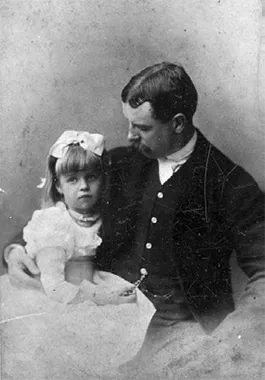
Five-year-old Eleanor and her adoring father, Elliott
Her father became the center of Eleanor’s world. “With my father,” she remembered years later, “I was perfectly happy.”
Anna, however, was not happy. The fairy-tale version of married life that had been predicted for her and Elliott turned out to be an illusion. It was not long into the marriage that Anna began to suspect that Elliott’s drinking was a bigger problem than she could handle. His behavior was erratic, and his trips away, sometimes for pleasure, sometimes to attempt to break his addiction, bore holes into their family.
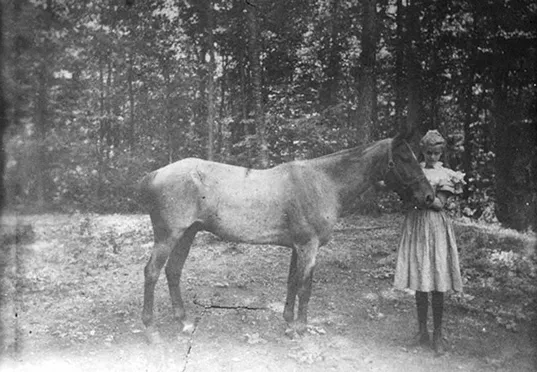
Eleanor had a lifelong love of horses. Here she’s at Grandmother Hall’s summer home in Tivoli, New York, in 1894.
Eleanor didn’t understand why her father was gone so often, but cherished the time they had together, much of it centered on their mutual love of horses and dogs. But on at least one occasion, Elliott took the opportunity to show Eleanor a very different side of life. Members of the upper classes were expected to be charitable to those less fortunate than themselves, and the Roosevelt family took their responsibility seriously. Both Elliott and his father, Theodore Sr., were supporters of a charity called the Children’s Aid Society. One of the society’s projects was providing places where the many young boys hawking newspapers on the streets of New York could sleep or get a hot meal for a small fee.
On Thanksgiving and Christmas, the boys enjoyed a free holiday dinner—turkey, ham, potatoes, and pie, the kind of food they rarely saw. One year, when Eleanor was about six, her father brought her to help serve a Thanksgiving dinner to scruffy boys with nicknames like Crutcher and Jake the Oyster at the Newsboys’ Lodge. This was an eye-opening event for a little girl who lived in luxury.
Eleanor was also struck by her father’s personal generosity. One night he left their house wearing his finest coat. He returned, shivering, his coat gone. Eleanor asked what had happened to it, and he told her he had given it to a “a small and ragged urchin” who needed the coat more than he did.
Through these experiences, and after attending other charitable functions with her family, Eleanor became aware that while her life was blessed with plenty, there were plenty of others who lived in poverty. These lessons, and the importance Elliott put on helping those less fortunate, were planted early and deep.
Wealth was not very helpful to Elliott Roosevelt, however. Each year his drinking became worse and his actions more outrageous. Anna tried to hold her household together while struggling with her own health issues. Then in 1892, while Elliott was away, she came down with a case of diphtheria, an infection that begins with a sore throat and headache. In Anna’s case, it ended with death. She was twenty-nine years old.
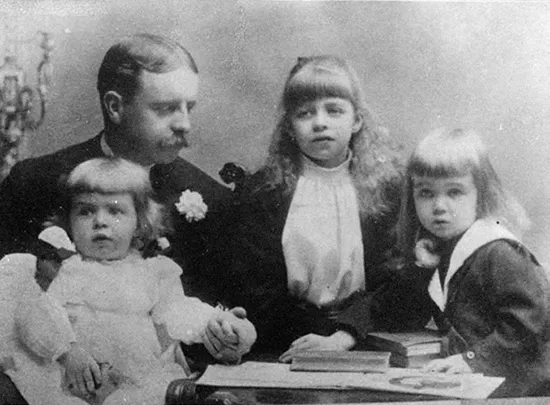
After Anna’s death in 1892, the children’s only parent was the troubled Elliott.
It is telling that on hearing the news of her mother’s death, Eleanor’s first thought was that now her father would be coming home. And though he did return for the funeral, it had already been decided that his children would be best off living with Anna’s mother, Eleanor’s grandmother, Mary Hall. Eleanor later realized what a defeat this must have been for her father to be separated from her and the boys, to be seen as unable to care for his own children. But at the time, his eight-year-old daughter listened closely as he told her that someday she would make a home for him and they would travel the world together—“somehow it was always he and I.”
This vision of life with her father (she wasn’t quite sure where her brothers fit into the picture) helped sustain her when she moved into Grandmother Hall’s large New York City brownstone home (in the summer, the family spent time at the Halls’ country home in upstate New York, Tivoli). The household was dominated by Eleanor’s young aunts and uncles, a rowdy crew in their late teens and twenties who always had drama happening in their lives. Grandmother Hall dealt with the chaos by going inside her bedroom and firmly closing the door.
Eleanor’s brothers, five and seven years younger than she, didn’t provide much company, and though her aunts and uncles were kind, they were focused on themselves. Eleanor spent a good deal of her free time living inside her head, spinning daydreams in which she was the heroine and her father was the hero.
In May of 1893, only six months after her mother died, there was another loss. Her brothers both came down with scarlet fever. She was sent to Tivoli so she wouldn’t catch the illness, too. There, Eleanor received a telegram from her father telling her that though Hall was getting better, Elliott Jr. was gravely ill and would likely be joining Anna in heaven. The four-year-old died a few hours later.
A little more than a year later, the news was even worse. Nine-year-old Eleanor received the shocking announcement from her aunts that her father was dead. They did not tell her that he had died from complications after attempting suicide.
Eleanor remembered later that she wept and wept, but the following morning she returned to her dreamworld, where her father still lived. She was content to spend much of her time there. “I knew in my mind that my father was dead, and yet I lived with him more closely, probably than I had when he was alive.”
The next five years were a difficult and lonely time for Eleanor. Already shy, now she became fearful—of the dark, of displeasing people, of failure. Her life revolved around school and the occasional outing. She also liked to read, and as she grew older, she was left alone to choose what she wanted from the extensive Hall library. That is, until her grandmother started asking questions about books she thought might be unsuitable for a girl of Eleanor’s age—then they would disappear. That’s what happened to Charles Dickens’s Bleak House. Eleanor tried to find the novel for days.
A huge disappointment for Eleanor was her grandmother’s decision to allow only occasional visits with her father’s family, the Roosevelts. Being with her exuberant Uncle Teddy and his family was exhilarating and very outdoorsy—far different from what she was used to at her grandmother’s house. But Grandmother Hall, having lost control of her own children, decided to be a stern disciplinarian with Eleanor and Hall. Eleanor described her grandmother’s child-rearing theory this way: “We were brought up on the principle it was easier to say no than yes.”
So it came as a surprise to Eleanor when she was fifteen that Grandmother Hall told her, “Your mother wanted you to go to boarding school in Europe, and I have decided to send you.” It is more likely that Grandmother Hall felt that her children, often wild in their ways, could become a bad influence on Eleanor now that she was a teenager, and so she wanted Eleanor out of the house. “Suddenly life was going to change for me,” Eleanor remembered.
She was to attend a school outside London, England, called Allenswood Academy. To leave behind the pain and sorrow of her early life was liberating for Eleanor, but she was also leaving every person and place she had ever known. She would be alone in a school across an ocean, and making new friends was something she did neither easily nor well. It must have taken every bit of strength she had to muster the courage to go. But by now Eleanor knew one thing about herself: “Anything I had accomplished had to be done across a barrier of fear.”
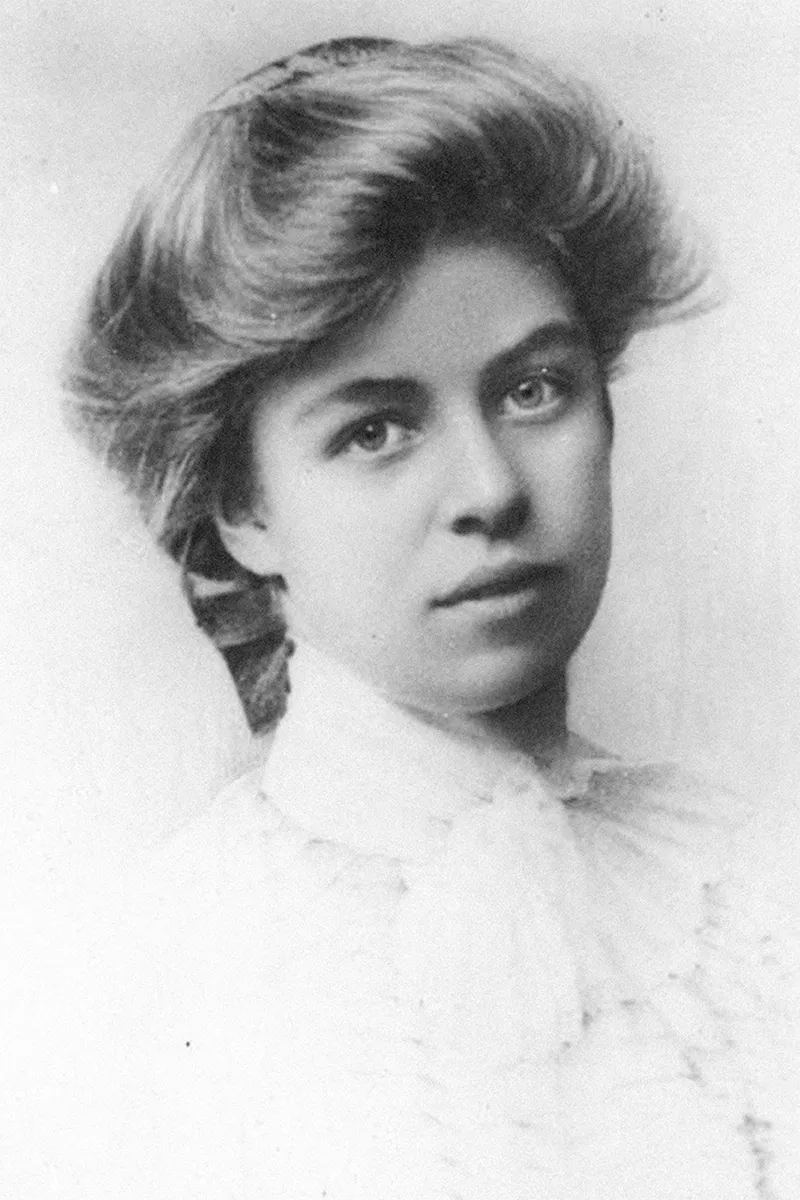
A fifteen-year-old Eleanor at the time she was sent to Allenswood
2
FINDING HERSELF
After a long ocean voyage, “lost and lonely” fifteen-year-old Eleanor was dropped off at Allenswood Academy by an aunt. In her suitcase was a packet of her father’s letters tied with ribbon. But Eleanor didn’t have much time to feel sorry for herself. She had entered a dizzying new environment, and she quickly realized she needed to step up.
The headmistress at the girls’ school was handsome, silver-haired Mademoiselle Marie Souvestre. She was the kind of woman whose “eyes looked through you,” Eleanor later reflected, “and she always knew more than she was told.” An avant-garde educator who taught her lessons with intensity and enthusiasm and prized curiosity in her students, she was also a feminist who wanted her students to know that they could have happy, fulfilling lives, with or without marriage.
The women’s movement—the push for women to have equal rights to men, including the right to vote—had been around for more than fifty years by the time Eleanor arrived at Allenswood in 1899. Most people in Eleanor’s world were more comfortable with the status quo. Women, at least upper-class women, were raised to be helpmates to their husbands and mothers to their children. Even among the well-educated, few had careers.
Mlle. Souvestre had a different idea. She thought women and girls should be able to think for themselves, find ways to make a difference in the world, and she wanted to instill in them “courageous judgment, and . . . a deep sense of public duty.” It was from Mlle. Souvestre, Eleanor later noted, that she learned one of her life’s guiding principles: that the “underdog should always be championed.”
Almost immediately upon her arrival at Allenswood, Eleanor became Mlle. Souvestre’s favorite. One of the rules of the school was that French was the primary language to be spoken. Eleanor’s first nanny had been French, and so as a toddler she’d learned the language before learning English. This fluency gained Eleanor a coveted spot at Mlle. Souvestre’s dinner table, where she spoke with her teacher in the woman’s native tongue. She was also invited to her teacher’s study with other select students to discuss—also in French—literature and poetry.
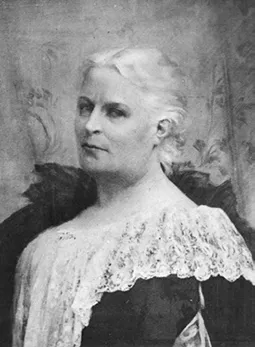
Mademoiselle Marie Souvestre was one of the greatest influences on the life of Eleanor.
Teacher and student, over the next three years, became exceptionally close. They traveled across Europe together, and Mlle. Souvestre, who was in her early seventies, left it to Eleanor to handle all the arrangements. Those responsibilities gave her a new sense of confidence. Eleanor was also thrilled by her teacher’s spontaneity; Mlle. Souvestre readily threw away plans if something more interesting...
Table of contents
- Cover
- Title Page
- Dedication Page
- Copyright Page
- Contents
- Prologue
- 1 Granny
- 2 Finding Herself
- 3 Losing Herself
- 4 A Life to Be Lived
- 5 Reaching Out
- 6 A New Standard for Understanding
- 7 The Spur
- 8 It Never Hurts to Be Kind
- 9 War Clouds
- 10 Fighting and Dying
- 11 Turning the Page
- Eleanor in her Own Words
- Time Line
- Notes
- Bibliography
- Author’s Note
- Acknowledgments
- Index of Searchable Terms
Trusted by 375,005 students
Access to over 1.5 million titles for a fair monthly price.
Study more efficiently using our study tools.
Frequently asked questions
Yes, you can cancel anytime from the Subscription tab in your account settings on the Perlego website. Your subscription will stay active until the end of your current billing period. Learn how to cancel your subscription
No, books cannot be downloaded as external files, such as PDFs, for use outside of Perlego. However, you can download books within the Perlego app for offline reading on mobile or tablet. Learn how to download books offline
Perlego offers two plans: Essential and Complete
- Essential is ideal for learners and professionals who enjoy exploring a wide range of subjects. Access the Essential Library with 800,000+ trusted titles and best-sellers across business, personal growth, and the humanities. Includes unlimited reading time and Standard Read Aloud voice.
- Complete: Perfect for advanced learners and researchers needing full, unrestricted access. Unlock 1.5M+ books across hundreds of subjects, including academic and specialized titles. The Complete Plan also includes advanced features like Premium Read Aloud and Research Assistant.
We are an online textbook subscription service, where you can get access to an entire online library for less than the price of a single book per month. With over 1.5 million books across 990+ topics, we’ve got you covered! Learn about our mission
Look out for the read-aloud symbol on your next book to see if you can listen to it. The read-aloud tool reads text aloud for you, highlighting the text as it is being read. You can pause it, speed it up and slow it down. Learn more about Read Aloud
Yes! You can use the Perlego app on both iOS and Android devices to read anytime, anywhere — even offline. Perfect for commutes or when you’re on the go.
Please note we cannot support devices running on iOS 13 and Android 7 or earlier. Learn more about using the app
Please note we cannot support devices running on iOS 13 and Android 7 or earlier. Learn more about using the app
Yes, you can access Eleanor Roosevelt, Fighter for Justice by in PDF and/or ePUB format, as well as other popular books in Social Sciences & Social Science Biographies. We have over 1.5 million books available in our catalogue for you to explore.