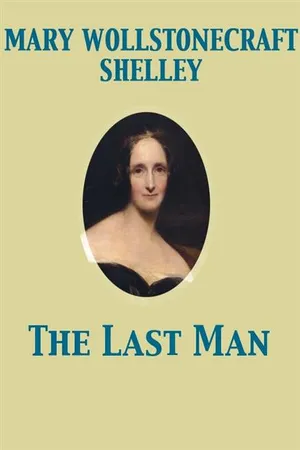
- 726 pages
- English
- ePUB (mobile friendly)
- Available on iOS & Android
eBook - ePub
Last Man
Information
Subtopic
ClassicsIndex
LiteratureVOLUME I.
CHAPTER I.
I AM the native of a sea–surrounded nook, a cloud–enshadowed
land, which, when the surface of the globe, with its shoreless
ocean and trackless continents, presents itself to my mind, appears
only as an inconsiderable speck in the immense whole; and yet, when
balanced in the scale of mental power, far outweighed countries of
larger extent and more numerous population. So true it is, that
man's mind alone was the creator of all that was good or great to
man, and that Nature herself was only his first minister. England,
seated far north in the turbid sea, now visits my dreams in the
semblance of a vast and well–manned ship, which mastered the winds
and rode proudly over the waves. In my boyish days she was the
universe to me. When I stood on my native hills, and saw plain and
mountain stretch out to the utmost limits of my vision, speckled by
the dwellings of my countrymen, and subdued to fertility by their
labours, the earth's very centre was fixed for me in that spot, and
the rest of her orb was as a fable, to have forgotten which would
have cost neither my imagination nor understanding an effort.
My fortunes have been, from the beginning, an exemplification of
the power that mutability may possess over the varied tenor of
man's life. With regard to myself, this came almost by inheritance.
My father was one of those men on whom nature had bestowed to
prodigality the envied gifts of wit and imagination, and then left
his bark of life to be impelled by these winds, without adding
reason as the rudder, or judgment as the pilot for the voyage. His
extraction was obscure; but circumstances brought him early into
public notice, and his small paternal property was soon dissipated
in the splendid scene of fashion and luxury in which he was an
actor. During the short years of thoughtless youth, he was adored
by the high–bred triflers of the day, nor least by the youthful
sovereign, who escaped from the intrigues of party, and the arduous
duties of kingly business, to find never–failing amusement and
exhilaration of spirit in his society. My father's impulses, never
under his own controul, perpetually led him into difficulties from
which his ingenuity alone could extricate him; and the accumulating
pile of debts of honour and of trade, which would have bent to
earth any other, was supported by him with a light spirit and
tameless hilarity; while his company was so necessary at the tables
and assemblies of the rich, that his derelictions were considered
venial, and he himself received with intoxicating flattery.
This kind of popularity, like every other, is evanescent: and
the difficulties of every kind with which he had to contend,
increased in a frightful ratio compared with his small means of
extricating himself. At such times the king, in his enthusiasm for
him, would come to his relief, and then kindly take his friend to
task; my father gave the best promises for amendment, but his
social disposition, his craving for the usual diet of admiration,
and more than all, the fiend of gambling, which fully possessed
him, made his good resolutions transient, his promises vain. With
the quick sensibility peculiar to his temperament, he perceived his
power in the brilliant circle to be on the wane. The king married;
and the haughty princess of Austria, who became, as queen of
England, the head of fashion, looked with harsh eyes on his
defects, and with contempt on the affection her royal husband
entertained for him. My father felt that his fall was near; but so
far from profiting by this last calm before the storm to save
himself, he sought to forget anticipated evil by making still
greater sacrifices to the deity of pleasure, deceitful and cruel
arbiter of his destiny.
The king, who was a man of excellent dispositions, but easily
led, had now become a willing disciple of his imperious consort. He
was induced to look with extreme disapprobation, and at last with
distaste, on my father's imprudence and follies. It is true that
his presence dissipated these clouds; his warm–hearted frankness,
brilliant sallies, and confiding demeanour were irresistible: it
was only when at a distance, while still renewed tales of his
errors were poured into his royal friend's ear, that he lost his
influence. The queen's dextrous management was employed to prolong
these absences, and gather together accusations. At length the king
was brought to see in him a source of perpetual disquiet, knowing
that he should pay for the short–lived pleasure of his society by
tedious homilies, and more painful narrations of excesses, the
truth of which he could not disprove. The result was, that he would
make one more attempt to reclaim him, and in case of ill success,
cast him off for ever.
Such a scene must have been one of deepest interest and
high–wrought passion. A powerful king, conspicuous for a goodness
which had heretofore made him meek, and now lofty in his
admonitions, with alternate entreaty and reproof, besought his
friend to attend to his real interests, resolutely to avoid those
fascinations which in fact were fast deserting him, and to spend
his great powers on a worthy field, in which he, his sovereign,
would be his prop, his stay, and his pioneer. My father felt this
kindness; for a moment ambitious dreams floated before him; and he
thought that it would be well to exchange his present pursuits for
nobler duties. With sincerity and fervour he gave the required
promise: as a pledge of continued favour, he received from his
royal master a sum of money to defray pressing debts, and enable
him to enter under good auspices his new career. That very night,
while yet full of gratitude and good resolves, this whole sum, and
its amount doubled, was lost at the gaming–table. In his desire to
repair his first losses, my father risked double stakes, and thus
incurred a debt of honour he was wholly unable to pay. Ashamed to
apply again to the king, he turned his back upon London, its false
delights and clinging miseries; and, with poverty for his sole
companion, buried himself in solitude among the hills and lakes of
Cumberland. His wit, his bon mots, the record of his personal
attractions, fascinating manners, and social talents, were long
remembered and repeated from mouth to mouth. Ask where now was this
favourite of fashion, this companion of the noble, this excelling
beam, which gilt with alien splendour the assemblies of the courtly
and the gay—you heard that he was under a cloud, a lost man; not
one thought it belonged to him to repay pleasure by real services,
or that his long reign of brilliant wit deserved a pension on
retiring. The king lamented his absence; he loved to repeat his
sayings, relate the adventures they had had together, and exalt his
talents—but here ended his reminiscence.
Meanwhile my father, forgotten, could not forget. He repined for
the loss of what was more necessary to him than air or food—the
excitements of pleasure, the admiration of the noble, the luxurious
and polished living of the great. A nervous fever was the
consequence; during which he was nursed by the daughter of a poor
cottager, under whose roof he lodged. She was lovely, gentle, and,
above all, kind to him; nor can it afford astonishment, that the
late idol of high–bred beauty should, even in a fallen state,
appear a being of an elevated and wondrous nature to the lowly
cottage–girl. The attachment between them led to the ill–fated
marriage, of which I was the offspring. Notwithstanding the
tenderness and sweetness of my mother, her husband still deplored
his degraded state. Unaccustomed to industry, he knew not in what
way to contribute to the support of his increasing family.
Sometimes he thought of applying to the king; pride and shame for a
while withheld him; and, before his necessities became so imperious
as to compel him to some kind of exertion, he died. For one brief
interval before this catastrophe, he looked forward to the future,
and contemplated with anguish the desolate situation in which his
wife and children would be left. His last effort was a letter to
the king, full of touching eloquence, and of occasional flashes of
that brilliant spirit which was an integral part of him. He
bequeathed his widow and orphans to the friendship of his royal
master, and felt satisfied that, by this means, their prosperity
was better assured in his death than in his life. This letter was
enclosed to the care of a nobleman, who, he did not doubt, would
perform the last and inexpensive office of placing it in the king's
own hand.
He died in debt, and his little property was seized immediately
by his creditors. My mother, pennyless and burthened with two
children, waited week after week, and month after month, in
sickening expectation of a reply, which never came. She had no
experience beyond her father's cottage; and the mansion of the lord
of the manor was the chiefest type of grandeur she could conceive.
During my father's life, she had been made familiar with the name
of royalty and the courtly circle; but such things, ill according
with her personal experience, appeared, after the loss of him who
gave substance and reality to them, vague and fantastical. If,
under any circumstances, she could have acquired sufficient courage
to address the noble persons mentioned by her husband, the ill
success of his own application caused her to banish the idea. She
saw therefore no escape from dire penury: perpetual care, joined to
sorrow for the loss of the wondrous being, whom she continued to
contemplate with ardent admiration, hard labour, and naturally
delicate health, at length released her from the sad continuity of
want and misery.
The condition of her orphan children was peculiarly desolate.
Her own father had been an emigrant from another part of the
country, and had died long since: they had no one relation to take
them by the hand; they were outcasts, paupers, unfriended beings,
to whom the most scanty pittance was a matter of favour, and who
were treated merely as children of peasants, yet poorer than the
poorest, who, dying, had left them, a thankless bequest, to the
close–handed charity of the land.
I, the elder of the two, was five years old when my mother died.
A remembrance of the discourses of my parents, and the
communications which my mother endeavoured to impress upon me
concerning my father's friends, in slight hope that I might one day
derive benefit from the knowledge, floated like an indistinct dream
through my brain. I conceived that I was different and superior to
my protectors and companions, but I knew not how or wherefore. The
sense of injury, associated with the name of king and noble, clung
to me; but I could draw no conclusions from such feelings, to serve
as a guide to action. My first real knowledge of myself was as an
unprotected orphan among the valleys and fells of Cumberland. I was
in the service of a farmer; and with crook in hand, my dog at my
side, I shepherded a numerous flock on the near uplands. I cannot
say much in praise of such a life; and its pains far exceeded its
pleasures. There was freedom in it, a companionship with nature,
and a reckless loneliness; but these, romantic as they were, did
not accord with the love of action and desire of human sympathy,
characteristic of youth. Neither the care of my flock, nor the
change of seasons, were sufficient to tame my eager spirit; my
out–door life and unemployed time were the temptations that led me
early into lawless habits. I associated with others friendless like
myself; I formed them into a band, I was their chief and captain.
All shepherd–boys alike, while our flocks were spread over the
pastures, we schemed and executed many a mischievous prank, which
drew on us the anger and revenge of the rustics. I was the leader
and protector of my comrades, and as I became distinguished among
them, their misdeeds were usually visited upon me. But while I
endured punishment and pain in their defence with the spirit of an
hero, I claimed as my reward their praise and obedience.
In such a school my disposition became rugged, but firm. The
appetite for admiration and small capacity for self–controul which
I inherited from my father, nursed by adversity, made me daring and
reckless. I was rough as the elements, and unlearned as the animals
I tended. I often compared myself to them, and finding that my
chief superiority consisted in power, I soon persuaded myself that
it was in power only that I was inferior to the chiefest potentates
of the earth. Thus untaught in refined philosophy, and pursued by a
restless feeling of degradation from my true station in society, I
wandered among the hills of civilized England as uncouth a savage
as the wolf–bred founder of old Rome. I owned but one law, it was
that of the strongest, and my greatest deed of virtue was never to
submit.
Yet let me a little retract from this sentence I have passed on
myself. My mother, when dying, had, in addition to her other
half–forgotten and misapplied lessons, committed, with solemn
exhortation, her other child to my fraternal guardianship; and this
one duty I performed to the best of my ability, with all the zeal
and affection of which my nature was capable. My sister was three
years younger than myself; I had nursed her as an infant, and when
the difference of our sexes, by giving us various occupations, in a
great measure divided us, yet she continued to be the object of my
careful love. Orphans, in the fullest sense of the term, we were
poorest among the poor, and despised among the unhonoured. If my
daring and courage obtained for me a kind of respectful aversion,
her youth and sex, since they did not excite tenderness, by proving
her to be weak, were the causes of numberless mortifications to
her; and her own disposition was not so constituted as to diminish
the evil effects of her lowly station.
She was a singular being, and, like me, inherited much of the
peculiar disposition of our father. Her countenance was all
expression; her eyes were not dark, but impenetrably deep; you
seemed to discover space after space in their intellectual glance,
and to feel that the soul which was their soul, comprehended an
universe of thought in its ken. She was pale and fair, and her
golden hair clustered on her temples, contrasting its rich hue with
the living marble beneath. Her coarse peasant–dress, little
consonant apparently with the refinement of feeling which her face
expressed, yet in a strange manner accorded with it. She was like
one of Guido's saints, with heaven in her heart and in her look, so
that when you saw her you only thought of that within, and costume
and even feature were secondary to the mind that beamed in her
countenance.
Yet though lovely and full of noble feeling, my poor Perdita
(for this was the fanciful name my sister had received from her
dying parent), was not altogether saintly in her disposition. Her
manners were cold and repulsive. If she had been nurtured by those
who had regarded her with affection, she might have been different;
but unloved and neglected, she repaid want of kindness with
distrust and silence. She was submissive to those who held
authority over her, but a perpetual cloud dwelt on her brow; she
looked as if she expected enmity from every one who approached her,
and her actions were instigated by the same feeling. All the time
she could command she spent in solitude. She would ramble to the
most unfrequented places, and scale dangerous heights, that in
those unvisited spots she might wrap herself in loneliness. Often
she passed whole hours walking up and down the paths of the woods;
she wove garlands of flowers and ivy, or watched the flickering of
the shadows and glancing of the leaves; sometimes she sat beside a
stream, and as her thoughts paused, threw flowers or pebbles into
the waters, watching how those swam and these sank; or she would
set afloat boats formed of bark of trees or leaves, with a feather
for a sail, and intensely watch the navigation of her craft among
the rapids and shallows of the brook. Meanwhile her active fancy
wove a thousand combinations; she dreamt "of moving accidents by
flood and field"—she lost herself delightedly in these self–created
wanderings, and returned with unwilling spirit to the dull detail
of common life. Poverty was the cloud that veiled her excellencies,
and all that was good in her seemed about to perish from want of
the genial dew of affection. She had not even the same advantage as
I in the recollection of her parents; she clung to me, her brother,
as her only friend, but her alliance with me completed the distaste
that her protectors felt for her; and every error was magnified by
them into crimes. If she had been bred in that sphere of life to
which by inheritance the delicate framework of her mind and person
was adapted, she would have been the object almost of adoration,
for her virtues were as eminent as her defects. All the genius that
ennobled the blood of her father illustrated hers; a generous tide
flowed in her veins; artifice, envy, or meanness, were at the
antipodes of her nature; her countenance, when enlightened by
amiable feeling, might have belonged to a queen of nations; her
eyes were bright; her look fearless.
Although by our situation and dispositions we were almost
equally cut off from the usual forms of social intercourse, we
formed a strong contrast to each other. I always required the
stimulants of companionship and applause. Perdita was
all–sufficient to herself. Notwithstanding my lawless habits, my
disposition was sociable, hers recluse. My life was spent among
tangible realities, hers was a dream. I might be said even to love
my enemies, since by exciting me they in a sort bestowed happiness
upon me; Perdita almost disliked her friends, for they interfered
with her visionary moods. All my feelings, even of exultation and
triumph, were changed to bitterness, if unparticipated; Perdita,
even in joy, fled to loneliness, and could go on from day to day,
neither expressing her emotions, nor seeking a fellow–feeling in
another mind. Nay, she could love and dwell with tenderness on the
look and voice of her friend, while her demeanour expressed the
coldest reserve. A sensation with her became a sentiment, and she
never spoke until she had mingled her perceptions of outward
objects with others which were the native growth of her own mind.
She was like a fruitful soil that imbibed the airs and dews of
heaven, and gave them forth again to light in loveliest forms of
fruits and flowers; but then she was often dark and rugged as that
soil, raked up, and new sown with unseen seed.
She dwelt in a cottage whose trim grass–plat sloped down to the
waters of the lake of Ulswater; a beech wood stretched up the hill
behind, and a purling brook gently falling from the acclivity ran
through poplar–shaded banks into the lake. I lived with a farmer
whose house was built higher up among the hills: a dark crag rose
behind it, and, exposed to the north, the snow lay in its crevices
the summer through. Before dawn I led my flock to the sheep–walks,
and guarded them through the day. It was a life of toil; for rain
and cold were more frequent than sunshine; but it was my pride to
contemn the elements. My trusty dog watched the sheep as I slipped
away to the rendezvous of my comrades, and thence to the
accomplishment of our schemes. At noon we met again, and we threw
away in contempt our peasant fare, as we built our fire–place and
kindled the cheering blaze destined to cook the game stolen from
the neighbouring preserves. Then came the tale of hair–breadth
escapes, combats with dogs, ambush and flight, as gipsey–like we
encompassed our pot. The search after a stray lamb, or the devices
by which we elude or endeavoured to elude punishment, filled up the
hours of afternoon; in the evening my flock went to its fold, and I
to my sister.
It was seldom indeed that we escaped, to use an old–fashioned
phrase, scot free. Our dainty fare was often exchanged for blows
and imprisonment. Once, when thirteen years of age, I was sent for
a month to the county jail. I came out, my morals unimproved, my
hatred to my oppressors encreased tenfold. Bread and water did not
tame my blood, nor solitary confinement inspire me with gentle
thoughts. I was angry, impatient, miserable; my only happy hours
were those during which I devised schemes of revenge; these were
perfected in my forced solitude, so that during the whole of the
following season, and I was freed early in September, I never
failed to provide excellent and plenteous fare for myself and my
comrades. This was a glorious winter. The sharp frost and heavy
snows tamed the animals, and kept the country gentlemen by their
firesides; we got more game than we could eat, and my faithful dog
grew sleek upon our refuse.
Thus years passed on; and years only added fresh love of
freedom, and contempt for all that was not as wild and rude as
myself. At the age of sixteen I had shot up in appearance to man's
estate; I was tall and athletic; I was practised to feats of
strength, and inured to the inclemency of the elements. My skin was
embrowned by the sun; my step was firm with conscious power. I
feared no man, and loved none. In after life I looked back with
wonder to what I then was; how utterly worthless I should have
become if I had pursued my lawless career. My life was like that of
an animal, and my mind was in danger of degenerating into that
which informs brute nature. Until now, my savage habits had done me
no radical mischief; my physical powers had grown up and flourished
under their influence, and my mind, undergoing the same discipline,
was imbued with all the hardy virtues. But now my boasted
independence was daily instigating me to acts of tyranny, and
freedom was becoming licentiousness. I stood on the brink of
manhood; passions, strong as the trees of a forest, had already
taken root within me, and were about to shadow with their noxious
overgrowth, my path of life.
I panted for enterprises beyond my childish exploits, and formed
distempered dreams of future action. I avoided my ancient comrades,
and I soon lost them. They arrived at the age when they were sent
to fulfil their destined situations in life; while I, an outcast,
with none to lead or drive me forward, paused. The old began to
point at me as an example, the young to wonder at me as a being
distinct from themselves; I hated them, and began, last and worst
degradation, to hate myself. I clung to my ferocious habits, yet
half despised them; I continued my war against civilization, and
yet entertained a wish to belong to it.
I revolved again and again all that I remembered my mother to
have told me of my father's former life; I contemplated the few
relics I possessed belonging to him, which spoke of greater
refinement than could be found among the mountain cottages; but
nothing in all this served as a guide to lead me to another and
pleasanter way of life. My father had been connected with nobles,
but all I knew of such connection was subsequent neglect. The name
of the king,—he to whom my dying father had addressed his latest
prayers, and who had barbarously slighted them, was associated only
with the ideas of unkindness, injustice, and consequent resentment.
I was born for something greater than I was—and greater I would
become; but greatness, at least to my distorted perceptions, was no
necessary associate of goodness, and my wild thoughts were
unchecked by moral considerations when they rioted in dreams of
distinction. Thus I stood upon a pinnacle, a sea of evil rolled at
my feet; I was about to precipitate myself into it, and rush like a
torrent over all obstructions to the object of my wishes— when a
stranger influence came over the current of my fortunes, and
changed their boisterous course to what was in comparison like the
gentle meanderings of a meadow–encircling streamlet.
CHAPTER II.
I LIVED far from the busy haunts of men, and the rumour of wars or political changes came worn to a mere sound, to our mountain abodes. England had been the scene of momentous struggles, during my early boyhood. In the year 2073, the last of its kings, the ancient friend of my father, had abdicated in compliance with the gentle force of the remonstrances of his subjects, and a republic was instituted. Large estates were secured to the dethroned monarch and his family; he received the title of Earl of Windsor, and Windsor Castle, an ancient royalty, with its wide demesnes were a part of his allotted wealth. He died soon after, leaving two children, a son and...
Table of contents
- INTRODUCTION.
- VOLUME I.
- CHAPTER I.
- CHAPTER II.
- CHAPTER III.
- CHAPTER IV.
- CHAPTER V.
- CHAPTER VI.
- CHAPTER VII.
- CHAPTER VIII.
- CHAPTER IX.
- CHAPTER X.
- CHAPTER XI.
- VOLUME II.
- CHAPTER I.
- CHAPTER II.
- CHAPTER III.
- CHAPTER IV.
- CHAPTER V.
- CHAPTER VI.
- CHAPTER VII.
- CHAPTER VIII.
- CHAPTER IX.
- VOLUME III.
- CHAPTER I.
- CHAPTER II.
- CHAPTER III.
- CHAPTER IV.
- CHAPTER V.
- CHAPTER VI.
- CHAPTER VII.
- CHAPTER VIII.
- CHAPTER IX.
- CHAPTER X.
Trusted by 375,005 students
Access to over 1.5 million titles for a fair monthly price.
Study more efficiently using our study tools.
Frequently asked questions
Yes, you can cancel anytime from the Subscription tab in your account settings on the Perlego website. Your subscription will stay active until the end of your current billing period. Learn how to cancel your subscription
No, books cannot be downloaded as external files, such as PDFs, for use outside of Perlego. However, you can download books within the Perlego app for offline reading on mobile or tablet. Learn how to download books offline
Perlego offers two plans: Essential and Complete
- Essential is ideal for learners and professionals who enjoy exploring a wide range of subjects. Access the Essential Library with 800,000+ trusted titles and best-sellers across business, personal growth, and the humanities. Includes unlimited reading time and Standard Read Aloud voice.
- Complete: Perfect for advanced learners and researchers needing full, unrestricted access. Unlock 1.5M+ books across hundreds of subjects, including academic and specialized titles. The Complete Plan also includes advanced features like Premium Read Aloud and Research Assistant.
We are an online textbook subscription service, where you can get access to an entire online library for less than the price of a single book per month. With over 1.5 million books across 990+ topics, we’ve got you covered! Learn about our mission
Look out for the read-aloud symbol on your next book to see if you can listen to it. The read-aloud tool reads text aloud for you, highlighting the text as it is being read. You can pause it, speed it up and slow it down. Learn more about Read Aloud
Yes! You can use the Perlego app on both iOS and Android devices to read anytime, anywhere — even offline. Perfect for commutes or when you’re on the go.
Please note we cannot support devices running on iOS 13 and Android 7 or earlier. Learn more about using the app
Please note we cannot support devices running on iOS 13 and Android 7 or earlier. Learn more about using the app
Yes, you can access Last Man by Mary Wollstonecraft Shelley in PDF and/or ePUB format, as well as other popular books in Literature & Classics. We have over 1.5 million books available in our catalogue for you to explore.