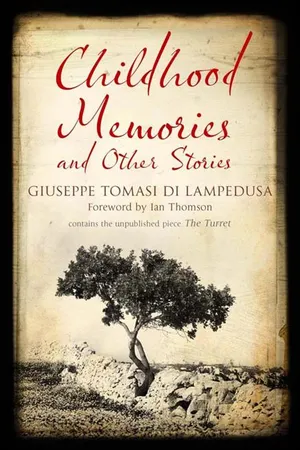
I have very recently (mid-June 1955) reread Henri Brulard1 for the first time since the long-gone year of 1922. At that time I was still obsessed by the ideas of “clear beauty” and “subjective interest”, and I remember that I didn’t like the book.
Now I am ready to agree with those who think it almost ranks as Stendhal’s masterpiece. There is an immediacy of feeling, an evident sincerity and a wonderful determination to dig through the accumulated strata of memory in order to reach what lies beneath. And what lucidity of style! How many impressions stream by, quite ordinary and yet so precious!
I should like to try and achieve the same effect. I actually feel duty-bound to do so. When the decline of life has set in, it becomes imperative to gather up as much as we can all the sensations that have passed through this body of ours. If it’s true that only a very few (Rousseau, Stendhal, Proust) can make a masterpiece of it, most people should at least be able to preserve, in this way, what would otherwise, without this slight effort, be lost for ever. Keeping a diary or writing one’s memoirs when one has reached a certain age should be an obligation imposed on us by the State: the material which would then accumulate over three or four generations would have inestimable value: many of the psychological and historical problems afflicting humanity would be solved. All written memoirs, even those of seemingly insignificant people, are of outstanding social value and rich in colour.
The extraordinary fascination we feel for Defoe’s novels lies in the fact that they are almost like diaries – quite brilliantly so, even though invented. Think, then, what genuine diaries would be like! Just imagine the real diary of some courtesan in Regency Paris, or the memoirs of Byron’s valet during his period in Venice!
So I will try to follow as closely as possible the method adopted in Henri Brulard – even to the point of including “maps” of the main locations.
But where I part company with Stendhal is over the “quality” of the memories which are evoked. He looks back on his childhood as a time when he was subjected to tyranny and abuse. I see my childhood as a lost paradise. Everyone was kind to me, I was treated like a king. Even those who later became hostile to me were, when I was a child, aux petits soins.2
Therefore, my readers – though there won’t be any – can expect to be taken on a stroll through a now lost Garden of Eden. If they get bored, I don’t really care.
I plan to divide these ‘Memoirs’ into three parts. The first part, ‘Childhood’, will describe the period of my life up to my going to secondary school. The second, ‘Youth’, will take us up to 1925. The third, ‘Maturity’, will continue to the present time, which I regard as the beginning of my old age.
Memories of childhood – for everyone I think – consist in a series of visual impressions, many of them still sharply focused, but lacking any kind of temporal sequence. To write a chronology of one’s childhood is, in my view, impossible: even with the best will in the world, the result would only be a false representation based on terrible anachronisms. I will therefore adopt the method of grouping memories by topic, and in this way give an overall idea of them through spatial ordering rather than temporal succession. I will speak of the places where my childhood was spent, of the people who surrounded me and of my feelings (whose development I will not necessarily seek to trace).
I undertake to say nothing which is untrue. But I do not wish to write down everything: I reserve the right to lie by omission.
Unless I change my mind, of course.
MEMORIES
One of the earliest memories I can date with some precision, as it involves a verifiable historical event, goes back to 30th July 1900, when I was just a few days older than three and a half.3
I was with my mother4 and her maid (probably Teresa, from Turin) in her dressing room. This room was longer than it was wide and was lit by a balcony at each of the short ends: one of them looked out onto the tiny garden separating our house from the Oratory of Santa Zita and the other onto a small internal courtyard. The bean-shaped (
) dressing table had a glass-covered surface, under which there was a pink fabric and legs covered in a sort of white-lace skirt. It was placed in front of the balcony that looked onto the garden. On it, there were hairbrushes and other such implements, and a large mirror with a frame, also of mirror glass, decorated with stars and other crystal ornaments which I liked a lot.
It was in the morning, about 11 o’clock I think – I can see the bright light of a summer day coming in through the windows, which were open but with the shutters closed.
Mother was brushing her hair, with her maid helping her. I was seated on the ground in the middle of the room, doing something or other – I can’t remember what. My nurse Elvira, from Siena, may have been in the room with us – but perhaps not.
Suddenly we heard hurried steps on the narrow internal staircase which connected the dressing room to my father’s small private apartment situated on the lower mezzanine just underneath the room where we were. He entered without knocking and said something in an agitated voice. I remember his tone vividly, but not what he said or what the words meant.
Yet I can still “see” quite clearly the effect his words produced: Mother dropped the long-handled silver hairbrush she was holding, while Teresa exclaimed: “Bon Signour!”5 The whole room was plunged into consternation.
My father6 had come to tell us that the previous evening, 29th July 1900, King Umberto had been assassinated at Monza.7 I repeat that I can still “see” the stripes of light and shadow coming through the shutters of the balcony window – that I can still “hear” the agitation in my father’s voice, the bang of the brush onto the glass surface of the dressing table and Teresa’s exclamation in Piedmontese – that I can “feel again” the dismay which filled everyone present. But as far as I’m concerned, all this remains detached from the news of the King’s death. Only afterwards was I told about the historical significance of what had happened: it is this which explains why the episode has remained in my memory.
Another memory which I can accurately date is that of the Messina earthquake (28th December 1908).8 The shock was felt very clearly in Palermo, but I don’t remember it – I think I must have slept through it. However, I can still “see” quite clearly my grandfather’s9 tall English case clock, then placed incongruously in the large winter drawing room, with its hands stopped at the fatal hour of 5.20 a.m. – and I can still hear one of my uncles (probably Ferdinando, who had a passion for clocks) telling me that it had stopped because of the earthquake on the night before. And I also remember how in the evening of that same day, at about 7.30, while I was in my grandparents’ dining room (I often sat with them when they dined, since it was earlier than my own mealtime), one of my uncles – probably Ferdinando again – came in holding a copy of the evening paper with the headline: “Huge Destruction and Many Victims at Messina Following This Morning’s Earthquake”.
I’ve said “my grandparents’ dining room”, but I should really say “my grandmother’s”,10 because my grandfather had already been dead for just over a year.11
This memory is visually much less vivid than the first one, but it is far more precise from the point of view of “what happened”.
A few days later, my cousin Filippo, who had lost both his parents in the earthquake, arrived from Messina. He went to live with my Piccolo cousins12 – together with a cousin of his own, Adamo – and I remember going there one bleak, wintry, rainy day to see him. I remember he (already!) owned a camera, which he had been careful to take with him as he fled the ruins of his home in Via della Rovere, and how he drew the outlines of battleships on a table which stood in front of a window, talking with Casimiro about the calibre of the cannons and the position of the gun towers. His air of detachment, amid the terrible misfortunes that had befallen him, aroused criticism even then among the family, although it was compassionately attributed to the shock (the word used then was “impression”) caused by the disaster and common to all the Messina survivors. Afterwards it was put down more correctly to his coldness of character, which was only stirred by technical matters such as, indeed, photography and the position of the gun towers in the early dreadnoughts.13
I remember too my mother’s grief when, many days later, the news arrived that the bodies of her sister Lina and her husband had been found. I see Mother seated in the large armchair in the “green drawing room” – a chair no one ever sat in (the same on which, however, I can still see my grandmother sitting) – wearing a short moiré astrakhan cape and sobbing. Large army vehicles were driving through the streets to collect clothing and blankets for the homeless. One of them came down Via Lampedusa, and from one of the balconies I was held out to give two woollen blankets to a soldier who was standing on the vehicle so that he was almost on a level with the balcony. The soldier belonged to the artillery regiment and wore a blue side cap with orange braids – I can still see his ruddy cheeks and hear his accent from Emilia as he thanked me with a “Grazzie, ragazzo”.14 I also remember the remarks people made about the “thoroughly shameless behaviour” of the earthquake survivors, who’d been lodged everywhere in Palermo, including the boxes in theatres, and my father smiling as he said they were keen “to replace the dead” – an allusion I understood all too well.
I have kept no clear memory of my aunt Lina, who died in the earthquake (the first in a series of tragic deaths that befell my mother’s sisters, exemplifying the three main ways of coming to a violent end: accident, murder and suicide).15 She visited Palermo infrequently – I remember her husband, however, with his lively eyes behind his glasses and a small unkempt beard speckled with grey.
Another day remains impressed on my memory, though I cannot date it precisely: it was certainly long before the earthquake at Messina, perhaps shortly after the death of King Umberto. It was in the middle of the summer, and we were staying with the Florio family at their villa in Favignana.16 I remember the nursemaid, Erica, coming and waking me earlier than usual, before 7 o’clock. She sponged my face down quickly in cold water and then dressed me with great care. I was led downstairs and emerged through a small side door into the garden. Then I was made to climb the six or seven steps leading to the front terrace, which looked out onto the sea. I can still recall the blinding sunlight of that morning in July or August. On the terrace, which was sheltered from the sun by large awnings of orange canvas billowing and flapping in the sea breeze like sails (I can still hear the clapping sound they made), my mother, the Signora Florio (the “godlike beauty” Franca)17 and others were sitting on wicker chairs. In the middle of them sat a very old lady with a hooked nose, bent with age and dressed in widow’s weeds which blew about in the wind. I was brought before her: she said some words I didn’t understand and then bent down even further to kiss me on my forehead (I must therefore have been very little if a seated woman needed to bend down to kiss me). After this, I was pulled away and taken back to my room: my Sunday-best clothes were removed and replaced with a plainer outfit, and I was led down to the beach, where I joined the Florio children and others. After bathing in the sea, we spent a long time under the bakingly hot sun playing our favourite game, which consisted in looking in the sand for those tiny pieces of bright-red coral that could often be found in it.
Later in the afternoon, it was revealed to me that the old lady was Eugénie, the former Empress of France.18 Her yacht was lying at anchor off the coast of Favignana, and she had been the Florios’ guest at dinner the previous evening (something I knew nothing about, of course). In the morning she had come to take her leave (at seven o’clock, imperially indifferent to the torment this caused my mother and the Signora Florio), and the young scions of the families had been duly presented to her. Apparently, the remark she made before kissing me was: “Quel joli petit!”19
CHILDHOOD
Places
First of all our house.20 I loved it with utter abandon. And I still love it today – now that it has been a mere memory for the past twelve years. Up until a few months before it was destroyed, I slept in the room where I was born, four yards away from where the bed in which my mother had given birth to me had been placed. And I was happy in the certainty that I would die in that same house – perhaps in that very same room. All the other houses I have known – not many, unless you count hotels – have been mere roofs sheltering me from the wind and sun, not houses in the ancient and venerable meaning of the term. Especially the house I live in now – a house I do not like in the least, which I bought to please my wife and was only too glad to purchase in her name, since it cannot be said truly to be my house.
Therefore it will be a painful task for me to evoke this beloved place that no longer exists in all its completeness and beauty, as it was until 1929 and remained until 5th April 1943, when bombs carried across the Atlantic sought it out and destroyed it.
The first sensation that comes to my mind is its vastness. And this is not because children see their surroundings as larger than they actually are, but because it was so in reality. When I saw the ground it used to stand on covered with its hideous ruins, the area measured over 17,000 square feet. One wing was occupied by us and another by my paternal grandparents, while my unmarried uncles lived on the second floor. I had the run of the entire place for twenty years – its three courtyards, its four terraces, the garden, the huge staircases, its entrance halls and corridors, the stables and service rooms for servants and administrators. For a small boy on his own, it was a veritable kingdom – an empty kingdom which was at times populated with figures full of affection.
I am sure that nowhere on earth was the sky a more intense blue than on that stretch over our enclosed terrace – nor did the sun cast gentler beams of light than it did through the half-closed blinds in the “green drawing room”. No curiously shaped patches of damp on the outside walls of courtyards ever excited the imagination more than those found in m...
Table of contents
Cover
Title page
Copyright page
Contents
List of Illustrations
Foreword by Ian Thomson
Note on the Texts
Childhood Memories
Joy and the Law
The Siren
The Blind Kittens
Notes
Biographical Note
Trusted by 375,005 students
Access to over 1.5 million titles for a fair monthly price.
Study more efficiently using our study tools.
Frequently asked questions
Yes, you can cancel anytime from the Subscription tab in your account settings on the Perlego website. Your subscription will stay active until the end of your current billing period. Learn how to cancel your subscription
No, books cannot be downloaded as external files, such as PDFs, for use outside of Perlego. However, you can download books within the Perlego app for offline reading on mobile or tablet. Learn how to download books offline
Perlego offers two plans: Essential and Complete
Essential is ideal for learners and professionals who enjoy exploring a wide range of subjects. Access the Essential Library with 800,000+ trusted titles and best-sellers across business, personal growth, and the humanities. Includes unlimited reading time and Standard Read Aloud voice.
Complete: Perfect for advanced learners and researchers needing full, unrestricted access. Unlock 1.5M+ books across hundreds of subjects, including academic and specialized titles. The Complete Plan also includes advanced features like Premium Read Aloud and Research Assistant.
Both plans are available with monthly, semester, or annual billing cycles.
We are an online textbook subscription service, where you can get access to an entire online library for less than the price of a single book per month. With over 1.5 million books across 990+ topics, we’ve got you covered! Learn about our mission
Look out for the read-aloud symbol on your next book to see if you can listen to it. The read-aloud tool reads text aloud for you, highlighting the text as it is being read. You can pause it, speed it up and slow it down. Learn more about Read Aloud
Yes! You can use the Perlego app on both iOS and Android devices to read anytime, anywhere — even offline. Perfect for commutes or when you’re on the go. Please note we cannot support devices running on iOS 13 and Android 7 or earlier. Learn more about using the app
Yes, you can access Childhood Memories and Other Stories by in PDF and/or ePUB format, as well as other popular books in Literature & Literature General. We have over 1.5 million books available in our catalogue for you to explore.