- 176 pages
- English
- ePUB (mobile friendly)
- Available on iOS & Android
eBook - ePub
About this book
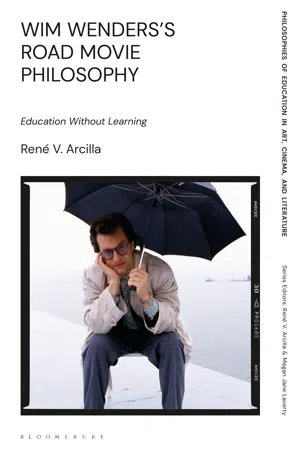
What is education? Most of the time, we have little patience for this question because we take the answer to be obvious: we identify education with school learning. This book focuses on education outside of the school context as a basis for criticizing and improving school learning. Following the examples of Jean-Jacques Rousseau and John Dewey, Arcilla seeks to harmonize schooling with a more pervasive education we are all naturally undergoing. He develops a philosophical theory of education that stresses the experience of being led out-a theory latent in the Latin term, "educere"-by examining the road movies of Wim Wenders. This book contributes both to our understanding of another crucial kind of education our schooling could better serve, and to our appreciation of what unifies and distinguishes Wenders's achievements in cinema.
Information
1
Alice in the Cities
A man is driving a car. A bit later, he is riding in a taxi. Still later, he is on a boat, this time accompanied by a young girl. After some bus and monorail trips, they end up in a different car that he again drives. Throughout these sequences and others from Alice in the Cities, the camera intermittently turns from the characters to shoot out of the vehicles’ windows or at rest stops. It records passing landscapes in South Carolina, New Jersey, New York City, Amsterdam, Wuppertal, Essen, Oberhausen, Gelsenkirchen, and other places along this movie’s road. And it responsively focuses on the smallest, most ordinary incidents chanced upon along the way: a blooming tree waves in the wind; cows graze in a pasture in front of a factory; a woman lifts a veil over her mouth; a boy bicycles on the sidewalk along a row of houses (Figure 1.1). The sheer amount of time and attention that the film devotes to the life rustling around its travelers is striking, particularly compared to most fictional films.
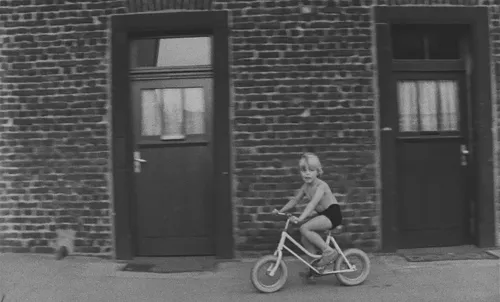
Figure 1.1 Alice in the Cities directed by Wim Wenders © Filmverlag der Autoren, Munich/Westdeutscher Rundfunk, Cologne 1974. All rights reserved.
Why is this? What is so interesting about the various places and their happenings that the film’s characters and we move through? As I discussed in my introductory chapter, this question broaches the road movie. The term suggests that there is a genre of cinematic, fictional narrative that aspires to provide us with some satisfactory, meaningful answers.
Alice in the Cities, released in 1974 as Wenders’s fourth feature film, is his first sustained attempt to develop such a narrative.1 What always beguiles me about it is that for long stretches, the story barely and only ambiguously exists. Indeed, shortly after the initial scenes, its main protagonist, thirty-one year-old Phillip Winter, confesses that he is unable to construct a story out of his photographic images; only in the final scene does he declare that he is now ready to finish the story.2 As the film takes us from Surf City toward Munich, then, it places us on the road from storylessness to authorship. This is the road I want to map in this chapter, as a first step toward tracing the family features of Wenders’s road movies. To do so, I need to respect how the film creates for its movement a mesmerizing state of narrative suspension and I need to resist the temptation to impose a premature story on this movement in the form of a plot synopsis. If I can focus on patiently reconstructing how the film’s events and its characters’ interactions gradually turn into a story, I think I will have a better shot at drawing into view what is at stake in it. This work of Wenders shows us how Phillip comes to find redemptive meaning in the experience of being on the road with the eponymous Alice. This experience leads him, and us, to the question of destiny.
Alice opens with a lingering shot of a plane in the sky. Following it as it flies further away and its engine roar is replaced by music, the camera encounters in the foreground a street sign. Panning down from the sign, we come to a deserted beach. There is a cut to a partial reverse-angle shot of a boardwalk and then the camera looks underneath it to find, sitting in the sand, Phillip. He looks unhappy. He lifts his own Polaroid camera to his eyes, takes a picture, and waits for the ejected photograph to develop. We see the beach and then we see him looking at the image of the beach, comparing them. As if to express his disappointment, he starts to sing, in a distinctly sardonic tone, the refrain to The Drifters’ “Under the Boardwalk.” The next, pulled-back shot discloses that in front of him lies a whole row of such photos, one that echoes the very medium of this picture (Figure 1.2). He picks each up, carefully blows the sand from it, and deposits it in a shoulder bag. He then takes up the bag and walks away.
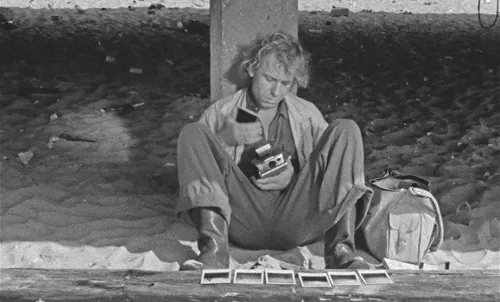
Figure 1.2 Alice in the Cities directed by Wim Wenders © Filmverlag der Autoren, Munich/Westdeutscher Rundfunk, Cologne 1974. All rights reserved.
Like most, I cannot help but greet any film at its start with the question of what it is about. Wenders’s answer in this case is remarkable for its combination of leisureliness and concision. Right out of the gate, Alice rolls along at an unhurried, even pace that lasts until its close. The film is evidently about this kind of time, one that signals that spectacular swerves and explosions of passion are probably not on the horizon. To borrow David Bordwell’s useful term, Wenders starts, and stays, on a “dedramatizing” rhythm that propels us gently forward and hypnotizes us into watching even when nothing much seems to be happening.3 This does not mean, however, that the time of the film is devoid of emotion, or even, as we shall see, of unforced, non-histrionic drama. The musical theme and the lone jet give the opening a melancholy air and the filmmaker quickly and succinctly roots that feeling in who the film is about. Phillip is in a condition that resembles flight. His behavior on the beach introduces us to the elements of his predicament. He looks at the world from a place of solitude. Rather than missing, and searching for, the company of other people, however, he is focused on his problematic relationship to the very world itself. That relationship has something to do with the fact that his photos of things do not capture reality. More generally, any image of a time and a place, such as that imagined in a song, appears deceptive. This gap between the world and his pictures of the world drives him to redouble his photographic attempts to o vercome it. “It just never shows what you saw!” he complains obsessively a few scenes later, glancing down at yet another one of his pictures while on the road.
Some of us may recognize in Phillip the textbook problem of philosophical skepticism: How can I ever know that my experience of the world is true to the way the world really is? I want to steer away from analytical discussions of this, though, in order to pursue how Wenders invests this rather abstract, epistemological conundrum with dramatic significance. After all, most of us go about our lives without giving hardly a thought to something so laughably arcane. When faced with this man preoccupied by it, why do we not simply dismiss him as crazy, or at least as someone who has nothing to say about the pressing, practical challenges of our lives?
What may give us intriguing pause is that Wenders implicates in this problem the very film we are watching. Alice, like all fictional work in the medium of cinema, relies on the photographic recording of events at a particular time and place in order to convey its story. This convention establishes what we as viewers may expect from it. If, on the contrary, we find ourselves unable to assume that the film’s images are images, that they automatically and infallibly depict some (perhaps disguised) part of the world, then whatever story the film tries to tell would be apt to be lost in our perplexity. Consider, for instance, the case of a film recounting the sci-fi tale that opens this book. I could imagine the filmmaker employing all kinds of special effects to create the illusion of a shockingly alien planet and society. All of this wizardry, however, trades on my rock-solid understanding that at some level, as the proverb has it, photographs do not lie. On top of all the artful makeup, intricate sets, and lighting trickery, what seals my suspension of disbelief in the portrayed alien is my recognition that this work of cinema by nature documents existence. If I suddenly realize that this is not a photographic work at all, I will be at a loss as to how to compose its nonimages into a story.
Along these lines, Alice takes off right from the start from a problem that casts doubt, in modernist fashion, on its very intelligibility as a film. On the one hand, the film announces, as it were, that it is going to tell a story about a man alive to a version of the problem of skepticism. This story promises to make understandable how someone could become preoccupied with the gap between photographs and their objects, and how struggling with this gap could make a meaningful difference to one’s life. On the other hand, to the extent the film succeeds at this, it will expose its viewers to this same gap and its self-conscious-making paradoxes. They will be invited to identify with a man who cannot identify with a film character. In this sense, Wenders offers us a story that appears bound to be self-deconstructing; at the same time, that story is directly connected to ours as its viewers. This ingeniously unstable ambiguity is part of its hook.
Returning to that sort of story, then, why is Phillip so upset that his photography fails to capture the real world? Why does he even care about this problem? Some of the reasons emerge in a pair of early scenes. The first one takes place after he has been driving for a while up the coast toward New York. One evening, he pulls into the Skyway Motel to check into a room, draws open the window curtains to disclose the neon signs glowing outside, turns on the television, and collapses exhausted on the bed. The TV is playing a classic film by John Ford, Young Mr. Lincoln (1939). Phillip drifts off to sleep and when he awakens, he watches a scene in that movie that is abruptly broken by commercials. “A mind is a terrible thing to waste,” intones one; in another, a gregarious man from “sunny Florida” introduces himself so that he can pitch something. These advertising images blend in seamlessly with the signs on the streets. Phillip flies into a rage and smashes the machine on the floor.
This first scene tells us that there is something about television that Phillip hates. The second tells us why. After he has reached New York and defeatedly bought a ticket to return on the morrow to Munich via Amsterdam, the scene opens with him sharing a hotel room for the night with two people whom he had just met earlier in the day: Alice Van Dam, the nine-year-old of the film’s title, and her mother, Lisa. Alice is asleep on a couch. Lisa raises her head from her pillow as if she cannot sleep and sees Phillip sitting at the foot of the bed, watching a disjointed montage of images on the TV with the sound off and scribbling in a notebook. She asks about what he is writing. In reply, he reads aloud:
What is so barbaric about this TV is not that it chops up everything and interrupts it with ads, though that’s bad enough. Far worse is that everything it shows turns into advertising too, ads for the status quo. All the TV images come down to the same common, ugly message, a kind of vicious contempt. No image leaves you in peace. They all want something from you.
Phillip detests the feeling that television images, like the billboards and signs we are surrounded by, are always trying to reach inside and manipulate us so that we invest ourselves in the prevailing rules of the game. His suffering is exacerbated by the fact that beyond interrupting the programming, the commercial has become its very form; every program now adopts the rhetoric of selling something, of approaching its mass viewers, including him, as potential suckers. Being a similar medium of moving pictures, can cinema oppose this tendency? Can Alice? How? Phillip’s photography, not to mention Wenders’s filming, may be accordingly understood to be a search for images that resist this whole way of looking at the world. Such images would somehow open up and maintain a respectful distance between the world and the viewer who contemplates it.
Unfortunately, as we have seen at the outset, Phillip’s search is not going well. His photos only come up false, which fuels his driving worry that there is no alternative to deceptive pictures and their insinuating tales. This is why the gap between image and reality maddens him. Indeed, when later in the film he tours Amsterdam on a boat, the way the guide frames what he sees in order to sell the city revolts him so much, he has to quit the ride before it is over. It seems to him that nothing exists any longer outside the television set.
Moreover, this is not the only thing Phillip quits. It turns out that he is a journalist who has been given the assignment of writing a story on the American landscape. We learn this when he shows up at his editor’s New York office empty-handed. The editor angrily interrogates him about what has gone wrong; Phillip explains that as he traveled, the images he saw changed him. As a result, he was impelled to take notes on them and to take plenty of his own photographs, but he has stopped working on any sort of story. He promises to turn these notes and photos into one once he is back in Munich but the editor washes his hands of the entire project; he evidently does not believe that this photo maniac is any longer capable of storytelling. Correspondingly, we may start to become dubious that Wenders’s initial series of scenes in Alice, with their haphazard shots of the road and their rants agains t the transformation of life into spectacle, will ever crystallize into much of a narrative. Both Phillip and Wenders have taken us on a trip away from any kind of story.
The first part of Alice, then, follows Phillip on his journey to and around New York. He is a man who has become alienated from the land through which he travels by its inescapable, invasive images that assault him. They are relentlessly trying to guide him toward their products. He attempts to defend himself by producing his own counterimages, but they invariably lack truth. Consequently, the real world, off in the distance, ends up leading him on by eluding him and he has become sick of the trip. On top of it all, his very ability to give story form to his life is blocked. Why is this? Perhaps it is because he has come to realize that putting the moments of his life in the service of a story is akin to using images as a sell. He cannot bring himself to participate in this kind of exploitative and distorting betrayal: something about his experience of the here-and-now as such, in its vivid integrity, calls to him to be preserved. Although he always fails to capture it, he senses that truth exists there, in the instant. Like many, he has been seized by the ethic of living in the moment. Formulating this predicament from another angle, we could say that Wenders’s film up to this point poses the question of whether it can avoid being made for TV. Is it possible for it to tell a story—which usually implies the point of view of someone looking back on things that have already happened in order to lead its audience to something like a moral—that is not false but true to the open-ended, present tense of filming? Unlike television, can it open our eyes, rather than blind us, to the way the world simply and sometimes movingly, if unprofitably, happens?
Indeed, perhaps this is a good place to note quickly that if one wants to dramatize the contrast between something occurring in the present and a retrospective account of that past event, the medium of narrative cinema is especially fitting. Film records what is happening in the world, rather than what an author remembers has happened. Conversely, if one is interested in road journeys that turn on this contrast, one may have reason to pass over the medium of journey literature. A film that records someone being on the road and then someone recalling being on the road draws the difference more sharply than a novel, like Jack Kerouac’s, that reflects on both of these experiences.
A last scene in New York before Phillip does fall ...
Table of contents
- Cover
- Half-Title
- Series
- Dedication
- Title
- Contents
- List of Illustrations
- Preface
- Introduction
- 1 Alice in the Cities
- 2 Related Road Movies
- 3 Genre Contrasts
- 4 Education Movies
- 5 Learning without Education
- 6 Coda
- Index
- Copyright
Trusted by 375,005 students
Access to over 1.5 million titles for a fair monthly price.
Study more efficiently using our study tools.
Frequently asked questions
Yes, you can cancel anytime from the Subscription tab in your account settings on the Perlego website. Your subscription will stay active until the end of your current billing period. Learn how to cancel your subscription
No, books cannot be downloaded as external files, such as PDFs, for use outside of Perlego. However, you can download books within the Perlego app for offline reading on mobile or tablet. Learn how to download books offline
Perlego offers two plans: Essential and Complete
- Essential is ideal for learners and professionals who enjoy exploring a wide range of subjects. Access the Essential Library with 800,000+ trusted titles and best-sellers across business, personal growth, and the humanities. Includes unlimited reading time and Standard Read Aloud voice.
- Complete: Perfect for advanced learners and researchers needing full, unrestricted access. Unlock 1.5M+ books across hundreds of subjects, including academic and specialized titles. The Complete Plan also includes advanced features like Premium Read Aloud and Research Assistant.
We are an online textbook subscription service, where you can get access to an entire online library for less than the price of a single book per month. With over 1.5 million books across 990+ topics, we’ve got you covered! Learn about our mission
Look out for the read-aloud symbol on your next book to see if you can listen to it. The read-aloud tool reads text aloud for you, highlighting the text as it is being read. You can pause it, speed it up and slow it down. Learn more about Read Aloud
Yes! You can use the Perlego app on both iOS and Android devices to read anytime, anywhere — even offline. Perfect for commutes or when you’re on the go.
Please note we cannot support devices running on iOS 13 and Android 7 or earlier. Learn more about using the app
Please note we cannot support devices running on iOS 13 and Android 7 or earlier. Learn more about using the app
Yes, you can access Wim Wenders's Road Movie Philosophy by René V. Arcilla in PDF and/or ePUB format, as well as other popular books in Education & Education Theory & Practice. We have over 1.5 million books available in our catalogue for you to explore.