The cactus thrives in the desert while the fern thrives in the wetland. The fool will try to plant them in the same flower box.Vera Nazarian, The Perpetual Calendar of Inspiration
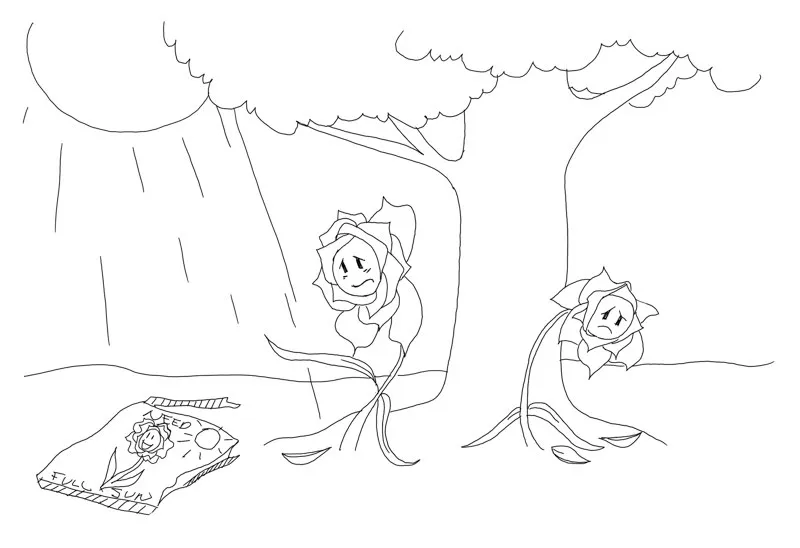
A huge oak tree in my front yard allows hardly any sun to hit the flower beds along my house. For almost every hour of the day, my front yard is covered in shade. When I first moved in, I went to a nursery to buy flowers and plants to adorn these beds in color. I found dahlias that burned like the sunset, their petals stretching wider than my hands. Zinnias that looked like you could squeeze them and cause paint to run onto the ground. Sunflowers that would make Van Gogh’s mouth water. I couldn’t wait to fill the hatchback of my Subaru with these flowers and plant them along the brick of my new home.
Then I noticed each of these had a tag that said, “Needs Full Sun.” For a moment, I paused and wondered about that oak tree, but quickly dismissed the tag as more of a suggestion than a requirement. I loaded the car with as many plants and flowers as I could fit inside and planted them under that red oak.
A month later, they were all dead.
It turned out that “Needs Full Sun” was not a suggestion. The flowers I desperately wanted for my yard needed a certain environment to survive. They needed hours and hours of sun to grow, bloom, and grace my landscape beds with their wonder. I would have had to cut down the oak tree, and since I’d just spent a month’s salary on flowers, that wasn’t going to happen. Today my beds are filled with shade-tolerant, monochromatic hostas, and I’m green with envy of my neighbors’ sunny yards.
Expecting a group of students—who have always approached learning from an individual perspective—to work together, have creative breakthroughs, and be more efficient than when working alone is like planting knockout roses in the shade. You’ve planted these amazing flowers but given them none of what they need to survive. Collaboration requires intentionality and a culture that allows it to thrive. Only when this culture exists and is continually nurtured can collaboration be successful and not something that will make you want to rip your hair out.
Many teachers want to do collaborative work and often start with a group project. The problem is that their students are used to an environment that operates on individual assignments, individual grades, and individual progress. Seating arrangements, assessments systems, classroom protocols, and even the nature of most classes are all designed for the enlightenment of the individual student. Most K–12 settings lack an environment that supports successful collaboration. As a result, these lone collaborative projects, which are like small islands in a vast ocean of individualism, usually fail, making it that much easier to write off group work and return to what is safer and easier.
Just because people are communal beings does not mean they naturally know how to be productive communally. They have to be taught what collaboration is and what it is not, what it looks like, and what purpose it will serve in their learning. That means teachers, from the start of every school year, must be intentional about creating a collaborative culture. They have to lay the foundation for a collaborative culture, always assuming that their students are not yet skilled collaborators. The work of establishing a collaborative culture with a new group of students requires three major components:
- Clarity
- Reflection
- Intrinsic motivation
These components, which we will explore further, have to be introduced before anything else in a collaborative classroom. Building culture is about creating a place people want to be. This is why in my high school classrooms, the first week of the school year never covered any content work. I always spent the first weeks setting the tone for the rest of the year, building relationships with students, and helping them get to know each other so that they felt safe and comfortable working hard in that environment the rest of the year. There’s obviously a time sacrifice involved in doing this, but establishing a collaborative culture is essential and sets your class up for success.
Establishing Clarity
Students need to have clarity when entering a collaborative classroom. Moving from an individual focus to a group focus can be jarring for many students. It’s like plucking a fish out of the ocean and expecting it to breathe on land. Students should know from the first day how your class might be different from what they are used to and what your expectations are in a collaborative environment. If students are not introduced to a collaborative classroom with clarity, it will lead to friction and resistance down the line, which is a natural reaction.
I’ve worked with many schools to help their staffs navigate project-based learning (PBL) and innovate their teaching methods. In too many instances, an administrator brings me in to work with teachers to help them completely flip their learning models, with the expectation that everyone would teach using this new approach from then on. A few teachers in every group are excited about learning new processes, but everyone is obligated to be there. Most of the experienced teachers sit with their arms crossed, projecting that here-we-go-again attitude, and are clearly not thrilled to be learning another new model they don’t believe will work.
I often get questions like, “Do we have to implement everything you are going to talk about today?” or “Is this going to become a part of our evaluations?” If the principal isn’t in the room, someone might even ask, “Three years ago we adopted a different learning model. Do we really need to do this again?”
It’s become apparent to me after doing the professional developments (PDs) for a while that I can’t just dive into the content of my workshop. I cannot simply walk in and begin to teach and try to inspire teachers to push their boundaries and try this methodology I know to be effective and transformational. I have to first provide clarity and understanding if I ever hope to inspire others to try it out. Many teachers have worked in a certain type of environment for years, and they are most comfortable with what they know. Their resistance, I think, is rooted more in skepticism than arrogance. They have had so many new ideas thrown at them with little explanation that they now harbor a large degree of skepticism.
There has to be a foundation for innovation before that new learning can occur. This foundation often does not get laid, and the result is new systems failing and an inevitable return to the previous model.
The same is true for students. Whether you teach first graders or college seniors, most of your students have that bad taste in their mouths from when working with others has gone wrong. For many students, collaboration was not a positive experience, and so many will be hesitant about entering a collaborative classroom. Before diving into any collaborative work, give students a chance to call out reasons they do not like it.
Start by having them write their reasons, giving the prompt: “Make a list of reasons why group work is difficult.”
Every single student should be able to generate a list. For even the most skilled collaborators, the work is difficult at times.
Once students have their lists, let them share their responses aloud and make sure not to minimize anything that they say. Listen to them; allow them to be honest as they slam collaboration, which they most likely will. I’ve encountered few students (and adults) who enjoyed collaborative work before they learned how to do it successfully. They need to know that you understand the struggle and are not naive about the challenges of collaboration.
You also hate when one person does all the work and everyone else gets credit. You get why they’d be hesitant to work with people they don’t like. Make clear that you understand their resistance and that those are issues you will work on during the school year. (By the way, this is exactly what I do with participants in my workshops.)
Class Contract Gallery Walk
Once grievances have been aired, shift the conversation to what you can do to make the bad parts of collaboration happen less and less. “What are some things our class can do to make sure we don’t hate, but actually enjoy, working with each other?”
This conversation is a great way to introduce the idea of creating a class contract. A class contract, also known as a social contract, is a list of norms and expectations for a class that students help create and then abide by the rest of the year. In a collaborative classroom, everything on the contract should be aimed at improving the way students work together. Start by asking a handful of key questions and having students write their responses. A fun way to do this is to set up a gallery walk, with the questions written on posters, and have students write their responses on sticky notes and place them on the posters throughout the room. As students silently walk around to each poster, if they see a sticky note with something they agree with, they should put a check mark next to it.
Here are some examples of helpful focus questions:
- What does a productive class look like?
- How do you want to be treated in here?
- What does a healthy class discussion look like?
- What does it mean to have a safe classroom—physically and emotionally?
- What actions show someone is being responsible?
- What does it look like to be involved in your learning?
- What does it look like to be involved in each other’s learning?
After students respond and place their sticky notes around the room, have them divide into small groups and discuss their answers. The next step is to take the discussion to the whole group and talk about everything students wrote down. What responses have the most check marks? What do they value most in a classroom environment? Synthesize their responses down to a few essential rules and norms everyone can agree to, print these norms on a poster, and hang them in a visible location in your classroom. This poster can be student-designed and be visually attractive or it can be as plain as print on paper. What’s most important is that it was created by the entire class and remains on display for your class every day. You can even have students sign the bottom of it as proof that they have all agreed to abide by their own rules.
A finished class contract could look something like this:
- I will listen to others, whether I agree with them or not.
- I will let others know if they have hurt or offended me.
- I will work hard to succeed but also to help others succeed.
- I will always strive to meet deadlines.
- I will always strive to do my best work.
- I will take risks and challenge myself and others.
This contract can be used for accountability and as a reminder to students of what they agreed to at the beginning of the year. More importantly, creating a class contract is a way to provide clarity to students about the expectations for your collaborative classroom. They will learn early on that there are specific traits—particularly respect for one another—that are valued in your classroom. This clarity will help pave the way for healthy collaboration the rest of the year.
Practicing Reflection
Part of growing in any skill or ability is giving yourself time to reflect so you can make iterations and improve. Life is too busy and too noisy to make meaningful adjustments on the fly. We have to develop a habit to pause and reflect regularly. In our personal lives, this can mean journaling, honest discussions with loved ones, or even just turning off the radio or podcast on the way to work and driving in silence. It’s in this intentional time that we can discover why certain class activities didn’t work, how to mend a relationship with a coworker, what we need to cut to find balance in life, or other challenges that need to b...