What is the fate of cinema in an age of new technologies, new aesthetic styles, new modes of cultural production and consumption? What becomes of cinema and a century-long history of the moving image when the theatre is outmoded as a social and aesthetic space, as celluloid gives over to digital technology, as the art-house and multiplex are overtaken by a proliferation of home entertainment systems?
The Orientation of Future Cinema offers an ambitious and compelling argument for the continued life of cinema as image, narrative and experience. Commencing with Lumière's Arrival of a Train at a Station, Bruce Isaacs confronts the threat of contemporary digital technologies and processes by returning to cinema's complex history as a technological and industrial phenomenon. The technology of moving images has profoundly changed; and yet cinema materialises ever more forcefully in digital capture and augmentation, 3-D perception and affect, High Frame Rate cinema, and the evolution of spectacle as the dominant aesthetic mode in contemporary studio production.
- 320 pages
- English
- ePUB (mobile friendly)
- Available on iOS & Android
eBook - ePub
About this book
Information
PART ONE
The age of late cinema
1
On cinematic experience
Early and late cinema
Screen, film, spectator; image, movement, and time; representation and the problem of ‘realism’, or the relation of image to referent; signification and narrative; technology and art: the form and vocabulary in which these questions are posed has changed continuously in the history of film theory as a series of conflictual debates. Yet the basic set of concepts has remained remarkably constant.1
One of the earliest experiences of moving images was an encounter with a train arriving at a station. The spectacle of Lumière’s train (L’Arrivée d’un Train à La Ciotat [Arrival of a Train at a Station], 1895) assaulted the senses of an unsuspecting audience who had merely gathered in a café, as they had so many times before, to see what the fuss was about.2 The train was, as Tom Gunning has suggested, a shock to the spectator.3 The object of fascination was not a mechanical form, not the instrument of modern industrialized life, but an image on a screen. It was this image in movement that enthralled the ‘naïve’ spectator. And yet now, after a century of viewing cinema, of living life through the screen, that early encounter seems so far distant as to be almost incomprehensible. What must that moment have been like, to see actual life transfigured in a moving image? How would the spectator have made sense of such a spectacle?
This chapter reflects on how cinema manifests in individual and collective minds, from Lumière’s early moving images to what I call the age of late cinema, in which new technologies, new cinematic spaces, the new material of cinematic life, transforms the old medium into something equally astonishing.4 I begin by revisiting some of the sacred positions brought to bear on a century of meditation on the medium: on its claims to aesthetic brilliance, philosophical truth, or more humbly, to represent that which we already experience in our sensory lives – the image of the world. Surely this is where we begin each time we enter the darkened space of the theatre, or sit in front of our laptops – the cinema gives us back the life we experience through our senses.
However, cinema could never maintain a century-long life as merely representation. For the image to be of any real value, it must be greater than, merely, the image of the world. As Bazin suggests, the question of experiencing the world through cinema, which is perhaps the fundamental question that drives its spectators to the theatre, is a psychological one.5 Cinema represents an obsessive tendency to experience the world in a certain way. In an engaging meditation on cinema’s effect, Sean Cubitt declares: ‘I want to know what cinema does. If it causes no effect, however ornery or belated, cinema doesn’t do anything, and there is left only the question of what it is or, more exactly, what it fails to be. Cinema does something, and what it does matters.’6 Cubitt’s charge here is to return to the essence of cinema – the matter that makes it what it is. But what it is, for Cubitt, is determined by what kind of transformation it effects. His position is thus a savvy confrontation with the long history of cinema that traces its being, its ontological presence, without also illuminating its purpose. How else might a spectator explain an obsession with cinema, but as a radically new image of the world? Why else would we seek it out?
In this chapter, I wish to charge the spectator (and reader) with the self-same shock of the image Gunning identifies in Lumière’s early film – images that, spellbinding then, materialize now as grainy, degraded, flawed, and for this lack of pixilated brilliance, all but inaccessible. Take a moment to stream a YouTube clip of Lumière’s L’Arrivée d’un Train en Gare de La Ciotat (Arrival of a Train at a Station, 1895). Experience the banality of this black and white image, that was once new and pristine, but is now degraded in digital form. To my students, and perhaps to the majority of contemporary cinema spectators, this image is lifeless. But if cinema is to maintain its life for the foreseeable future, if it is to invigorate an image of the world growing ever distant from the celluloid century of the medium, the image must continue to manifest as astonishment, as novelty object. This must be its overarching effect: to astonish, to fascinate, to engage, to overwhelm the senses, to transform the internally, psychologically animated lives of its spectators.
Old and new technologies of the image
Lumière’s celluloid image, and the celluloid image of the greater part of the life of cinema, was a product of technological opportunity. At a point of origin in the late nineteenth century, with the image so strikingly new to the world, equally fascinating and disconcerting for the early spectator was the technological object that gave the image in movement its unnatural life – the Cinématographe (figure 1.1).
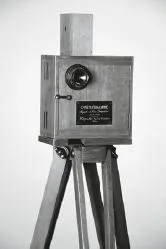
FIGURE 1.1 Early Cinema’s Apparatus: the Cinématographe.
This small square box rested on tripod legs (though it could easily be held and carried) and cranked out, quite literally, its moving image of the world. The device permitted the observer to ‘capture’ the world – a speeding locomotive, or women leaving a factory, a baby being fed, a comedic routine involving a garden hose, later royal parades and commemorations, exotic wonders of the Far East, even races at Flemington, Melbourne.7 These worlds, once present and past in the same instant to our sensory perception, and irrecoverable outside of the still life of a photograph, were brought back in the fullness of their movement – a train that was now a projectile, bursting into a station that had materialized in the quaint interior of a Parisian café (Salon Indien du Grand Café).
The fascination of early cinema was equally a fascination with the technology of a new world, a mechanism that belonged to industrial modernity alongside the motorcar and the airplane. Much of Lumière’s most interesting early cinema depicts industrial processes, such as a train arriving at a station, or workers exiting a factory. In an account of the origins of the Cinématographe, Bordwell depicts the early presence of the camera as a novelty mechanism, and Lumière and his coterie of cinematographers as fiercely protective of the secret of their new technology. Other pioneers of varying kinds, including Méliès, attempted to purchase the Cinématographe from the Lumières without success. Even when travelling the world, spanning the continents of Europe and North America in the first year (1895–96), and much of the rest of the world by 1897, Lumière’s cinematographers kept their technology to themselves.8
Cinema was a technological object then, a product of an industrial modernity, and its long history has seen an evolution of that technological form. The screened image engages our senses, certainly. We are moved, or in currently fashionable language, affected by its potentiality on the screen. But the technology that once gave life to moving images, and arrested the world’s attention with its seemingly magical properties, is equally present in the material of current cinematic life. The technology of the life of the image remains a profound presence in the most immediate, unadorned, unconcocted cinema. The most determinedly and self-consciously realist cinema, the early Dogme films for example, present a technological image, an image born of a uniquely technological effect. To return to Cubitt, surely the quest for the purpose of cinema must engage the image as a material that springs, at the end of a long itinerary, not from the actual physical world, or from the world of the senses, or indeed from the internal world of the imagination – but from a mechanical contraption.
I’m sitting at the present moment in my office surveying the product of new technology: YouTube and its technological shell, an iMac (27” widescreen display) with its assorted paraphernalia of image production and reception. On screen, I have a stream of film, streaming in the present an image from December 1895, when Lumière first captured a group of women exiting a factory: La Sortie des usines Lumière à Lyon [Workers Leaving the Lumière Factory in Lyon, 1895].9 The clip stream is 38 seconds in duration. Cubitt makes ingenious use of this simple tract of film (though, of course, it’s no longer film, a notion I will attempt to project to its radical end), but here, on YouTube, with the image moving in awkward, spasmodic sections, I wish to merely stop it in its natural motion. The natural life of this image in 1895 was as an image in motion – as what Bazin terms, in another context, the image of inherent continuity;10 I address this section of film as a continuous flow of place and people in time. But now, on my iMac screen, this inherent continuity of motion, this movement, has been stilled. I have the YouTube clip on pause, bringing what was a natural progression of early cinema to the more artificial still-life digital rendering. You may wish to call up this image on your own screen. The pause is arbitrary, at 17 seconds; the postures of the bodies are natural, though their stillness is a contrivance of the technology at my fingertips.
Stilled this way, Lumière’s image takes on a new and unintended life of its own. My contemplation of the women stilled has altered either my perception of them or the ontology of the streamed image. Stilling the progression, I change in some essential way the image as object. The women now seem constrained by the boundaries of the image; off-screen space, so alive to the potent...
Table of contents
- FC
- Title
- Copyright
- Contents
- Acknowledgements
- Part One: The age of late cinema
- Part Two: The spectacle image
- Part Three: On the Characteristics of Future Cinema
- Bibliography
- Filmography
- Index
Trusted by 375,005 students
Access to over 1.5 million titles for a fair monthly price.
Study more efficiently using our study tools.
Frequently asked questions
Yes, you can cancel anytime from the Subscription tab in your account settings on the Perlego website. Your subscription will stay active until the end of your current billing period. Learn how to cancel your subscription
No, books cannot be downloaded as external files, such as PDFs, for use outside of Perlego. However, you can download books within the Perlego app for offline reading on mobile or tablet. Learn how to download books offline
Perlego offers two plans: Essential and Complete
- Essential is ideal for learners and professionals who enjoy exploring a wide range of subjects. Access the Essential Library with 800,000+ trusted titles and best-sellers across business, personal growth, and the humanities. Includes unlimited reading time and Standard Read Aloud voice.
- Complete: Perfect for advanced learners and researchers needing full, unrestricted access. Unlock 1.5M+ books across hundreds of subjects, including academic and specialized titles. The Complete Plan also includes advanced features like Premium Read Aloud and Research Assistant.
We are an online textbook subscription service, where you can get access to an entire online library for less than the price of a single book per month. With over 1.5 million books across 990+ topics, we’ve got you covered! Learn about our mission
Look out for the read-aloud symbol on your next book to see if you can listen to it. The read-aloud tool reads text aloud for you, highlighting the text as it is being read. You can pause it, speed it up and slow it down. Learn more about Read Aloud
Yes! You can use the Perlego app on both iOS and Android devices to read anytime, anywhere — even offline. Perfect for commutes or when you’re on the go.
Please note we cannot support devices running on iOS 13 and Android 7 or earlier. Learn more about using the app
Please note we cannot support devices running on iOS 13 and Android 7 or earlier. Learn more about using the app
Yes, you can access The Orientation of Future Cinema by Bruce Isaacs in PDF and/or ePUB format, as well as other popular books in Mezzi di comunicazione e arti performative & Film e video. We have over 1.5 million books available in our catalogue for you to explore.