![]()
CHAPTER 1
Untenable Situations: All Shapes, All Sizes, All Personal
- Anatomy of untenable situations
- Stuffed in the closet and swept under the rug
- Only for underperformers—not
- Getting real—the issue behind the issue
Untenable situations are those negative, unstainable conditions that continue to plague despite all logic. Untenable situations: what they are, why they hang around, examples in life and work and the surprising truth about who has them.
Anatomy of Untenable Situations
We all have big issues that could be handled better. Many big issues are untenable. Untenable situations are those situations that are negative or undesirable. They can show up in both life and work and frequently occur in the areas of health, finances, relationships, careers, leadership effectiveness, and organizational effectiveness. These situations are a blind spot to us or to which we have turned a blind eye.
They come in all shapes and sizes. They are hard to defend logically. They often have some element of unsustainability. They don’t make sense and they are often getting worse. They are important, but for some reason, they have not been dealt with effectively to date. We often incur a lot of pain and wasted energy because of them.
Some examples:
- A business owner might be putting off a decision about quitting a business that hasn’t performed in years
- An executive runs around like 13 “priorities” is normal, can be handled, and that things will be different from the results from last year
- A leader knowing that a high-level person is not working out (even the janitors know it is not working out), but no action is being taken
- A person feeling frustrated and anxious trying to perform well in a job they fundamentally do not enjoy
- A person experiencing health issues like extreme obesity or a two packs a day smoking habit
- The government reports that funds set aside for social benefits are soon to be depleted, but no politician is forthcoming with a rational plan to address
- Lack of a safety culture taken seriously by senior leaders
- Organizations that cannot deliver on promises after a big acquisition
- Organizations facing new competition with old thinking and hubris
- Organizations that cannot attract, develop, or retain exceptional talent
- An organization led by leaders with weak ethics.
A person’s behavior can also be untenable. Behaviors like the ones below can lead to negative and unsustainable situations.
- Acting in a disrespectful way
- Vacillating on important decisions
- Trying to please everyone
- Impulsive decision-making
- Isolating oneself from new information or key trends
- Chronic overeating and no exercise when on the road
- Not stretching after exercise
- Looking for blame and not cause
It is important to look at untenable situations and behaviors because they represent an unsustainable condition. Just staying put or doing more of the same won’t cut it. The cost of staying in the current situation has exceeded or soon will exceed the cost to address. Something needs to change and the sooner the change is made the better.
The topic of identifying and resolving negative, unsustainable issues is particularly important in the context of leadership. The demands on individuals are high and the consequences of not taking effective action in a timely manner, before opportunities are lost, are significant. This book is designed to help leaders highlight these issues clearly and smooth out any behaviors or mind-sets that are negatively impacting performance. While developed with the leader in mind, these concepts can also be used to address issues in other parts of a person’s life.
So how do you know if you have an untenable situation? Basically, there are three conditions: (1) the costs of the status quo are already high or soon they will be, (2) ignoring the situation or further adaptation will not work, and (3) you care about it.
Let’s take the example of a person with an unhealthy weight problem. They would likely meet all three of the criteria.
Costs of the status quo: The costs of maintaining the current weight are high and might include heart disease, diabetes, or decreased mobility.
Ignoring and adaptation will not work: Keeping the current weight or just getting bigger clothes won’t help the situation.
They care about it: They personally (hopefully) care about their own quality of life and would not like to live with the consequences.
On the other hand, consider the example of a new neighborhood restaurant with a lousy offering. You might see that their service is poor and the food is not of a good value. You might also observe that the situation can’t last the same way. But then again, you don’t care that much because you have many other dining options and it is not your business to save. It is the restaurant owner’s untenable situation, but not yours.
There are situations where further adaptation or ignoring will not fix the problem and you care about it, but the situation has not really reached a breaking point. Examples might include two direct reports who don’t like each other very much, but still seem to get the job done.
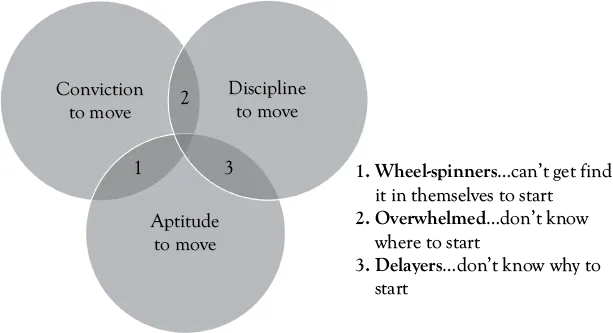
Figure 1.1 Why people stay put in their untenable situations
Can you think of some situations in your life and work that fit those three criteria? If so, this book is for you. In this book I will present strategies and tools to help correct these situations, and just as importantly, how to prevent them from occurring in the first place.
But why don’t people make necessary changes when logic would tell them to do so? Why do people stay put even when the costs may be significant, the situation is worsening, and they care about resolving it positively?
As illustrated in Figure 1.1, there are three elements that must be in place for people to get moving. People must have the conviction, discipline, and aptitude to move. Let’s look at each and how they interact.
Conviction to move: People must be convinced that something must be done and that things cannot continue in their current state.
Discipline to move: People have to have the inner resources to get themselves moving.
Aptitude to move: People must have the skills and knowledge of what to do to improve the condition.
A person who has conviction and aptitude but no discipline will just be spinning their wheels until they can find it in themselves to move. A person who has the conviction and the discipline but lacks the aptitude won’t know where to start and likely will be overwhelmed. A person with the discipline and aptitude to move but lacks conviction will delay because they can’t see why they should start.
Let’s look again at an example of someone with a weight problem that could seriously affect their health. They would b...