eBook - ePub
Manufactured Bodies
The Impact of Industrialisation on London Health
- 160 pages
- English
- ePUB (mobile friendly)
- Available on iOS & Android
eBook - ePub
About this book
Industrialisation is a notoriously complex issue in terms of the hazards and benefits it has brought to human beings in our endeavours to improve our lives. This is never more evident than in the field of health and medicine, where there are many questions about the causes and treatments of diseases we commonly encounter today, such as cancer, diabetes and degenerative age-related conditions. Are there genetic predispositions to these conditions? Are they a mirror of our modern lifestyles, driven by our fast-paced lifestyles or have they always existed but gone undetected? The archive of human skeletal remains at the Museum of London provides a large bank of evidence that has been explored here, along with other skeletal collections from around England, to investigate how far some of these diseases go back in time and what we can tell about the influence of living environments past and present on human health. The Industrial Period was a key period in human history where substantial change occurred to the population's lifestyles, in terms of occupations, housing and diet as well as leisurely past-times, all of which would have impacted on their health. London had become the most densely populated metropolis in the world, the beating heart of trade and consumerism, an unambiguous example of the urban experience in the Industrial age. Using up-to-date medical imaging technologies in addition to osteoarchaeological examination of human skeletal remains, we have been able to establish the presence of modern day diseases in individuals living in the past, both before and during Industrialisation, to compare to rates in UK populations today. By re-examining the skeletal evidence, we have traced how the perils of unregulated rural and urban lives, changing food consumption, transport, technologies as well as improving medical treatment and life expectancy, have all altered health patterns over time.
Information
Subtopic
Diseases & AllergiesIndex
Social Sciences1
Occupational hazards and sporting catastrophes
It’s a bit funny but we are a dying breed paying homage to the already dead. Well we are, there are none of us to follow...People of Swinton and Pendlebury, please tell your children about us, tell them about those who have gone before, of the blood, sweat and tears they shed in order to make this a better place, take them on the heritage trail so thoughtfully provided by your council. The mining families of the past fought, suffered and died for the rights we now enjoy, please don’t let them down.
Brian, father of Adam Stott (336), the last miner to die at Agecroft Colliery, Swinton. 29 May 2016
At 9.20am on Thursday 18 June 1885, for some, time stood still. A huge explosion occurred at Clifton Hall Colliery, near Swinton, Salford that could be felt at a distance of half a mile (0.8 km). In total, 178 men and boys were killed through injuries, burns, drowning or by the effects of ‘afterdamp’ (carbon monoxide poisoning). The bodies of the miners were buried at numerous churchyards and burial grounds in the locality, including the Jane Lane burial ground, which was subject to commercial development in 2013, some 130 years later. The human remains in the burial ground pre-dating 1900 were not cleared away but instead were exhumed and recorded by archaeologists prior to reburial in Swinton cemetery, forming one of our study groups for this project. Through this process the remains of some of the victims of the Clifton Hall Colliery disaster were identified and its history once more brought to light. Unfortunately, incidents like these were all too common during this period, a time of industrial accidents on an industrial scale. Construction projects were implemented at a furious rate during the Victorian period and were notoriously dangerous. It has been calculated, for example, that three labourers died for every mile of rail track laid in the UK. Mortality rates were even higher for the railway tunnellers. Thirty-two labourers were killed and at least 140 seriously injured while working on the Woodhead Tunnel between Manchester and Sheffield, which runs for 3 miles (4.8 km). That’s one death plus 4–5 serious injuries for every 495 ft or 150 m.
Accidents, of course, were not just restricted to the work-place. Cities like London were energetic places of hustle and bustle, people constantly on the go, with no time to waste and ever in haste. The lack of regular maintenance checks and health and safety regulations meant that the potential for danger lurked on every corner and not only in the towns; roads everywhere were a source of constant threat, especially with the use of horse-drawn carts on pot-holed tracks. Road safety was not a concept and nor was there any lawful responsibility on the part of the builders of temporary constructions, machines or contraptions, which many people used in the home or as part of recreation on a daily basis. Some injuries, of course, were also sustained through acts of violence resulting from wars, domestic abuse, or ‘Peaky Blinders’ style rival gang brutality. Others were caused by common sporting activities such as horse riding, boxing or shooting. The recording of traumatic injuries in skeletal remains by archaeologists, supplemented by historic accounts of events happening at the time, gives us a very stark reminder of the scale of unfortunate misdemeanours and human disasters that occurred in the past and how this compares with our heavily safety-regulated living environments today.
London is nowadays associated with high levels of accidents and violence on account of the high population density and sheer volume of vehicular traffic in the City. Was this also the case in the past? Was life in the City really more hazardous compared to more rural settings? How did accidents and trauma impact upon our bodies in the past and was this different according to where we lived?
Pre-industrial lifestyles and trauma risk
Trauma is predominantly influenced by the environment in which we live and work, and the medieval period in Britain was no exception. During this time the country was predominantly agricultural and jobs were labour intensive. For many, food production, brewing and farming were day-in, day-out tasks of hard, manual labour. This would have extended to the maintenance and repairs of their own houses, barns or other property. Occupational hazards, then, were surprisingly common, even within rural settings.
Some of the more risky environments would have been experienced by the raft of tradesmen specialising in jobs that were more industrial in nature, such as carpentry, candle making, milling, brick and tile production, quarrying, mining, cloth making, smelting and blacksmithing (Fig. 24). As the population grew throughout the medieval period not only did the agricultural economy intensify, with more and more land cleared for crop growing, but also technologies involving the production of foods, materials and transport advanced. The 6500 turnable mills already in existence in England in 1086, as documented in Domesday Book, were quickly superseded by vertical windmills, the earliest of which in Europe is thought to date to 1185, located in the former village of Weedley in Yorkshire, overlooking the Humber Estuary. The wide-ranging major technological advances and inventions in medieval Europe from the 12th century led to the mechanisation of many production processes, although these industries were still in their infancies compared to the vast scale of mass production experienced from 1750 onwards in England.
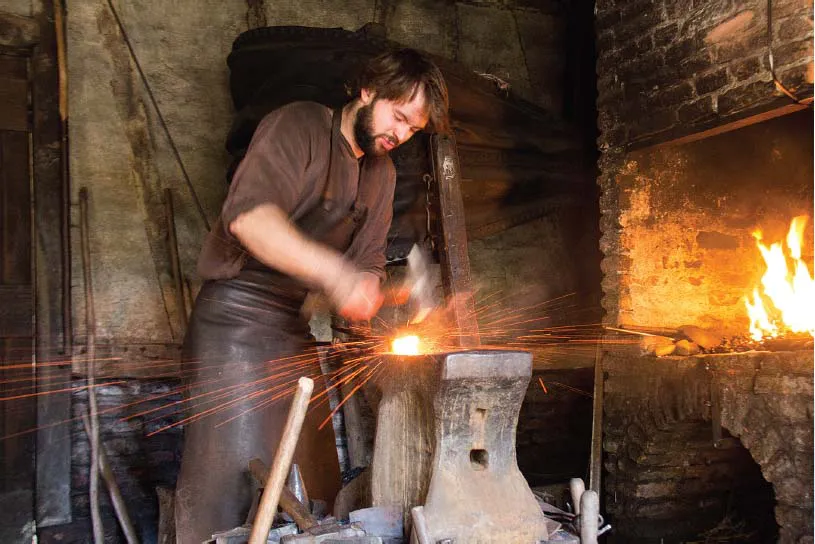
Figure 24 Recreating medieval blacksmithing.
(Hans Splinter, cc-by-nd/2.0, https://www.flickr.com/photos/archeon/10493442664)
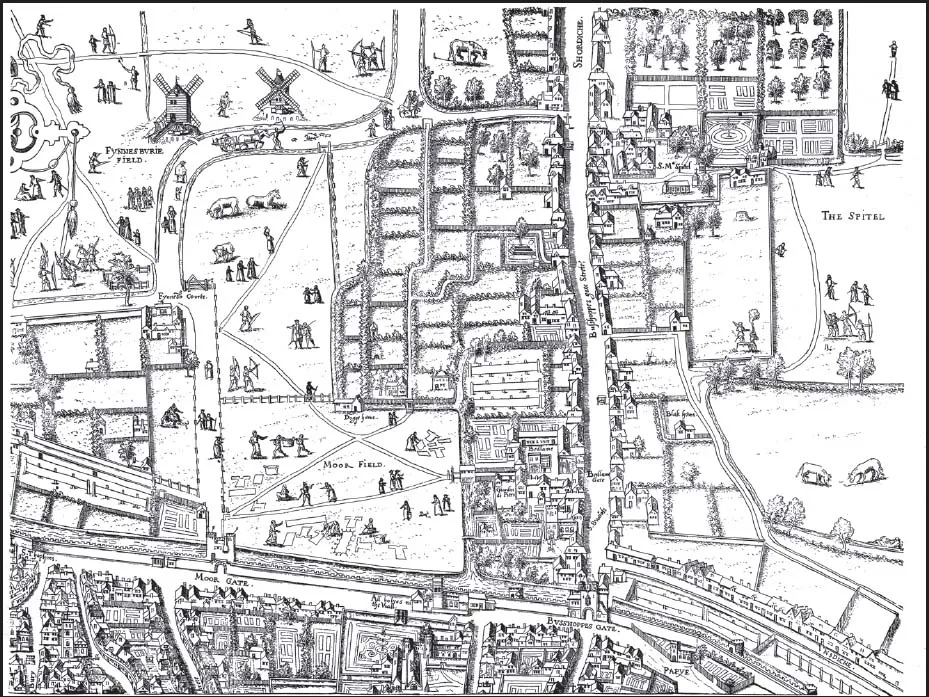
Figure 25 Copperplate map 1559, Frans Franken, section showing Moorfields and The Spital
(© Museum of London)
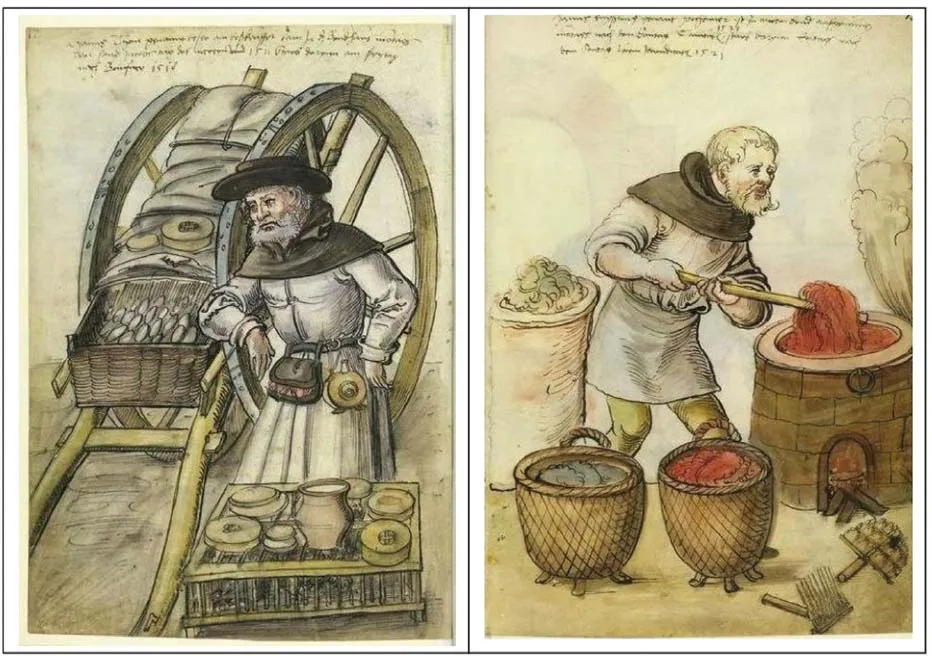
Figure 26 Cheese merchant at market and textile dyer
(Paul K. cc-by/2.0, https://www.flickr.com/photos/bibliodyssey/albums/72157610727752183)
Towns, and even cities such as London, were much smaller and less densely populated than today. Many areas in the City during the medieval period, such as Nine Elms, Bow, Hackney, Bethnal Green, Chelsea and Spitalfields, were small hamlets, villages or bases for religious houses, surrounded by open greenfields used for market gardening, agriculture and meadowland (Fig. 25).
Over time, as trade between settlements grew and more goods were transported by land and by river, the market economy developed (Fig. 26). Markets in towns flourished, and those in the City such as Billingsgate, where originally many goods such as corn, coal, iron, salt pottery and fish could be purchased, eventually specialised; Billingsgate for example became the world famous fish market.
The market wealth generated led to the construction of an increasing number of prestigious large stone buildings, in particular, strongholds and cathedrals, as well as bridges. The building of Westminster Abbey, completed in 1066, and West Minster Hall, started in 1097, not only consolidated the position of William the Conqueror as the King of England but also London’s status as the political and mercantile centre of the country. The City’s higher status and clerical role led to the creation of many bureaucratic and professional occupations. The construction trade, in contrast, was very hazardous, with little to protect workers from substantial falls and injuries (Fig. 27).
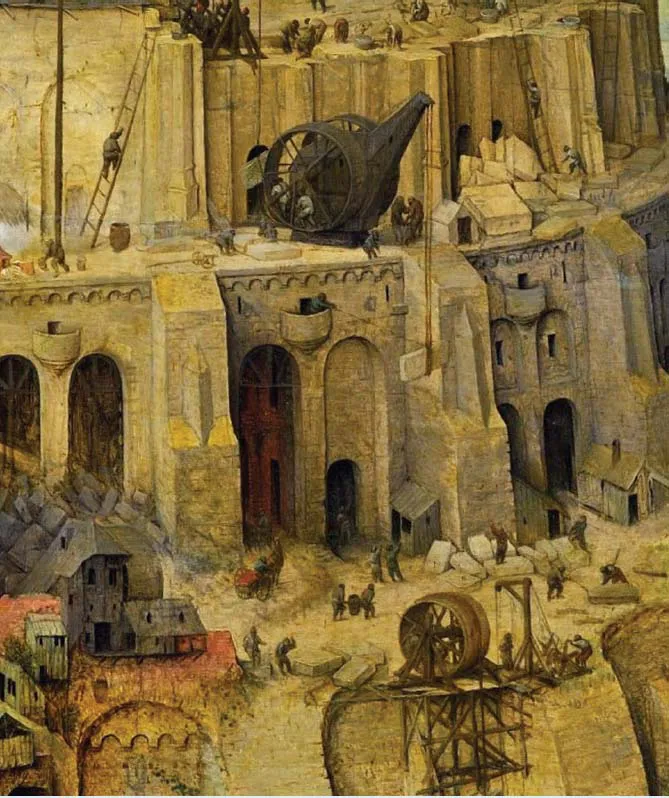
Figure 27 Bruegel’s Tower of Babel, detailing stone construction and use of the treadmill crane
(rpi virtuell, cc-by/2.0, https://www.flickr.com/photos/84132860@n03/7702914260)
Written accounts at St Paul’s Cathedral, dating to the time of Sir Christopher Wren’s construction from 1675, record compensation payments to the widows of builders who died from falls at the site. Additionally, analysis of the medieval human remains from Hereford Cathedral, carried out by the University of Bradford, revealed a high number of fractures, including multiple injuries and crush fractures among males, likely related to the contemporary building works in the city of the Cathedral and the castle, although these were healed fractures, indicating that the injuries sustained were not fatal.
Also present at Hereford Cathedral, as found elsewhere such as at Barton-upon-Humber, Wharram P...
Table of contents
- Cover
- Title
- Copyright
- Contents
- Acknowledgements
- Foreword
- Introduction
- Gazetteer of sites
- Chapter 1: Occupational hazards and sporting catastrophes
- Chapter 2: The air we breathe
- Chapter 3: Cancer
- Chapter 4: Getting fat: a growing crisis
- Chapter 5: Getting old: us in winter clothes
- Conclusion: The human engine
- Glossary of terms
- Selected further reading
Trusted by 375,005 students
Access to over 1.5 million titles for a fair monthly price.
Study more efficiently using our study tools.
Frequently asked questions
Yes, you can cancel anytime from the Subscription tab in your account settings on the Perlego website. Your subscription will stay active until the end of your current billing period. Learn how to cancel your subscription
No, books cannot be downloaded as external files, such as PDFs, for use outside of Perlego. However, you can download books within the Perlego app for offline reading on mobile or tablet. Learn how to download books offline
Perlego offers two plans: Essential and Complete
- Essential is ideal for learners and professionals who enjoy exploring a wide range of subjects. Access the Essential Library with 800,000+ trusted titles and best-sellers across business, personal growth, and the humanities. Includes unlimited reading time and Standard Read Aloud voice.
- Complete: Perfect for advanced learners and researchers needing full, unrestricted access. Unlock 1.5M+ books across hundreds of subjects, including academic and specialized titles. The Complete Plan also includes advanced features like Premium Read Aloud and Research Assistant.
We are an online textbook subscription service, where you can get access to an entire online library for less than the price of a single book per month. With over 1.5 million books across 990+ topics, we’ve got you covered! Learn about our mission
Look out for the read-aloud symbol on your next book to see if you can listen to it. The read-aloud tool reads text aloud for you, highlighting the text as it is being read. You can pause it, speed it up and slow it down. Learn more about Read Aloud
Yes! You can use the Perlego app on both iOS and Android devices to read anytime, anywhere — even offline. Perfect for commutes or when you’re on the go.
Please note we cannot support devices running on iOS 13 and Android 7 or earlier. Learn more about using the app
Please note we cannot support devices running on iOS 13 and Android 7 or earlier. Learn more about using the app
Yes, you can access Manufactured Bodies by Gaynor Western,Jelena Bekvalac in PDF and/or ePUB format, as well as other popular books in Social Sciences & Diseases & Allergies. We have over 1.5 million books available in our catalogue for you to explore.