eBook - ePub
World Class Master Scheduling
Best Practices and Lean Six Sigma Continuous Improvement
- 272 pages
- English
- ePUB (mobile friendly)
- Available on iOS & Android
eBook - ePub
World Class Master Scheduling
Best Practices and Lean Six Sigma Continuous Improvement
About this book
Master scheduling is the heartbeat of every manufacturing and distribution process. In fact, there is no more important process within manufacturing. This up-to-date "how-to" guide explains how master scheduling integrates with Lean and Six Sigma to create the perfect environment for robust control and continuous improvement. World Class Master Scheduling will help organizations establish rules of engagement and set the stage for maximum effectiveness of both Lean strategies and Six Sigma in the scheduling process. The author describes the need for cooperation with the demand side of the organization and how to achieve high-performance results. This desk reference is a must for operations managers, production supervisors, planners and schedulers, and Lean, Six Sigma and ERP practitioners and consultants.
Information

UNDERSTANDING THE MASTER SCHEDULE
Master scheduling is probably one of the most important and yet least appreciated processes to control costs in business today. Top management ignores it, middle managers take it for granted, and line management often unknowingly subverts the integrity of the schedule by causing unnecessary changes to it. In contrast, high-performance businesses treat the master scheduling process as the heartbeat of the supply chain and utilize best practices in this space to minimize cost and efficiency and to maximize customer service. Techniques in master scheduling cover lots of business process territory, including links to demand planning, financial planning, inventory strategy, customer service, and rules of engagement.
Topics covered in the chapters to come include what good process would look like, how top managers interact with this driver of requirements called master scheduling, and how to implement a high-performance master production scheduling process in your business. Master scheduling is a passion with some manufacturing professionals. The objective of this book is to capture some of that passion. It is a pleasure to put into writing the power of one process that can help improve numerous processes within both manufacturing and distribution companies. Observation of hundreds of businesses using both good and bad process has helped with the conclusions. The logical place to start this discussion is by defining the master schedule.
THE MASTER SCHEDULE
The master schedule in an enterprise resource planning (ERP) business system is the detailed driver of requirements in manufacturing companies. This accounting of known and unknown requirements is a company’s determination of firm and forecasted signals empowered to drive procurement and manufacturing requirements. This schedule can dictate amount of inventory and timing of the procurement and can even influence lot size or order size. This is an extremely important set of requirements and makes the disciplines and rules governing the schedule very important to most businesses concerned about cost, efficiency, and customer service.
In high-performance businesses, top management engages in a planning process referred to as the sales and operations planning (S&OP) process. It should be noted that some companies refer to this as the SIOP (sales, inventory, and operations planning) process. In this book, it will be referred to as the S&OP process. The master scheduler plays a critical role in the development of the spreadsheets and performance metrics evaluated in S&OP. Probably even more important is the requirement in high-performance companies that the master schedule link directly with this top management planning process. In the S&OP planning process, the CEO, president, and vice presidents of both demand and supply engage in risk management within the planning horizon of 12 rolling months. No one understands the risks of creating the right product using only forecasts for the demand signals better than the master scheduler.
In a high-performance ERP organization, sometimes referred to as a Class A ERP organization, the two most influential positions are the plant manager and, you guessed it, the master scheduler. The master schedule not only defines the activities required to meet the top management S&OP but also dictates the requirements from customer demand. This already sounds like quite a job and it is. Figure 1.1 depicts the relationship of the master schedule to the rest of the ERP process flow. Top management planning decisions feed into the master production schedule (MPS) and drive emphasis and create the forecasted demand. The MPS in turn feeds back vital data concerning customer activity and coordinates the interaction of the two inputs. This feedback affects the next S&OP cycle.
The MPS is the detailed schedule that resides within the ERP business system that drives inventory strategy, supply chain accountability, inventory levels, customer service, and machine and capacity utilization. The main categories that are driven fall into two areas: known requirements and unknown requirements. This may seem too simple to even state, but it is the essence of understanding the master scheduling process.
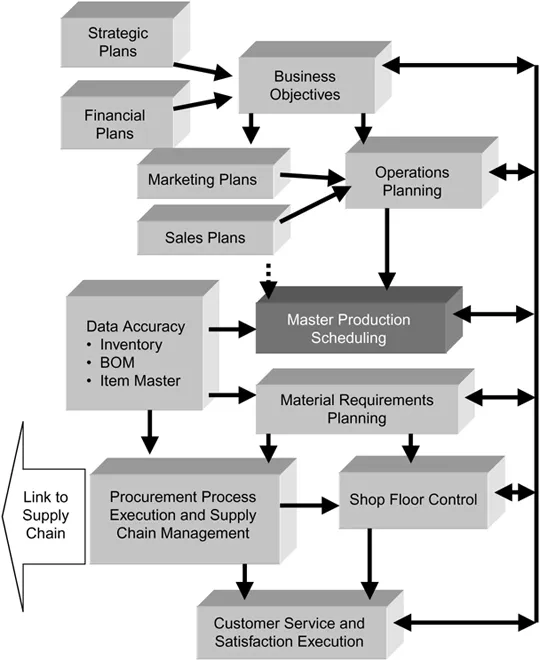
Figure 1.1. ERP Business System Model
The darker shaded areas in Figure 1.2 represent the known requirements. Where the darker shaded areas appear, there are normally many detailed stockkeeping unit (SKU) level requirements driven from either firm orders from customers or firm orders from planned requirements. In the case illustrated in Figure 1.2, if each rectangular shaded area represents one day, the conclusion from this figure is that backlogged orders only go out about six days, and even then capacity is not full for the six days. Only Monday and Tuesday are close to being filled (Tuesday might even be a little over capacity per the diagram).
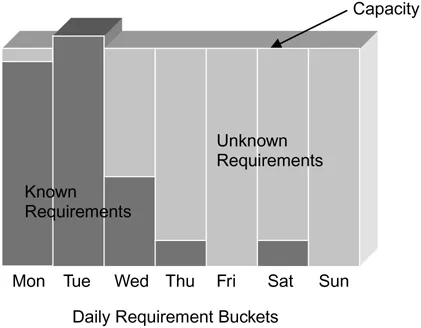
Figure 1.2. Master Schedule Known and Unknown Requirements
This is the basic structure of the MPS in its simplest form. As this book progresses, best practices examples of how high-performance companies deal with the realities of business will be used. The first step is to tie inventory strategy tightly to this schedule, in order to understand the impact. Inventory strategy must be well understood to execute master scheduling well.
INVENTORY STRATEGY
Inventory strategy (sometimes referred to as manufacturing strategy) is the buffer inventory plan for each product family in a planning process. The buffer inventory plan is the plan for where in the business the inventory will be buffered, if at all. Sometimes buffer will be in raw material, sometimes it may be in finished goods, and sometimes it will not exist at all except in the forecasted plan. If the flexibility and responsiveness within the supply chain match the need, there is no reason to have buffer. Very few manufacturing plants, however, meet the criteria completely to go buffer-free. In those companies without buffer, the plan has to be decided based on product family process capability. Figure 1.3 gives a sense of how these strategies fit together. Keep in mind that most companies do not engage in just one of the strategies. It is most common for companies to have several inventory strategies, with separate pricing strategies, rules of engagement, and service requirements for each product family.
It is necessary to review inventory strategy as you set up the MPS because the entire manufacturing planning world revolves around these strategies. Although many companies do not acknowledge this thinking, all companies have to make these decisions. Too many organizations will say they use one type of inventory strategy and actually do something totally different. Still others do not recognize that their strategies differ from one product family or line to another.
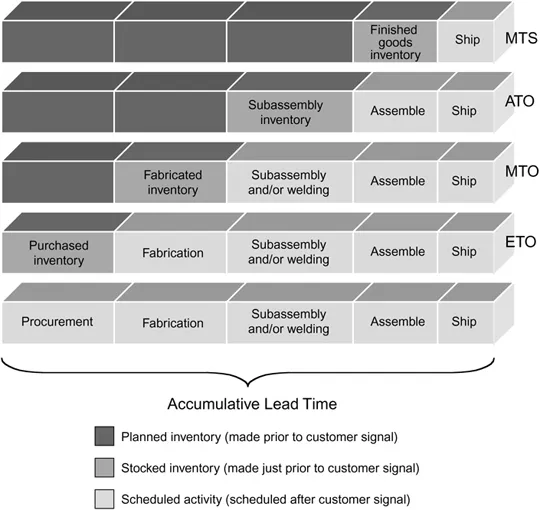
Figure 1.3. Inventory Strategy
It is common for those in top management to believe that their business methodology is one inventory strategy. It is just as common for them to get involved with the process and find that they do not really understand what is going on in the detail planning process. Maybe it is unfair to be so critical, but most of the time, especially in so-called “make-to-order” environments, there are buffers distributed in various places within the process. These have to be recognized and understood in order to have real control over the manufacturing process. After all, these buffers are probably there for a reason. It is paramount to know what is in place and for what reason it was initially positioned. It could very well make a difference in planning methodology or inventory strategy overall. It certainly affects customer service and profitability.
With the proper acknowledgment of actual buffer strategy, management is more in control of the risks taken and no one is surprised by inventory that by design is built into the process. Inventory strategies change the method used for master scheduling suppliers and components. Inventory strategy is smart policy, but the rules agreed to internally — what products, how much, and when — need to be understood by all the players. Many times, finished goods inventory is scrutinized, as it is very visible and better understood. Sometimes inventory does not need to be built in advance of the customer order. This is the whole point of inventory strategy. Lean philosophy has gotten a lot of press recently and deservedly so, but inventory strategy has been around for years and covers some common ground.
It is important to realize that acknowledging rules of engagement and utilizing good inventory strategy is not a methodology designed to say no to the customer. Inventory strategy is acknowledged so that everyone in the business has the same shared goals. Its role is to acknowledge and understand what it costs when we say yes to the customer.
The acknowledgment of inventory strategy is not difficult to determine. In fact, it is dictated to you if the background data are understood. When lead time requirements from the customer are shorter than the total accumulative lead time of the supply chain and manufacturing process, some of the process must be planned. That means some of the lead time in the process is committed to via forecasted requirements. Inventory strategy should be mapped out, agreed to by both demand- and supply-side management, and rules of engagement documented. When the market practices or strategies change, high-performance organizations regularly update the handshake between the parties. Again, the objective is lowest cost with highest service. To acknowledge the realities of inventory strategy is to allow for the most cost-effective and highest customer service processing of orders.
Master scheduling different inventory strategies will make a difference in scheduling approach and what techniques will be used. That opens up the discussion on the definitions of product families.
PRODUCT FAMILY
Through lots of evolution within the ERP process, companies have determined that there is an optimum level of detail for planning at the top management level. This level of detail generically is referred to as product family. If product family has a specific meaning to you in your environment, do not get too involved yet trying to apply your definition. Product family can be defined differently in every business. The definition used in this book will be a common one, so set aside your definition for now. The good news is that you can call what in this book will be referred to as “product family” anything you want as long as everyone in your business understands it the same way.
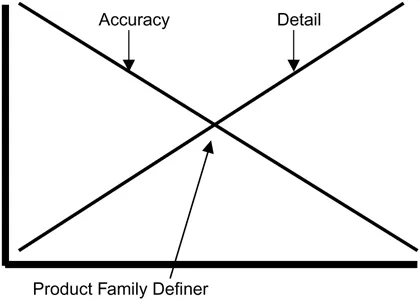
Figure 1.4. Accuracy Versus Detail Comparison
As you can see from Figure 1.4, there is a...
Table of contents
- Cover
- Title
- Copyright
- Dedication
- Table of Contents
- Preface
- Acknowledgments
- The Author
- About Apics
- Web Added Value™
- Chapter 1: Understanding the Master Schedule
- Chapter 2: Utilizing Inventory Strategy
- Chapter 3: Master Production Schedule Integration With Enterprise Resource Planning
- Chapter 4: Demand Planning Influences
- Chapter 5: The Details Behind Master Scheduling
- Chapter 6: Order Management
- Chapter 7: Roles Of the Players in the Master Production Scheduling Process
- Chapter 8: Sales And Operations Planning
- Chapter 9: Measuring The Master Production Scheduling Process
- Chapter 10: Management Systems
- Chapter 11: Integration With Material Requirements Planning
- Chapter 12: Forecast Requirements
- Chapter 13: Software Tools
- Chapter 14: Master Scheduler Job Description
- Chapter 15: Class A Erp Business Model And Performance
- Chapter 16: Integrating The Master Production Schedule With Lean And Six Sigma
- Chapter 17: Discussions With The “Masters”
- Glossary Of Terms
- Checklist For High-Performance Master Scheduling
Trusted by 375,005 students
Access to over 1.5 million titles for a fair monthly price.
Study more efficiently using our study tools.
Frequently asked questions
Yes, you can cancel anytime from the Subscription tab in your account settings on the Perlego website. Your subscription will stay active until the end of your current billing period. Learn how to cancel your subscription
No, books cannot be downloaded as external files, such as PDFs, for use outside of Perlego. However, you can download books within the Perlego app for offline reading on mobile or tablet. Learn how to download books offline
Perlego offers two plans: Essential and Complete
- Essential is ideal for learners and professionals who enjoy exploring a wide range of subjects. Access the Essential Library with 800,000+ trusted titles and best-sellers across business, personal growth, and the humanities. Includes unlimited reading time and Standard Read Aloud voice.
- Complete: Perfect for advanced learners and researchers needing full, unrestricted access. Unlock 1.5M+ books across hundreds of subjects, including academic and specialized titles. The Complete Plan also includes advanced features like Premium Read Aloud and Research Assistant.
We are an online textbook subscription service, where you can get access to an entire online library for less than the price of a single book per month. With over 1.5 million books across 990+ topics, we’ve got you covered! Learn about our mission
Look out for the read-aloud symbol on your next book to see if you can listen to it. The read-aloud tool reads text aloud for you, highlighting the text as it is being read. You can pause it, speed it up and slow it down. Learn more about Read Aloud
Yes! You can use the Perlego app on both iOS and Android devices to read anytime, anywhere — even offline. Perfect for commutes or when you’re on the go.
Please note we cannot support devices running on iOS 13 and Android 7 or earlier. Learn more about using the app
Please note we cannot support devices running on iOS 13 and Android 7 or earlier. Learn more about using the app
Yes, you can access World Class Master Scheduling by Donald Sheldon in PDF and/or ePUB format, as well as other popular books in Business & Operations. We have over 1.5 million books available in our catalogue for you to explore.