Object Lessons is a series of short, beautifully designed books about the hidden lives of ordinary things.
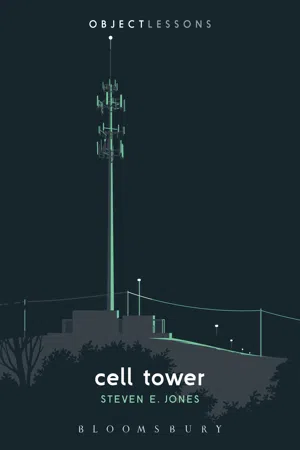
Cropping up everywhere, whether steel latticework or tapered monopoles, encrusted with fiberglass antennas, cell towers raise up high into the air the communications equipment that channels our calls, texts, and downloads. For security reasons, their locations are never advertised. But it's our romantic notions of connectivity that hide them in plain sight. We want the network to be invisible, ethereal, and ubiquitous. The cell tower stands as a challenge to these desires.
Object Lessons is published in partnership with an essay series in The Atlantic.
- 160 pages
- English
- ePUB (mobile friendly)
- Available on iOS & Android
eBook - ePub
Cell Tower
About this book
Information
1 Cellspotting
This is not a book about the cellphone, that shiny, flat computer with a radio in it that you probably have with you right now. This is a book about what makes the cellphone mobile, about the large object that connects the phone to the network—the cell tower. Communication towers of one kind or another have been around for centuries, tall platforms from which to signal using flags, lanterns, bells, or voices. But the cell tower (in the UK it’s called a mobile mast or a telephone mast) is a descendant of early modern towers, and it inherited some of modernism’s ambitions in its steel bones.
Nikola Tesla’s Wardenclyffe Tower is a good example of those modernist ambitions. It was 187 feet tall, built on New York’s Long Island in 1901 and demolished in 1917, and was meant to transmit both telegraph signals and electrical power wirelessly, using the Earth itself as the conductive medium. Or, take the Eiffel Tower in Paris (1889), which Walter Benjamin called a “monument” to the “heroic age of technology.”1
Maybe you’ve visited it. It’s a famous architectural structure with an aesthetic aura, but the whole point originally was its iron-lattice engineering. It stands 1,024 feet tall, with 2,500,000 rivets and 18,038 iron components—tallies like these have always been part of appreciating the iconic Tower.2
Scheduled for demolition after twenty years, it was kept standing in part because Eiffel promoted its usefulness as a giant wireless antenna.3
You’ve probably seen the animated RKO Radio Pictures logo at the beginning of old movies, a giant latticework steel tower straddling the globe and beaming out radio waves and bolts of electricity. Broadcast or telecommunications towers like these went up everywhere during the twentieth century and into the twenty-first century, from London’s BT Tower, to Toronto’s CN Tower, to the red-and-white Tokyo Tower (which is also an emoji), to the Skytree, also in Tokyo, and many more around the world. Tapered towers and techno-spires like these show up in the cartoon skylines of The Jetsons, Futurama, and Disney World’s Tomorrowland because they once signified “The Future” (which evidently will involve lots of radio transmissions).
That future isn’t what it used to be. We still depend on radio waves, on harnessing a portion of the electromagnetic spectrum, but the bulk of today’s communications infrastructure has been shrunk into skinny glass fibers, running underground and underwater, often along paths originally laid for telegraph cables. Above ground, though, it’s all about utilitarian steel, antennas bolted on in various configurations. Today’s cell towers descend from the earlier communications towers—latticework types like the Eiffel Tower, and monopoles like the needle-shaped BT Tower—but cell towers are actually a very different kind of object, so mundane we barely notice them. The carriers prefer it that way (“Security Through Obscurity” is a common motto). Most of us prefer it that way, too. We’re too busy looking down at the little screens in our hands to notice.
Today’s telecommunications networks combine wireless and wired connections. The cell tower is a kind of steel portal between the two. That wireless jump—to and from our phones—is the shortest link in the chain of connectivity, but it’s the most important link to most of us, the link that makes the cellular network cellular. That network is laid out in an imagined grid of six-sided cells, like a beehive, a quilt, or a patio made of hex-block pavers. As a shape, the hexagon tessellates well, as mathematicians say, like a tile or a paver that can be laid efficiently, covering a lot of area without leaving too many gaps. Where I live, sidewalks and patios are often paved with hex blocks for this reason. The goal of the cellular telephone system is “a kind of spatial multiplexing,”4
a way of allowing multiple signals to share a portion of the electromagnetic spectrum. In the cellular grid, a tower can be placed at the juncture of any three hexes where their edges touch, beaming its radio waves in three directions (three sectors of 120 degrees each). This is a geometry of optimization: a way to approach the ideal of ubiquitous coverage and to provide a seamless “handoff” from tower to tower as you move from place to place. In real life, though, things happen to block the connection. You may lose indicator bars on your phone, maybe drop the call. “’You there?” you say. “I lost you.” But what you’ve really lost is the wireless connection to an unseen cell tower, of which you suddenly become aware in its moment of failure, like a missing tooth.
Someone I know in rural Appalachia can stand in her kitchen, look out through the screen door, and point across adjacent fields to “her” tower, silhouetted up on a mountain ridge, a tapered latticework structure with a triangular rack around the top like an eighteenth-century tricorn hat, mounted with three sets of oblong white antenna panels. Cell sites in that area are so sparse she’s probably right. She likely does know where her connection comes from, at least when she’s in the house and yard. If she drives to the Walmart thirty miles away, she’ll probably drop the signal more than once—either because she gets out of range of that tower and isn’t in range of another, or because the rock-faced mountains interfere, creating radio shadows where the signal just can’t reach.
I, on the other hand, drive past thirty cell towers on my forty-mile commute. That’s thirty actual towers, not counting various antenna arrays mounted on rooftops or around the perimeter of water-tower tanks (I see those, too). This is in Florida, which is close to sea level everywhere, and I travel mostly on an elevated highway, so I can see pretty far—to the horizon in many places. Tall objects really stand out. In the metropolitan area of Tampa Bay, with very little public transportation, unlike cities I’ve lived in before, I have to make this drive several times a week, and I always feel guilty about it. One day, sitting in traffic on the bridge (plotting the purchase of an electric vehicle), I looked up and noticed all the cell towers. It dawned on me: all this infrastructure—bridge, highway, towers—none of it is beneath my everyday life (as the prefix infra might imply). It is my everyday life. I’m inside it.
Thirty is a lot of towers. Depending on where you live, you may have that many cell towers near you, too, maybe more. But do you ever really notice them? Mostly, we don’t. Or rather, we prefer to unsee them, to look right through them and immediately forget we ever saw them. The cell tower is a giant piece of infrastructure we depend on every day, but we’re so invested in the idea that the cellphone experience should be seamless, invisible, ethereal, and ubiquitous, we screen it out. We just don’t see it looming there. We
unsee it.
I began this book because I started noticing cell towers. Eventually I made a kind of game of it, developing a habit I jokingly called cellspotting.5
Like a trainspotter—a nerdy railway hobbyist (especially in the UK) who treats transportation infrastructure the way bird-watchers treat rare species in the wild, recording the models and individual serial numbers of locomotives they see on platforms or passing by on the tracks—I look out for cell towers anywhere I travel. It all started with those thirty towers, on that fifty-minute drive from a small barrier island on the Gulf of Mexico to the urban campus where I teach, traveling over the causeway and a three-mile bridge across the sparkling waters of Tampa Bay.
On the bridge, I often see brown pelicans flying along beside the car at eye level, then disappearing as they dive for fish. Sometimes an osprey sits on a light pole to eat a fish it caught down between the concrete pilings.
One of my favorite towers stands on a narrow bar of mangroves at the edge of the land on the west side of the bay (Figure 1). Because it’s so close to the road, I can see the whole cell site, from the top of the slightly faceted monopole, to its multiple tiers of triangular panel-antenna arrays, to open portholes lower down where cables emerge and connect to the BTS (base transceiver station) equipment, including transmitters and receivers, generators, and batteries in metal containers at the base, all of it sitting on raised metal platforms to avoid the inevitable salty floodwaters, the whole site surrounded by a chain-link fence with a number-pad lock. Dense trees form a backdrop to the site. Once on the bridge, I can see several more towers. As I said, because it’s so flat here, you can see all kinds of faraway tall objects; cell towers are just one kind. In fact, they resemble those tall, spindly palm trees that stick up everywhere here. The fronds at the top of a sabal palm (the Florida state tree) look very much like the array of antennas around the top of a monopole cell tower, a resemblance that (who knows?) may have inspired one of the common stealth-tower disguises. I’ve learned to spot different styles of towers and antennas besides those slim, tubular monopoles: triangular cross-section, tapered, freestanding steel latticework towers (the ones that look like little Eiffel Towers); very tall, straight-sided and guy-wired latticework towers, sometimes painted in alternating red and white bands, with cellular equipment bolted on about halfway up; arrays of oblong directional antennas (each panel of which I know has a column of small metal antennas behind it), arranged in threes or fours around a triangular rack, with multiple racks sometimes stacked in layers in what the industry calls colocation (co-location), the combination of more than one carrier on the same tower; white microwave drums, parabolically curved beneath flat or bulging covers, stuck on the sides of towers like mushrooms on a tree trunk, and requiring clear line-of-sight connections between them; multidirectional whip antennas sometimes protruding from the tops of towers, used to pinpoint the strength and location of phones; similar looking lightning rods; fat coaxial cable bundles running down to the ground like tropical vines, where they connect to the sheds and boxes enclosed behind a locked fence with ominous warning signs in the “ground space” at the foot of the tower. Once I began to notice cell towers, I started to see them everywhere, even if I only caught a glimpse as I zoomed by at 70 mph. I had been surrounded all along.
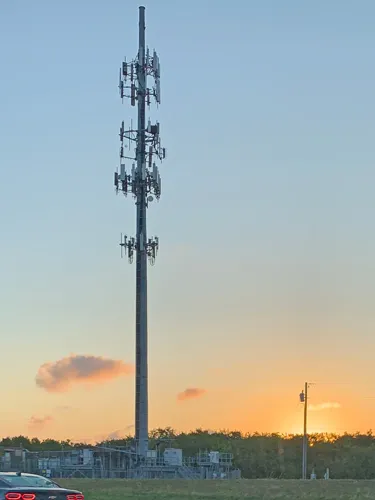
FIGURE 1 Monopole tower near the Howard Frankland Bridge, Tampa Bay, St. Petersburg, Florida. Author’s photograph.
Earlier, I said that most of us prefer to unsee cell towers. I’m borrowing the term from the science-fiction novel by China Miéville, The City & the City (2009). In the story, two imaginary European city-states occupy the same geographic space while maintaining their two separate cultures—not unlike the real-world examples of Jerusalem, Berlin, or Beirut—as if they existed in parallel universes or adjacent dimensions. If you’re a citizen of one of the cities, then the other city must remain outside your conscious vision. Residents are raised from early infancy to inhabit their own civic space without acknowledging the overlapping other space, taught to observe invisible but inviolable borders, to see only one of the two realities. A kind of cultural taboo compels you to unsee residents from the other city as they pass on the same street, to unsee the buildings, parks, and signs of the other city that you’re are not “in,” even though you’re physically standing in the same geographic space. You have to practice a kind of willed blindness. (In the TV adaptation, this is represented visually by blurring half the streetscape, or the building, or the person that a character is supposed to be unseeing in a given scene.) If a momentary lapse or “breach” occurs and you happen to catch a glimpse of the other city’s infrastructure or inhabitants, then you must instantly unsee or “unnotice” them, erase them from consciousness. Forbidden objects are said to be “unvisible”—not inherently invisible but capable of being unseen.
This fictional analogy may seem a little dramatic, but I think it’s a useful metaphor for what we do every day when it comes to cellular infrastructure: we unsee it, as if in obedience to some internalized taboo. We avert our eyes or look right through it toward the horizon and continue to talk about cellphone connections as if they happened through invisible wireless magic. But the towers intrude on our awareness from time to time, stubbornly material manifestations of the system sticking right up into the air, in our face. They force us to notice them when the signal drops on our phones (I must be out of range of a tower, you think), their presence felt through their absence, like the “girdered towers” from one city in Miéville’s novel, the shadow of which “would loom over” a church in the parallel city—that is, it would “if they were there.” Sometimes you realize with a shudder that your location is being tracked, that Google knows where you are because your phone just pinged that tower you think you glimpsed out of the corner of your eye.6
Sometimes a 200-foot tower shows up in your own backyard, as it were, near your kid’s school, say, or in sight of your local park, commanding attention, provoking inchoate fears about potential health effects, even though you may be aware that scientific research has shown no link between the non-ionizing radiation of cell towers and damage to human health.7
Or an intrusive tower may just strike you as aesthetically ugly or ridiculous in its failed attempt at camouflage (no one could mistake that hideous thing for a real tree!). But even when you’re unaware of them, nearby cell towers are aware of you (thanks to y
our ever-present phone). That’s just how they work. In another scene in The City & the City, the streets are crowded with people from the other, overlapping city, and the narrator has to keep unseeing the passersby as he hurries along in the midst of them. “I unsaw them,” he says, “but it took time to pick past them all.”
The cell tower is a gigantic object that remains effectively invisible most of the time, at the periphery of our vision but at the center of our everyday lives. It is linked not only to the cellular network but to structures of political power, money, social relations, and quotidian activities that shape our lived experience.8
While writing this book I’ve tried not to pick my way past a wide variety of cell towers out in the world, tried instead to really see them and to understand them in their own right, in their local contexts. They were often weirder than I expected—more idiosyncratic and more interesting—and this wasn’t limited to examples camouflaged as pine trees, hidden in church steeples, or attached to a roadside buffalo sculpture. They embodied in various forms the stubborn materialities that support our shiny idea of cellular telephony. The cell tower remains an object worth paying attention to, even in this era of supposedly imminent 5G networks, small cells, better concealed antennas mounted on buildings and street furniture—among which tall cell towers will likely remain for some time—not to mention the possibility of cell towers in space. Learning to really see the cell tower can help us to better understand our insatiable desire for invisible, ethereal, and ubiquitous connectivity—however much steel, concrete, and cable it takes to sustain that desire.
2 Invisible Waves
Cell towers are part of the history of radio, and radio is all about invisible electromagnetic waves. The cell tower is a piece of 200-foot infrastructure, anything but invisible. But it connects to your phone via radio waves, propagated over an unseen portion of the electromagnetic spectrum. That spectrum itself is a hard thing to get a handle on, a challenge to our ideas of what’s real and what’s not. The large thing that cell towers help to make up—cellular telephony—is also hard to grasp, since it operates at a scale beyond everyday experience. All of these are perhaps reasons we tend to think of the network as invisible, despite its material infrastructure of concrete, steel, batteries, generators, and cables—but also human workers, money, corporations, and governments.1 Besides, as humans, we’re self-centered. The network is linked to us via those invisible waves, so that’s what matters most to us.
Our fascination with invisible communications predates cell towers, going back at least to the era when radio was new and “wireless” was a synonym for it (...
Table of contents
- Cover
- Series
- Title
- Contents
- 1 Cellspotting
- 2 Invisible Waves
- 3 Camouflage
- 4 Ethereal Connections
- 5 Design
- 6 Coverage
- 7 On Earth
- List of Figures
- Acknowledgments
- Notes
- Index
- Copyright
Trusted by 375,005 students
Access to over 1.5 million titles for a fair monthly price.
Study more efficiently using our study tools.
Frequently asked questions
Yes, you can cancel anytime from the Subscription tab in your account settings on the Perlego website. Your subscription will stay active until the end of your current billing period. Learn how to cancel your subscription
No, books cannot be downloaded as external files, such as PDFs, for use outside of Perlego. However, you can download books within the Perlego app for offline reading on mobile or tablet. Learn how to download books offline
Perlego offers two plans: Essential and Complete
- Essential is ideal for learners and professionals who enjoy exploring a wide range of subjects. Access the Essential Library with 800,000+ trusted titles and best-sellers across business, personal growth, and the humanities. Includes unlimited reading time and Standard Read Aloud voice.
- Complete: Perfect for advanced learners and researchers needing full, unrestricted access. Unlock 1.5M+ books across hundreds of subjects, including academic and specialized titles. The Complete Plan also includes advanced features like Premium Read Aloud and Research Assistant.
We are an online textbook subscription service, where you can get access to an entire online library for less than the price of a single book per month. With over 1.5 million books across 990+ topics, we’ve got you covered! Learn about our mission
Look out for the read-aloud symbol on your next book to see if you can listen to it. The read-aloud tool reads text aloud for you, highlighting the text as it is being read. You can pause it, speed it up and slow it down. Learn more about Read Aloud
Yes! You can use the Perlego app on both iOS and Android devices to read anytime, anywhere — even offline. Perfect for commutes or when you’re on the go.
Please note we cannot support devices running on iOS 13 and Android 7 or earlier. Learn more about using the app
Please note we cannot support devices running on iOS 13 and Android 7 or earlier. Learn more about using the app
Yes, you can access Cell Tower by Steven E. Jones in PDF and/or ePUB format, as well as other popular books in Letteratura & Teoria della critica letteraria. We have over 1.5 million books available in our catalogue for you to explore.