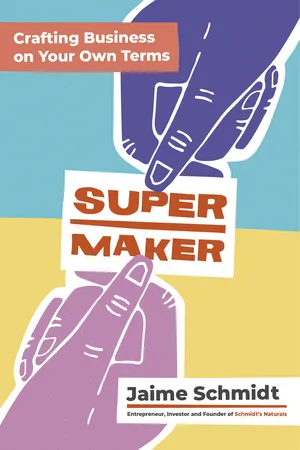
Supermaker is a guide to business and career development by Jaime Schmidt: acclaimed entrepreneur, founder of Schmidt's Naturals, and icon of the Maker Movement.
In Supermaker, she shares how you too can start or grow your own business with advice on branding, product development, social media marketing, scaling, PR, and customer engagement, all based on her own hard-won mastery.
In just seven years, Jaime Schmidt went from making natural products in her Portland, Oregon, kitchen to turning her brand into a household name and selling her company to Unilever—without sacrificing the integrity of her product or her creative vision.
• Readers learn how to get ahead on their own terms and while maintaining their commitment to fair and sustainable principles.
• A valuable resource to the ever-growing community of business owners and entrepreneurs who want to go from maker to magnate.
• Candid advice from an industry disruptor.
Following her growth from farmers' market stand to international brand, Jaime's book is a riveting mix of inspiration, the honest airing of mistakes, and indispensable instruction.
Supermaker empowers and unites the next generation of entrepreneurs.
• A go-to guide for the passion-to-profit journey.
• The perfect read for aspiring entrepreneurs, makers, creatives, and anyone with an interest in natural products, selling your products online, retail strategy, and digital marketing.
• Great for anyone who enjoyed Start Something That Matters by Blake Mycoskie, Craft, Inc: Turn Your Creative Hobby into a Business by Meg Mateo Ilasco, and The Girls' Guide to Starting Your Own Business: Candid Advice, Frank Talk, and True Stories for the Successful Entrepreneur by Caitlin Friedman.
- 256 pages
- English
- ePUB (mobile friendly)
- Available on iOS & Android
eBook - ePub
About this book
Information
Part I
Make It Yours
Perfect your product + share your passion
Chapter 1
Don’t quit the quest.
Seek out your “thing”; you’ll know when you’ve found it.
I had no idea what I was doing. I was thirty-one years old, eight months pregnant, in a wonderful but still very new relationship, and working a job that didn’t suit me. Mostly, I was in a rush to figure out who I was, and quickly, before beginning my new, unexpected role of mother. So there I was, stirring up my first batch of deodorant in the kitchen of my tiny rental in Portland.
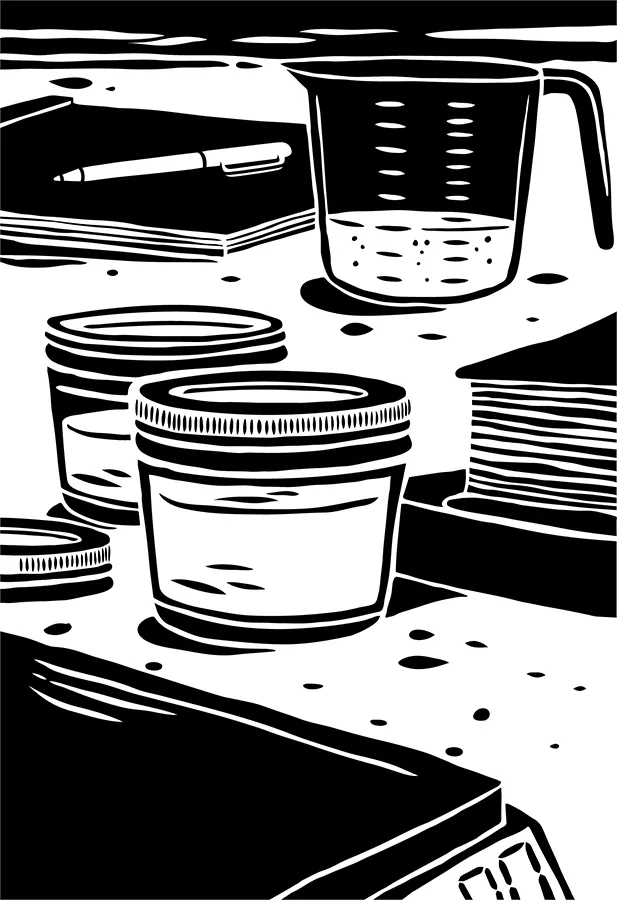
From the moment I started making, that kitchen was a disaster. The oils and butters gunked up every surface, and the sink was a few days away from being completely clogged. There were crumpled-up papers of discarded recipes and notes littered across the counter. Essential oils and samples of my latest test batches cluttered every inch of surface space available, alongside my jars of homemade kombucha and hot sauce. My feet ached from standing, and I was already tired after long days at my full-time job. As I stirred, bigger questions swirled around my head: Am I ready to be a mother? Should I stay in this job? Will we have enough money? And an old, familiar one: What’s my purpose?
But something about the process of making put my world in order (even as it sent my kitchen into disarray). Only one thing was certain: the very act of creating—leaning over my kitchen stove, mixing the butters and powders and essential oils, pouring the mixture carefully into little Mason jars—lit me up like nothing else had before.
I was not one of those kids who “always knew” she was a writer or a musician or a doctor or an artist. I spent years thinking, I don’t know what my passion is, or simply, I don’t have a passion. I was searching for it, but I also didn’t know where to look. I kept trying to figure out where I belonged, time and again, working odd jobs, moving from one city to another, enrolling in classes, only to find myself at a lot of dead ends. In that Portland kitchen, I was lucky enough to discover something—and once I did, I kept at it, relentlessly.

Perhaps not surprisingly, I didn’t set out with deodorant as my destination.
I grew up in a tiny Bavarian tourist town in Michigan—population fewer than five thousand—where you could (and still can) dial 1-800-FUNTOWN to call the chamber of commerce. My dad worked as an engineer for General Motors and my mom stayed home to raise me and my older brother, Jason. My family has always been close and very supportive (and to this day we talk regularly), though I wouldn’t say that we shared a lot of deep, emotional conversations growing up. Ours was a relatively reserved household, where we were more likely to talk about local news and the weather than our inner feelings or aspirations.
I count myself as very fortunate to have experienced a childhood of freedom in the company of a loving family. I spent many hours playing with my best friends—two girls who lived down the street—riding bikes around the neighborhood loop and exploring the woods, which we called “Wonderland.” We’d play in the creeks and catch crawfish; climb trees and pick flowers. We spent whole afternoons in our treehouse, inventing stories and imagining other worlds.
On weekends, my parents, my brother, and I would visit my grandparents in northern Michigan. They lived on a lake, where we’d fish in summer and play on the ice in winter. We called the surrounding area the “Deep Dark Woods,” though it was wondrous and welcoming. I’d walk around collecting acorns, putting them all in a Ziploc bag my grandmother gave me. Back home, I’d dump them out, play with them, then return them to their bag for later—my own little treasures.
When it came time for college, I followed in my brother’s footsteps and attended Michigan State University, a Big Ten school notorious for its athletics and fraternity/sorority scene. I roomed with my best friend from high school, Anne, who already knew she wanted to major in political science and move to Washington, DC, after graduation. I didn’t have a clear sense of what I wanted to be when I grew up. My brother had majored in business, so I did the same, though I wasn’t passionate about it. That lack of pride and confidence in what I was doing felt like a heavier weight each year I carried it with me. Any time I was asked “What’s your major?” I hated trying to fake my way into a good reason for why I’d chosen business.
Between classes, I worked. For a while I was a student ID checker and dishwasher in the dorm cafeteria. Later I became a sandwich maker at a Blimpie sub shop, then moved on up to kitchen prep and cook at a kitschy chain restaurant. I wanted to be a server, but first had to climb the ranks, which included dressing up as the restaurant’s mascot and standing roadside during rush hour. After one too many days sweating in my costume, I decided it was time to quit. Eventually I landed a server position at the local Chi-Chi’s, the Mexican food chain, where I developed a rapport with the regulars, who racked up higher tabs (and higher tips) as they drank.
As graduation approached, I somewhat hastily added a minor in human resources. The inevitability of facing the “real world” was on the horizon, and I didn’t have a clue about what I was going to do with my business degree once I was out there. Human resources seemed somewhat interesting; at least it involved humans, as opposed to the world of numbers and data I had been immersed in with my business classes.
I got the feeling that my future was supposed to look something like this: graduate from a good college, work a steady job, get married, and “settle down.” Where was the fun part? I’d rather go back to the Deep Dark Woods and collect acorns. But I carried on that path, taking steps that I thought were supposed to lead me to happiness.
When I graduated, I moved in with my boyfriend, who had a summer job working in landscaping, while I, after months of sending out dozens of applications, started working at a small, privately owned staffing company. My boss was erratic and once screamed at me for giving someone’s paycheck to their mom instead of directly to the employee. She told me her boss would have thrown an ashtray at her head for such reckless behavior. That job didn’t last long.
A string of other jobs at different staffing companies followed, and eventually my boyfriend and I moved to Chicago, where finally I got what felt like a “real” HR job at a gas technology company. While it was thrilling to live in Chicago, I still felt lost in my career. I went back to school for a master’s in sociology. I wasn’t sure exactly how I’d use the degree, but I hoped it would expand my qualifications and opportunities for some future role that would resonate with me. My employer helped fund the degree, and I stuck it out over the next three years, juggling the commute, job, and classes after work.
I was hustling along the prescribed path but continued to feel unfulfilled. My boyfriend and I agreed it was time to take the next step in our relationship, and we got married. Soon after, we bought our first home, a condo in downtown Chicago that seemed like a smart investment. I left the gas tech company to work at the prestigious MacArthur Foundation. Their office was located in downtown Chicago and commuting by train each day felt like a luxurious upgrade, after making the long haul by car to my previous office in the suburbs.
From the outside, life looked good: great city, new husband, home, master’s degree, and fancy job. But something still felt off. On my commute to work, I’d look around at the faces of strangers on the train, thinking everyone seemed tired and burnt out. At the office, the monotony of giving new-hire orientations quickly became tedious, and I always felt like a schmuck reviewing staid policies and procedures with employees who had more important work to do. I couldn’t shake a persistent feeling of discontent. I knew there had to be something more, but I didn’t know how to go about finding it. To make matters worse, I was having the same feeling about my marriage.
One day at work, my boss and I dialed into a conference call together in her office. When it was my turn to speak, I didn’t recognize myself. My voice sounded unusually strained and shaky, dipping and rising, making it difficult to be understood. When the call ended, I looked at her and said, “What’s happening to my voice?”
“You sound nervous,” she responded, but I wasn’t feeling nervous at all.
The “voice thing” happened more and more. My voice would become shaky for seemingly no reason, and I was unable to control it. It was a blow to my confidence, and it was scary. What was happening to me? I began scheduling appointments with doctors. It took a long time and many visits before we discovered what it was: spasmodic dysphonia, a rare neurological condition that causes vocal cords to spasm. While that sounded terrifying, the doctor reassured me that the condition wasn’t a threat to my health. There wasn’t anything I could do about it, either. Not much was known about its cause or cure, as the condition is so rare. I just had to carry on.
Much later I learned that trauma or stress can trigger spasmodic dysphonia. Coming across that information made me wonder if I had become so deeply unhappy in my life in Chicago that this was my body’s way of insisting I make a change.
I’ll never be sure exactly what the impetus was, but I did make a change. My husband was feeling as restless as I was. Were we both unhappy in our careers, or were we feeling trapped in our relationship, having met and married so young? We agreed on one thing: we’d move across the country and make a fresh start. Portland, Oregon, was our city of choice. We’d visited, and we loved the impression we got of the young, energetic people who lived there. There was easy access to hiking trails and camping sites. It seemed like the perfect change of pace and scenery from our life in the Midwest. After five years in Chicago, we sold the condo and, like many seekers before us, headed West. Neither of us had a job lined up, but with the money from the sale of the condo we had some security, along with the faith we’d find our way.
“This job is so not you”
I loved Portland right away. It felt like a small big city—the perfect size—and it notably lacked Chicago’s cold weather and chaotic traffic patterns. It seemed like there was a real community there. I just needed to find my way in.
With the move, I was determined to start fresh in my career. But how? I didn’t have any connections and couldn’t afford to put off working for long. I resigned myself to getting another job in HR, promising myself that it would only be temporary.
I found a job with Portland Public Schools giving orientations to new teachers and administering their benefits packages, working alongside a small group of primarily women coworkers. Our desks were practically within arm’s reach of each other, so we’d get talking about our lives—friendly chatter to pass the time. One day one of my colleagues looked at me warmly and said, “This job is so not you.” She didn’t mean it in a critical way, and I wasn’t offended. It was validating to know that someone else could sense my internal confusion; someone else recognized that I didn’t belong. Just like each job I’d held in my twenties, this was a valuable part of my journey, bringing new relationships, lessons, and skills, teaching me what I didn’t want. But I still couldn’t see through the fog. What job was for me? What did I want?
As part of my new-city adventure, I bought a moped. The fuel-efficient scooters were popular in Portland at the time, and I figured if I was going to commute to this office every day, I might as well have some fun doing it. The first time I tried to mount the bike, it fell on top of me. I picked it up and thought, Bring it on. I was determined to stake my claim to a newfound sense of freedom and fun.
It was liberating to be untethered from Chicago’s train schedule, and instead to zip through the quiet, tree-lined streets of Portland. It was the rainy season, but that didn’t deter me. I bought a water-resistant jacket with padded elbows, along with lined waterproof pants and boots. I completed my all-black outfit with a burgundy helmet. I’d arrive at work and pull into the motorcycle section of the lot around back, where typically I was the only woman.
That fall, despite the fact that we’d taken this leap of faith together, found jobs, and tried to make a fresh start, my husband and I decided to end our relationship. We’d followed all the steps we thought we were supposed to and had even shaken things up by moving West. But we had to be honest with ourselves and each other: it was time to go our separate ways. Deep down, I knew we weren’t the right fit. I remember sitting on our bed and realizing that I was about to be truly alone for the first time in my adult life. I was terrified. And what would my parents think? I already felt like I’d let them down by uprooting my “settled” life in Chicago and turning from a perfectly laid-out path. But much to my relief, they were both very supportive and nonjudgmental. Soon after I told my mom, she said, “Well, I guess we can get rid of that old wedding dress and the photos we’ve been storing!” (She hates clutter.)
Now it was just me and my moped. I moved into a small one-bedroom apartment on the top floor of an old house. I was living alone for the first time in my life, in a new city where I knew almost no one. It was a difficult and confusing time, but also an invigorating one. I felt a new sense of possibility. I remember buying a big bookcase from IKEA and sitting on the floor one night, a glass of wine in hand, music playing in the background, slowly assembling the thing myself. It took hours and hours, but I did it. The world was mine.
A new friend invited me to join a sewing class with her. If I couldn’t find satisfaction in a job, maybe a side project could fill the void. For the first few classes, I was so excited. I had visions of starting a business by giving new life to thrifted clothes, like turning men’s collared shirts into dresses. I wrote a mission statement and found a clip art image of a lotus flower (symbolizing rebirth) for my logo. I went to the thrift store and bought a bunch of pieces with every intention of reinventing and reselling them. I bought my own sewing machine and got to work.
The following Saturday, I spent the entire day stitching a simpl...
Table of contents
- Introduction
- Part I: Make It Yours
- Part II: Make It Exceptional
- Part III: Make an Impact
- Part IV: Make It Last
- Acknowledgments
- About the Author
Trusted by 375,005 students
Access to over 1.5 million titles for a fair monthly price.
Study more efficiently using our study tools.
Frequently asked questions
Yes, you can cancel anytime from the Subscription tab in your account settings on the Perlego website. Your subscription will stay active until the end of your current billing period. Learn how to cancel your subscription
No, books cannot be downloaded as external files, such as PDFs, for use outside of Perlego. However, you can download books within the Perlego app for offline reading on mobile or tablet. Learn how to download books offline
Perlego offers two plans: Essential and Complete
- Essential is ideal for learners and professionals who enjoy exploring a wide range of subjects. Access the Essential Library with 800,000+ trusted titles and best-sellers across business, personal growth, and the humanities. Includes unlimited reading time and Standard Read Aloud voice.
- Complete: Perfect for advanced learners and researchers needing full, unrestricted access. Unlock 1.5M+ books across hundreds of subjects, including academic and specialized titles. The Complete Plan also includes advanced features like Premium Read Aloud and Research Assistant.
We are an online textbook subscription service, where you can get access to an entire online library for less than the price of a single book per month. With over 1.5 million books across 990+ topics, we’ve got you covered! Learn about our mission
Look out for the read-aloud symbol on your next book to see if you can listen to it. The read-aloud tool reads text aloud for you, highlighting the text as it is being read. You can pause it, speed it up and slow it down. Learn more about Read Aloud
Yes! You can use the Perlego app on both iOS and Android devices to read anytime, anywhere — even offline. Perfect for commutes or when you’re on the go.
Please note we cannot support devices running on iOS 13 and Android 7 or earlier. Learn more about using the app
Please note we cannot support devices running on iOS 13 and Android 7 or earlier. Learn more about using the app
Yes, you can access Supermaker by Jaime Schmidt in PDF and/or ePUB format, as well as other popular books in Business & Entrepreneurship. We have over 1.5 million books available in our catalogue for you to explore.