It is beyond dispute that physical activity is good for us, but what are the benefits, challenges and impacts of sport on health? This is the first book to focus on football in the context of health from individual, public and population-level perspectives.
Football as Medicine examines the effects of football training on the three main types of fitness (cardiovascular, metabolic and musculoskeletal) and on specific target populations (for example, children, type 2 diabetes patients, cancer patients, people with mental health conditions, the socially deprived and older people). It discusses the significance of football for public health and assesses the efficacy of football interventions by clubs and community sport development programs.
With its multi-disciplinary approach, this is a valuable resource for students, researchers and practitioners working in physical activity and health, public health, health promotion and medicine, as well as football and sport business management, sport and exercise science, and the sociology of sport.
Chapter 1 Football as Medicine against cardiovascular disease
Magni Mohr, Peter Riis Hansen, Felipe Lobelo, Lars Nybo, Zoran Milanović and Peter Krustrup
Exercise as treatment for cardiovascular disease
Cardiovascular disease (CVD) encompasses multiple pathological conditions for which exercise may be a significant part of the treatment protocol, including cerebrovascular disease, hypertension, coronary heart disease, heart failure and intermittent claudication.
Cerebrovascular disease, including stroke, transient ischemic attack and cerebral bleeding, is clinically defined as a rapid onset disorder of brain function with symptoms lasting more than 24 hours or causing death. The cause is likely to be of vascular origin. Average age of the patients is 75 years, however 20% are younger than 65 years. Parts of brain functions deteriorate, and symptomatic stroke patients mainly have unilateral paresis of extremities. In addition, about one third also experience aphasia. Some stroke patients may also display cognitive and emotional impairment, and around 30% experience post-stroke depression (Paolucci et al. 2006). Patients with prior stroke are therefore likely to be physically inactive (Rand et al. 2009). Physical inactivity is a major cause for atherosclerotic disease and hypertension, which is supported by epidemiological findings demonstrating that physical inactivity is a predictor of apoplexy (Hu et al. 2007; Krarup et al. 2007; Krarup et al. 2008; Sui, LaMonte, and Blair 2007; Boysen and Krarup 2009). In contrast, stroke patients who have a high physical activity level display comparatively fewer severe subsequent strokes and show superior recovery results compared to their inactive counterparts (Krarup et al. 2008).
Hypertension markedly elevates the risk of stroke, coronary artery disease (CAD) such as acute myocardial infarction, heart failure and sudden death. Epidemiological reports indicate that regular physical exercise and a high fitness level prevents hypertension (Fagard 2005; Fagard and Cornelissen 2007, 2005). Lewington and colleagues (2002) demonstrated a linear relationship between a reduced cardiovascular mortality rate and the lowering of arterial blood pressure to a systolic blood pressure of below 115 mmHg and a diastolic blood pressure of below 75 mmHg (Lewington et al. 2002). A decline of 20 mmHg in systolic blood pressure or 10 mmHg in diastolic blood pressure induced a 50% reduction in risk of cardiovascular mortality. Thus, an individual with systolic blood pressure of 120 mmHg has half the cardiovascular mortality risk of a person with systolic blood pressure of 140 mmHg (Pedersen and Saltin, 2015). Despite this, arterial hypertension is still diagnosed as systolic blood pressure >140 mmHg and diastolic blood pressure >90 mmHg. According to this definition, ~20% of the population suffer from arterial hypertension or require blood pressure-lowering medication (Burt et al. 1995). However, the definitions of optimal and normal blood pressure and of mild, moderate and severe hypertension are arbitrary (Burt et al. 1995) and the paradox of optimal and normal arterial blood pressure is highly complex. CAD that impairs the blood flow supply to the myocardium cells will provoke myocardial ischaemia. The principal cause is atherosclerothrombosis-induced obstruction of the coronary arteries, but myocardial ischaemia can also develop in patients with other heart conditions. Physical activity level and aerobic fitness status are positively associated with adverse cardiovascular endpoints in healthy individuals, as well as patients diagnosed with CAD (Myers et al. 2002).
Heart failure patients have attenuated maintenance of blood flow to cover the metabolic demands of the peripheral tissue (Braunwald and Libby 2008). The most common symptoms are fluid retention, breathlessness or tiredness when resting or exercising, and can relate to impaired systolic function of the left ventricle (Pedersen and Saltin, 2015). Heart failure syndrome can be initiated by CAD, but can additionally be provoked by hypertension or valvular heart disease (Braunwald and Libby 2008). Since the capacity for peripheral oxygen delivery and consumption is deteriorated in heart failure patients (Sullivan et al. 1989), they are likely to encompass a low daily physical activity level, which may impair quality of life and induce a negative impact on adaptability to exercise training. This may attenuate myocardial function and peripheral complications in skeletal myocytes (Pedersen and Saltin 2015). Heart failure patients may consequently also develop muscle atrophy, tiredness and low muscle strength (Anker et al. 1997; Harrington et al. 1997). Finally, heart failure patients experience a myriad of homeostasis dysfunctions (Bradham et al. 2002), including insulin resistance (Paolisso et al. 1991). The characteristic symptom of accelerated tiredness is likely to impair physical abilities, creating a vicious circle that patients with heart failure may partly reverse by regular exercise training (Pedersen and Saltin 2015).
Lower limbs arterial insufficiency, such as symptomatic ischaemia in the legs, is a chronic obstructive disease in the aorta below the outlet of the renal arteries, the iliac artery and the arteries in the legs provoked by atherosclerosis (Pedersen and Saltin 2015). Peripheral arteriosclerotic disease increases with increasing age, and since conventional medical treatment of the condition has poor outcome exercise training is a major component in the treatment (TASC 2000). When the condition develops and becomes severe, the patients experience a marked impairment in function level and deterioration of quality of life. Patients often have increasing pain when walking and the exercise anxiety, may gradually cause physical inactivity and social isolation. This further leads to deterioration of physical ability and the progression of atherosclerosis, reduced muscle strength and muscle atrophy. Thus, exercise training should be applied to counteract this negative spiral and target the pathogenesis of the condition by increasing training status and muscle strength, changing pain perception, reducing the degree of exercise anxiety and preventing the progression of the disease.
Aerobic exercise training for stroke patients has substantiated clear positive effects on walking speed and CV function, and some evidence for reducing mortality (Pedersen and Saltin 2015). In relation to hypertension, meta-analyses have concluded that physical exercise has a positive impact on blood pressure in both normotensive and hypertensive individuals (Fagard and Cornelissen 2007; Cornelissen, Buys, and Smart 2013; Cornelissen and Smart 2013; Huang et al. 2013). Meta-analysis evidence demonstrate an effect of both aerobic and strength training (Pedersen and Saltin 2015). Additionally, there is strong documentation in favour of beneficial effects of exercise training on patients with CAD. Exercise training increases survival rates and may have a direct effect on the pathogenesis of the disease. Aerobic training at moderate intensities is recommended for this patient group (Pedersen and Saltin 2015). Moreover, international guidelines recommend exercise training for patients with heart failure since numerous studies demonstrated the beneficial effect on central and peripheral factors, as well on function abilities and quality of life without significant negative side-effects (Hunt et al. 2005; Swedberg et al. 2005). Indeed, the positive effects of exercise training on patients with heart failure has been assessed in numerous meta-analyses (Hwang and Mar-wick 2009; Davies et al. 2010; Pedersen and Saltin 2015), interval training is suggested as exercise treatment protocol for heart failure patients (Pedersen and Saltin 2015). Finally, there is strong evidence for the beneficial effect of exercise training on patients with intermittent claudication. In a Cochrane review (Lane et al. 2014) analysing 30 trials and nearly 2000 participants with continuous leg pain showed positive effects of different exercise regimes ranging from strength to aerobic exercise. Collectively, there is clear scientific evidence that exercise training should be deployed to treat a wide range of CVDs, though the training protocols differ. Thus, complex training protocols, such as football training, can be suggested for targeting several of the pathophysiological mechanisms in cardiovascular patients.
Effects of football on cardiac structure and function
CVD, e.g., CAD, stroke, arrhythmias and heart failure, account for approximately 1 in every 3 deaths, and in high-income countries, IHD remains the leading cause of death, albeit IHD mortality has declined over the past decade (Benjamin et al. 2017). Also, CVD rates are increasing on a global scale owing to, for example, the aging population and increased urbanisation, with environmental pollution, nutritional transition to more animal-source, processed and sugar-rich food, lack of physical exercise and other factors fuelling the epidemic rise in major CVD risk factors such as obesity, diabetes and hypertension (Laslett et al. 2012). Although exercise is a safe and effective intervention for primary and secondary prevention of CVD, it is well recognised that it remains poorly implemented in clinical practice. Lack of time is a frequently cited barrier to exercise, and shorter-duration high-intensity interval training may be a time-efficient way to achieve multifaceted health benefits that can lead to reduction of CVD (Karlsen et al. 2017; Weston, Wisloff, and Coombes 2014). Also, there is ample evidence to suggest that team sports, including football, offer a range of positive psychological and psychosocial effects that promote participation in and adherence to the sport irrespective of the subject’s age and the presence of chronic somatic or mental conditions (Andersen, Ottesen, and Thing 2018). On several parameters, the physiological load characteristics of football training are similar to high-interval aerobic training, and here we provide a short overview of the effects of football on the cardiovascular system and circulating lipid levels (Iaia, Rampinini, and Bangsbo 2009; Bangsbo et al. 2015; Krustrup et al. 2018).
Effects of football on the cardiovascular system and circulating lipid levels
Myocardial structure and function
Physical inactivity is an important contributor to childhood obesity and is associated with a clustering of cardiovascular risk factors that track into adulthood and are linked with increased subclinical atherosclerosis in young adulthood and increased risk of CVD in adults (Andersen et al. 2011; Pahkala et al. 2011; Baker, Olsen, and Sorensen 2007). There are limited studies of the effects of football training on myocardial structure and function in children, but significant increases in left-ventricular posterior-wall thickness and right-ventricular systolic function have been demonstrated by echocardiography after football training in obese children, and discrete cardiac adaptations were found in normal-weight, school-aged, football-playing boys and children of both genders in response to a school-based football intervention (Barczuk-Falecka et al. 2018; Krustrup et al. 2014; Larsen et al. 2018; Hansen et al. 2013).
In randomised controlled studies with football as the intervention, favourable changes in left-ventricular dimensions and systolic and diastolic functions have also been reported, as well as amelioration of right-ventricular function in untrained premenstrual women, hypertensive men, men with type 2 diabetes and elderly men, respectively, compared to control subjects (Andersen et al. 2010, 2014; Schmidt et al. 2013, 2014). In addition, a cross-sectional study showed that left-ventricular systolic function was increased in veteran football players compared to untrained elderly healthy men (Schmidt et al. 2015). Intriguingly, football was not associated with changes of echocardiographic variables in elderly men with prostate cancer undergoing androgen deprivation therapy, suggesting that the latter may diminish the myocardial effects of football training (Schmidt et al. 2015, 2017).
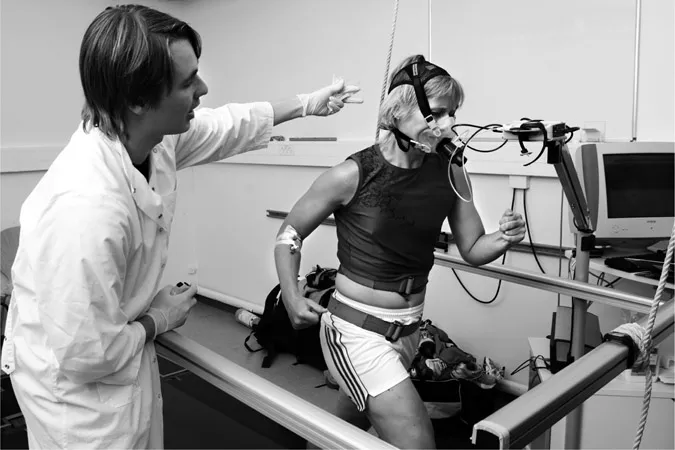
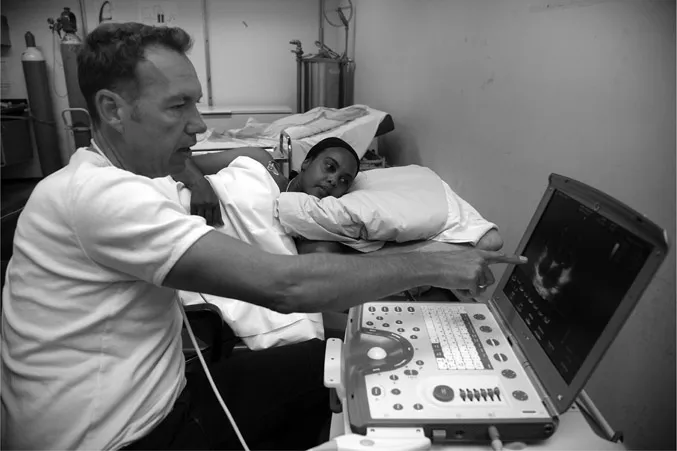
Photo 1.1 Testing the aerobic fitness (a) and cardiac function and structure (b) before and after 16 and 64 weeks of recreational football training for sedentary 20- to 45-year-old women.
Source: Photo Credit: Lizette Kabre.
While overall changes in myocardial structure and function following football training, e.g., increases in left- and right-ventricular systolic function, may confer reduced risk of CVD and improved prognosis, the long-term consequences of football training for cardiovascular morbidity and mortality await further study and the potential of football training to add to cardiac rehabilitation programmes, e.g., in patients with IHD and heart failure, is unknown. However, it is notable that positive results are accumulating for high-intensity interval training in various patient subsets, and high-intensity training comparable to football is increasingly advocated for the primary and secondary prevention of CVD (Iaia, Rampinini, and Bangsbo 2009; Bangsbo et al. 2015; Krustrup et al. 2018; Price et al. 2016). Moreover, favourable psychosocial effects of team sports that promote the subject’s participation and adherence appear to be independent of the presence of a range of chronic diseases, indicating that football may be a winning ticket for cardiac rehabilitation exercise programmes (Andersen, Ottesen, and Thing 2018).
Arterial function
Arterial function and characteristics, e.g., arterial stiffness and flow-mediated endothelial-dependent vasodilatation, contribute importantly to myocardial afterload and regulation of tissue perfusion (Mitchell 2009). It is therefore hardly surprising that measures of arterial function carry prognostic information and are increasingly utilised as preclinical surrogates of CVD (Mitchell 2009; Flam-mer, 2012). By using peripheral arterial tonometry, we found that, in hypertensive men, the augmentation index (a measure of arterial stiffness that predicts CVD) was lowered after football training, whereas the reactive hyperaemia index (a correlate of endothelial function that is also a predictor of CVD) was unchanged (Krustrup et al. 2013). Similar findings were observed after football...
Table of contents
Cover
Half Title
Series Page
Title
Copyright
Dedication
Contents
List of figures
List of photos
List of tables
List of contributors
Foreword
Introduction: Football as Medicine
1 Football as Medicine against cardiovascular disease
2 Football as Medicine against type 2 diabetes and metabolic syndrome
3 Football for promotion of bone health across the lifespan
4 Football as rehabilitation for cancer patients
5 Football as broad-spectrum prevention for children and youth – in club and school settings
6 Football for homeless and socially deprived people
7 Football and healthy ageing
8 Motivational aspects of Football as Medicine
9 Fitness and health effects of other team sports: ‘recreational team sports – the motivational medicine’
10 Football at the workplace
11 The implementation of Football Fitness
12 Injury prevention in football: the 11+ programme
13 Watching Football as Medicine: promoting health at the football stadium
14 Smartphone fitness apps and football fans: a case study of Fan Fit
15 Football and mental health
16 Tobacco-free stadia: a case study at the 2016 UEFA European Championships in France
17 A closing comment on the policy and politics of implementing football as medicine: the English context
Index
Trusted by 375,005 students
Access to over 1.5 million titles for a fair monthly price.
Study more efficiently using our study tools.
Frequently asked questions
Yes, you can cancel anytime from the Subscription tab in your account settings on the Perlego website. Your subscription will stay active until the end of your current billing period. Learn how to cancel your subscription
No, books cannot be downloaded as external files, such as PDFs, for use outside of Perlego. However, you can download books within the Perlego app for offline reading on mobile or tablet. Learn how to download books offline
Perlego offers two plans: Essential and Complete
Essential is ideal for learners and professionals who enjoy exploring a wide range of subjects. Access the Essential Library with 800,000+ trusted titles and best-sellers across business, personal growth, and the humanities. Includes unlimited reading time and Standard Read Aloud voice.
Complete: Perfect for advanced learners and researchers needing full, unrestricted access. Unlock 1.5M+ books across hundreds of subjects, including academic and specialized titles. The Complete Plan also includes advanced features like Premium Read Aloud and Research Assistant.
Both plans are available with monthly, semester, or annual billing cycles.
We are an online textbook subscription service, where you can get access to an entire online library for less than the price of a single book per month. With over 1.5 million books across 990+ topics, we’ve got you covered! Learn about our mission
Look out for the read-aloud symbol on your next book to see if you can listen to it. The read-aloud tool reads text aloud for you, highlighting the text as it is being read. You can pause it, speed it up and slow it down. Learn more about Read Aloud
Yes! You can use the Perlego app on both iOS and Android devices to read anytime, anywhere — even offline. Perfect for commutes or when you’re on the go. Please note we cannot support devices running on iOS 13 and Android 7 or earlier. Learn more about using the app
Yes, you can access Football as Medicine by Peter Krustrup, Daniel Parnell, Peter Krustrup,Daniel Parnell in PDF and/or ePUB format, as well as other popular books in Medicine & Sports Medicine. We have over 1.5 million books available in our catalogue for you to explore.