Much is talked and written about well-being in the workplace, but many wonder whether 'putting people first' is just a facade and that were it not for employment legislation, union representation and the high profile of human rights issues, employers would regard employees as a necessary burdensome financial evil, as in days gone by. Some scholarly research has focused on the reactions of employees to the quality of working life and well-being at work and much of this suggests high levels of dissatisfaction, disaffection and disengagement. In Workers' Voice, HRM Practice, and Leadership in the Public Sector: Multidimensional Well-Being at Work, Nicole Cvenkel avers that whilst it is known that public sector employees are even less satisfied than those in the private sector, there has been very little research into the effects of working life experiences on employee well-being in public sector organisations. There is even some doubt about whether a well-being philosophy that can be applied in the private sector can readily be extended to the public sector. The push towards New Public Management (NPM) means organisations continue to undergo significant reform processes around efficiency, costs and public service delivery. All these changes place additional demands on public sector employees who are at times also subject to intensive scrutiny by stakeholder groups, who may regard the recourse to well-being initiatives as a poor use of public funds. The author has researched in the UK local government sector and that is the setting for the debate in this book, about whether and how an employee well-being ideology can be successfully promoted and maintained in an NPM environment, given continuous reform and expenditure reduction. In a local government case organisation, the author has researched, limited resources, reduction in budgets, redundancies, increased workloads, lack of trust, and the existence of a 'controlled' working environment were all found to be central to a climate of bullying and unfairness. Although the organisation was committed to the adoption of HRM 'best practice' and initiatives geared towards promoting employees well-being, employees still believed they were being bullied and treated unfairly. It was found that different perspectives on the psychological contract, fairness, and bullying at work were highlighted by managerial and non-managerial employees. The author's conclusions contribute to a clearer understanding than hitherto of workers' voice in relation to work, leader-member exchanges, and well-being in the public sector and she offers a model depicting employees' understanding of what their quality of working life, line manager's leadership and well-being should be, that might be used by organisational leaders, researchers, policy makers, Human Resources managers and other practitioners and consultants, to move towards a more holistic, multidimensional, well-being at work paradigm.
eBook - ePub
Workers' Voice, HRM Practice, and Leadership in the Public Sector
Multidimensional Well-Being at Work
- 314 pages
- English
- ePUB (mobile friendly)
- Available on iOS & Android
eBook - ePub
Workers' Voice, HRM Practice, and Leadership in the Public Sector
Multidimensional Well-Being at Work
Part I
Theoretical developments in HRM, New Public Management and well-being research agendas
1
Building a foundation for workplace health and well-being in the public sector
Introduction
The rising dependencies on the global market and continued increased workloads have, and continues to, place an ever-increasing burden on those of working age in the delivery of products and services. In turn, increased workloads, line management relationship, and work-life conflicts and relationships are among the highest causes of stress-related absence at work, presenteeism and leaveism that have a negative effect on the health and well-being of workers, resulting in high cost to business and the public purse (CIPD, 2019; Hesketh and Cooper, 2014; MacDonald, 2005). For example, public sector absence levels (and associated costs) are now estimated to be nearly nine days per employee every year; with stress and other mental health conditions now being the main causes of employee absence. Moreover, the concentration on problems such as absenteeism, presenteeism, leaveism and accidental injury is giving way to a broader vision of what a healthier and happier and more productive workforce can achieve in terms of higher performance and productivity. Therefore, the fundamental principle outlined by policy makers are that all working age people have the opportunity to make the optimum contribution to their organisations while enjoying a safer, more satisfying and healthier working life (Black, 2008). This vision has been embraced by cutting edge companies that have invested deeply in the well-being of their workforce and are now reaping the benefits, as it appears that well-being at work is increasingly being recognised as an important factor in determining organisational success (CIPD, 2019).
This book draws from research that explored employees’ perspectives and reactions to HRM practices, line management leadership, the quality of working life and how such experiences have contributed to employees’ well-being at work in the local government context in North West England. This chapter establishes the research territory and identifies the research aims, objectives, justification and conceptual framework for the research. The structure of the book is outlined and the chapter concludes with a summary of the key issues discussed.
Establishing the research territory
Well-being in the workplace is one of the essential domains for contemporary organisations. Several reasons can be advanced for the importance of studying employee well-being at work. Historically, in the late nineteenth century, employers paid little attention to employee well-being, though there were some exceptions in employers (Quaker Cadbury family and Lever Brothers) who generally cared about employees’ well-being and introduced practices that assisted employees in the workplace and in life outside work (Cooper and Robertson, 2001; Newall, 2002). However, most employers at that time held a different view and generally regarded employees as a necessity but burdensome financial evil was a far more frequent phenomenon (Currie, 2001). Social and economic history shows that it took centuries to develop the employment relationship where well-being is recognised as an organisational responsibility (Cooper and Robertson, 2001). However, one often wonders if, under the organisational façade of ‘putting people first’, whether this attitude is still uppermost in contemporary employers thinking but is being stopped by the now pressing ‘best practice’ and employment legislation standards, unions and human rights corporative.
The nature of global, technological, economic, demographic and social changes in the twenty-first century have affected, and will continue to affect work, workers and management in the coming decades as emphasis is placed on revolutions in business concepts and incremental progress, a little cheaper, better and faster (Armstrong and Brown, 2001; Berman et al., 2010; CIPD, 2008; Cascio, 2010; MacDonald, 2005). These changes have transformed the way people live and work, revolutionising the rules of the game, creating a 24/7 service work culture, resulting in individuals working longer hours and experiencing job insecurity. All of these have implications for increased work-related stress, mental ill-health and negative well-being (ESRC, 2006; Green and Whitfield, 2009). ESRC (2010) further argues that the risk of losing jobs is greater in large organisations and has shifted from blue to white collar workers with professionals experiencing much of the job losses.
Work-related stress and mental ill-health are other salient principles of growing importance for policy makers and organisations as the growing intensity and pressures of work are major problems facing British workers (DWP, 2005; HSE, 2004, 2007, 2009). The cost of workers’ ill-health to organisations and the economy is astronomical, with the average cost of sickness absence in the United Kingdom (UK) being £600 per employee per year, resulting in 35 million working days lost yearly to occupational ill-health and injury with absence due to sickness costs of around £12 billion in 2007 and is now predicted to be GBP21 billion in 2020 and GBP26 billion in 2030 (CIPD, 2007, 2019; HSE, 2004, 2009; Silcox, 2007). In the public sector, the CIPD, 2019 Health and Well-Being at Work research points out an increased focus on mental health, which remains the most common cause of long-term absence in the public sector and other organisations. Public sector British employees’ average absence levels are 8.4 days per employee over the last year compared to 4.4 days for the private sector services, 5.6 days in manufacturing and production and 6.3 in the non-profit sector (DWP, 2005, 2017). While absence levels in the private services and non-profit sectors have shown a steady decline over the last decade, there has been little change in public sector absence over the last few years (CIPD, 2019). Public sector absence is costing around £4 to £9 billion a year to the taxpayer and approximately £100 billion to the British economy (DWP, 2005, 2017; HSE, 2000, 2009; Silcox, 2007). Therefore, promoting and maintaining employee well-being in the public sector in particular is essential given the high absence levels and cost to individuals, organisations and the economy as a whole.
The challenges and tensions of work, work-related stress, mental ill-health and employee absence have implications for worker satisfaction and positive well-being. Guest and Conway (1999) and Brown et al. (2006) argue that the level of worker satisfaction and worker well-being in Britain is considerably lower than suggested by Workplace Employment Relations Survey (WERS) 2004 survey (Kersley et al., 2006). Brown et al. state that a majority of British workers (15 million or more) are in fact dissatisfied with their jobs and recommend an urgent policy towards worker well-being and its likely incremental impact (Brown et al., 2006; Fisher et al., 2004). In support, the Gallup survey points out that more than 80% of Britain’s workers lack any real commitment to their jobs and a quarter of those are ‘actively disengaged’ or truly disaffected with their workplaces, lacking inspiration and engagement with their work, and the problem hasn’t gotten any better (Flade, 2003; MacLeod and Clarke, 2009). Echoing this view, Green and Whitfield (2009) claim that workers in larger organisations report higher levels of more stress, work intensity, a lack of influence and more dissatisfaction than those in smaller and medium-sized organisations (CIPD, 2019). In support, CIPD’s (2010) research found that public sector employees are less satisfied than their private sector counterparts.
The UK public sector, as with many public sectors worldwide, continues to undergo significant reform processes around efficiency and costs (Morphet, 2008; Noblet et al., 2006). These have been associated with a number of pressures that have been a catalyst for public sector reform (Bach et al., 2005). In particular, local government reforms tend to focus on improved management of resources and redefinition of roles and responsibilities (Noblet et al., 2006). All these changes place additional demands on public sector employees, leading to an increase in the stresses they face relative to their normal work (Morphet, 2008). Additionally, public sector employees are at times subject to intensive scrutiny by stakeholder groups, who may regard recourse to ‘well-being initiatives’ a poor use of the public purse (Baptiste, 2009).
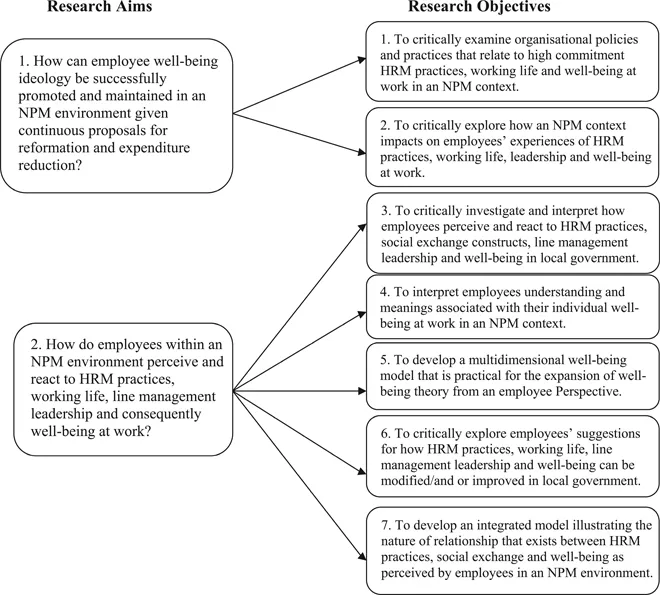
Figure 1.1 Relationship between the research aims and objectives
To this end, Black (2008) suggests that the business case evidence for promoting employee well-being is far from proven (ESRC, 2006, 2010). Echoing this view, Guest (2002) points out the impact that management implementation of people management practices can have on employees (Pfeffer, 2005; Purcell and Hutchinson, 2003); and the evidence of increasing work-related stress, mental ill-health, presenteeism and leaveism occurring in the public sector over the last decade (Hesketh and Cooper, 2014; Silcox, 2007) all have implications for employee well-being. Thus, this is a fascinating and essential area of investigation. Whilst the issue of employee well-being at work has reached a new level of importance in the minds of policy makers and managers, there is still little evidence that attention has been paid to the ‘workers’ voice’ in their evaluation of HRM practices, the quality of working life and well-being at work in the public sector. Research within this area remains relatively untapped. Furthermore, understanding employees’ expectations of the psycho-social factors affecting behaviour, the meaning of work experiences and well-being, and employees’ perceptions of how their well-being can be improved are all lacking in the evidence base (ESRC, 2010; HSE, 2007; Mowbray, 2009). Based on the preceding discussions, this book takes local government as its setting and seeks to contribute towards the debates in these areas. This book explores how public sector employees perceives HRM practices, line management leadership, their quality of working life and consequently their well-being at work in a New Public Management (NPM) environment given continuous proposals for reformation and expenditure reduction.
The relationships between the research aims and objectives of the research illustrated in this book are summarised in Figure 1.1.
Research rationale
The health and well-being of people of working age is of fundamental importance to Britain’s future (Black, 2008). Growing evidence suggests that work can help improve physical and mental health, reduce health inequalities and offer improved opportunities in life (DWP, 2005, 2017; HSE, 2009). The debate about the impact of working life on employee well-being has been intensified with the publication of Dame Carol Black’s (2008) review Working for a Healthier Tomorrow; the CIPD’s research on the Health and Well-Being of Work Survey (CIPD, 2019); the Kersely et al. (2006) research on Inside the Workplace: Findings from the 2004 Workplace Employment Relations Survey; the Department of Health research on Commissioning Framework for Health and Well-Being (DOH, 2007); and the Department of Works and Pensions research, Health, Work and Well-Being: Caring for Our Future – A Strategy for the Health and Well-Being of Working Age People (DWP, 2005). The central messages in these reviews are that promoting the health and well-being of employees is not only a good thing in itself, but it also promotes the well-being of the organisations for which they work, including so-called bottom-line performance indicators such as profits and targets (Black, 2008; CIPD, 2019; DOH, 2007; DWP, 2005; ESRC, 2006; HSE, 2009). Black (2008) further states that the failure of many organisations to grasp this is as a result of a lack of information. Black avers that the key importance in the promotion of employee well-being is job design, management organisation and minimisation of work-related stress.
This policy position is based on evidence from the review by Price-waterhouseCoopers (PwC) research (PwC, 2008) that considered the wider business case for workplace wellness programmes and the economic business case for UK employers. The evidence indicates that the costs of well-being programmes can in many circumstances be translated into benefits in the form of cost savings rather than increased income or revenue flows, which can all impact positively upon intermediate measures that can be followed through to financial benefits (HSE, 2009; PwC, 2008).
Furthermore, Williams and Cooper (1999) emphasise that when people come to work the whole person comes to work not just the part that does the job. Central to this view, Thompson and Bates (2009) indicate that it is important for organisations to understand that when they employ individuals it is essential to recognise that they have employed a ‘human being’ to perform a particular task and presumably add value to the organisation. Echoing this view Bolton and Houlihan (2007) maintain that organisations need to recognise that their human resources are precisely that: human; they are not simply a resource and they will be a far from optimal resource if their humanity is not recognised, respected and supported. In essence, the journey to workplace health and well-being can start with a ‘leap of faith’ as it is most needed for the challenges organisations and individuals face in the twenty-first century.
Central to this view, Bates and Thompson (2007) argue that the idea that an organisation’s most valuable resource is its human resource – its people – is an idea that has been around for a long time now and sadly it often remains at a rhetorical level and does not rise above the status of an empty slogan. What is of particular importance to this argument here is that, in order to view employees as the most valuable asset it may require ‘going back to the basics’ of the notion that people are more valuable than ‘carbon chapter’ or placed ‘ninth’ in the list of organisational priorities (Figure 1.2).
It is important for organisations to have the understanding that people can work more effectively, may be more creative, productive, stimulated and fulfilled when their well-being is promoted (Baptiste, 2008, 2009). Echoing this view, Cartwright and Cooper (2009) state that organisations that take care of thei...
Table of contents
- Cover
- Half Title
- Title
- Copyright
- Contents
- List of figures
- List of tables
- Preface
- Introduction: an agenda for research
- PART I Theoretical developments in HRM, New Public Management and well-being research agendas
- PART II The workers’ voice: HRM practices, line management leadership and well-being at work
- Author biography
- Abbreviations and acronyms
- Index
Trusted by 375,005 students
Access to over 1.5 million titles for a fair monthly price.
Study more efficiently using our study tools.
Frequently asked questions
Yes, you can cancel anytime from the Subscription tab in your account settings on the Perlego website. Your subscription will stay active until the end of your current billing period. Learn how to cancel your subscription
No, books cannot be downloaded as external files, such as PDFs, for use outside of Perlego. However, you can download books within the Perlego app for offline reading on mobile or tablet. Learn how to download books offline
Perlego offers two plans: Essential and Complete
- Essential is ideal for learners and professionals who enjoy exploring a wide range of subjects. Access the Essential Library with 800,000+ trusted titles and best-sellers across business, personal growth, and the humanities. Includes unlimited reading time and Standard Read Aloud voice.
- Complete: Perfect for advanced learners and researchers needing full, unrestricted access. Unlock 1.5M+ books across hundreds of subjects, including academic and specialized titles. The Complete Plan also includes advanced features like Premium Read Aloud and Research Assistant.
We are an online textbook subscription service, where you can get access to an entire online library for less than the price of a single book per month. With over 1.5 million books across 990+ topics, we’ve got you covered! Learn about our mission
Look out for the read-aloud symbol on your next book to see if you can listen to it. The read-aloud tool reads text aloud for you, highlighting the text as it is being read. You can pause it, speed it up and slow it down. Learn more about Read Aloud
Yes! You can use the Perlego app on both iOS and Android devices to read anytime, anywhere — even offline. Perfect for commutes or when you’re on the go.
Please note we cannot support devices running on iOS 13 and Android 7 or earlier. Learn more about using the app
Please note we cannot support devices running on iOS 13 and Android 7 or earlier. Learn more about using the app
Yes, you can access Workers' Voice, HRM Practice, and Leadership in the Public Sector by Nicole Cvenkel in PDF and/or ePUB format, as well as other popular books in Business & Business General. We have over 1.5 million books available in our catalogue for you to explore.