With the continued growth of PhD programs in architecture and the simultaneous broadening of approaches, InterVIEWS: Insights and Introspection on Doctoral Research in Architecture begins a timely survey into contemporary research at academic institutions internationally, in the context of the expanding landscape of architectural inquiry. The eighteen interviews with scholars who direct or contributed to doctoral research programs in areas of architecture history and theory, theory and criticism, design research, urban studies, cross-disciplinary research, and practice-based research expose a plurality of positions articulating a range of research tactics. Renowned scholars narrated the stories, the experiences, and the research that shaped and are shaping doctoral education worldwide, providing an invaluable knowledge resource from which readers may find inspiration for their work. InterVIEWS acknowledges the diversity in approaches to research to evidence meaningful differences and the range of contributions in academic institutions. The relevance of this self-reflection becomes apparent in the exposition of vibrant and at times divergent viewpoints that offer a thought-provoking opportunity to consider the openness and breadth of a field that is unrelenting in redefining its boundaries along with the probing questions.
eBook - ePub
InterVIEWS
Insights and Introspection on Doctoral Research in Architecture
- 282 pages
- English
- ePUB (mobile friendly)
- Available on iOS & Android
eBook - ePub
About this book
Trusted by 375,005 students
Access to over 1.5 million titles for a fair monthly price.
Study more efficiently using our study tools.
Information
1
Architectural theories and the world of philosophy, science, and theology
For over thirty years, I have taught the history of architectural theories in relation to what philosopher Edmund Husserl called the spiritual history of Europe,1 the foundation of our present global, technological world. Present-day architectural practices have their roots in this history. I examined the connection between architectural intentions – expressed through writing and artifacts – and the world of philosophy, science, and theology at different moments in Western history, between Ancient Greece and modernity. Such historical understanding is vital to unveil true options for our discipline in view of its present challenges. It is necessary to develop a practical philosophy and thus practice ethically. It matters little if you come from Iran or Indonesia or that you are going to work in India or China, because the conditions of the global world arose from this history. This is not a political history but one of transforming worldviews. The questions I raise have been framed by way of an examination of the primacy of perception through phenomenology and, more recently, enactive cognitive science. Architectural meanings arise with perception. If we do not understand perception and cognition’s affinities with emotion, we cannot address the fundamental issues of architecture, nor start to imagine how to proceed when we design. This tradition connects seamlessly with hermeneutics, which is the study of natural language as human understanding. These have been the foundations of my teaching and research.
[Federica Goffi] Can you describe your role in the McGill PhD program in History and Theory of Architecture over time?
[Alberto Pérez-Gómez] I conceived the Post-professional History and Theory Master’s program at McGill when I arrived in 1987, and I taught most of the courses between 1987 and 2000. About one hundred twenty master’s theses were approved externally, following the procedure of doctoral dissertations. Most students dealt with primary sources and produced materials that created a foundation to think about the PhD. When the professional program changed over to master’s, it was the right time to push for the approval of our PhD. We brought in Martin Bressani and started the program in 2000. After a year worth of seminars and courses with the master students, PhD students began their research. This structure was a hybrid between European and North American models, with more structured supervision than the former and without the extensive coursework required by the latter. My premise was that PhD students in our field should arrive with a set of personal questions, focusing almost exclusively on their research. I held seminars where students would present their work in progress and invited colleagues, like Marco Frascari, David Leatherbarrow, and Paul Emmons, as critics. My role changed at McGill in the last few years. It is still a research PhD, and now many colleagues have students, but the structure is different. I am not part of the administration, so I am doing my research and reducing my intake of PhD students.2
[Brynne Campbell] What has been your favorite encounter with architecture?
[APG] A building that moved me is La Tourette (Figure 1.1). I spent a few days there. It was transformative, much more than any other building by Le Corbusier.3 It is profound in its spirituality and gets at things that are significant in the contemporary world. It was a monastery, but now that it is no longer a monastery you can spend time there, even the night. The way that it constructs atmospheres is an example of how modern architecture can engage with tradition and ritual.
[FG] Considering what you wrote about the functionalization of theory,4 what are the antidotes against method, and what is your approach to thinking in architecture?
[APG] Potentially problematic reductive analysis originates with Descartes’ philosophy. The question is how to overcome the limitations of Cartesianism. This issue has been understood in philosophy but seldom by technical practices. There is nothing wrong with clear thinking, and phenomenology, which offers a critique of Cartesianism, is not against science. Phenomenology is at the foundation of appropriate theorizing, and one of its insights is that natural language is our primary means to articulate human truths, beyond logical syllogism. The language of syllogisms is also the language of algorithms. Merleau-Ponty explains that the language of syllogism valorizes the transparency of the logical formulation, and this is at odds with natural language; wherein human truths are expressed in language that is polysemic, poetic, and never merely denotative, emerging from gestures and habits.5 Such language does not have a one-to-one relationship to anything; it aspires to express meaning, but it never forecloses it. This is what phenomenology reveals in continuity with hermeneutics. The best antidote against functionalized theories that are instrumental is narrative language. Aristotle made a clever distinction between theoretical knowledge, practical knowledge, and technical knowledge. I would claim that all architectural theory in the traditional world before nineteenth-century functionalism included these autonomous and yet complementary
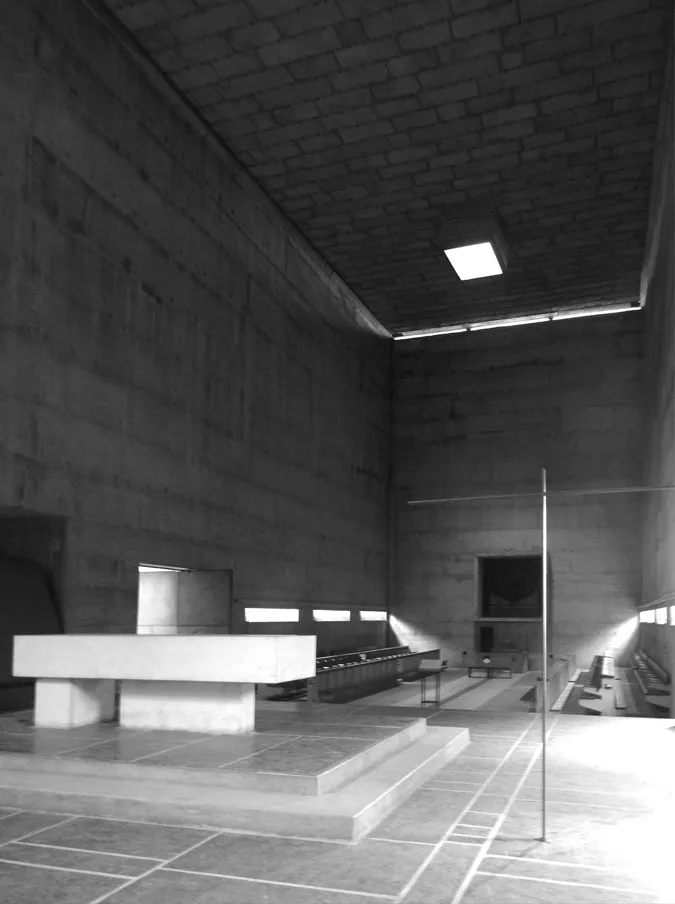
Figure 1.1 The Monastery of Sainte Marie de La Tourette (1957–60), church interior.
Source: © Courtesy of Angeliki Sioli (June 2013).
modalities of discourse, which are never reducible to one another. Aristotle says that the theoretical knowledge that is proper to science is the language of mathematics (originating in celestial contemplation, for mimesis in traditional theories); practical knowledge is the language of rhetoric that leads to wisdom in everyday life affairs (prudence for appropriateness in human actions); lastly, technical knowledge, which is equally important for architects, comes from poiesis, making, and is irreducible to the others; it is the wisdom embedded in bodily skills.6 We misunderstand the problem of theory and practice when we do not acknowledge this complexity.
[FG] Are there methods that may confuse our understanding of architecture?
[APG] Yes. It is important to grasp the difference between explanation and understanding. Analytic methods that privilege clarity may explain phenomena and become instrumentalized, but understanding comes from genuine questions and a fusion of horizons, enabling a self-understanding. Methods that are important for the positive sciences often assume a dualistic reality that entails the opposition of subjectivity and objectivity, resulting in the authority of statistics, for example, or pseudo-objective research in the social sciences. All matters of stipulations that bypass language and experience and substitute this with experimental research generate misunderstandings – this condition followed from the scientific revolution instigated primarily by Galileo and Descartes in the seventeenth century.7 Western humanity started to take the idea of the experiment as being synonymous with experience. An experiment looks for quantifiable data and isolates phenomena from context, directing our intellectual judgment; it bypasses emotions, which are unquantifiable and yet enable thinking. Emotions were robbed of their cognitive dimension, something that neurobiologists like Antonio Damasio now contest.8 Damasio insists that emotion, rather than getting in the way of cognition, is in fact a component of it. We cannot think clearly nor plan our future if the emotional centers of the brain are impaired. Emotion is cognitive. It matters that something moves us and that this triggers our research questions. This is a component of understanding, in opposition to the fallacy of dispassionate information. Conversely, design methods that bypass experience, like parametric design does, to reduce aspects of building projects through mathematics are problematic. They do not do justice to the experience, which is embodied in natural language, first and foremost.
[Ryan Stec] Is there something in this shift coming from neuroscience that you bring back to research in architecture?
[APG] Yes, but it is important not to misunderstand the convergence between phenomenology, neuroscience, and recent cognitive science as enabling a prescriptive methodology to design ‘intelligent’ buildings or cities. Enactive cognitive scientists have given up the computer model of the brain put forward in the second half of the twentieth century and insist on grasping consciousness as a full-body situated phenomenon. Alva Noë claims that consciousness does not end in the skull;9 the world is literally a part of consciousness. For me, such arguments add evidence and authority to the older claims of phenomenology and hermeneutics. Hermeneutics offers a whole structure of interpretation in how to deal with history, to account for the world of the work and your personal questions. Rather than importing the methods that are proper to the hard sciences, these developments reinforce the importance of hermeneutic phenomenology for poetic and ethical architecture.
[FG] Considering that history has been systematized through methods and linear development, what does your approach to history offer? Is there a difference between the history and the theory of architecture today?
[APG] The idea of linear history, with its origins in Judeo-Christian linear time, embraces the concept of progress and culminates in Hegel.10 During the early nineteenth century, this resulted in a concept that reduced the history of architecture to the history of buildings, systematically classified according to typologies and styles, like in the history book by Jean-Nicolas-Louis Durand (1760–1834),11 which becomes an explanatory system supposedly enabling architects to choose appropriate – self-consciously contingent – decoration. In opposition, early hermeneutical thinking, with its roots in Giambattista Vico’s insights, argued that history has its internal methodology that you cannot import from the hard sciences, foregrounding the concept of interpretation as understanding.12 This thinking culminated in the contemporary hermeneutical approach to history, as explained by philosophers such as Hans-Georg Gadamer and Paul Ricœur.13
Today, the theory of architecture no longer has the connotations of theoria (θεωρία) in the Greco-Roman sense, meaning the contemplation of the immutable order of nature manifested in the heavenly ‘star dance’ of the five visible planets, the sun and the moon – all divinities – serving as a model for mimetic architectural design; its conventional understanding is merely a mode of applied science. Conversely, I argue that it is better to build upon the mode of discourse that Aristotle named practical knowledge, or practical philosophy, which was an essential component of traditional theories. After Claude Perrault (1613–1688) denied the long-standing cosmic analogy in architecture, but mostly after Durand consolidated the concept of architecture as functional technology,14 the only way to argue legitimately for theory in architecture is by understanding it as practical philosophy, not as hard science. In this sense, theory is a narrative discourse that can orient practice and enable the design of atmospheres in view of programs, situations, and places. Such narrative theory is fundamentally history as interpretation in a hermeneutic sense, driven by presence (emotional cognition) and present questions yet respectful of the world of the work. Mere formal descriptions or stylistic classifications never suffice. Hermeneutics discloses how architecture contributed to reveal truths and grant existential orientation to the inhabitants. This approach is unlike scientific research for documentation or for the production of the ‘ultimate’ (pseudo-objective) rendition of a topic. We understand from hermeneutics that we can find our way only diachronically by conversing with something, which is at a distance. We thus seek a fusion of horizons in a dialogue that allows orienting our acts into the future. We need theory as history for the sake of action, to enable ethical practice. That is the true purpose of history, already suggested by Nietzsche in the nineteenth century.15 Practical philosophy meets the stories that come from hermeneutic endeavors, and together, they constitute a discourse.16 History and theory can be seen as diffe...
Today, the theory of architecture no longer has the connotations of theoria (θεωρία) in the Greco-Roman sense, meaning the contemplation of the immutable order of nature manifested in the heavenly ‘star dance’ of the five visible planets, the sun and the moon – all divinities – serving as a model for mimetic architectural design; its conventional understanding is merely a mode of applied science. Conversely, I argue that it is better to build upon the mode of discourse that Aristotle named practical knowledge, or practical philosophy, which was an essential component of traditional theories. After Claude Perrault (1613–1688) denied the long-standing cosmic analogy in architecture, but mostly after Durand consolidated the concept of architecture as functional technology,14 the only way to argue legitimately for theory in architecture is by understanding it as practical philosophy, not as hard science. In this sense, theory is a narrative discourse that can orient practice and enable the design of atmospheres in view of programs, situations, and places. Such narrative theory is fundamentally history as interpretation in a hermeneutic sense, driven by presence (emotional cognition) and present questions yet respectful of the world of the work. Mere formal descriptions or stylistic classifications never suffice. Hermeneutics discloses how architecture contributed to reveal truths and grant existential orientation to the inhabitants. This approach is unlike scientific research for documentation or for the production of the ‘ultimate’ (pseudo-objective) rendition of a topic. We understand from hermeneutics that we can find our way only diachronically by conversing with something, which is at a distance. We thus seek a fusion of horizons in a dialogue that allows orienting our acts into the future. We need theory as history for the sake of action, to enable ethical practice. That is the true purpose of history, already suggested by Nietzsche in the nineteenth century.15 Practical philosophy meets the stories that come from hermeneutic endeavors, and together, they constitute a discourse.16 History and theory can be seen as diffe...
Table of contents
- Cover
- Half Title
- Series Page
- Title
- Copyright
- Dedication
- Contents
- List of figures
- List of contributors
- Acknowledgments
- Abbreviations
- Initials of interviewees and interviewers
- Full-relief: an introduction to the InterVIEWS
- 1 Architectural theories and the world of philosophy, science, and theology
- 2 Architecture for those who need it
- 3 Wondering awry
- 4 The experience of architecture
- 5 In the medium itself: three decades of design practice research at Royal Melbourne Institute of Technology
- 6 Asking questions, framing answers
- 7 Design research at Harvard Graduate School of Design
- 8 Design research: an eye on the past and the future
- 9 Encounters in the field of architecture: pathways and obstructions in architectural studies
- 10 Architecture, history, and technology: Illinois Institute of Technology College of Architecture’s PhD program in Architecture
- 11 On the study of conflict in cities
- 12 A view from the South Pacific: architecture and scholarship across cultures
- 13 Architecture engaged with culture
- 14 The many loci of research
- 15 Collaboration is the story
- 16 Architectural design and doctoral research
- 17 Diagnosing design: doctoral studies in architecture at the University of Michigan
- 18 Cross-cultural prospects for doctoral training in architecture
- Bibliography
- Index
Frequently asked questions
Yes, you can cancel anytime from the Subscription tab in your account settings on the Perlego website. Your subscription will stay active until the end of your current billing period. Learn how to cancel your subscription
No, books cannot be downloaded as external files, such as PDFs, for use outside of Perlego. However, you can download books within the Perlego app for offline reading on mobile or tablet. Learn how to download books offline
Perlego offers two plans: Essential and Complete
- Essential is ideal for learners and professionals who enjoy exploring a wide range of subjects. Access the Essential Library with 800,000+ trusted titles and best-sellers across business, personal growth, and the humanities. Includes unlimited reading time and Standard Read Aloud voice.
- Complete: Perfect for advanced learners and researchers needing full, unrestricted access. Unlock 1.5M+ books across hundreds of subjects, including academic and specialized titles. The Complete Plan also includes advanced features like Premium Read Aloud and Research Assistant.
We are an online textbook subscription service, where you can get access to an entire online library for less than the price of a single book per month. With over 1.5 million books across 990+ topics, we’ve got you covered! Learn about our mission
Look out for the read-aloud symbol on your next book to see if you can listen to it. The read-aloud tool reads text aloud for you, highlighting the text as it is being read. You can pause it, speed it up and slow it down. Learn more about Read Aloud
Yes! You can use the Perlego app on both iOS and Android devices to read anytime, anywhere — even offline. Perfect for commutes or when you’re on the go.
Please note we cannot support devices running on iOS 13 and Android 7 or earlier. Learn more about using the app
Please note we cannot support devices running on iOS 13 and Android 7 or earlier. Learn more about using the app
Yes, you can access InterVIEWS by Federica Goffi in PDF and/or ePUB format, as well as other popular books in Architecture & Architecture General. We have over 1.5 million books available in our catalogue for you to explore.