The Church Missionary Society (now renamed the Church Mission Society) has been for most of its 200-year history the largest and most influential of the British Protestant missionary agencies. Its bicentenary in 1999 is being marked by the publication of this collection of historical and theological essays by an international team of scholars, including Lamin Sanneh, Kenneth Cragg, and Geoffrey A. Oddie. The volume contains re-assessments of the classic centenary history of the CMS by Eugene Stock and of the strategic vision of Henry Venn, one of the two architects of the Three-Self theory of the indigenous church. There are chapters on the close links between the CMS and the Basel Mission, women missionaries, and regional studies of Samuel Crowther and the Niger mission, Iran, the Middle East, New Zealand, India, and Kikuyu Christianity. The volume makes a major contribution to the growing body of literature on the indigenization of missionary traditions, and will be of interest to historians of the missionary movement and non-western Christianity, as well as theologians concerned with religious pluralism, dialogue, and Christian mission.
- 400 pages
- English
- ePUB (mobile friendly)
- Available on iOS & Android
eBook - ePub
The Church Mission Society
About this book
Trusted by 375,005 students
Access to over 1.5 million titles for a fair monthly price.
Study more efficiently using our study tools.
Information
Topic
Theology & ReligionSubtopic
ReligionPart 1
The CMS: Historical and Theological Themes
1. "Taking Stock": The Church Missionary Society and Its Historians
KEVIN WARD
Introduction
When Eugene Stock came to write his great history of the Church Missionary Society in 1899, he was faced with an arduous task, but one that did not seem to offer insuperable problems of organization or presentation. The internal structures and procedures of the society, with which Stock, as editorial secretary, had been intimately involved for a quarter of a century, provided the work with a unified, coherent, and satisfying structure. The issues do not seem as straightforward a hundred years later. There is no longer much taste for multivolume histories of institutions. More seriously, there is suspicion of unified and centralizing structures in historical writing as in life, and a much greater awareness of the necessity of diversity of perspective and multiplicity of voices. The very idea of mission history as a respectable branch of historical inquiry became rather suspect in the era of decolonization after 1945 and especially in the 1960s and 1970s (the era of independence for most of Africa). Was not mission history primarily an account of the expansion of Europe, which must now cede priority to the histories of Asian, African, and Latin American peoples and cultures, including the history of local Christian communities in their various expressions? In the light of this, what value does a history of a mission society have?
In examining this issue, this chapter will examine the two major histories of the CMS as an institution: that written by Stock at the turn of the nineteenth century and that by Hewitt in the 1970s. Gordon Hewitt continued the history from more or less where Stock had ended, down to 1942, when Max Warren became general secretary. The chapter will conclude by examining what shape a history of the CMS might take for the period from 1942 up to the bicentenary in 1999.
Eugene Stock's History of the CMS
Writing from his Tegel prison cell in 1944, Dietrich Bonhoeffer reflected on the fragmentariness of life in his day, compared to the lives of those who lived and worked just a generation before his own at the end of the nineteenth century:
The portraits of the great savants in Harnack's History of the Academy make me acutely aware of that, and almost saddens me a little. Where is there an intellectual magnum opus today? Where are the collecting, assimilating, and sorting of material necessary for producing such a work? Where is there today the combination of fine abandon and large scale planning that goes with such a life?1
1. Dietrich Bonhoeffer, Letters and Papers from Prison, enl. ed. (London: SCM Press, 1971), p. 219.
The great work of mission history that Eugene Stock produced to commemorate the first centenary of the Church Missionary Society in 1899 — with its portraits of great nineteenth-century missionaries and its tremendous industry of collecting, assimilating, and sorting — provokes a similar sense of awe, not to mention a little sadness at the loss of such solidity and security. The History of the Church Missionary Society: Its Environment, Its Men and Its Work in Three Volumes is nothing if not solid: volume 1 covers the first fifty years, 1799-1849, in 504 pages; volume 2, 1849-72 (the death of Henry Venn), in 659 pages; volume 3, 1872-99, in 832 pages. Then there was the Centenary Volume of the Church Missionary Society, published in 1902, containing the speeches and sermons surrounding the centenary celebrations, statistics, and useful directories of the 1,602 men (clerical and lay) who had gone out with the society, the 584 women (not including wives), and the 623 "native" clergy connected to the society between 1799 and 1900. Finally, Stock wrote a "Supplementary Volume the Fourth," taking the story up to 1916.2 Ironically, the work had originally been entrusted to Charles Hole, who produced a first volume that covered only the first fifteen years. He then abandoned the project, and it was decided to start again "though on a smaller scale"!3
2. The details are: Eugene Stock, The History of the Church Missionary Society, vols, 1-3 (London: CMS, 1899); vol. 4 (London: CMS, 1916); The Centenary Volume of the Church Missionary Society for Africa and the East (London: CMS, 1902).
3. Stock, vol. 1, p. vii.
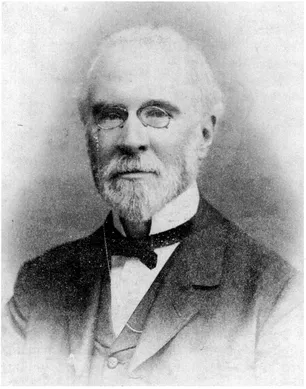
Fig. 1. Eugene Stock (1836-1928), author of the centenary history of the CMS. Church Mission Society, London
Despite the solidity of this great project, something of the vulnerability and fragmentariness that one might say is the nature of missionary work, does come through again and again in Stock's narrative. The project was conceived by Stock as an institutional history, the history of a great institution, an institution whose very existence for its first forty years was precarious, but which had become a force to be reckoned with in the life of the Church of England. As one of Stock's sternest modern critics puts it:
His great History is the story of English missionary structures at work at home and abroad. The non-English elements emerge only occasionally from the shadows and then to illustrate the work of English missionaries.4
4. Peter Williams, The Ideal of the Self-Governing Church: A Study of Victorian Missionary Strategy (Leiden: E. J. Brill, 1990), p. 170.
In spite of this, the work remains a very great achievement. It is encyclopedic as a work of reference to the activities of the society, its missions, and its personnel. Yet Stock had the ability to present his material in a coherent and interesting way so that the text does not become a tedious list of forgotten names and places about which we know little. He has a particular skill in putting the life of the society in the context of English church politics and theological disputes. His style is precise and unfussy, a model of clarity. Stock once wrote of Philip O'Flaherty, one of the first missionaries to Uganda, that "his pen was the pen of a too ready writer." O'Flaherty was a man whose incautious utterances, both spoken and written, made him a difficult colleague to work with.5 Stock's own fluency with the pen was legendary — he is said to have had only once to write out a page a second time.6 On the other hand, Stock was as diplomatic as O'Flaherty was indiscreet. In the earlier part of the work, the pen of the historian is most in evidence, sifting and exercising his considerable critical faculties in a judicious way. But in the later part of the book Stock is an actual player. He began his editorial duties (the task of preparing the letters from missionaries overseas for various forms of wider circulation and publication) in 1873 and became a full secretary of the society in 1881. His social background was somewhat humbler than those of the honorary clerical secretaries (Henry Venn, 1841-72; Henry Wright, 1872-80; and Frederic Wigram, 1880-95) whose personalities and ideas often dominated the policy making of the society. Nevertheless, Stock's influence was increasingly felt. The son of a failed business man, he did not attend a university. He was a lay person who reflected the ethos of a successful institution in a period of sustained growth. In some ways he created, or helped to create, that ethos. This needs to be borne in mind when considering Stock's account of the last years of the nineteenth century, years of profound crisis for the society's work in West Africa, which are severely glossed over and skewed in Stock's narrative. The metropolitan, institutionally oriented point of view is paramount from the beginning of the work. But it is my contention that something of the significance and consequence of world mission from the perspective of the subjects of mission does emerge from Stock's pages.
5. Stock, vol. 3, p. 414.
6. Georgina Gollock, Eugene Stock: A Biographical Study, 1836 to 1928 (London: CMS, 1929), p. 128.
Moreover, in defense of Stock, in almost every case he is scrupulous in honoring the leaders of the local church by recording their names and activities. The story never reads as simply, or indeed primarily, the activities of foreign missionaries. Philip O'Flaherty, the missionary reprimanded by Stock for his lack of reserve and diplomacy, can serve as a way into this theme. O'Flaherty was in no way typical of nineteenth-century missionaries, although, as an army man, he does represent a steady number of CMS recruits throughout the period. The "typical" missionary in the first period would perhaps be the German Lutheran from Wurttemberg, trained at the Basel missionary institute;7 in the middle years of the century, he would be the product of England's homegrown missionary college in London, the Islington Institute.8 At the end of the century, he would be the Cambridge upper-middle-class graduate, imbued with Keswick zeal. O'Flaherty was none of these. But his life does in several strange ways symbolize the experience of many of the subjects of mission in the nineteenth century.9 First of all, O'Flaherty must have been one of the few CMS missionaries who had experienced both sides of missionary work — the giving as well as the receiving. Born into a Roman Catholic family in County Mayo, Ireland, in the 1830s, he grew up in a society about to be disrupted by the impact of the outside world. In the aftermath of the Great Famine (when Roman Catholic pastoral support in the countryside had to some extent broken down), he attended the cabin school of a Presbyterian organization working among the Irish-speaking community of western Ireland, a movement that aimed at the conversion of Irish "Romanists" to the evangelical faith and their civilization by introducing them to English education and values. Marrying the daughter of the Presbyterian minister who had brought him to the faith, he took the middle passage to Liverpool, to work as a teacher. Enlisting as a soldier in the Tenth Hussars, he went to the Crimea, becoming proficient in Turkish and French and later Arabic. He became a sergeant interpreter for the British army. After the war he did some medical studies in Edinburgh, before being sent by the Free Church of Scotland to work as a missionary in Constantinople. It was here that he was engaged as an assistant to the great CMS missionary and expert on Islam, C. G. Pfander, until the mission was closed down by the Turkish authorities in 1864. Back in England, O'Flaherty was ordained into the Church of England, though he never quite felt at ease in the role of an English curate. In 1880 he was called to Uganda. He always claimed (though his own volatile nature makes this difficult to credit) that he was asked to sort out the interpersonal difficulties faced by the beleaguered mission community at the court of the Kabaka (king of Buganda). In reality he exacerbated the problems, but he was able to exercise his linguistic skills, demonstrate his knowledge of Islam and the Muslim world to the Swahili traders who were an important faction at the court, make his contribution to Catholic-Protestant diatribe, and (as a clergyman) to baptize the first Ugandan converts to Protestant Christianity. After five years of separation from his wife and children, he retraced his steps to the coast and boarded a boat at Mombasa in order to return home. He died of fever, however, on 21 July 1886, just before the ship entered the Suez Canal, and he was buried at sea.
7. See chap. 2 below.
8. This was a missionary training college started in the early years of the nineteenth century specifically to train missionaries who did not have a university degree. Some of its graduates were subsequently ordained for ministry overseas by the bishop of London or by a bishop in the mission where they worked. But the institute was not primarily intended for ordination training.
9. For O'Flaherty's early life, see Thomas Simpson, "Rev. Philip O'Flaherty of Ballaghadallagh, Co. Mayo and of Uganda," The Bulletin of the Presbyterian Historical Society of Ireland 11 (Nov. 1981). Correspondence relating to his activities in Uganda is found in the CMS archives (Birmingham): G3/A60.
The experience of O'Flaherty's own Irish community bears some resemblance...
Table of contents
- Cover
- Title
- Copyright
- Contents
- Foreword
- Acknowledgments
- Contributors
- List of Illustrations
- Abbreviations
- Introduction
- PART 1 THE CMS: HISTORICAL AND THEOLOGICAL THEMES
- PART 2 MISSION AND THE INDIGENOUS CHURCH
- PART 3 CHANGING PERSPECTIVES ON MISSION IN BRITAIN
- Afterword: The CMS and the Separation of Anglicanism from "Englishness"
- Bibliography of Printed Sources
- Index
Frequently asked questions
Yes, you can cancel anytime from the Subscription tab in your account settings on the Perlego website. Your subscription will stay active until the end of your current billing period. Learn how to cancel your subscription
No, books cannot be downloaded as external files, such as PDFs, for use outside of Perlego. However, you can download books within the Perlego app for offline reading on mobile or tablet. Learn how to download books offline
Perlego offers two plans: Essential and Complete
- Essential is ideal for learners and professionals who enjoy exploring a wide range of subjects. Access the Essential Library with 800,000+ trusted titles and best-sellers across business, personal growth, and the humanities. Includes unlimited reading time and Standard Read Aloud voice.
- Complete: Perfect for advanced learners and researchers needing full, unrestricted access. Unlock 1.5M+ books across hundreds of subjects, including academic and specialized titles. The Complete Plan also includes advanced features like Premium Read Aloud and Research Assistant.
We are an online textbook subscription service, where you can get access to an entire online library for less than the price of a single book per month. With over 1.5 million books across 990+ topics, we’ve got you covered! Learn about our mission
Look out for the read-aloud symbol on your next book to see if you can listen to it. The read-aloud tool reads text aloud for you, highlighting the text as it is being read. You can pause it, speed it up and slow it down. Learn more about Read Aloud
Yes! You can use the Perlego app on both iOS and Android devices to read anytime, anywhere — even offline. Perfect for commutes or when you’re on the go.
Please note we cannot support devices running on iOS 13 and Android 7 or earlier. Learn more about using the app
Please note we cannot support devices running on iOS 13 and Android 7 or earlier. Learn more about using the app
Yes, you can access The Church Mission Society by Brian Stanley,Kevin Ward in PDF and/or ePUB format, as well as other popular books in Theology & Religion & Religion. We have over 1.5 million books available in our catalogue for you to explore.