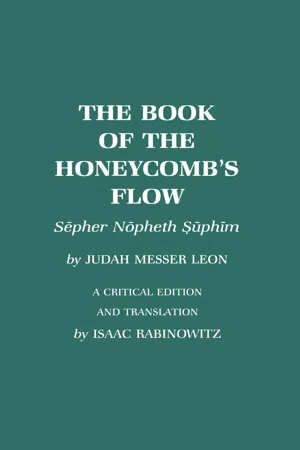
The Book of the Honeycomb's Flow
eBook - ePub

The Book of the Honeycomb's Flow

Sepher Nopheth Suphim by Judah Messer Leon

  1. 678 pages
  2. English
  3. ePUB (mobile friendly)
  4. Available on iOS & Android
eBook - ePub

The Book of the Honeycomb's Flow

Sepher Nopheth Suphim by Judah Messer Leon

About this book

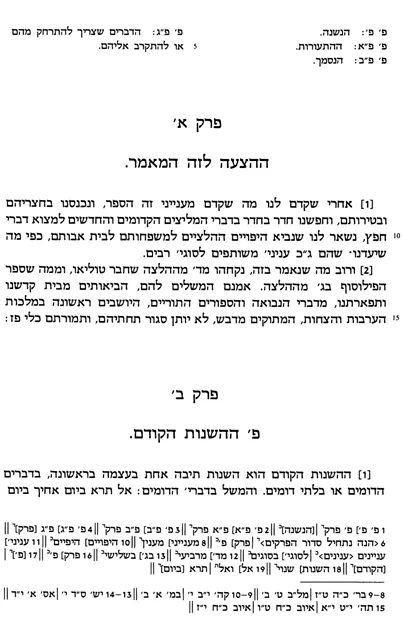
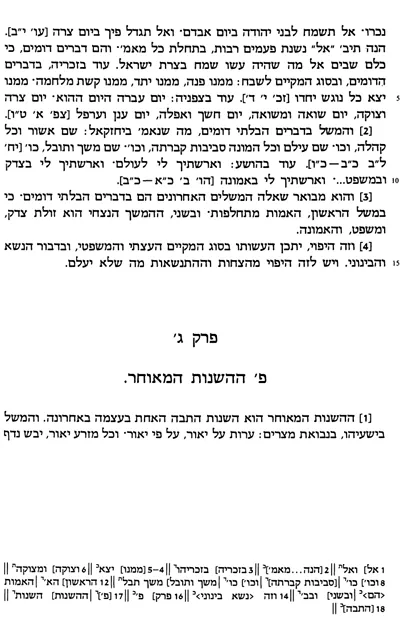
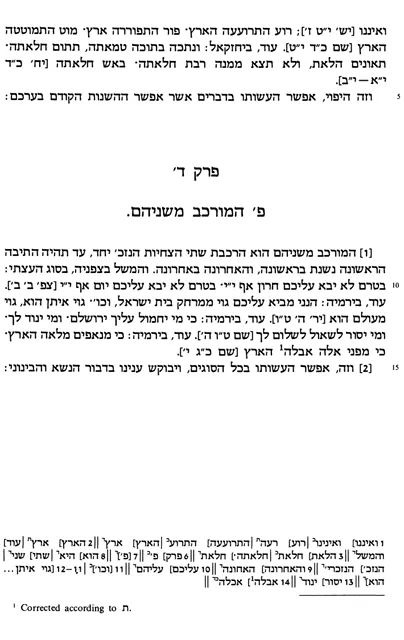
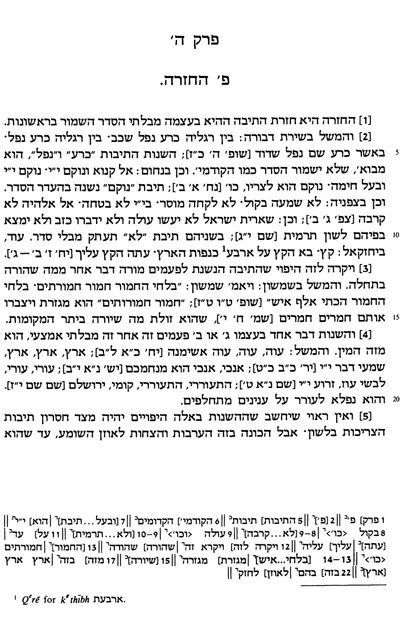
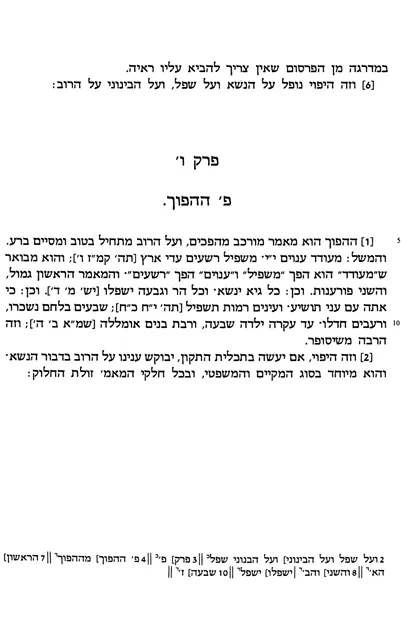
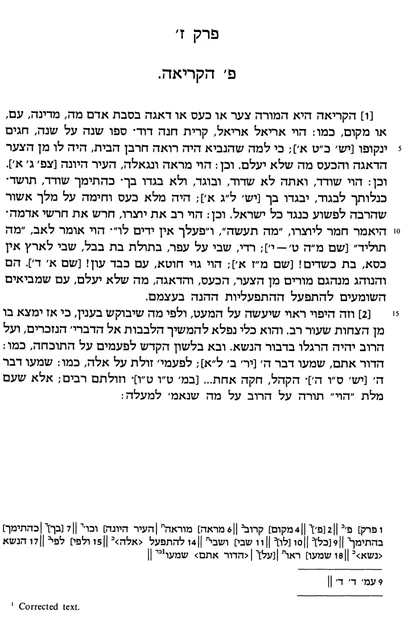
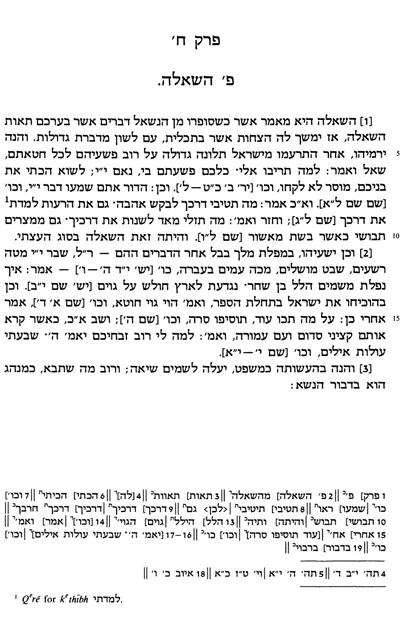
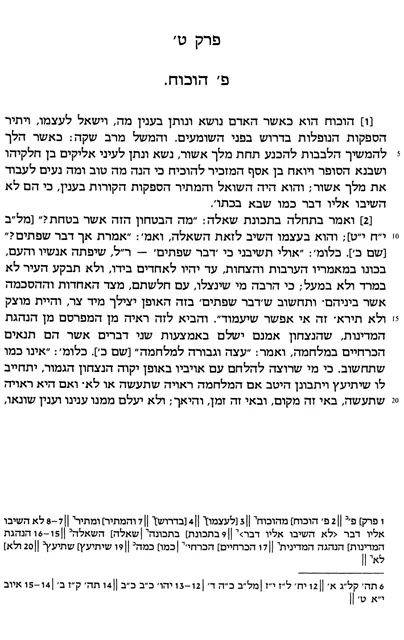
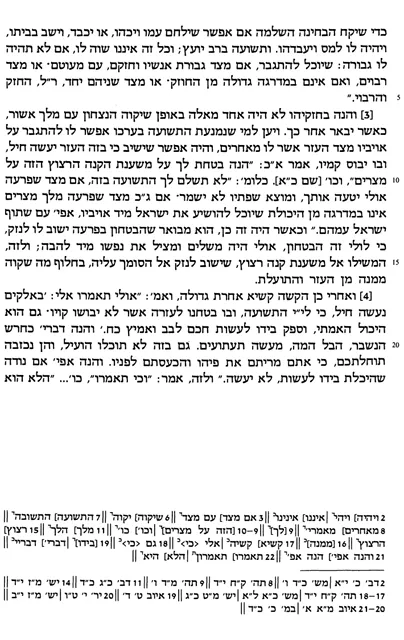
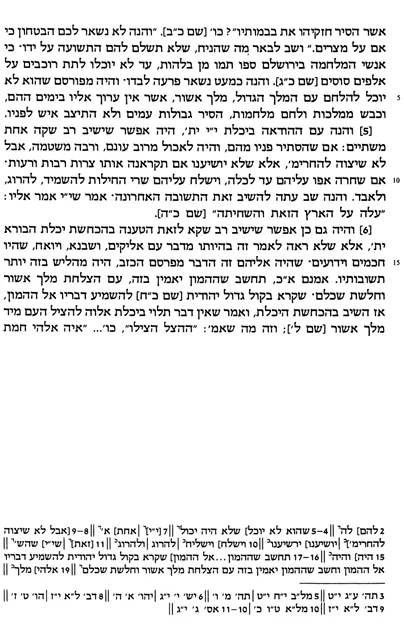
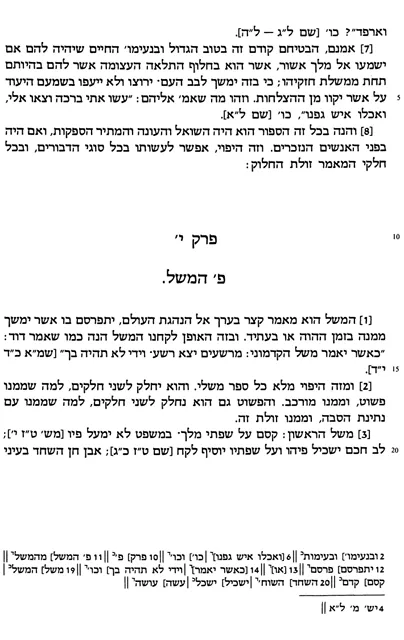
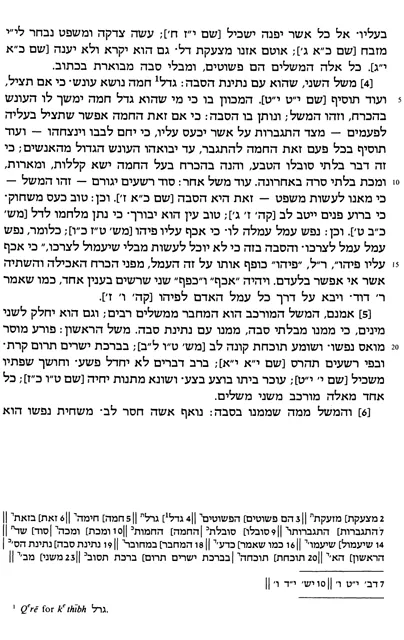
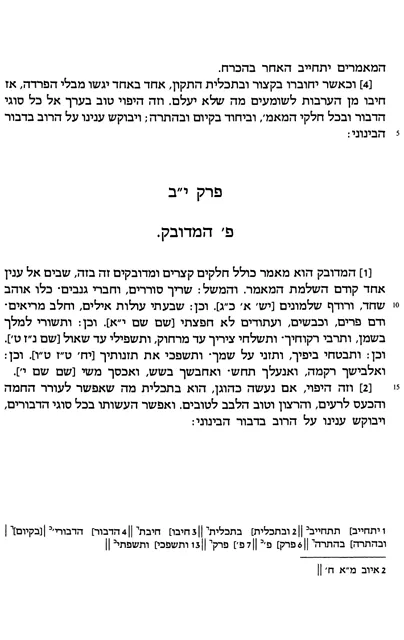
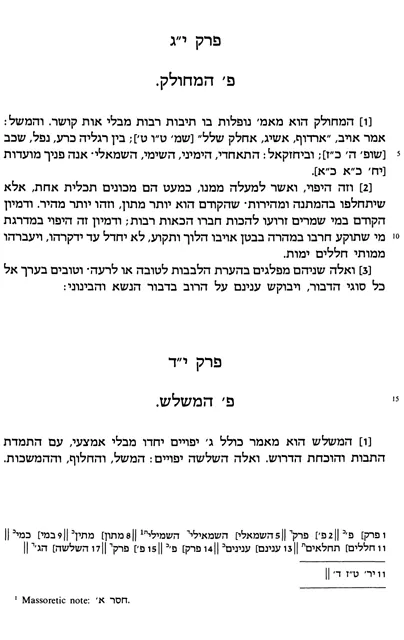
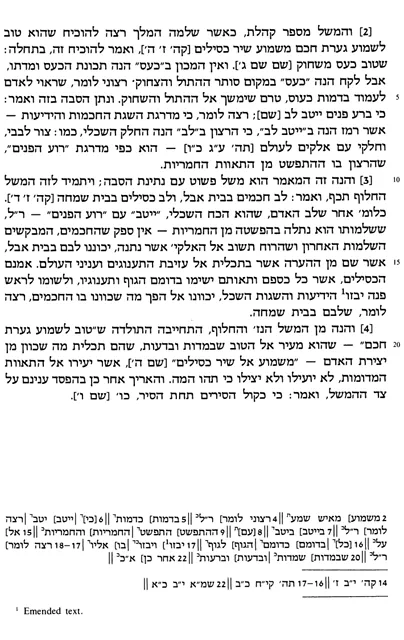
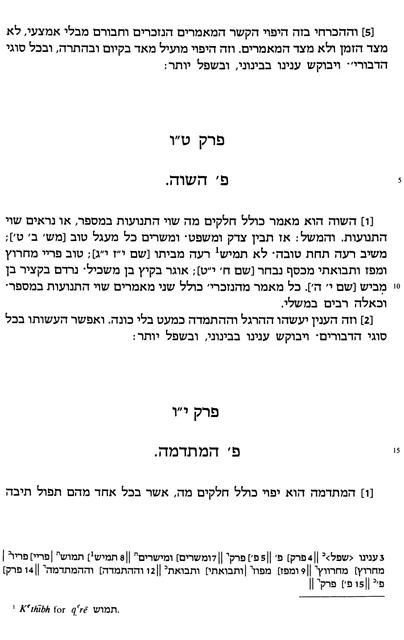
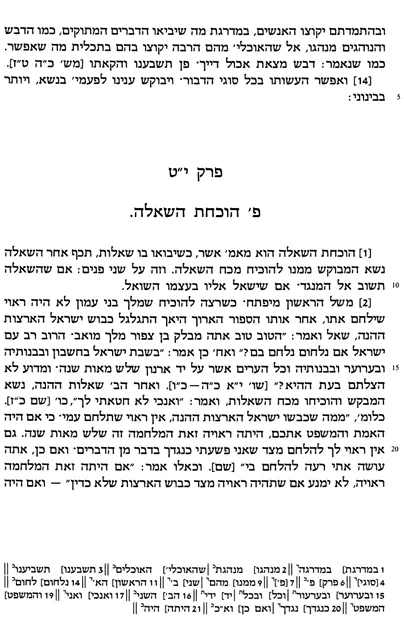
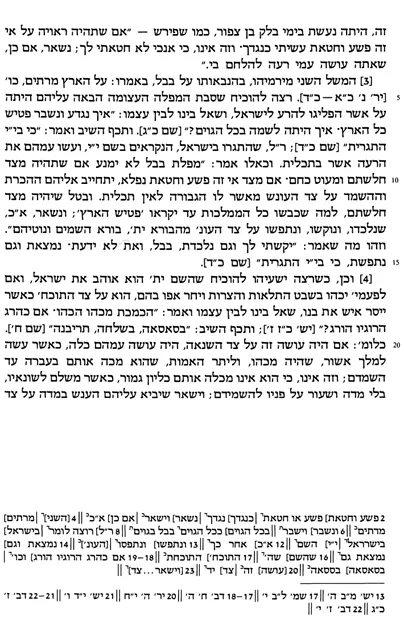
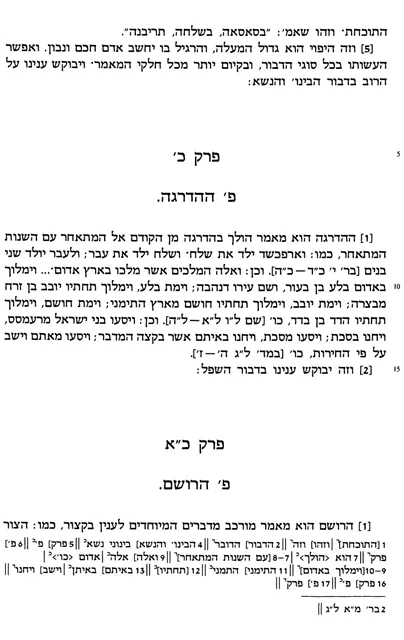
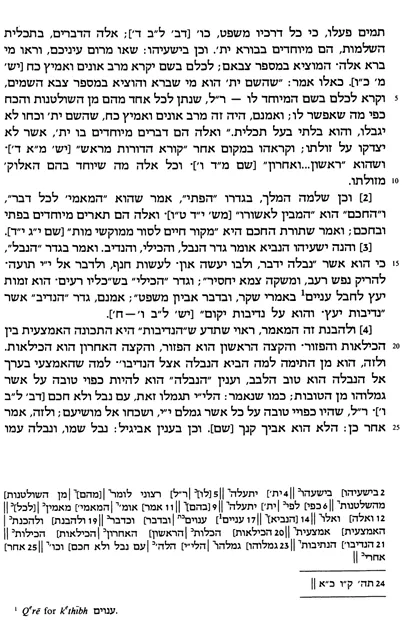
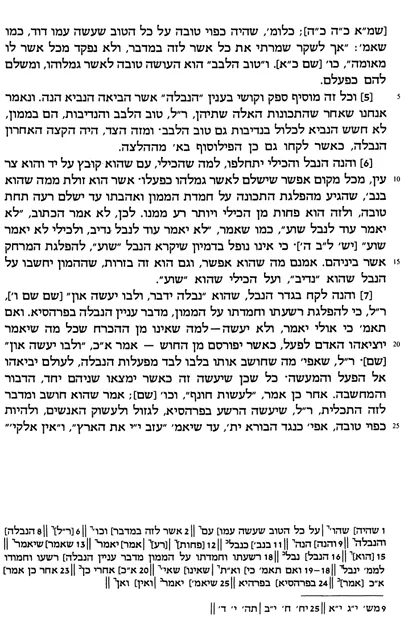
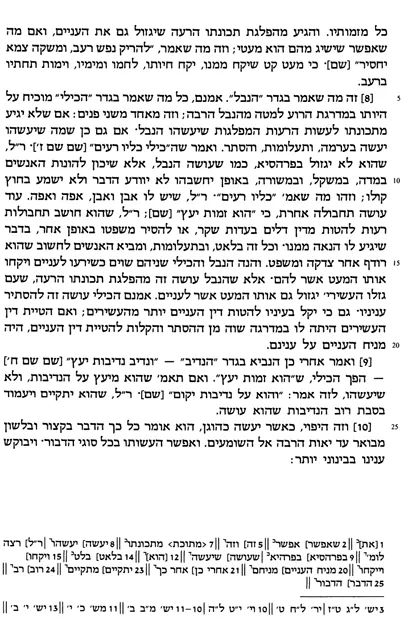
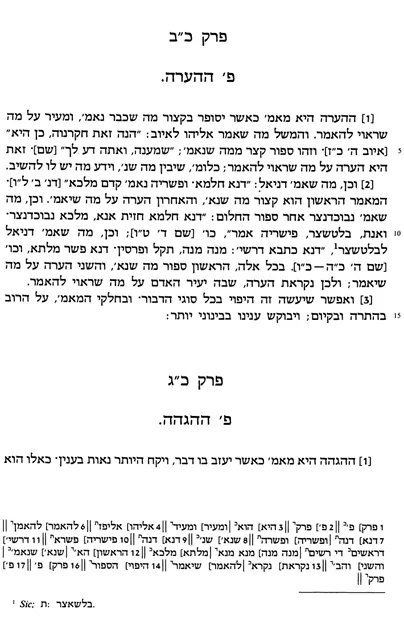
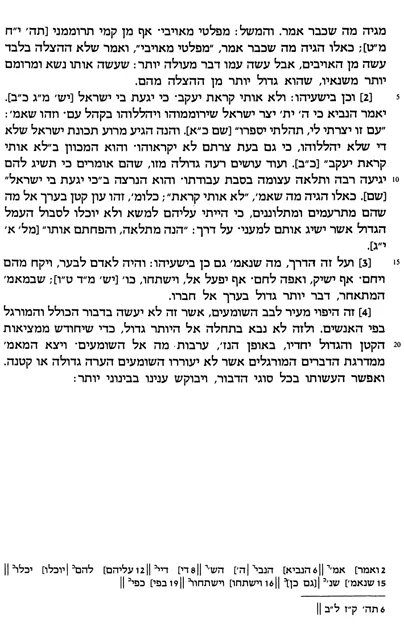
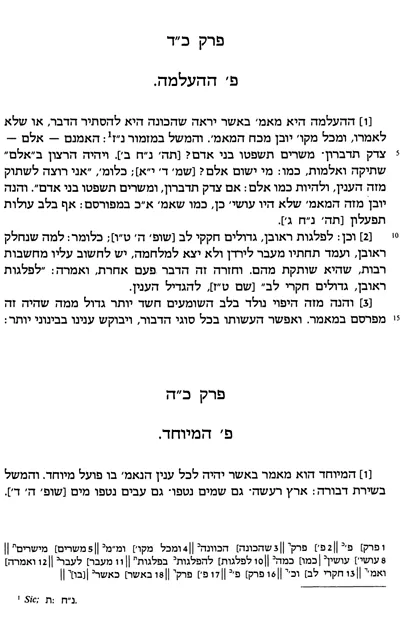
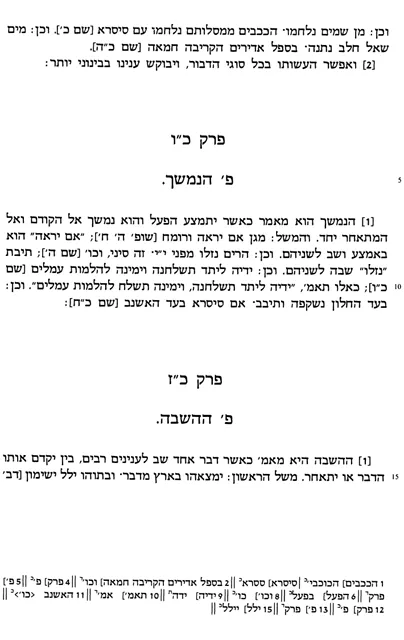
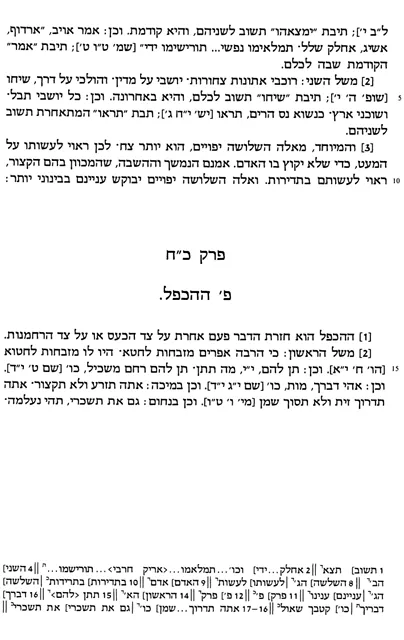
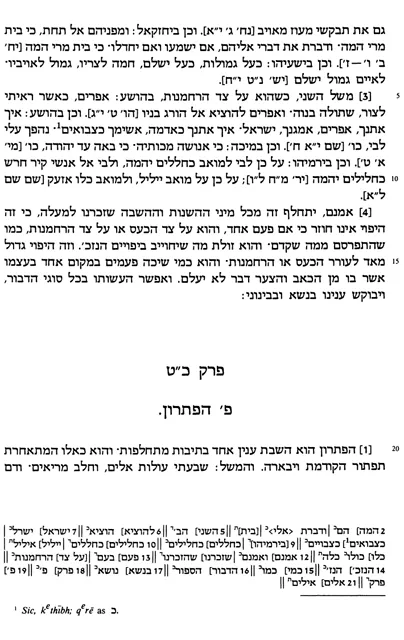
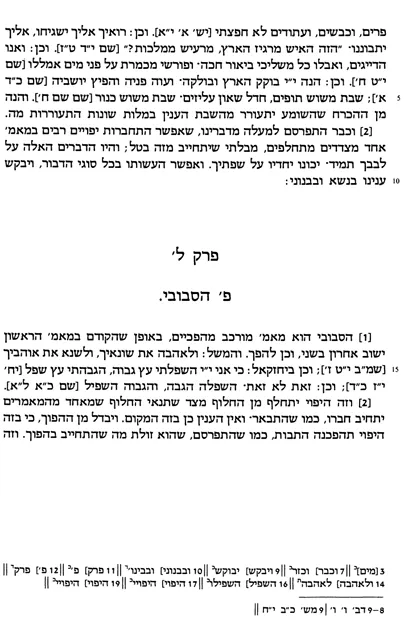
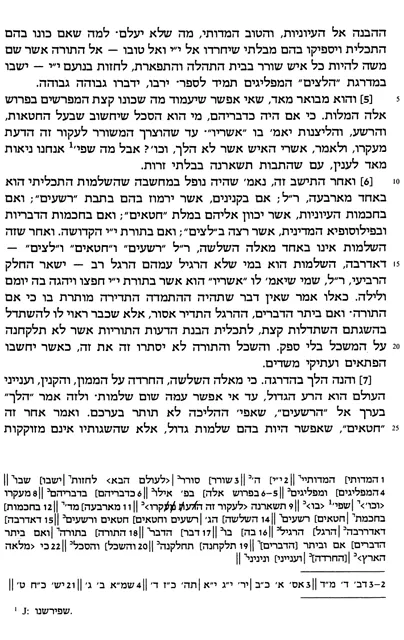
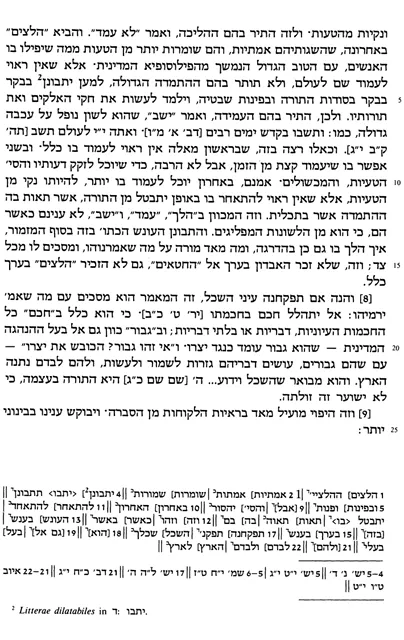
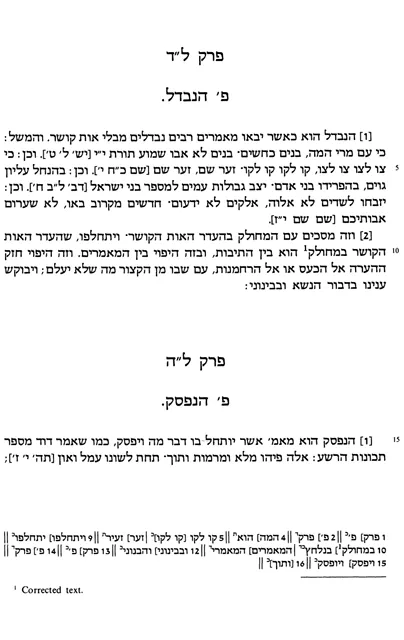
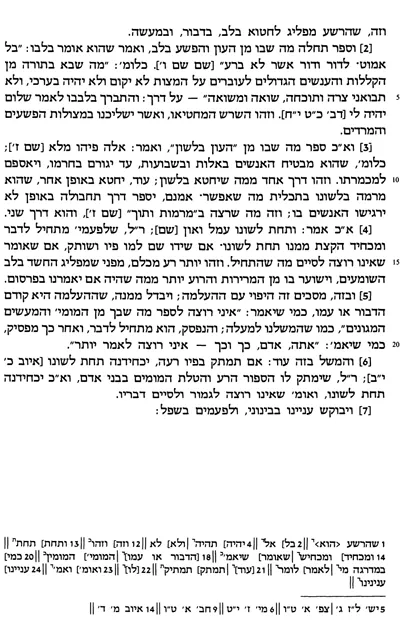
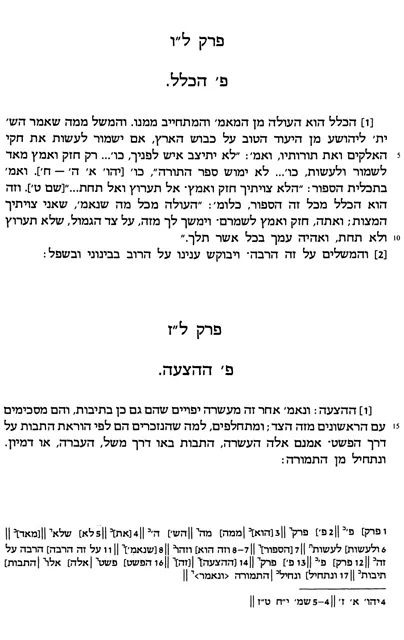
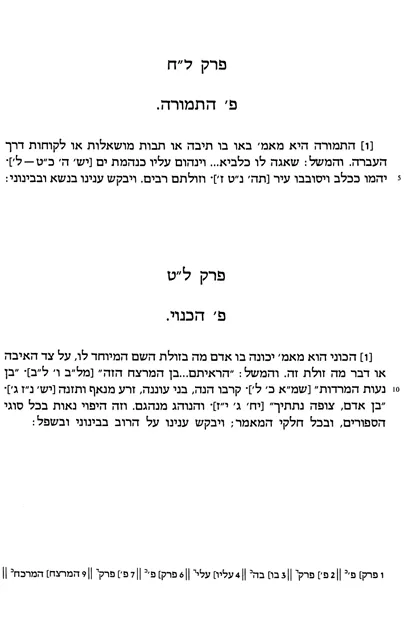
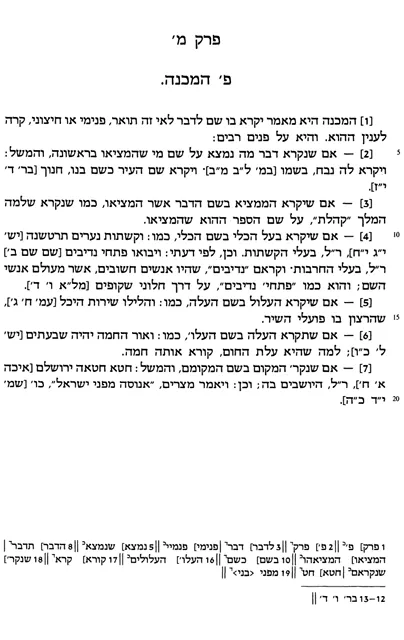
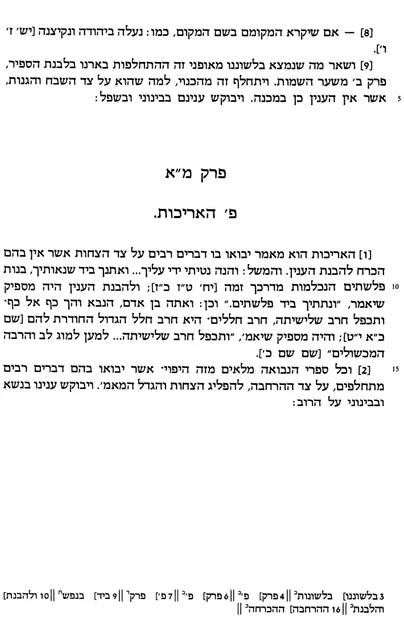
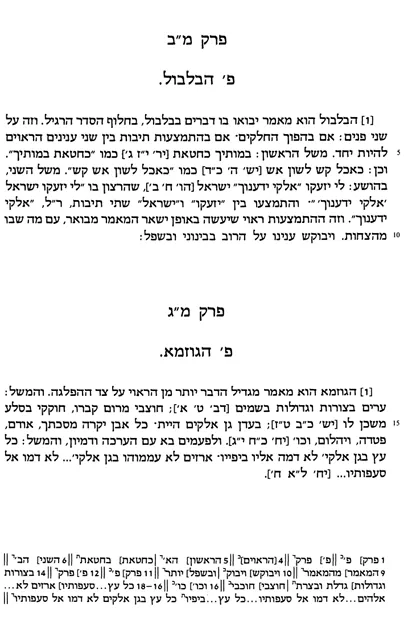
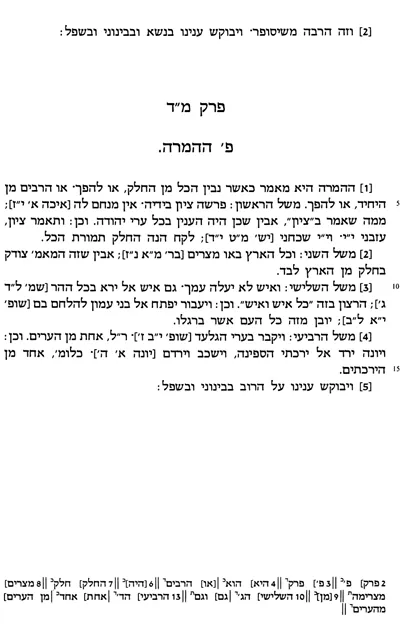
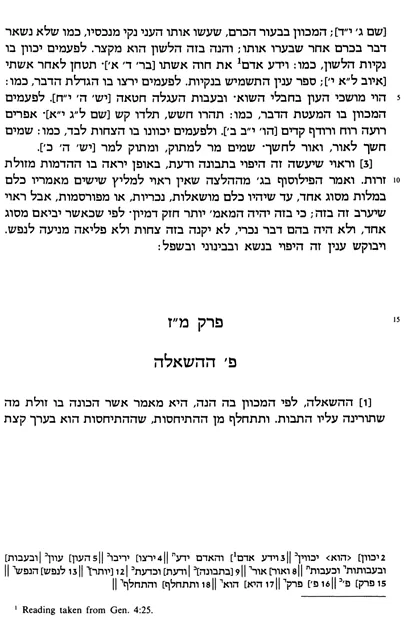
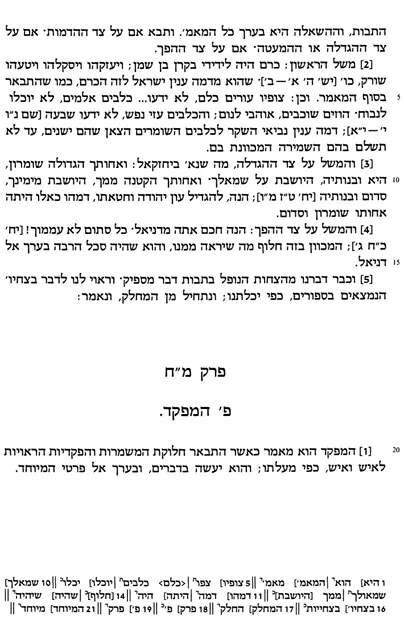
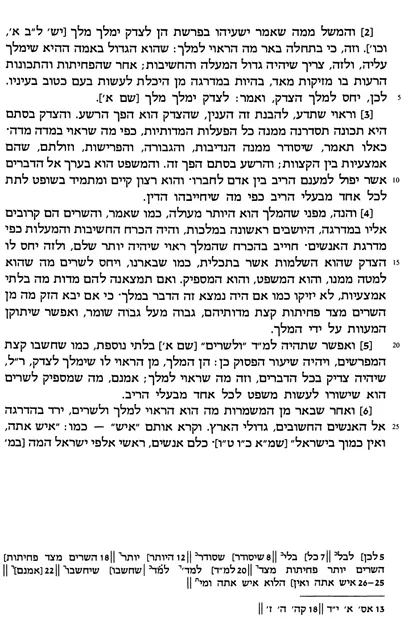
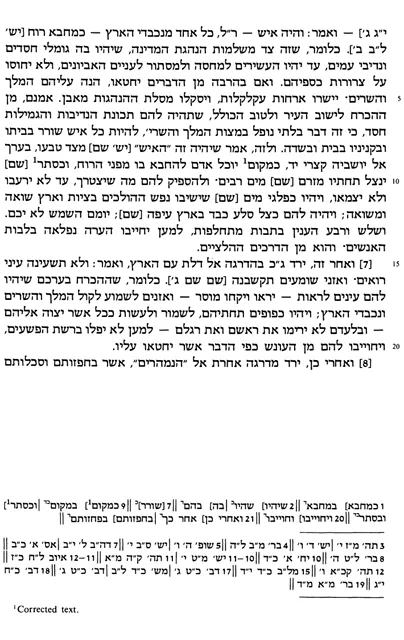
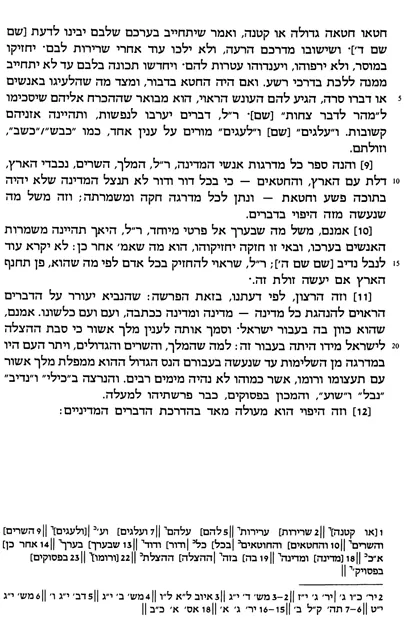
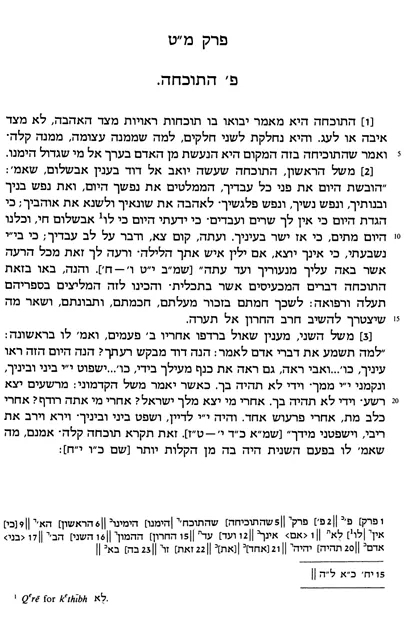
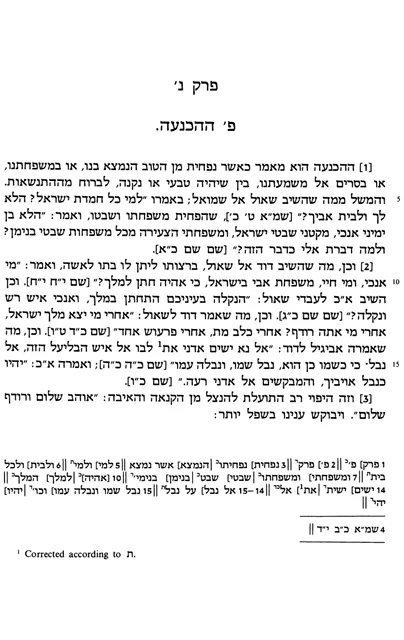
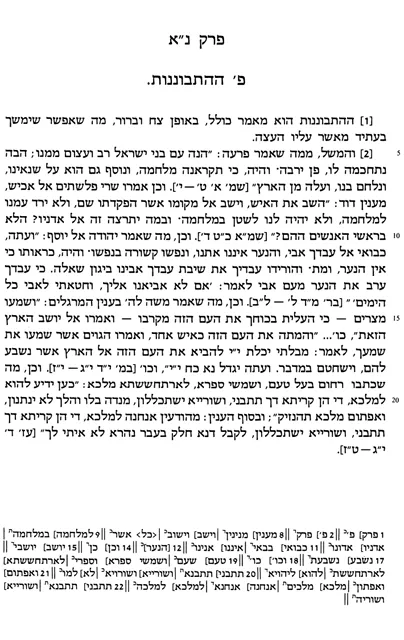
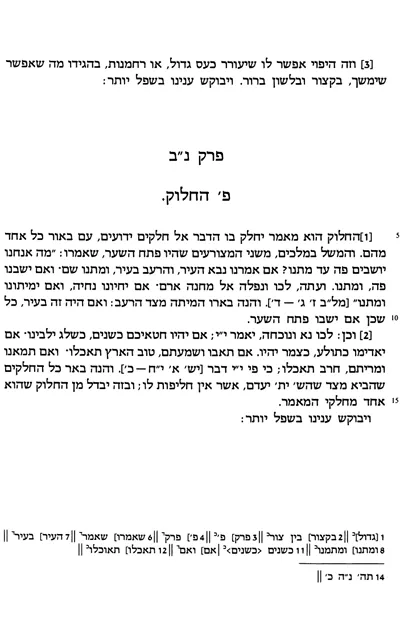
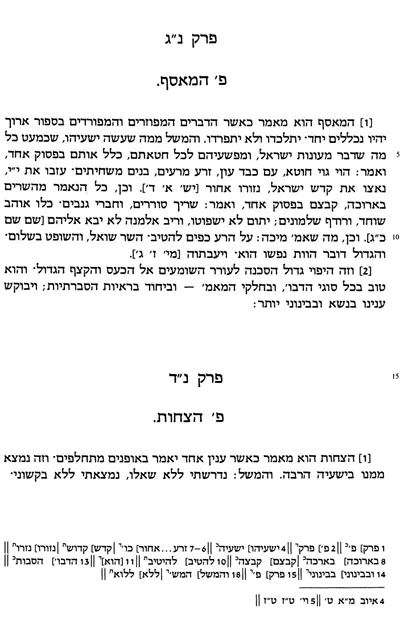
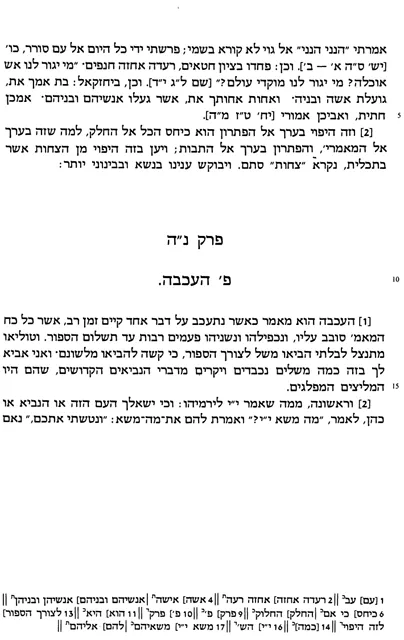
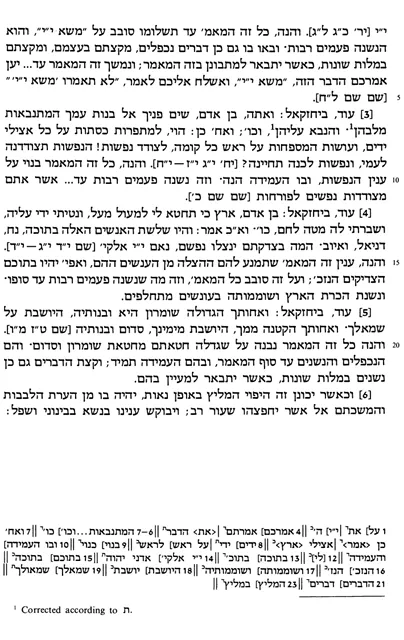
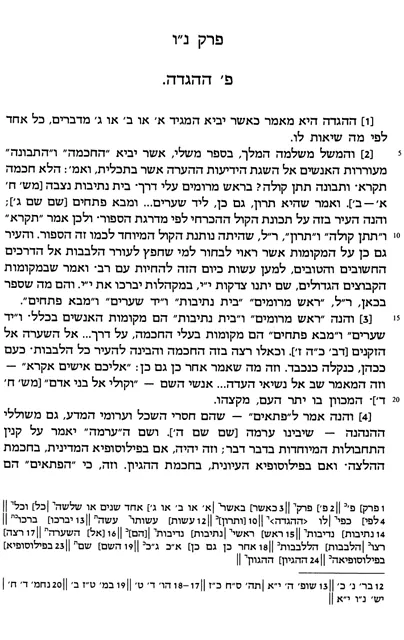
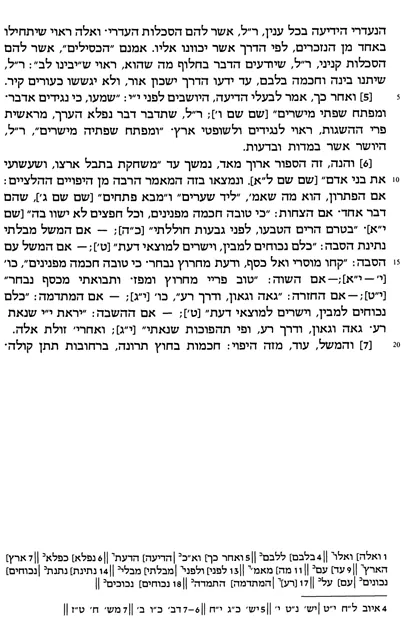
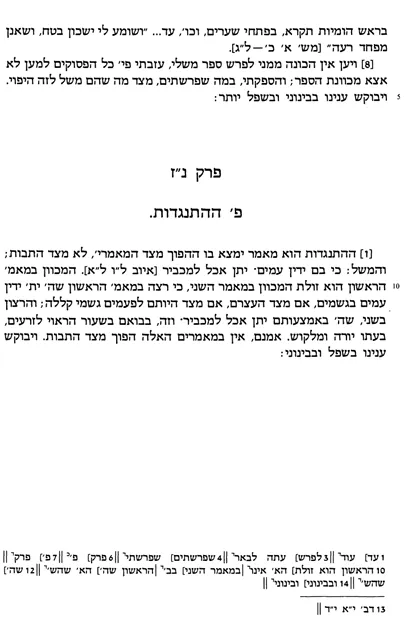
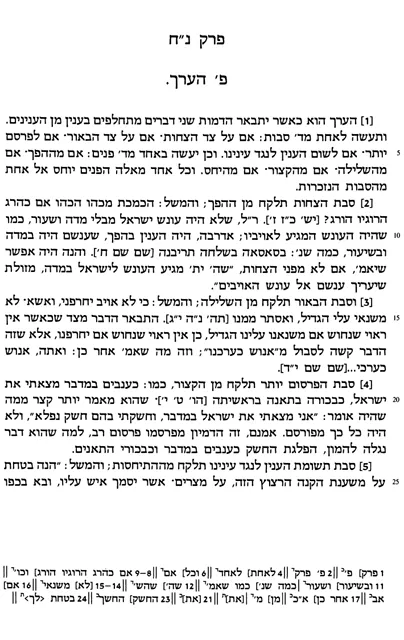
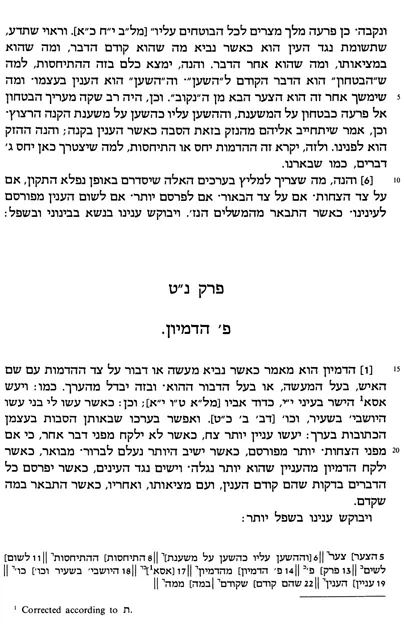
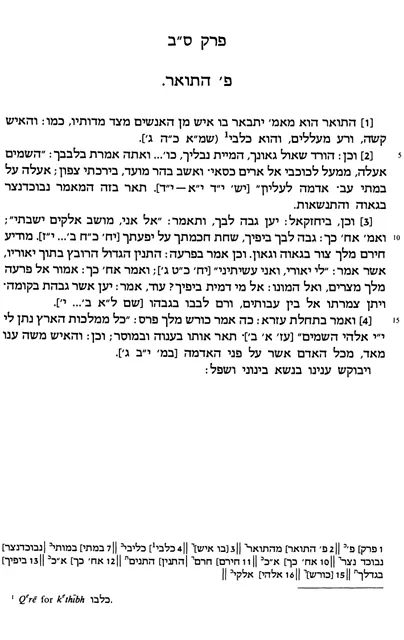
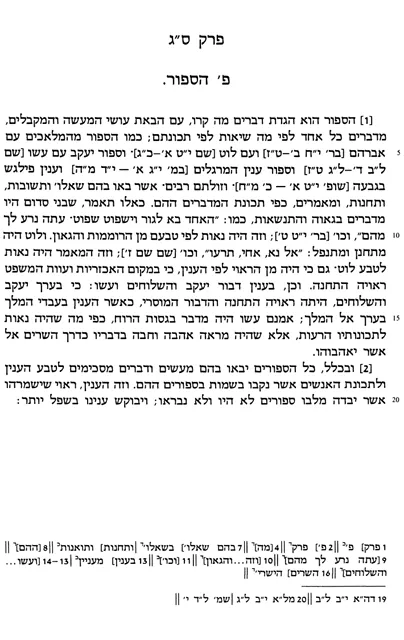
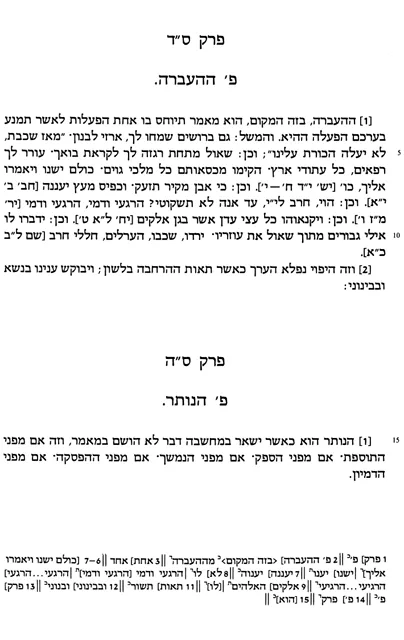
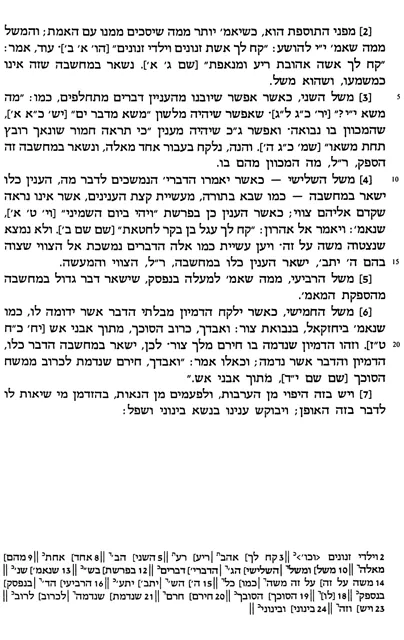
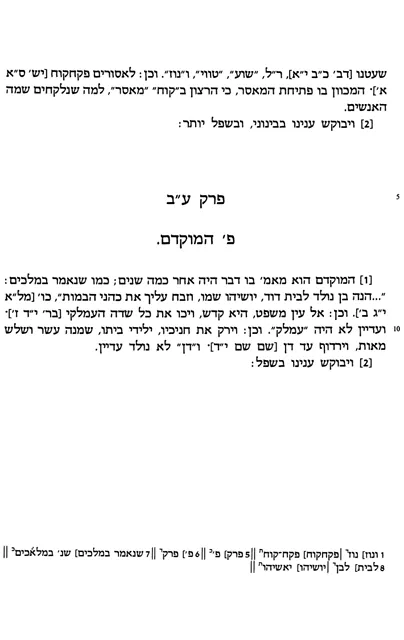
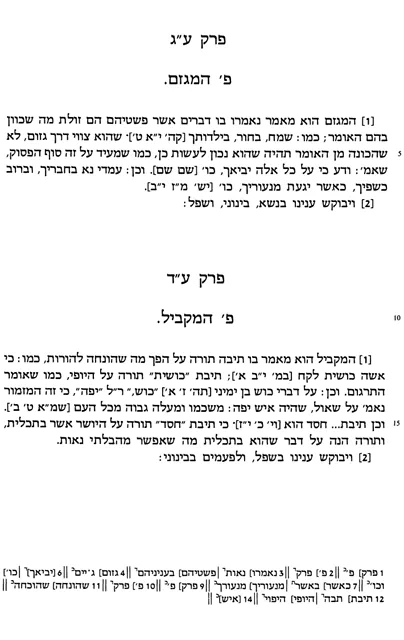
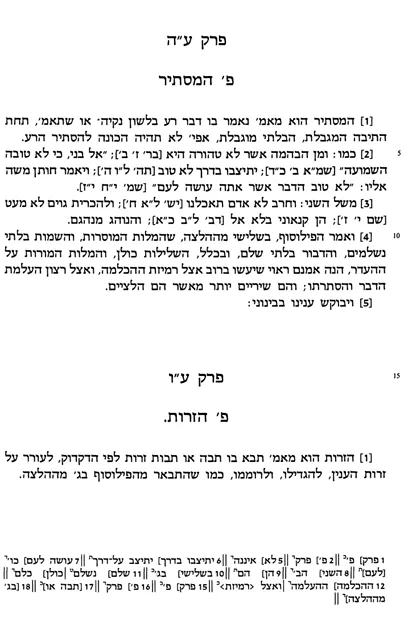
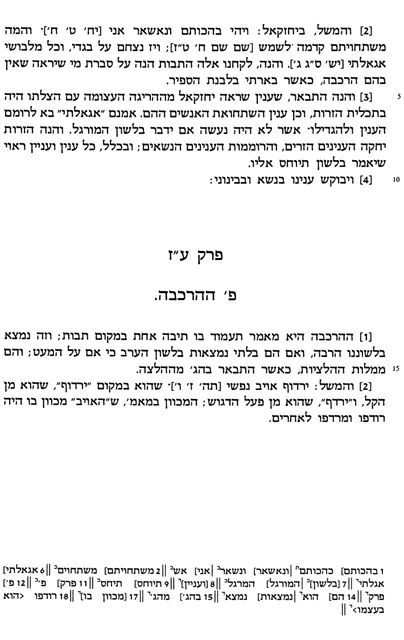
Judah Messer Leon's The Book of the Honeycomb's Flow, written in the second half of the fifteenth century, is a treatise on the art of rhetoric in which the classical rhetorical doctrine of the Greeks and Romas is applied to the Hebrew Bible. It is the earliest such work by a competent Hebrew scholar. Discussing or alluding to a wide variety of theological, philosophical, political, legal, and psychological subjects, it is one of the most important books of early Renaissance humanism.

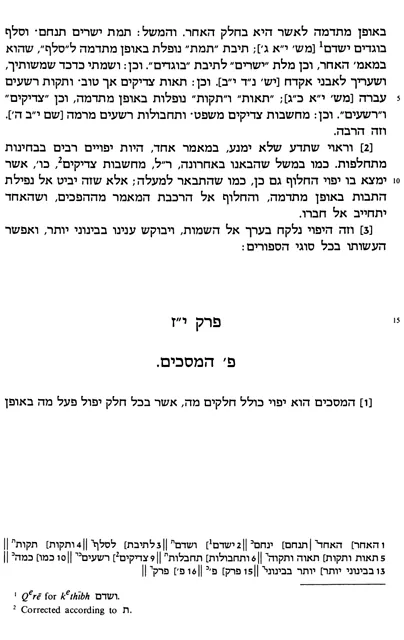
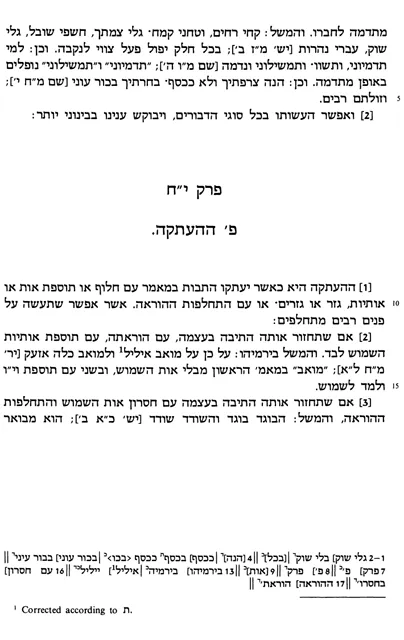
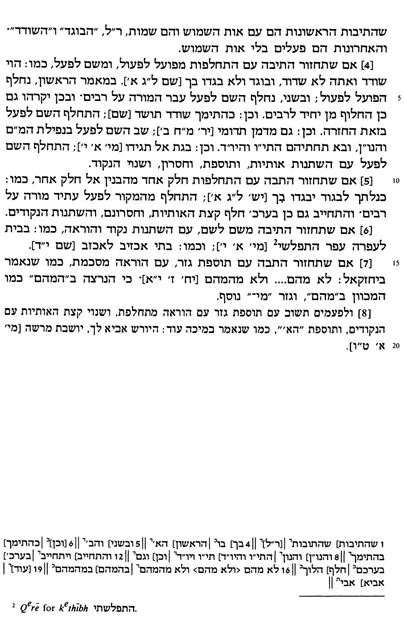
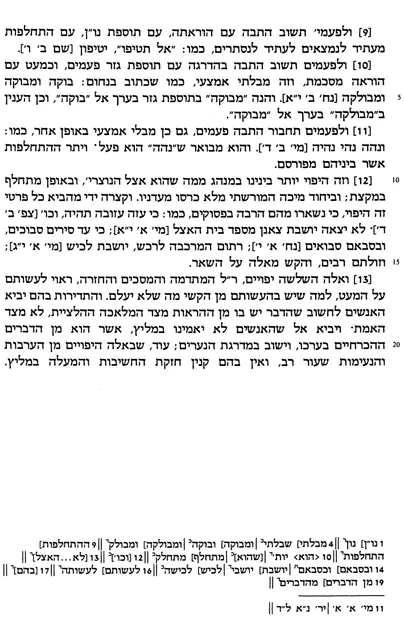
As the indispensable basis of his annotated English translation, Isaac Rabinowitz has provided the first critical edition of the Hebrew text, drawing on an early manuscript, the first print edition of 1475/6, and other pertinent sources. Besides supplying paragraphing and punctuation, his Hebrew text includes references to all passages of Scripture cited for exposition or for illustration of rhetorical doctrine, apparatuses of the variant readings and of the book's implicit scriptural allusions and reminiscences, and other textual notes. The annotated translation—the first in any modern European language—includes full references to all Messer Leon's classical sources. The introduction to the entire work contains a detailed reconstruction of Messer Leon's life and a full discussion of the nature and intended purposes of The Book of the Honeycomb's Flow.

The publication of the The Book of the Honeycomb's Flow will help scholars to appreciate more fully the importance of the vital Italian Jewish culture of the Renaissance.
Trusted by 375,005 students

Access to over 1.5 million titles for a fair monthly price.
Study more efficiently using our study tools.

Information

Year
2020
Print ISBN
9780801408700
eBook ISBN
9781501752209

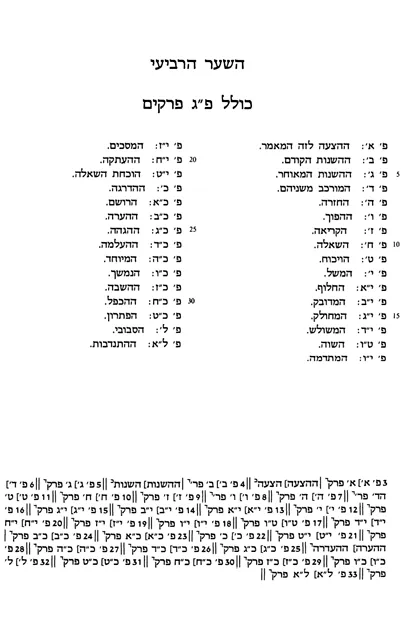
BOOK IV1

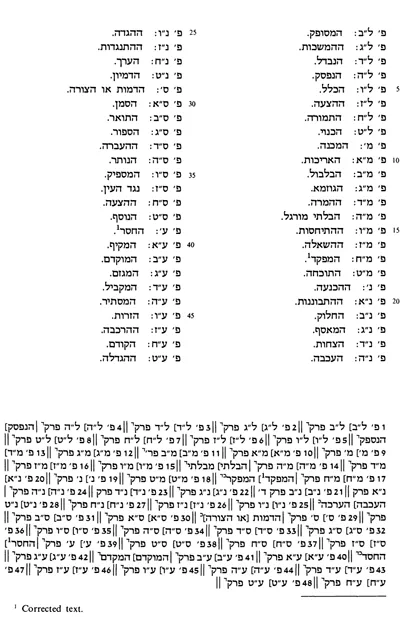
  • Chapter 1: The Advance Outline of This Book
  • Chapter 2: Epanaphora
  • Chapter 3: Antistrophe
  • Chapter 4: Interlacement
  • Chapter 5: Transplacement
  • Chapter 6: Antithesis
  • Chapter 7: Apostrophe
  • Chapter 8: Interrogation
  • Chapter 9: Reasoning by Question and Answer
  • Chapter 10: The Maxim
  • Chapter 11: Reasoning by Contraries
  • Chapter 12: Colon or Clause
  • Chapter 13: Comma or Phrase
  • Chapter 14: The Triple Figure
  • Chapter 15: Isocolon
  • Chapter 16: Homoeoptoton
  • Chapter 17: Homoeoteleuton
  • Chapter 18: Paronomasia
  • Chapter 19: Hypophora
  • Chapter 20: Climax
  • Chapter 21: Definition
  • Chapter 22: Transition
  • Chapter 23: Correction
  • Chapter 24: Paralipsis
  • Chapter 25: Disjunction
  • Chapter 26: Conjunction
  • Chapter 27: Adjunction
  • Chapter 28: Reduplication
  • Chapter 29: Interpretation
  • Chapter 30: Reciprocal Change
  • Chapter 31: Surrender
  • Chapter 32: Indecision
  • Chapter 33: Elimination
  • Chapter 34: Asyndeton
  • Chapter 35: Aposiopesis
  • Chapter 36: Conclusion
  • Chapter 37: An Advance Outline
  • Chapter 38: Onomatopoeia
  • Chapter 39: Antonomasia or Pronomination
  • Chapter 40: Metonymy
  • Chapter 41: Periphrasis
  • Chapter 42: Hyperbaton
  • Chapter 43: Hyperbole
  • Chapter 44: Synecdoche
  • Chapter 45: Catachresis
  • Chapter 46: Metaphor
  • Chapter 47: Allegory
  • Chapter 48: Distribution
  • Chapter 49: Frank Speech
  • Chapter 50: Understatement
  • Chapter 51: Vivid Description
  • Chapter 52: Division
  • Chapter 53: Accumulation
  • Chapter 54: Refining
  • Chapter 55: Dwelling on the Point
  • Chapter 56: Dialogue
  • Chapter 57: Antithesis
  • Chapter 58: Comparison
  • Chapter 59: Exemplification
  • Chapter 60: Simile
  • Chapter 61: Portrayal
  • Chapter 62: Character Delination
  • Chapter 63: Characteristic Statement
  • Chapter 64: Personification
  • Chapter 65: Emphasis
  • Chapter 66: Conciseness
  • Chapter 67: Ocular Demonstration
  • Chapter 68: An Advance Outline
  • Chapter 69: Pleonasm
  • Chapter 70: Ellipsis
  • Chapter 71: The Inclusive Term
  • Chapter 72: Anticipation
  • Chapter 73: Irony
  • Chapter 74: Inversion
  • Chapter 75: Euphemism
  • Chapter 76: Strange Usage
  • Chapter 77: The Composite Word
  • Chapter 78: Prolepsis
  • Chapter 79: Augmentation
  • Chapter 80: Duplication
  • Chapter 81: Arousal
  • Chapter 82: The Construct
  • Chapter 83: Expressions Which Should Be Avoided or Sought
________
  1. 1. In this Book, I have kept, as the English translations of the Hebrew terms for the Figures, Professor Harry Caplan’s widely accepted English renderings of the Latin terms found in the Rhetorica ad Herennium. Messer Leon’s carefully considered Hebrew translations of the same terms are given, and in most instances glossed, in footnotes at the beginning of each respective chapter.
CHAPTER l1
The Advance Outline of This Book
[1] In the course of the preceding treatment of the subjects with which the present work is concerned, we entered their villages and their encampments [Gen. 25:16] and searched out the inner chamber [2 Kings 9:2] of the pronouncements made by both ancient and more recent rhetoricians in order to find out words of delight [Eccl. 12:10]. It now remains for us to introduce the Figures of Speech by their families, by their fathers’ houses [Num. 1:2], as we promised,2 for these also are matters that more than one of the Kinds of Cause have in common.
[2] For most of what we shall say herein, we shall draw upon Book IV of the [New] Rhetoric written by Tully,3 and upon the account given by the Philosopher in Book III of his Rhetoric. The examples of the Figures, however, I have taken from our holy and our beautiful house [Isa. 64:10], from the words of prophecy and the divinely inspired narratives that sit first in the kingdom [Esth. 1:14] of agreeableness and elegance, that are sweeter than honey [Ps. 19:11], that cannot be gotten for gold neither shall the exchange thereof be vessels of fine gold [Job 28:15,17].
________
  1. 1. Added in C, just before “Chapter One”: “Here we begin the ordering of the Chapters.”
  2. 2. See the introduction to Book III.
  3. 3. Supra, note 1 to the chapter-listing of Book IV.
CHAPTER 2
Epanaphora1
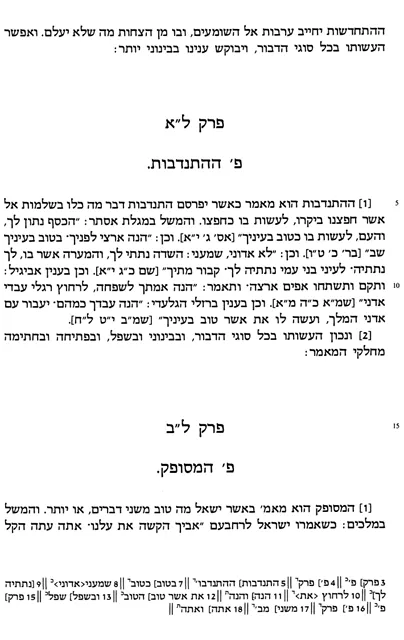
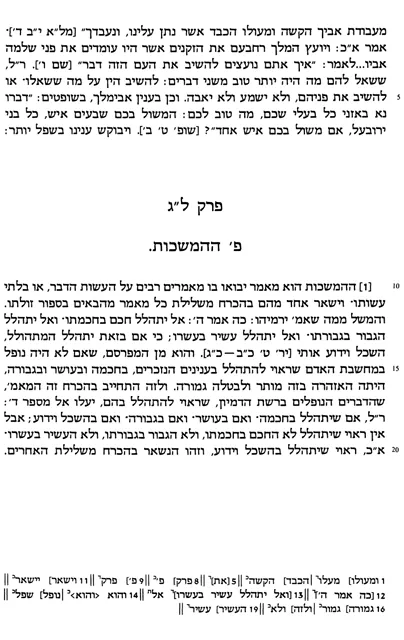
[1] Epanaphoraa is repetition of an identical initial word in expressions either of like or unlike content. Examples in expressions of like content: Not have gazed 2shouldest thou on the day of thy brother in the day of his disaster, not have rejoiced shouldest thou over the children of Judah in the day of their ...

Table of contents

  1. Preface and Acknowledgments
  2. Abbreviations and Signs
  3. Introduction
  4. The Book of the Honeycomb’s Flow On Facing Pages
  5. Messer Leon’s Preface
  6. Book I
  7. Book II
  8. Book III
  9. Book IV
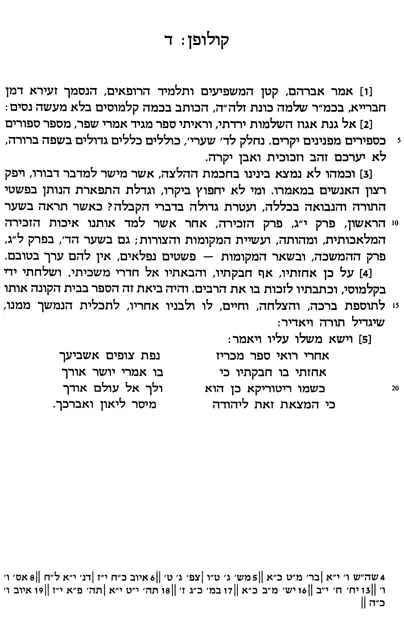
  10. Abraham Conat’s Colophon to the Editio Princeps
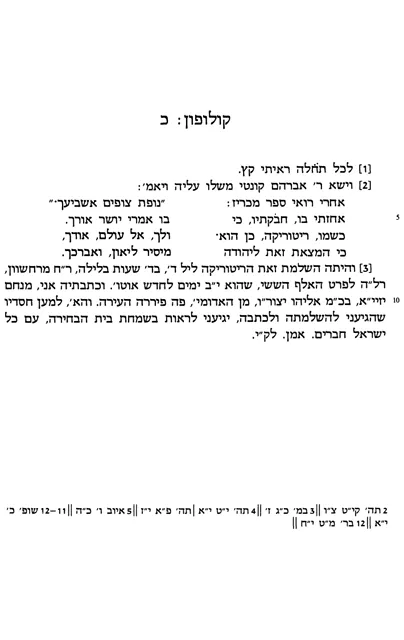
  11. Menahem de’ Rossi’s Colophon to the Ambrosian Library’s Manuscript
  12. Indexes:

Frequently asked questions

Yes, you can cancel anytime from the Subscription tab in your account settings on the Perlego website. Your subscription will stay active until the end of your current billing period. Learn how to cancel your subscription
No, books cannot be downloaded as external files, such as PDFs, for use outside of Perlego. However, you can download books within the Perlego app for offline reading on mobile or tablet. Learn how to download books offline
Perlego offers two plans: Essential and Complete
  • Essential is ideal for learners and professionals who enjoy exploring a wide range of subjects. Access the Essential Library with 800,000+ trusted titles and best-sellers across business, personal growth, and the humanities. Includes unlimited reading time and Standard Read Aloud voice.
  • Complete: Perfect for advanced learners and researchers needing full, unrestricted access. Unlock 1.5M+ books across hundreds of subjects, including academic and specialized titles. The Complete Plan also includes advanced features like Premium Read Aloud and Research Assistant.
Both plans are available with monthly, semester, or annual billing cycles.
We are an online textbook subscription service, where you can get access to an entire online library for less than the price of a single book per month. With over 1.5 million books across 990+ topics, we’ve got you covered! Learn about our mission
Look out for the read-aloud symbol on your next book to see if you can listen to it. The read-aloud tool reads text aloud for you, highlighting the text as it is being read. You can pause it, speed it up and slow it down. Learn more about Read Aloud
Yes! You can use the Perlego app on both iOS and Android devices to read anytime, anywhere — even offline. Perfect for commutes or when you’re on the go.
Please note we cannot support devices running on iOS 13 and Android 7 or earlier. Learn more about using the app
Yes, you can access The Book of the Honeycomb's Flow by Isaac Rabinowitz,Judah Messer Leon in PDF and/or ePUB format, as well as other popular books in Languages & Linguistics & Jewish History. We have over 1.5 million books available in our catalogue for you to explore.