Fibrosis is a condition with globally high unmet medical need, and as such is a highly active area of academic and pharmaceutical research covering multiple treatment targets, organs, tissues and therapeutic approaches. Anti-fibrotic Drug Discovery is a single source reference for the latest drug-discovery approaches to tackle fibrosis in various tissues, comprehensively covering recent success and future perspectives on emerging therapeutic intervention points. The book highlights significant pre-clinical and clinical drugs currently being developed globally for this disorder. This book is ideal for postgraduate students and researchers with an interest in anti-fibrotic drug discovery as well as clinicians specialising in liver, kidney, heart and lung disease, in which fibrosis plays a key role in pathology.
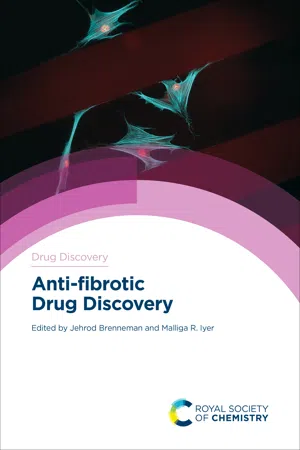
Anti-fibrotic Drug Discovery
- 340 pages
- English
- ePUB (mobile friendly)
- Available on iOS & Android
Anti-fibrotic Drug Discovery
About this book
Trusted by 375,005 students
Access to over 1.5 million titles for a fair monthly price.
Study more efficiently using our study tools.
Information
*E-mail: [email protected]
Fibrosis is a pathological process characterized by excessive accumulation of extracellular matrix, which contributes to the pathology of a variety of chronic diseases. Fibrotic diseases cause about 45% of deaths, which confirms the high importance of anti-fibrosis therapy. The master regulator of fibrosis is transforming growth factor beta (TGFβ) signaling and, therefore, this presents as a major target for pharmacotherapy. This chapter summarizes anti-TGFβ approaches developed for fibrosis therapy across tissues and organs, targeting directly the ligands, the receptors, canonical and non-canonical signaling and effectors as well as interacting pathways. A common challenge for all approaches is the pleiotropic action of TGFβ, and consequently finding effective and safe principles. Many approaches towards TGFβ inhibition failed despite promising preclinical data due to unfavorable risk–benefit profiles in patients. However, increased understanding of the pathway and lessons learnt from earlier failures helped to identify more specific pathway nodes as well as to produce advanced generations of drugs. Currently, two compounds are on the market for idiopathic pulmonary fibrosis (IPF), pirfenidone and nintenadib. These two compounds are indirect inhibitors of TGFβ signaling, and neither have fully defined mode of actions. Both show good risk–benefit profiles and manageable adverse events in patients, and their approval was a breakthrough in fibrosis therapy.
1.1 Introduction
1.1.1 Fibrosis
1...
Table of contents
- Cover
- Halftitle
- Series Editor
- Title
- Copyright
- Preface
- Contents
- Chapter 1 TGFβ Signaling
- Chapter 2 Targeting the αv Integrins in Fibroproliferative Disease
- Chapter 3 Discovery, Structural Refinement and Therapeutic Potential of Farnesoid X Receptor Activators
- Chapter 4 Autotaxin Inhibitors in Fibrosis
- Chapter 5 Inhibition of LOXL2 and Other Lysyl Oxidase (Like) Enzymes: Intervention at the Core of Fibrotic Pathology
- Chapter 6 Targeting the Ubiquitin Proteasome System in Pulmonary Fibrosis
- Chapter 7 Galectin-3 Involvement in Fibrotic Diseases
- Chapter 8 Emerging Role of CXCR4 in Fibrosis
- Chapter 9 BH3 Mimetic Drugs for Anti-fibrotic Therapy
- Chapter 10 Intratumoral Fibrosis: Emerging Concepts and Therapeutic Opportunities
- Chapter 11 Targeting Fibroblasts in Fibrosis and Cancer
- Subject Index
Frequently asked questions
- Essential is ideal for learners and professionals who enjoy exploring a wide range of subjects. Access the Essential Library with 800,000+ trusted titles and best-sellers across business, personal growth, and the humanities. Includes unlimited reading time and Standard Read Aloud voice.
- Complete: Perfect for advanced learners and researchers needing full, unrestricted access. Unlock 1.5M+ books across hundreds of subjects, including academic and specialized titles. The Complete Plan also includes advanced features like Premium Read Aloud and Research Assistant.
Please note we cannot support devices running on iOS 13 and Android 7 or earlier. Learn more about using the app