This book demonstrates how the school principal's consideration of culture and climate of the school can significantly improve and sustain student achievement over time. Highlighting an innovative approach to organizational health and student achievement, this volume uses inferential statistical data analysis to quantify the way school leaders can strategically interact within school culture and systems to improve student achievement. A cutting-edge analysis of the importance of school climate, this book draws on current research from the Organizational Health Inventory diagnostic framework to provide data-based conceptual models of the relation between culture and leadership.
eBook - ePub
Influencing High Student Achievement through School Culture and Climate
A Quantitative Approach to Organizational Health-Based Leadership
- 152 pages
- English
- ePUB (mobile friendly)
- Available on iOS & Android
eBook - ePub
Influencing High Student Achievement through School Culture and Climate
A Quantitative Approach to Organizational Health-Based Leadership
About this book
Information
1 Leadership Focus on School Climate
Synopsis
Transforming a school from low performing to high performing is one of the most difficult challenges faced by campus principals. The overwhelming issues that plague schools in need of improvement is even more challenging for principals who are new to the position. Every turnaround process starts with an assessment of all the data sources that can adequately describe all the aspects of the school organization. The pivotal moment in the school’s change process happens when the principal uses the data to initiate the planning and implementation toward a vision of teacher effectiveness toward the goal of improved student achievement improvement.
This chapter will introduce the newly appointed principal of Pilgreen Middle school, Jean Roberts, and her journey of interpreting demographic, academic, human capital, and perception data to plan and initiate a change process with school improvement as the goal. She is supported in this process by leadership coach Chuck King. Together they analyze the data from student achievement scores and results from an organizational health assessment completed by the teachers and former principal prior to her appointment to Pilgreen. This information is used to develop a plan for the improvement of the school’s culture and climate that will lead to the goal of making Pilgreen a school that fosters an environment of high expectations for all.
A Principal’s Experience
Jean Roberts was appointed principal of Pilgreen Middle School in early July. She knew the school was in desperate need of improvements. Prior to interviewing for the position, Jean had done her homework, researching the demographics of the school and community:
The student population of 890 students in grades 6–8 was very diverse and consisted of 31 percent African American, 55 percent Hispanic, 12 percent Asian and 2 percent white students. Thirty-three percent of the students were English Language Learners (ELL). Sixty-one percent of the student population qualified as economically disadvantaged. Seventy-four percent were considered at risk. The annual attendance rate was 90 percent, well below expectations. Student Achievement based on state testing and accountability showed that the students at Pilgreen struggled to meet the state required standards. End-of-the-year state assessments revealed that across all grade levels the average percentage of students demonstrating proficiency was below 50 percent in both reading and mathematics. Teacher turnover was high with approximately 20 percent of the 88 faculty members resigning over the previous two years. Most of the new teachers hired had fewer than five years of experience. The community surrounding Pilgreen was urban with multiple apartment complexes and low-income housing. Parent involvement was at a minimum and the once strong parent/teacher organization had disbanded the previous year due to a lack of participation. Jean knew that the job would require discovering the systemic dynamics that were contributing to poor student performance and developing strategies to overcome the challenging student demographics.
As She Reflected on Her Initial Thoughts, She Recalls
I was apprehensive about taking on the challenge of being the leader of Pilgreen. It had a reputation of being a tough school. I hoped my three years of experience as a department head and two years as an assistant principal in a neighboring middle school would have prepared me for what challenges lay ahead of me at Pilgreen.
I believe in the validity of first impressions, so, when I made my initial visit to campus as the new principal, I was pleasantly surprised with the overall appearance of the building and grounds. The building had been freshly painted, and the landscaping was sparse but clean. I was most pleased by the warm reception of the office staff, assistant principal, and counselor as we sat and got to know each other. They really wanted this school to be successful and were looking to me to help make Pilgreen a place that was good for children as well as the teachers. Therefore, I was encouraged about the prospect for creating consensus toward a shared vision for improvement for the upcoming year.
Although I knew that the comprehensive student achievement data was overwhelmingly poor, I had hoped to see some areas of growth and hope, but unfortunately it seemed like everything—discipline, attendance, parent participation, and student achievement scores—needed improvement. Obviously, I needed more information to find the causes for the poor data reports. Otherwise, I knew the default would be to blame the demographics of the students and the parents.
As Jean began contemplating potential contributing causes for the unsatisfactory conditions at Pilgreen, she had a flash back to her interview with Superintendent Jacobs. During the interview the superintendent shared that the district had partnered with a consultant company, for diagnosing and improving the culture and climate of district schools. Jean specifically recalled what she believed was his most salient conclusion from the Organizational Health data profile for Pilgreen taken in April the year before she started:
SUPERINTENDENT JACOBS: The data clearly state that this faculty has become very complacent and dependent on the principal and administrative team. The data pattern clearly shows that this is an adult-centered school.”
The superintendent further emphasized that:
Our next principal needs to be able to build on the existing strengths and to use those strengths to help faculty members become advocates for school-wide goal, work as cohesive teams to accomplish these goals, and support needed changes.
After sharing these perspectives about Pilgreen based on the past year’s climate profile, Jean recalls that Superintendent Jacobs specifically articulated the principles and beliefs that guided his leadership and that he expected all school leaders to adopt:
JEAN ROBERTS: I was impressed by the passion that Superintendent Jacobs exhibited when he described these principles, and I began to understand how these concepts could provide a framework for my behavior and decisions. For example, when he said, ‘Knowledge of and commitment to our mission provides a sense of True North for us and enables us to align all that we do with that mission,’ I realized for the first time how critically important it would be for all adults at Pilgreen to be committed to our goals. And then when he shared the principle that ‘Choices, not circumstances, control outcomes,’ I knew how that would impact my message to the faculty at Pilgreen.
Superintendent Jacobs gave Jean a copy of the report for Pilgreen that included the Sustained Systemic Success (SSS) (Picture 1.1) conceptual model that graphically depicted the conceptual framework—the leadership principles and beliefs—that he had briefly described to her. He encouraged her to examine the components of the SSS Model and to embrace its systemic approach for success.
As Jean began to study the SSS Model, in her report, she realized that she needed a more in-depth explanation of the components and their relationship to each other. This was an opportunity to engage her leadership-coach, Chuck King, so she scheduled a meeting with him. Chuck’s ability to “connect the dots” for Jean proved to be invaluable in helping understand the importance of establishing the structures and systems at Pilgreen for improved student achievement. Chuck proceeded to explain the rationale supporting the model and then to dissect each component within the “big picture” context. It was obvious to Jean that he had not only learned this framework—he had internalized it. Chuck showed Jean the graphic and then said the following:
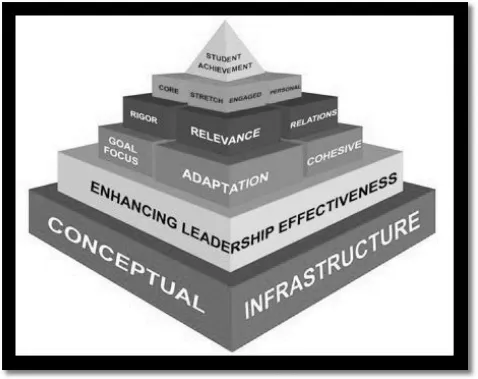
Picture 1.1 Sustained Systemic Success (SSS) Conceptual Model From Fairman and McLean, Enhancing Leadership Effectiveness. 3rd ed.
Source: Copyright © 2014 by Paradigm Media Publishing, LLC. Reprinted by permission of Paradigm Media Publishing.
CHUCK KING: Note that Student Achievement is at the apex of this pyramid. That is our goal; however, student academic success is not the natural result of placing students and teachers in a classroom together. Student success is not a serendipitous event; it will not ‘just happen’; there are prerequisite, sequential building blocks that must be aligned.
Look at this graph through the metaphor of an iceberg.
When you see an iceberg, what do you see? Exactly. You see the portion that is visible above the surface. However, the great mass of the iceberg is beneath the surface. Consider how that metaphor applies personally in relation to an individual’s personality and character. What is visible, what is above surface, is that individual’s behaviors; however, those behaviors are driven by the person’s beliefs, which are below the surface. The same is true in organizations. What is visible are the decisions, the behaviors, the processes, which are all products of the core values—the character—of that organization.
Overlaying the iceberg with the SSS Model, what is beneath the surface is the Conceptual Framework that is the six principles and beliefs that define the ‘character’ of Organizational Health.
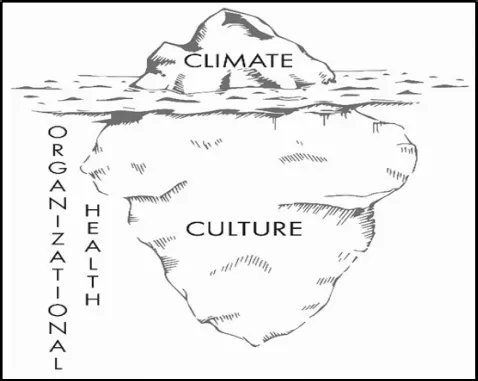
Picture 1.2 Culture/Climate Iceberg Metaphor.
Jean recalled that Chuck reviewed with her a copy of the following list of Principles and related Leadership Belief Statements that he left with her for future reference:
PRINCIPLE #1: Mission and goals provide purpose and true north direction.
Therefore, the mission and goals of the organization provide a framework from which quality decisions can evolve.
LEADERSHIP BELIEF #1: We believe all decisions should be consistent with our mission and goals, should be data based, should be anchored in sound theory and practice, and should be focused on what is best for the short- and long-term interests of all students.
PRINCIPLE #2: Choices, not circumstances, control outcomes.
Therefore, leaders should establish systems that anticipate and proactively address challenging circumstances.
LEADERSHIP BELIEF #2: We believe all decisions should be made at the most appropriate level and should be as close to the point of implementation as possible. The competency and commitment levels of those involved will help determine the appropriate level.
PRINCIPLE #3: Trust empowers others.
Therefore, leaders should capitalize on the expertise and commitment of individuals and teams by extending trust and empowering them appropriately.
LEADERSHIP BELIEF #3: We believe our behavior should promote and encourage empowerment throughout our organization. Empowerment should be highly individualized and be a function of their development on the maturity continuum within the context of belief statement #1.
PRINCIPLE #4: The whole is greater than the sum of the parts.
Therefore, leaders should develop individuals and teams that have a high commitment to team efforts, which will require building a synergistic community of leaders who function interdependently as individuals and teams.
LEADERSHIP BELIEF #4: We believe we have an obligation to establish and maintain cohesive interdependent teams that have a high commitment to the organization’s mission and goals.
PRINCIPLE #5: Effective relationships require mutual benefit.
Therefore, leaders should provide the systems that promote interdependent thinking and work that focus on win/win relationships.
LEADERSHIP BELIEF #5: We believe our behavior should promote and encourage professional autonomy and growth from dependence to interdependence for individuals and teams throughout the organization.
PRINCIPLE #6: Quality Production (results) requires continual development of production capability. Therefore, leaders should build in systems, structures, and processes to ensure that quality control and assurance strategies have been established throughout the system.
LEADERSHIP BELIEF #6: We believe that we have an obligation to build in quality control and quality assurance strategies throughout the organization. Building feedback loops into the system will assist leaders in aligning mission, strategies, structures, and systems to ensure quality control and assurance throughout the organization.
Chuck then continued, Those leadership belief statements will be instrumental in helping you build a consensus around requirements for quality decisions
- What are the requirements for quality decisions?
- Who should make what decisions?
- When and how should you empower individuals and teams?
- How to create cohesive teams with a commitment to our school-wide goals.
- How to move individuals and teams from feeling accountable to becoming responsible.
- How to build in quality control and assurance strategies. “The first component of the SSS ModelTM that is visible above the surface is Leadership as shown in Picture 1.1. You will hear the ‘fishbowl’ described in later trainings. As you already know, a principal’s actions are under scrutiny by many internal and external stakeholders. When leaders establish structures and systems and employ strategies that are consistent with those principle-centered beliefs, a principal can authentically use those beliefs to publicly explain the ‘why’ behind decisions. Furthermore, the dimensions necessary for a healthy culture and climate will be optimized (as he points to the dimensions of Goal Focus, Adaptation, and Cohesiveness in the SSS ModelTM).High Goal Focus will enable rigor in both the core and stretch academic goals for all students that are aligned with but not limited by state standards. High Adaptation will result in an instructional design that is relevant to student learning needs. High Cohesiveness will be revealed in high-trust relationships between students and teachers and among teachers. Then, with those building blocks in place, you can anticipate reaching the apex of this model—high student achievement
The session with Chuck provided Jean with a much clearer understanding of the conceptual infrastructure of the district and of the framework that was to guide her leadership.
During the August professional development trainings for new principals and their coaches, Jean participated in an Organizational Health training session that was designed to help new principals establish a foundation for improving the effectiveness of their schools. The agenda for that training included presentations and discussions surrounding the conceptual framework depicted in the SSS ModelTM, so Jean was grateful for the prior explanations that she had received from Chuck.
JEAN ROBERTS: I am very pleased that our district is providing leadership coaches for new principals. I had an opportunity to meet and work with my coach, Chuck, both prior to and during the pre-school workshop. Chuck reinforced my belief that I needed to model and share my leadership beliefs with my administrative team and other key leadership teams. I know doing so will be a good investment time because it will help me start building teams.
During that pre-school professional development training Jean reported that:
The data charts were explained, and I then understood which dimensions of Health needed improvement at Pilgreen. The data clearly revealed that the three lowest dimensions were the three that are statistically significant at the .001 correlations with student performance within the district. Pilgreen MS also had one of the highest faculty absenteeism ratios and lowest student attendance ratios in the district and these factors correlated with the three dimensions. Specifically, data revealed a need to increase Goal Focus, Cohesiveness, and Adaptation. As I had previously learned from the SSS Model, these three dimensions are the foundation for the ‘3 Rs’ popularized by Bill Daggett.
- Goal Focus is a prerequisite for Rigor
- Adaptation is a prerequisite for Relevance, and
- Cohesiveness is a prerequisite for quality Relationships.
The feedback from the Pilgreen faculty on the Organizational Health Instrument identified their collective status relative to the operational definitions for these critical dimensions:
- Goal Focus measures the degree to which faculty members have clarity, acceptance, support, internalization, and advocacy for school-wide goals. The data reflected a clear picture about the degree to which the faculty members understood and were committed to school-wide goals last year. The feedback also showed that the majority of teachers were functioning at the two lowest levels. The lack of clarity suggests that faculty members were getting mixed messages from the administrative team and central office supervisors. At ...
Table of contents
- Cover
- Half Title
- Title
- Copyright
- Contents
- Foreword
- List of Figures
- Acknowledgments
- 1 Leadership Focus on School Climate
- 2 Linking Culture, Climate, and Leadership
- 3 Organizational Health Model—Enhancing Leadership Effectiveness
- 4 Leadership Strategies for Goal Focus
- 5 Leadership Strategies for Adaptation
- 6 Leadership Strategies for Cohesiveness
- 7 Making Sustainable Change Happen
- Appendices
- Index
Trusted by 375,005 students
Access to over 1.5 million titles for a fair monthly price.
Study more efficiently using our study tools.
Frequently asked questions
Yes, you can cancel anytime from the Subscription tab in your account settings on the Perlego website. Your subscription will stay active until the end of your current billing period. Learn how to cancel your subscription
No, books cannot be downloaded as external files, such as PDFs, for use outside of Perlego. However, you can download books within the Perlego app for offline reading on mobile or tablet. Learn how to download books offline
Perlego offers two plans: Essential and Complete
- Essential is ideal for learners and professionals who enjoy exploring a wide range of subjects. Access the Essential Library with 800,000+ trusted titles and best-sellers across business, personal growth, and the humanities. Includes unlimited reading time and Standard Read Aloud voice.
- Complete: Perfect for advanced learners and researchers needing full, unrestricted access. Unlock 1.5M+ books across hundreds of subjects, including academic and specialized titles. The Complete Plan also includes advanced features like Premium Read Aloud and Research Assistant.
We are an online textbook subscription service, where you can get access to an entire online library for less than the price of a single book per month. With over 1.5 million books across 990+ topics, we’ve got you covered! Learn about our mission
Look out for the read-aloud symbol on your next book to see if you can listen to it. The read-aloud tool reads text aloud for you, highlighting the text as it is being read. You can pause it, speed it up and slow it down. Learn more about Read Aloud
Yes! You can use the Perlego app on both iOS and Android devices to read anytime, anywhere — even offline. Perfect for commutes or when you’re on the go.
Please note we cannot support devices running on iOS 13 and Android 7 or earlier. Learn more about using the app
Please note we cannot support devices running on iOS 13 and Android 7 or earlier. Learn more about using the app
Yes, you can access Influencing High Student Achievement through School Culture and Climate by Steven Busch,Julie Fernandez in PDF and/or ePUB format, as well as other popular books in Education & Education General. We have over 1.5 million books available in our catalogue for you to explore.