Around the world, researchers, policy makers, and practitioners are working to ensure cities and communities are prepared for the challenges and opportunities of aged and highly urbanised populations. Bringing together stakeholders from Asia, Australia, Europe, and North America, this book presents new evidence and critical reviews of current knowledge to promote ongoing discussions on: affordable and accessible housing to support ageing in place; built environment supports for health-enhancing physical activity and mobility; and planning and design strategies and approaches to promote healthy and active ageing in cities and communities. The book content is framed by socio-ecological models of ageing and well-being that emphasise the dynamic interconnections between people and environment. Contributions in this edited volume stem from the International Ageing Urbanism Colloquium, 2017, Singapore University of Technology and Design.
- 234 pages
- English
- ePUB (mobile friendly)
- Available on iOS & Android
eBook - ePub
About this book
Information
Part I
Housing
1 Housing for older Australians
Changing capacities and constrained choices
Introduction
Australia is known for high rates of home ownership, with the home sitting at the heart of family life, and the “great Australian dream” being to own a free-standing single family suburban home on a large block of land, with drive-in access to a garage for the family cars (Willing & Pojani, 2017). This ideal has been particularly true for the current generation of people over 65 years of age who mostly live in such dwellings free of mortgage or other financial liability, and who own a large share of Australia’s total housing wealth (Productivity Commission, 2015). However, this landscape is rapidly changing, with a rise in apartment dwellings, particularly in major cities. The housing economy is also changing with rising house prices, more people owing mortgages on their houses, and an increasing rental market. There is a strong social and political expectation that older people should move out of their homes to free up housing stock for younger people in the context of diminishing housing affordability (Judd, Liu, Easthope, Davy, & Bridge, 2014). However, these choices are not so clear from the perspective of the older person, whose home may hold a lifetime of meaning, and who may not have so many choices in terms of affordable housing alternatives.
As they age, people face a watershed decision whether to stay in their own homes, where they have lived for most of their lives, or whether to move into other accommodation that may be more appropriate to their changing needs and family structure. If they stay in their historical home, they may need to make changes to the dwelling to provide better supports for mobility and other activities of daily living. If they move, they may be able to “downsize” to an apartment or smaller dwelling, realise capital in their home, and enable better access to aged care and support. “To stay, or to move?” therefore becomes a conundrum in later life.
In this chapter, we look at housing for older people in Australia, considering their changing needs, dwelling types, and the intersections between housing and aged care. We draw on two large Australian studies of older people’s housing and the relationships between the built environment, people’s intrinsic capacities, and external supports: (1) The Housing and Independent Living (HAIL) Study (see Box 1.1, Figure 1.1) assessed how well older people’s homes fit with their current and future needs as they aged, and looked in detail at the homes and neighbourhoods of 260 men and women aged 75–79 years from seven selected suburbs in the greater Sydney metropolitan area (Byles et al., 2014); and (2) the Australian Longitudinal Study on Women’s Health (ALSWH; see Box 1.2, Figure 1.2) examined changes in women’s housing as they age from their 70s through their 80s (Byles et al., 2016), and how these changes relate to women’s use of aged care services (Forder, Byles, Vo, Curryer, & Loxton, 2018). Both studies show the importance of home and neighbourhood in supporting people’s ageing, as well as highlighting many unmet needs and opportunities.
Box 1.1 The HAIL Study
The HAIL Study was conducted to identify the extent to which homes and neighbourhoods of older people may be supportive of their needs as they aged.
SETTING: seven selected suburbs in the greater Sydney metropolitan area, identified as having high proportion of older people.
PARTICIPANTS: 260 men and women aged 75–79 years who were participants in the New South Wales 45 and Up Study.
- Sex: 128 males, 131 females (1 not stated) (66.5%)
- Mean age: 77 years
- Widowed: men 10%, women 28%
- Live alone: men 11%, women 37%
- Caring (disabled or sick): men 10%, women 9%
- Own home: men 93%, women 92%
- Duration of residence: town – 38.3 years (mean); neighbourhood – 36.7 years; home – 24.9 years
METHOD: postal questionnaire (n = 260), interviews (n = 202)
MEASURES: functional assessment, home assessment, neighbourhood assessment.
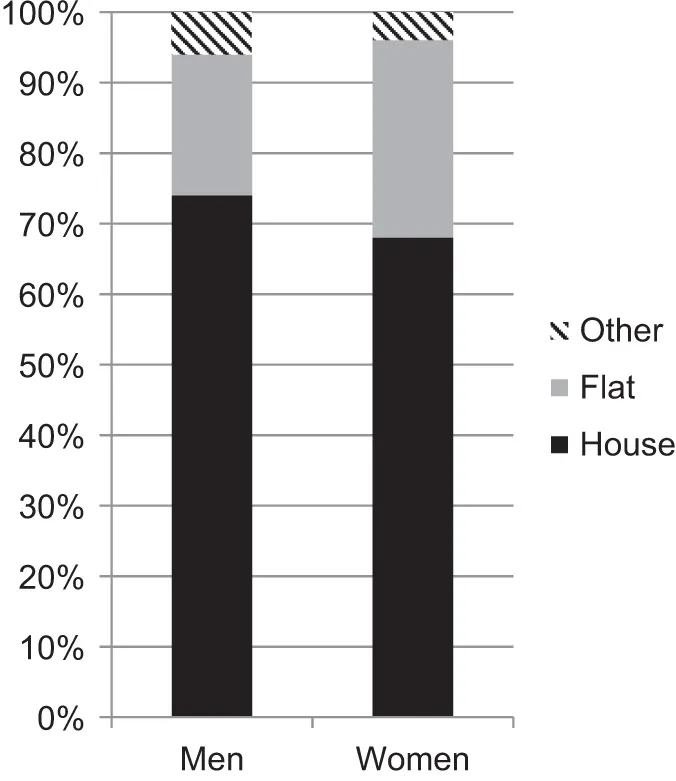
Figure 1.1 Housing type in the HAIL Study (according to gender).
Box 1.2 The ALSWH
The ALSWH is a national population-based study of health in Australian women. See: www.alswh.org.au
PARTICIPANTS: 12,432 women born 1921–1926 from all over Australia, randomly sampled from the Medicare data base, with over sampling in rural and remote areas.
METHOD:
- Postal questionnaires 1996, 1999, 2002, 2005, 2008, 2011, and then every six months.
- Linked administrative data on aged care use.
- National Death Index data.
MEASURES: housing type, Short Form 36 Health-related Quality of Life Profile, aged care use.

Figure 1.2 Housing type in ALSWH (according to year/age).
The importance of home in later life
In considering housing for older people, we must recognise that housing is one part of a person’s total ecosystem, with constant change and adaptation occurring due to both internal and external forces. Figure 1.3 shows an ecological model of housing in the context of people’s lives. The older person sits at the centre, perhaps with personal difficulties and limitations, but also with their own history and biography that makes up their sense of self. The person may have different capacities and abilities, and manifest different behaviours that reflect their personality, values, and motivations. However, these abilities and behaviours can also be constrained by their environment, with housing being the first layer, then the neighbourhood, and then the wider political, economic, and physical environment.

Figure 1.3 An ecological model of housing in the context of people’s lives.
Considering this model, we must view housing first from the perspective of the changing needs of the person as they age. The later period of life is often characterised in terms of increasing burden of disease and disability, decline in physical function, decreased capacity for well-being and quality of life, reduced social participation, and increased needs for health and social care. However, there has been increasing recognition of the potential for people to age well. The World Health Organization (WHO) (Beard et al., 2016, p. 2149) has framed a public health goal of “healthy ageing” as a “process of developing and maintaining the functional ability that enables well-being in older age,” optimising trajectories of functional abilities to move around, meet basic needs, learn, grow, make decisions, build and maintain relationships, and to contribute (see also Introduction for this volume). The focus is on the dynamic interaction between a person’s intrinsic capacity and the support provided by their extrinsic environment to maximise overall well-being, limit the impact of disease, and protect against loss of functional capacity. Healthy ageing is inclusive of people with different levels of need, drawing on capabilities theory (Sen, 2005), and framed around the functional ability to be, and to do, the things people have reason to value. The WHO definition of healthy ageing emphasises that even a frail older person, or one who needs long-term care and support, can still experience more or less positive trajectories depending on their own resources and social support, the services available to them, the environments they inhabit, and the choices they make.
In keeping with this model of healthy ageing, data from the ALSWH show different trajectories of change in functional abilities, and the potential for people to maintain functional capacities well into their later years. Analysis of data for women aged 70–75 up to ages 85–90 identified four main trajectories of ageing (Leigh, Byles, & Mishra, 2017). The first group (around 14% of women) maintained high levels of physical functioning, being able to engage in activities such as housework, lifting, or carrying groceries, climbing several flights of stairs, or walking more than 1 km, and sometimes in more vigorous activities, such as running and lifting heavy objects. A second group (around 30%) started at this level, but their functional ability declined over time. However, these women were still able to undertake most daily activities and get around even in their late 80s. A third group (around 40%) started at a lower level, and their functional ability declined to a point where most had difficulty on most activities, including climbing stairs, walking more than 500 m, and bending or stooping. A fourth group (around 16%) started with poor levels of physical function, and declined further over time to a point where they had difficulties with dressing, bathing, and moving around within the home. Overall, the proportion of people who needed help with daily tasks increased from 9 to 34%. Changes in functional abilities were also evident in changes in the women’s ability to drive themselves, from over 50% in their late 70s to around 35% in their late 80s, and changes in their housing, with many women moving from a house or an apartment to a retirement village or aged care.
Housing options for older people in Australia
The suburban house
Around three quarters of Australians aged 65 years and over live in a free-standing suburban dwelling (Australian Bureau of Statistics [ABS], 2013); Figure 1.4 shows a typical example of this housing type. This dwelling type remains the home of choice for most Australians, being seen as the ideal place for childrearing, with more spacious dwellings offering lifestyle pursuits, such as swimming in the backyard pool, gardening, entertaining, pets, and privacy and peacefulness (Willing & Pojani, 2017). Many of these suburban homes will have been “self-built” by their older owners, and most will have undergone a series of changes that stamp the mark of their owners firmly on their construction and character (Mackenzie, Curryer, & Byles, 2015). In the HAIL study, 73% of participants lived in a free-standing suburban house, and most had lived in their homes for several decades (around 25 years on average). Their choice of home was decided early in their marriage and was an integral part of their adult life and identity. This attachment to place sometimes limited people’s objectivity in considering whether the home suited their current or future needs. The social functions of the home were of critical importance to the older people, with the opportunity to host family functions, and to allow children and grandchildren to visit (Byles et al., 2014).

Figure 1.4 Typical Australian suburban home (Image by the author).
Development around their suburban home, and within their neighbourhood environment, was a major concern for many of the people interviewed in the HAIL study. High-rise housing attracted new and different people to their areas, and changes to traffic arrangements affected their ability to walk or drive to local shops and other facilities. Consequently, while these people themselves had not moved from their neighbourhoods, their neighbourhoods had changed around them. They no longer felt as familiar as they had, and they felt less safe.
Apartment living and downsizing
Apartment living is increasing in popularity in Australia, particularly among younger generations who desire shorter commutes and enjoy urban lifestyles (Willing & Pojani, 2017). For older people, apartments may also seem a good alternative for “downsizing,” with a move from larger suburban homes to smaller more compact and lower maintenance, apartment living (Beach, 2016; Byles et al., 2014). Given their rising popularity, there are significant shortages in apartments, and such housing is unaffordable to many older people, even those who own their own suburban home. Currently, around 9% of people aged 65–84 and 12% aged 85 and over live in apartments, and these are mostly in cities and larger regional areas (ABS, 2016).
Retirement villages
In 2014, there were an estimated 2,300 retirement villages in Australia, housing more than 184,000 older Australians (around 5% of those aged 65 and over) (Grant Thornton, 2014). These villages operate across a variety of urban and non-urban contexts, under different financial models, and with different levels of support provided for residents who need care. It is estimated that around one in five retirement village residents receive home care services (McCrindle Baynes, 2013), which may be outsourced or provided by the village operator. In future, reforms in the Australian aged care sector may make it easier for retirement village operators to provide aged care services or expand the services they offer (Productivity Commission, 2015).
The mean age of moving to a retirement village is around 70–75 years (McDougall, Barrie, & Lange, 2017; Productivity Commission, 2015), over half of residents are single, and around two-thirds of residents are women. Many people move to a village with the expectation they can more readily access help in older age, for a smaller home, convenience, affordability, and for social interaction (McDougall et al., 2017). Levels of satisfaction with village life are generally high, but there are some issues with costs and affordability (McDougall et al., 2017).
Other accommodation
A small but important proportion of older people live in other forms of accommodation, such as caravan parks or mobile homes. These can be part of a lifestyle choice, to travel or to be close to recreation, such as boating or fishing, or may reflect the limited choices available to older people who cannot afford other accommodation.
Residential aged care
Moving into residential aged care is a late life option for people with high levels of dependency, usually after the age of 80 years (Productivity Commission, 2015). This option is not the preference...
Table of contents
- Cover
- Half Title
- Series Page
- Title Page
- Copyright Page
- Table of Contents
- List of figures
- List of tables
- List of boxes
- List of contributors
- Foreword
- Acknowledgements
- Introduction
- Part I Housing
- Part II Mobility and transportation
- Part III Urban planning and design
- Index
Trusted by 375,005 students
Access to over 1.5 million titles for a fair monthly price.
Study more efficiently using our study tools.
Frequently asked questions
Yes, you can cancel anytime from the Subscription tab in your account settings on the Perlego website. Your subscription will stay active until the end of your current billing period. Learn how to cancel your subscription
No, books cannot be downloaded as external files, such as PDFs, for use outside of Perlego. However, you can download books within the Perlego app for offline reading on mobile or tablet. Learn how to download books offline
Perlego offers two plans: Essential and Complete
- Essential is ideal for learners and professionals who enjoy exploring a wide range of subjects. Access the Essential Library with 800,000+ trusted titles and best-sellers across business, personal growth, and the humanities. Includes unlimited reading time and Standard Read Aloud voice.
- Complete: Perfect for advanced learners and researchers needing full, unrestricted access. Unlock 1.5M+ books across hundreds of subjects, including academic and specialized titles. The Complete Plan also includes advanced features like Premium Read Aloud and Research Assistant.
We are an online textbook subscription service, where you can get access to an entire online library for less than the price of a single book per month. With over 1.5 million books across 990+ topics, we’ve got you covered! Learn about our mission
Look out for the read-aloud symbol on your next book to see if you can listen to it. The read-aloud tool reads text aloud for you, highlighting the text as it is being read. You can pause it, speed it up and slow it down. Learn more about Read Aloud
Yes! You can use the Perlego app on both iOS and Android devices to read anytime, anywhere — even offline. Perfect for commutes or when you’re on the go.
Please note we cannot support devices running on iOS 13 and Android 7 or earlier. Learn more about using the app
Please note we cannot support devices running on iOS 13 and Android 7 or earlier. Learn more about using the app
Yes, you can access Urban Environments for Healthy Ageing by Anna Lane,Anna P Lane in PDF and/or ePUB format, as well as other popular books in Social Sciences & Asian American Studies. We have over 1.5 million books available in our catalogue for you to explore.