
- 132 pages
- English
- ePUB (mobile friendly)
- Available on iOS & Android
eBook - ePub
About this book
Much of what constitutes our experience of our immediate environment is quite ordinary and familiar, in particular, where we live. While policymakers and academics are constantly seeking transformations in housing, what we seek from our own housing is stability and lack of change. We seek secure roots to our lives rather than step-changes and radical reform. This book considers this ordinary experience of housing and how we come to depend upon it. The notion of the ordinary is used to argue against the conceits of policymaking and the fetish for domestic design. Using a variety of methods such as critical analysis and film criticism (looking at the work of film-makers as diverse as Bergman, Dreyer, Shyamalan, Tarkovsky, Tati and the Wachowski Brothers), it provides an original, impressionistic view of the role housing plays in our lives.
Chapter 1
Roots and Ruts
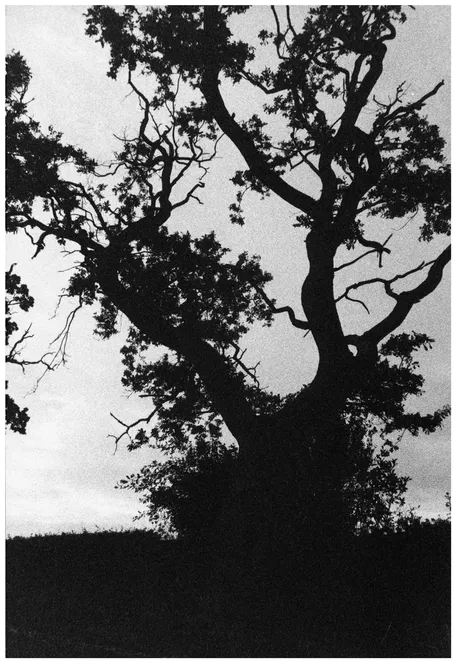
This is a root book. It is one that is grounded in something solid. It is secure in its antecedents, from where it takes its sustenance. It buries itself in something substantive and sustaining. There is a certainty, a straightforwardness, and this is comforting. As a root it holds secure, gripping tenaciously to the surrounding material, without which it has no future, no prospect other than a wilting death.
I use the term root consciously, and seek to use all its registers and resonances. To say we are rooted is to suggest we are connected, that we are placed. As Roger Scruton (2004) suggests, it is an awful cliché to say that 'we are rooted in the soil', but then, to coin another one, clichés become clichés because they have some truth in them. We have a sense of place and we feel located. This may be a small space, like a village or even our own dwelling, or it may be a community or a nation (Weil, 1952). But we can identify with that place. We are rooted into that place. This is another way of suggesting that we gain meaning from what is around us (King, 2004b).
Yet this sense of rootedness is not merely about meaning. It is also about obligation. As Simone Weil (1952) suggested, being in a community – being tied to place – brings with it an obligation. We are committed and this is a two-way process. We gain from our connection with others and with an ideal, but that also means that we too must work to protect and to nurture that connection and that ideal. Being rooted in the soil brings with it an obligation to maintain it, to sustain it and to put back more than we have taken out. Our use of the soil is a form of trust (Scruton, 2000), held by us for those gone and those yet to come. But it is also about the way we can trust our surroundings, in their regularities, their assuring qualities and their certainty. This place then is very much what we are stuck in: it is a rut, our rut.
But there is more to 'place' than that. Places are often substantial things that can stand up to the elements, that can resist their buffeting. Our dwelling covers us and protects us. It allows us to be intimate with those we love and share with; it helps us to feel secure by offering us privacy (King, 2004b). But to do this it must be grounded. A house is built on foundations. These foundations go down into the ground and remain there as solid embodiments of our need for roots. They do not sprout, link up with other foundations, create networks or seek out difference. They stay where they are, and for this we are grateful. Foundations are anchors; they hold the house tight to the ground. They form the sustaining link with a place. Dare we say that foundations root the house into the ground?
But, of course, the dwelling is itself the manifestation of our rootedness. It is the fruit of our desire for place. When we put our dwelling in that place we ground it in significance. The roots, we are tempted to say, make the place for us. Their groundedness brings the place into our senses; they give meaning to place.
We put down roots, but this is not always or ever of our own choosing. Often it is where we fell and 'took' in the ground. We are located here for reasons that are unclear to us, even as we realise the importance of our being here. But we need not understand our rootedness for it to work for us. We have fallen already on made ground, that has its ruts carved by those who preceded us with their traffic and commerce. So, as we put down roots, we find that there are ruts (routes) already leading to us. Indeed, as Roger Scruton (2004) reminds us, it is often only because we are within well-trodden ruts – that we can say our roots go back generations – that we will be accepted in a place and feel able, and are allowed, to call it ours. It is only once we have shown our obligations and commitment to a place that our roots are acknowledged. This is often important, even though it might be considered exclusionary and divisive. It is important precisely because it will guard us against false idols and the pernicious belief that we can take up our roots and walk.
The root is connected to enlightenment: it holds the plant up, so that it can reach up to the light. It takes its energy from both above and below. The root is a source of nutrition from close by. It is within the soil, taking up sustenance from around it. But it also supports the plant as it takes its energy from a source that is distant, seemingly eternal and certainly universal. So do we link into that which is near: we take the shelter offered by our rooted dwelling, but we are nurtured also by more distant, impersonal and long-lived entities like a community and traditions and customs. The house provides this for us as it offers the secure footing that allows us to explore outwards. Christian Norberg-Schulz (1985) used the analogy of axes and pathways, as the means by which we are oriented in our environment and our community. These are the ways by which the meaning of our surroundings is signified to us. Instead of using these terms, however, I wish to talk about roots and ruts. The similarities are clear: both axes and roots are fixed points and ruts and pathways are marked routes, which allow us to explore what is around us.
Yet I wish to be more restrictive than Norberg-Schulz. I wish to emphasise the fact that we are often stuck where we are, and to move we would have to be dug out. Likewise, we cannot go where we would like, but only where we are directed. There are often only a very few ways we can go. And also we cannot use the excuse that the pathway is not clear: it is not an indistinct mark across the landscape, but often a deep rut presenting us with the one and only way.
This rather restrictive position can be seen as a corrective to the emphasis that post-structuralists place on flux and contingency. I want to show that post-structuralism is mistaken in this emphasis and that it misunderstands human nature, particularly the sense of humans as dwellers, as people settled on the earth. This idea of settling is inimical to flux and contingency, which are states in which no one can feel secure in their place and take comfort and complacency from it (King, 2004b). My particular target here is the discussion of tree root and rhizome that forms both the method and structure of Gilles Deleuze and Felix Guattari's seminal book, A Thousand Plateaus (1988). The rhizome is emblematic of contingency, flux, relativism, of all that post-structuralism is meant to be, but which our dwelling is not and cannot be. To suggest that I am presenting a root book is thus to oppose this influential example of post-structuralist thought and all it stands for.
In undertaking this critique of Deleuze and Guattari it will also become clear just what I mean by a root book. I want to establish my targets, but also to be more positive and to lay the platform for the discussions that follow. What I wish to do is to make clear the route I intend to take – to show what rut I am in – and to show what sort of argument I am rooted in. What I am attempting is a distinctive description of housing, one based on the notion of ordinariness, of roots and ruts, and the means by which we stay put and pass through our surroundings with a sense that we are accepted and can, in turn, accept what we have and where we are.
The Root and the Rhizome
Gilles Deleuze and Felix Guattari collaborated on a number of projects in the 1970s and 1980s, the most influential of which are two books loosely connected by the subtitle Capitalism and Schizophrenia. These two books, Anti-Oedipus (1983) and A Thousand Plateaus (1988), are complex, (sometimes) amusing and perplexing books. In the foreword to A Thousand Plateaus the authors say that each chapter can be seen as a plateau that can be read independently of the others and in any order. Indeed, apart from the conclusion, it is hard to see what order the book has. It is rather a rambling, complex and very difficult book, which leaves one with a series of general impressions as well as some particular insights on Marxism, psychoanalysis and capitalism. It is though almost impossible to state what the book is about or summarise it succinctly in the manner one might do with other works of philosophy. Both these books are inherently anti-humanist with their constant references to the analogy of the machine as a key concept, but there is no system to be derived from reading Deleuze and Guattari.
But this, of course, is precisely as they would have it, for the complex structure of A Thousand Plateaus is as important as the particular content of the work. In this sense it has become emblematic of post-structuralism. As well as representing the anti-humanism and materialism central to a critique of structuralism and phenomenology, the book also presents a method and approach to discourse, that are themselves post-structuralist. This is shown by the key dichotomy, presented in the opening chapter of the book, between the tree root and the rhizome. This discussion has become important in that it can be seen as a key statement of the post-structuralist method, which emphasises what has become so significant a development out of post-structuralism. This development is that of difference, of the belief that there is a multiplicity of possibilities open to us rather than just one or two routes. Instead of seeking unity, boundedness, a fixed point, we should rather see networks with no core or centre. We should see multiplicity of form rather than a definitive structure. A Thousand Plateaus takes on this structure itself and is thus an example of what post-structuralism is, as well as presenting a key statement of method and outlook. Another way of describing difference is to see it as extraordinary: post-structuralism, then, can be seen as the perpetual search for the extraordinary.
What I wish to do is to explore this key dichotomy of the root and the rhizome for the light it can shed both on method and on more substantive issues. I wish to use it as a means of presenting my own preferred method, and also some of the key principles which underline my argument on housing and dwelling. But first I wish to deal with a possible objection. In the housing literature Deleuze and Guattari do not feature heavily. Indeed much of the controversy about post-structuralism seems to have passed housing studies by. It would be fair to say that I am not criticising Deleuze and Guattari out of any sense that they are dominating housing discourse. If I wished to pick a target then the ideas of Michel Foucault would be more pertinent, particularly with his ideas on discourse, governmentality and the gaze. But even here, it would be difficult to claim that Foucault had taken the world of housing research by storm.
Why I believe Deleuze and Guattari are important, therefore, is not because they are influential in themselves, but rather because they demonstrate a key element of post-structural thought that has pervaded much more widely than other more abstract concepts. This is this notion of difference or the extraordinary that I have already identified. It is this stressing of the outside, of the other, of what is different that I wish to contrast with my discussions of the ordinary and change. This is not because I wish to denigrate minorities, nor do I wish to ignore the very real needs of certain groups who are, as it were, outside of the mainstream. What I am concerned about rather is that an over-concern for otherness, for pointing out how we differ, how diverse we are, and how we should concentrate on the particular, reduces the possibility for solidarity. This emphasis on difference denigrates what we hold in common, what is universal and what is ubiquitous in our surroundings.
I would argue also that a concern for difference has the very opposite effect of what post-structuralists call for. They see the emphasis on difference as an attack on power and hierarchies. Deleuze and Guattari see their rhizomic method as anti-hierarchical and anti-authoritarian. Yet, as I argue in Private Dwelling (2004b), the effect of post-structuralism is often to leave nothing in place but naked power. The attempt to rid notions of desire of all limits, to breach the hegemonic laws and proscriptions of a society, is to leave nothing to protect the weak. It does not liberate anyone but those already capable of acting for themselves. The privileging of otherness over order, of possibility and multiplicity over limits, is to allow those with power to exercise it without recourse to any communal reproach. Therefore the very attempt to be transgressive, to go beyond the limits of a hierarchical order, is to jeopardise those incapable of defending themselves. What post-structuralism is suggesting is that, in the name of difference and liberation, we tear up the roots that support and sustain us: because roots limit us, because they tie us down, we should be rid of them. But, of course, the consequences of doing so are to cut us away from the very thing that nurtures us.
There is then a very real danger in emphasising difference and transgression of the social order. In the terms of my later discussion, this danger comes about because we privilege the extraordinary over the ordinary, the uncommon over the common. Housing discourse concerns itself not with the ordinary or with what we have. Instead it is concerned with transformation (King, 2004b), with those that have nothing or not enough, with step changes in policy to bring about rapid change: it is overly concerned with what can be or ought to be, rather than what is. One can suggest, perhaps a little unkindly, that housing policy and discourse are concerned with finding new ways to create the old problems. This is because of the rush to transform, to be concerned with tomorrow and never today (and certainly not to learn from yesterday), to take us to the next level, even if it means destabilising our current place. A discussion on this desire for transformation and its roots in theory is therefore an important one. We need to understand what is meant by this desire for difference and why it is deemed so important. Only then can we properly contest it. Hence, even if Deleuze and Guattari did not build houses, we can learn something from what they said and what they meant.
So let us consider this distinction between root and rhizome. As portrayed by Deleuze and Guattari, the difference between the two notions is that of a limited determining structure and a loose network. A root is a thing 'which plots a point, fixes an order' (1988, p. 7). This is very different from a rhizome, which is varied and diverse: 'The rhizome itself assumes very different forms, from ramified surface extension in all directions to concretion into bulbs and tubers' (p. 7). Unlike roots which are seen as being singular in structure, or at least very limited, rhizomes can take a multiplicity of forms from the highly disaggregated to the dense.
Deleuze and Guattari suggest that the root concept is an attempt to reflect nature: root books are seen as tracings of nature, as simplified copies. They state that 'The tree is already the image of the world, or the root the image of the world-tree. This is the classical book, as noble, signifying, and subjective organic interiority' (p. 5). A root book is therefore one with a traditional structure which tries to impose an order on the world. But, Deleuze and Guattari claim that 'Nature doesn't work that way: in nature, roots are taproots with a more multiple, lateral, and circular system of ramification, rather than a dichotomous one. Thought lags behind nature' (p. 5). But they claim that even more sophisticated attempts at definition, where roots are not seen as being singular, are also doomed to failure. These attempts are still too simplistic, and Deleuze and Guattari want to reject the whole notion of trees and roots as a metaphor for discourse. For them, 'The tree and root inspire a sad image of thought that is forever imitating the multiple on the basis of a centred or segmented higher unity' (p. 16). By insisting upon unity the root metaphor cannot but fail to describe the multiplicity of possibility Deleuze and Guattari wish us to see as the reality.
They sum up the apparent problems of the root metaphor as follows:
Arborescent systems are hierarchical systems with centres of significance and subjedification, central automata like organised memories. In the corresponding models, an element only receives information from a higher unit, and only receives a subjective affection along pre-established paths (p. 16).
In opposition to this they present the rhizome. Their claim is that in presenting this dichotomy they blow apart the whole notion of binary division. By presenting a view based on multiplicity they suggest they can dispense with simple dichotomies, and their claim is that the contrast between root and rhizome demonstrates this amply. Rhizomes are different from roots: they have no determinate form. Indeed Deleuze and Guattari go so far as to suggest that some animals can be rhizomic, for instance, rats or ants, who appear to operate in concert almost as collective entities, but without any form of central co-ordination. They also see burrows, 'in all of their functions of shelter, supply, movement, evasion, and breakout' (pp. 6-7), as a rhizome.
What are interesting are the particular facets of the burrow that they consider. They stress mobility and movement rather than stasis and stability, which might be seen to be the point of a dwelling (King, 2004b). Indeed the most popular fictional residents of burrows, hobbits, are portrayed by J.R.R. Tolkein as home-loving creatures of habit and routine, who dislike travel beyond their known surroundings: a hobbit, for one, would not relish multiplicity!
Yet it is this very notion of multiplicity that Deleuze and Guattari seek to emphasise, and, as we are not hobbits, we should give them a hearing. Rhizomes are seen as networks and 'any point of a rhizome can be connected to anything other, and must be' (p. 7). The implication here is of connectivity and flexibility. Rhizomes have no centre and no necessary shape: 'A multiplicity has neither subject nor object, only determinations, magnitudes, and dimensions that cannot increase in number without the multiplicity changing in nature' (p. 8). They are flexible to the extent that they can be remade: 'A rhizome may be broken, shattered at a given spot, but it will start up again on one of its old lines, or on new lines' (p. 9). It is therefore 'not amenable to any structural or generative model' (p. 12). There is no predetermined pattern for a rhizome, which limits its possibility for developing and making connections.
This lack of any central co-ordination to a rhizome is crucial to its definition: it is what makes the difference between roots and rhizomes:
To these centred systems, the authors contrast acentred systems, finite networks of automata in which communication runs from any neighbour to any other, the stems or channel do not pre-exist, and all individuals are interchangeable, defined only by their state at a given moment – such that the local operations are co-ordinated and the final, global result synchronised without a central agency (p. 17).
They go on:
unlike trees or their roots, the rhizome connects any point to any other, and its traits are not necessarily linked to traits of the same nature . . . It has neither beginning nor end, but always a middle from which it grows and which it overspills (p. 21).
There is then a fluidity and unpredictability about the rhizome in contrast to the tree root, which is seen as hierarchical and patterned. Deleuze and Guattari suggest that 'The rhizome is an acentred, non-hierarchical, non-signifying system without a General and without an organising memory or central automaton, defined solely by a circulation of states' (p. 21). The difference is between loyalty and acceptance on the one hand, and an equality of purpose on the other, or as they state it, 'The tree is filiation, but the rhizome is alliance' (p. 25).
The tree signifies a starting point, the acorn or seed, and an end, when the tree dies. However, the rhizome is not about starting or finishing but offers 'another way of travelling and moving: proceeding from the middl...
Table of contents
- Cover
- Half Title
- Title
- Copyright
- Contents
- Preface
- Introduction
- 1 Roots and Ruts
- 2 The Unseen Frame
- 3 Seeing the Ordinary
- 4 Housing in the Background
- 5 Memory and Exile
- 6 Accommodating Change
- Conclusions
- Bibliography
- Films
- Index
Trusted by 375,005 students
Access to over 1.5 million titles for a fair monthly price.
Study more efficiently using our study tools.
Frequently asked questions
Yes, you can cancel anytime from the Subscription tab in your account settings on the Perlego website. Your subscription will stay active until the end of your current billing period. Learn how to cancel your subscription
No, books cannot be downloaded as external files, such as PDFs, for use outside of Perlego. However, you can download books within the Perlego app for offline reading on mobile or tablet. Learn how to download books offline
We are an online textbook subscription service, where you can get access to an entire online library for less than the price of a single book per month. With over 1.5 million books across 990+ topics, we’ve got you covered! Learn about our mission
Look out for the read-aloud symbol on your next book to see if you can listen to it. The read-aloud tool reads text aloud for you, highlighting the text as it is being read. You can pause it, speed it up and slow it down. Learn more about Read Aloud
Yes! You can use the Perlego app on both iOS and Android devices to read anytime, anywhere — even offline. Perfect for commutes or when you’re on the go.
Please note we cannot support devices running on iOS 13 and Android 7 or earlier. Learn more about using the app
Please note we cannot support devices running on iOS 13 and Android 7 or earlier. Learn more about using the app
Yes, you can access The Common Place by Peter King in PDF and/or ePUB format, as well as other popular books in Physical Sciences & Geography. We have over 1.5 million books available in our catalogue for you to explore.