This edited collection traces the impact of monographic exhibitions on the discipline of art history from the first examples in the late eighteenth century through the present. Roughly falling into three genres (retrospectives of living artists, retrospectives of recently deceased artists, and monographic exhibitions of Old Masters), specialists examine examples of each genre within their social, cultural, political, and economic contexts. Exhbitions covered include Nathaniel Hone's 1775 exhibition, the Holbein Exhibition of 1871, the Courbet retrospective of 1882, Titian's exhibition in Venice, Poussin's Louvre retrospective of 1960, and El Greco's anniversaty exhibitions of 2014.
eBook - ePub
Monographic Exhibitions and the History of Art
- 354 pages
- English
- ePUB (mobile friendly)
- Available on iOS & Android
eBook - ePub
Monographic Exhibitions and the History of Art
About this book
Information
Part I
Living artists’ retrospectives
1
Nathaniel Hone’s 1775 exhibition
The first single-artist retrospective1
We live in an age in which exhibitions are deemed worthy of their own retrospectives. ‘Turner Prize: A Retrospective 1984–2006’ was staged at Tate Britain in 2007–2008, whereas ‘50 Years Documenta 1955–2005’ was presented at the Friderecianum in Kassel in 2005. But how did retrospectives, as a distinct type of exhibition format, emerge in the art world? In this chapter I will present the case of Nathaniel Hone’s 1775 private exhibition, which I argue is the first fully recorded single-artist retrospective ever staged by a living artist to showcase his work.
To date, Hone’s retrospective has been treated casually in art historical literature. It is not usually described as a retrospective, although it quite clearly was. Only Le Harivel in his small monograph on the artist mentions that ‘Hone’s defiant retrospective exhibition in 1775, which confronted the British art establishment, is now seen as a key event in the development of the status of artists’,2 while Anne Crookshank and the late Knight of Glin also identify it as a retrospective.3 Otherwise, it is mentioned incidentally in relation to the exhibitions of more notable artists (such as John Singleton Copley and Joseph Wright of Derby) and merely described as a one-man exhibition4 or a private exhibition.5 Some scholars, nevertheless, have recognised Hone’s exhibition as being probably the first private exhibition by an artist who charged admission.6 Its retrospective nature, however, has yet to be examined and thus provides the core argument of this chapter.
The history of the retrospective has so far received scant attention by art historians.7 The term rétrospective originates from the Latin verb retrospicere (to look back) and connotes a view or a contemplation of the past.8 Additionally, it implies a comprehensive survey or review of past events. As such, a retrospective exhibition brings together works from an extended period of time in order to represent the expanse of an artist’s career. Accordingly, a retrospective may be distinguished from a onewo/man show by the fact that, while the former presents material belonging to an extended time frame, the latter more often showcases a discrete body of recent work. Despite the fact that in art historical literature the two terms are often used interchangeably, in this chapter I deliberately use the term ‘retrospective’ for its historical connotation and its gender-neutral character.
It was during the second half of the nineteenth century that the retrospective exhibition became particularly noticeable in France and when the term exposition rétrospective entered the French language.9 Hence, it is not uncommon to associate the initiation of these special exhibitions with France at that time. Patricia Mainardi has argued that the retrospective was introduced on the occasion of the Exposition Universelle of 1855 when the government of the Second Empire organised individual displays for four leading artists of France: Jean-Auguste-Dominique Ingres, Horace Vernet, Eugène Delacroix and Alexandre-Gabriel Decamps.10 Robert Jensen, who has devoted a whole chapter to the subject of the retrospective, has provided a valuable account of the practice both as an official, state implementation to recognise artistic excellence which confers honours on exemplary artists and as a marketing tactic utilised by art dealers.11 Nevertheless, Jensen’s account is also concerned only with the second half of the nineteenth century in France. Additionally, Martha Ward has remarked that ‘the monographic or retrospective show, [was] in place by mid-century and quite common by 1900’.12
The emergence, however, of the retrospective – although it was not yet named as such – may be found in the eighteenth century. A number of studies have identified a 1783 exhibition in Paris as the first retrospective devoted to the work of a living artist.13 That exhibition, which presented a number of works by Claude-Joseph Vernet, was organised by an entrepreneur named Mammès-Claude Pahin de La Blancherie. His Vernet exhibition belonged to a group of three thematic displays intended to honour the French school of painting. Francis Haskell discussed these three shows in his penultimate and rewarding book, The Ephemeral Museum (2000), as early examples of another type of exhibition practice: the Old Master exhibition. Hone’s exhibition, however, is the first known retrospective organised by the artist himself. As the first of its kind, it certainly could have implanted the seed of the artist’s autonomy and given way to the blossoming of private exhibitions in England in the 1780s, and globally since.
The rise of the retrospective happened with contemporary artists vying for attention, recognition and patronage. Exhibitions were not only the platform from which artists presented their work to the public but also an arena in which they competed with one another. They were not only instrumental in promoting the reputation of an artist but also helped to raise his or her social and professional status.14 With Nathaniel Hone’s retrospective we witness the efforts of a living artist to present his productions independently, in the best possible manner, and a desire to gain autonomy from group associations and their restrictions. Hone’s exhibition happened in tandem with a significant proliferation of private exhibitions in England such as one-wo/man shows and one-picture shows. Living artists were trying to establish individual reputations and they found themselves battling for attention and patronage from collectors (and the state) who revered Old Masters and preferred them as a secure choice and as an investment. Hence, to be successful, contemporary artists had to stand out not only among their peers but also against esteemed masters.
As with any other private exhibition the retrospective epitomised authorship and enabled artists to showcase their individuality. At the same time, though, it offered the opportunity for living artists to show their history, their course of development and achievement in their respective field and the chance to encapsulate and expose their oeuvre. It is worth bearing in mind that England had neither Old Masters nor an established British School of art at the time to compete with the rest of Europe; hence the interest in contemporary production.
By assembling works that were produced over a long period of time, the retrospective enabled artists to delineate their career and advertise it. James Olney has argued that ‘a man’s lifework is his fullest autobiography’.15 Admittedly, when an artist assembles and presents his/her work in a retrospective exhibition, the venture resembles an autobiography. The writing of the self, the narration of one’s own history in the form of a story, which had become recognised as a genre by the end of the eighteenth century, shares many similar traits to a public exhibition that presents the lifework of an artist as a magnum opus. But let us look more closely at Hone’s venture in order to perceive why and how he staged his 1775 retrospective in London.
The exhibition
The following advertisement (Figure 1.1) appeared informing the London public, in the spring of 1775, that Nathaniel Hone R.A. was staging an exhibition of his works.
Hone’s announcement was surely different from what the public had come to expect. Nathaniel Hone, the Royal Academician, had rented a room to exhibit ‘the Conjurer’ along with several other examples of his work. He charged one shilling for admittance and distributed gratis a catalogue with his ‘apology’. In addition, his show ran concurrently with the Royal Academy exhibition in which, as a member, he was supposed to have been taking part.
The Conjuror (Figure 1.2),16 which was the highlight of the exhibition, is a large oil painting that Hone had sent to the Royal Academy, together with six other works, to be exhibited at the seventh annual exhibition of that body. For reasons to which I shall refer in what follows, the painting was rejected by the Academy committee, prompting the artist to stage his own exhibition. Nevertheless, as the advertisement made clear, Hone did not show only The Conjuror but also sixty-five other works spanning nearly the whole of his career. This appears to be the first fully recorded retrospective exhibition devoted to the work of a single artist. Additionally, it is the first one mounted by the very person whose work was on display.
![Figure 1.1 Advertisement of Hone’s Exhibition. The Public Advertiser, Monday, 8 May 1775, p. [1]. From Gale. 17th and 18th Century Burney Collection Newspapers.](https://book-extracts.perlego.com/1380474/images/fig1_1-plgo-compressed.webp)
Figure 1.1 Advertisement of Hone’s Exhibition. The Public Advertiser, Monday, 8 May 1775, p. [1]. From Gale. 17th and 18th Century Burney Collection Newspapers.
Source: © Gale, a part of Cengage Learning, Inc. Reproduced by permission. www.cengage.com/permissions
Hone was a founding member of the Royal Academy of Arts and showed examples of his work in all exhibitions of that institution until his death in 1784.17 His career as an artist started as a successful miniature painter, but he soon moved on to the more fashionable and profitable portraits in oil on a large scale. Upon switching to oil, however, he found it difficult to compete with established portraitists, such as Joshua Reynolds, with whom there appears to have been some rivalry.
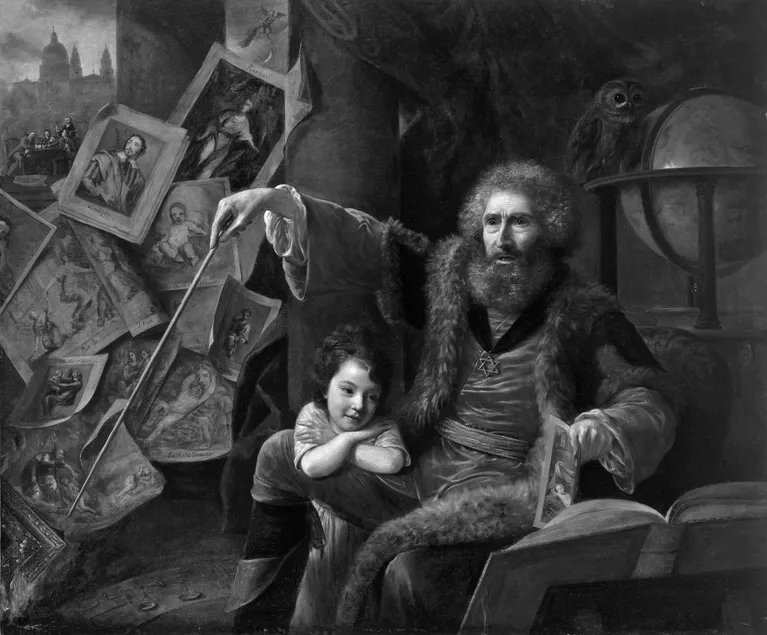
Figure 1.2 Nathaniel Hone I Irish, 1718–1784, The Conjuror, 1775, Oil on canvas, 1450 × 1730 mm
Source: © National Gallery of Ireland, NGI.1790
After Hone had submitted The Conjuror and the additional works at the Royal Academy, and while the paintings were actually hanging in the exhibition room, he was informed that fellow Academician Angelica Kauffman had expressed an objection to The Conjuror being included in the exhibition. Kauffman, it seems, claimed that she recognised herself among a group of nude figures at the top left-hand corner of the painting and, consequently, demanded the ‘offending’ picture be withdrawn, or else she would not exhibit her works in the same exhibition.18
Indeed, Hone had painted a group of naked figures – most of which were holding brushes and palettes so as to imply their status as painters – dancing in front of Saint Paul’s Cathedral. The group of artists is probably a reference to the failed scheme – proposed by Reynolds in 1773 – to decorate St. Paul’s Cathedral with contemporary paintings. The scheme, however, never came to fruition, and Hone is probably reminding the public of an embarrassing moment in Reynolds’s career.
As we are told in Hone’s catalogue, the artist tried to appease Kauffman by sending her a letter in which he explained that it was never his intention to represent her in the picture and offered to make alterations to the painting (in fact, in the final picture, he eliminated the nude figures altogether and in their place introduced four people drinking at a table). Kauffman, however, remained unconvinced, and Hone reprints in the retrospective catalogue the following letter from F.M. Newton, Secret...
Table of contents
- Cover
- Title
- Copyright
- Contents
- List of illustrations and illustration credits
- Preface
- Introductory: monographic exhibitions and the history of art
- PART I Living artists’ retrospectives
- PART II Posthumous retrospectives
- PART III Old Master monographic exhibitions from before World War II
- PART IV Old Master monographic exhibitions after World War II
- PART V Monographic exhibitions and the twenty-first century
- Afterword: learning from the artist’s monograph: anarchy, quality, and the ultimate noumenon
- Epilogue: some curatorial thoughts on the monographic exhibition
- Archival sources
- Bibliography
- Biographical notes on the contributors
- Index
Trusted by 375,005 students
Access to over 1.5 million titles for a fair monthly price.
Study more efficiently using our study tools.
Frequently asked questions
Yes, you can cancel anytime from the Subscription tab in your account settings on the Perlego website. Your subscription will stay active until the end of your current billing period. Learn how to cancel your subscription
No, books cannot be downloaded as external files, such as PDFs, for use outside of Perlego. However, you can download books within the Perlego app for offline reading on mobile or tablet. Learn how to download books offline
Perlego offers two plans: Essential and Complete
- Essential is ideal for learners and professionals who enjoy exploring a wide range of subjects. Access the Essential Library with 800,000+ trusted titles and best-sellers across business, personal growth, and the humanities. Includes unlimited reading time and Standard Read Aloud voice.
- Complete: Perfect for advanced learners and researchers needing full, unrestricted access. Unlock 1.5M+ books across hundreds of subjects, including academic and specialized titles. The Complete Plan also includes advanced features like Premium Read Aloud and Research Assistant.
We are an online textbook subscription service, where you can get access to an entire online library for less than the price of a single book per month. With over 1.5 million books across 990+ topics, we’ve got you covered! Learn about our mission
Look out for the read-aloud symbol on your next book to see if you can listen to it. The read-aloud tool reads text aloud for you, highlighting the text as it is being read. You can pause it, speed it up and slow it down. Learn more about Read Aloud
Yes! You can use the Perlego app on both iOS and Android devices to read anytime, anywhere — even offline. Perfect for commutes or when you’re on the go.
Please note we cannot support devices running on iOS 13 and Android 7 or earlier. Learn more about using the app
Please note we cannot support devices running on iOS 13 and Android 7 or earlier. Learn more about using the app
Yes, you can access Monographic Exhibitions and the History of Art by Maia Wellington Gahtan, Donatella Pegazzano, Maia Wellington Gahtan,Donatella Pegazzano in PDF and/or ePUB format, as well as other popular books in Arte & Arte general. We have over 1.5 million books available in our catalogue for you to explore.