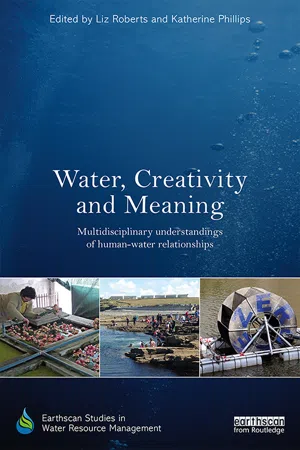
![]()
Part I
I Fluid processes
Creative research with water
![]()
chapter 1
Water power
Creativity and the unlocking of community knowledge
Loraine Leeson
The flow of the River Thames has been the lifeblood of London over many centuries. Since the first Bronze Age settlers it has provided sustenance, transport, trade, work and pleasure for a population that now exceeds 8 million. Communities grew up along the river to the east of the city to service its developing trade, but while this area was a hub of wealth generation, it has also seen the city’s greatest poverty. A focus point for new immigrants, it became home to a range of different cultural groupings, from the Huguenots in the seventeenth century onwards. Many entered with the trade ships, gravitating toward the work opportunities and cheaper living of this industrial quarter or aiming to join others from their own cultural backgrounds. Despite the poverty, however, it would be a mistake to see East Londoners as victims. Necessity drove these riverside communities to become highly organised, and it is their determination and resilience that has led to this current urban territory of astonishing energy, diversity and culture. It is not surprising therefore that its local inhabitants still recognise a role for this river in sustaining their lives. Indeed, when in 2007 members of the Geezers Club in an AgeUK East London centre were asked about technological needs for a research project, they looked to the river for solutions.1
Geezer power
This question was nevertheless put to this group, not by a technologist, but by myself as an artist commissioned by researchers who recognised the transformational potential of arts development methods. The research project in question, Democratising Technology,2 was led by an interdisciplinary team at Queen Mary University of London, who were exploring whether a generative, open-ended form of engagement between communities and technology could be produced and brought to bear on the design of society and its tools. The research team had been examining how the experience of older people was not only being excluded from the development of new technologies, but often left this age group victim to the technological design and control of others. They commissioned three artists, of which I was one, to work with older people’s groups around these ideas.
There is increasing recognition of the effectiveness of the arts in working alongside other disciplines to address issues of social relevance. While the arts can rarely implement change on their own, they are adept at communicating and consolidating ideas in a way that facilitates engagement, and particularly so when this includes drawing out the creativity of others. Creativity can be seen as the process through which an idea is ‘made real’, where energy interacts with matter to make something entirely new, whether that is a planet, a culinary dish or a painting. In using this method it helps to have some experience of the creative process as well as familiarity with the art of ‘not knowing’ – to stay with ideas as they emerge and change, then discover the meanings as they manifest. This is not a pre-requisite of the arts, but it is a process in which artists are well schooled and learn to manage productively.
From my experience of working as an artist with communities for almost four decades, I have discovered that if there is a need or issue to be addressed, then those most affected will hold important knowledge and may also already be working in some way to resolve it. Processes of creative facilitation can help people articulate what they know and communicate it in forms that are accessible to a wider audience. This approach nevertheless also requires some relinquishing of the notion of individual creation that has for so long been collapsed in public perception with the notion of the artist,3 and embracing the shared creativity of collaboration. Not all artists choose or are able to work in this way since it requires a range of skills and interests beyond the artistic. However it is an approach that has slowly developed as a professional pathway since the ‘community arts’ movement of the 1970s and 1980a. In the last 20 years a new movement of ‘socially engaged’ art has emerged that is not only accepted, but now even promoted by major art institutions. This is a chequered history that I explore further in my recent book Art: Process: Change (2017) that also delves into key methodologies employed in this endeavour.
The arts commissions offered by the research project were managed by SPACE4 with results to be exhibited in their gallery six weeks later. The assumption was that the ‘research’ had already been carried out by the academics and it was the artists’ role to ‘respond’ to this. While it was encouraging to see the social role of the arts recognised through the commissions, it was familiar but frustrating to encounter the assumption that the artistic process was essentially only about production. Through my art practice to date I had come to understand how research and production are interdependent. The creative process enacted through practice develops new knowledge, which is by its nature innovative and delivers substance that can then be examined. A more fruitful approach would have been to commence with the art, which would then have provided material for the academic researchers.
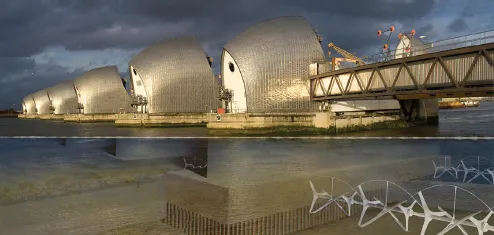
The six-week turnaround also had to encompass the building of the relationships necessary for meaningful community interaction, which together with the necessity of re-commencing research with this group, made for a tight call. The importance of long-term engagement with participants in socially engaged projects is becoming increasingly understood and I do not normally take on short-term commissions for this reason. However interest in the topic backed by the experience and support of the gallery and goodwill of the research team, suggested that the attempt would be worthwhile. It proved to be a risk worth taking, since it opened up a new creative pathway that generated a collective energy that continued to drive it under its own steam. Ten years on, the project is still going strong supported by funding that I have patched together as we progressed. During this time we have enlisted a professional engineer and a range of partners, created exhibitions, investigated how turbines might function on the Thames flood barrier, tested a small-scale tidal turbine in its central London reaches, run schools’ workshops, engaged in interdisciplinary presentations and international virtual communications and most recently created a floating water wheel to aerate the water and support fish and wildlife in a Thames tidal basin (Figure 1.1). I will, however, return to the beginning of this process to examine more closely the relationship, understanding and engagement of this particular community with the power of its river.
I met the Geezers at one of their regular meetings at an AgeUK centre in Bow. The self-named Geezers Club had been established in 2006 to mitigate the effects of isolation and loneliness on older men and offered members access to social activities, outings and talks by outside professionals. These were often on health-related topics, however, and it was clear that the group were delighted by the opportunity to work on something that drew on their skills and experience. During the project the group placed immense value on the fact that the activity was not just for its own sake or to pass the time, and one through which they could pass on their own accumulated knowledge to future generations. This dovetailed well with my position as an artist interested in enabling the impact of otherwise marginalised voices to enter public discourse and feed into social change.
Figure 1.1 Visualisation of tidal turbines on the Thames Barrier. The Not Quite Yet, SPACE, London, 25 January–29 February 2008 (© Loraine Leeson).
My opening question to this group of working-class men was on what technological developments each felt might best assist them or their communities in the future. I thought this might have been answered with ideas for gadgets or domestic aids, however the group had bigger ideas, formulated out of their lived experience in one of the country’s poorest boroughs that also borders one of its largest tidal rivers. ‘When electricity prices prevent older people from heating their homes, and the Thames is just down the road, why aren’t we using it to power our community?’ asked one member of the group. It turned out that many individuals in this area could not afford to live in the sheltered accommodation they needed due to service charges inflated by the high cost of energy. Yet in this group was an ex-steam engineer and others with practical skills who could see the potential that the ‘powers that be’ were missing. Many remembered how, decades before, tidal and wave power had been in the news but recently they had only heard of wind technology. Others recalled how in previous centuries a water wheel had been attached to London Bridge, while a nearby heritage site housed the remains of the world’s oldest and largest tidal mill. By the end of the first session the whole group were keen to focus on nothing less than harnessing the tidal power of the River Thames. While I had no experience or particular knowledge of these issues, I pledged that I would help take the Geezers as far along this route as it was possible for us to go.
We began by visiting the mill to learn how its now rusted wheels had once been used to turn stones for grinding grain, and also that current volunteers had plans for a new turbine that would bring it back into use. I conduct most of my practice through an arts organisation cSPACE,5 which was based at that time in the University of East London and here I discovered the Director of Sustainability, who advised us further. It seemed that funding for tidal technology had been severely reduced in the 1980s, with later development of renewable power sources focused mainly on wind energy. There were no readily available designs for turbines that could respond to the river’s ebb and flow and so, under his guidance, the group organised community transport to look at locally sited wind turbines that could most easily be adapted for underwater use. A visit to the Thames Barrier also revealed a suitable ready-made barrage for potential turbine installation. From visual materials gathered in our research I was able to create a large-scale photomontage of how turbines might function in this location. The group’s new knowledge coupled with their understanding of its potential benefits for the lives of local people also made them highly effective advocates of the sustainability argument. For the exhibition therefore, I conducted video interviews with its members to accompany the photo-visualisation. These were projected at a large scale to lend a weight of authority to the views of the speakers. The impact of this installation on gallery visitors was reflected in significant local press coverage. Despite little experience of public speaking, eight members of the group presented the project to great acclaim at On the Margins of Technology, the symposium that accompanied the exhibition. This attention was ironically much to do with the very nature of group members’ senior status, which caught people’s imaginations, turning on its head their initially marginalised position.
Active energy
The creative energy generated by the project, from that point entitled Active Energy, gained its own momentum, and at the end of the commission we all felt that it was not possible to halt the work there. After the exhibition I found a small amount of funding to equip the Geezers with a laptop and other equipment that would allow its members to learn the skills to conduct online research and share their findings. Group members were enormously engaged in the potential of their idea, which tapped into their existing skills and interests. Unprompted, they began to draft new turbine designs and debated how these would work. Engineering expertise presented itself in the form of Toby Borland, a highly creative mechanical engineer who ran a prototyping laboratory at University of East London, and Professor Stephen Dodds, renowned for his development of the control system for the European Space Commission. Both gave freely of their time and knowledge out of interest in the project. SPACE arts organisation, which had managed the original arts commission, re-joined the project for similar reasons, raising funds to support intergenerational work with a local school as well as continuation of the Geezers’ work on tidal energy. Through this collaboration I facilitated Toby Borland to lead the school workshops, assisted by Stephen Dodds, while previously isolated older men from the Geezers Club now found themselves mentoring underachieving boys. At the school’s request the work focused on wind power, and so the young peo...