![]()
Part I
Sociological perspectives and methods on generation gaps in a transformational society
![]()
1Paradigm
1 Social structure and social transition
The system of main social factors
“Society” is a word widely used in daily life. Not only is it used in media such as newspaper, broadcasting, and telecommunication, it is also frequently used in daily conversation, making it a kind of common expression. Normally, people do not investigate the deep meaning of this word because it is usually considered common sense. Isn’t society a place where people work from dawn to dusk? To be more specific, it is the place where people live. It is obvious that the society that people often notice is more of a physical setting, a space, or an environment, because this notion of society is relatively intuitive, visual, and easily identifiable.
From ancient to modern times, society has been defined by many scholars and publications worldwide. For instance, in many Chinese historical documents, “society” consists of two characters: she and hui. The word she means a place for sacrificing to gods; hui refers to a social gathering. When used together, they express the meaning that “people gathered at a certain place to hold a ceremony in honor of the god.” In order to study society, numerous Western sociologists have also attempted to define it. They examined society from different perspectives using diverse theoretical models and proposed many different definitions of society:
•Charles Horton Cooley (2015) argued that society is about networking crowds.
•Robert Park (1936) suggested that society is a kind of heritage that includes human beings’ behaviors, sentiments, and ethnicities.
•William Sumner (1907) believed that society is a system of certain forces.
•Emile Durkheim (2000) stated that society is collective consciousness and that it is also an independent entity which is built on individuals’ sensations.
•Morris Ginsberg (1950) asserted that society is the whole organization of human relationships, the relationship between all human beings, whether direct or indirect, organized or unorganized, conscious or unconscious, mutually beneficial or hostile.
•Psychologist Gabriel Tarde (1903) believed that society is a group of people with a common mindset.
From these definitions, we can see that in contrast to the common perception of viewing society as a physical space, scholars have given “society” a deeper meaning.
The well-known American sociologist Talcott Parsons is the founder of structural functionalism in sociology. In the 1930s, Parsons devoted himself to the study of Social Action Theory. He argued that social norms are an important tool for modifying the behavior of people. Specifically, these norms are reflected in all systems throughout institutionalized society, and through the socialization process, people’s attitudes and motivations are shaped to meet these norms. Later, Parsons shifted the focus of his study from Social Action Theory to Structural Functional Analysis based on the Theory of Social Systems. He believed that society is made up of many interconnected and interdependent systems, with each part performing its respective functions, in order to maintain the existence and development of the whole society. Because the social system constitutes an organic whole, changes in one part will affect the other parts. Under normal circumstances, the system is in equilibrium; however, during an external disturbance or the stimulation of internal changes, the original equilibrium can be disrupted. On this occasion, the internal system needs new forms of adaptation and integration in order to restore equilibrium (Parsons, 1958).
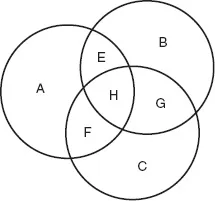
Therefore, the first steps in studying society are to understand its basic meaning, determine its inherent structure, and grasp the relationships between its various components. The examples above are just different views about society in sociological theories. Each theorist defined society from a different perspective. By integrating their views, we can summarize that the three basic elements of society are the physical system, the network system, and the concept system. The physical system refers to the composition of the material conditions of society, such as the living space, home, property, subsistence, and other material contents. The network system refers to the relationship networks and communication activities among members of society. The concept system refers to the regulations, norms, and values, etc. These three interconnected systems form the “trinity of social elements system.” Their relationships are illustrated in Figure 1.1.
“Humanitarianism” and “collectivism”
The French philosopher and sociologist August Comte (1798–1857) is believed to be the first person to regard society as an objective reality when performing research. Comte is regarded as the founder of sociology, since he uses the term “sociology” for the first time in his book, The Course in Positive Philosophy (Comte, 1974).
Other schools of thought in sociology came after Comte, such as positivistic sociology, functionalism, cultural sociology, conflict theory, interactionism, symbolic interactionism, etc. In all of the above schools, when the macrostructure of sociology is discussed, the concept system or social norm is never ignored. As Comte wrote, sociology is the only science which studies how to improve the rationality and psychology of human beings under the influence of social life. Furthermore, based on this idea, he formulated his complete methodology system, in which an individual in society is abstract, while the society is realistic. Therefore, he asserted that the goal of sociology is to advocate “order” and “progress.” To establish a social order, Comte transfers the general principles of social statics and social dynamics into his own empirical work on social and political systems. As a result, positivistic philosophy became a complete religion named “Humanitarianism.” This new religion believes that people must worship society as the Supreme Being because everybody receives benefits from society in all aspects (Comte, 1974).
Figure 1.1The trinity of social elements system.
Notes
A=physical system (i.e. social context).
B=network system (i.e. social relationship).
C=concept system (i.e. social norm).
The intersecting parts (E, F, G, H) are what we aim to discuss, i.e. “society.”
French sociologist Emile Durkheim (1858–1917) deeply investigated the system of social concepts. Durkheim believed that society is a special spiritual reality based on a general sense of “collective representations,” including legal, moral, and religious representations. Moreover, the objects of sociological research are regarded as social facts, which are not only independent from individuals but also constrain individual behaviors. His analysis of the components of social facts includes “facts of physical representation” and “facts of collective representation.” The former constitutes a society’s aspects of “substance” and “quantity,” such as population, streets, transportation, and housing. The latter is the essence of social spirit and includes the existing laws when a person was born, customs, ethics, religious beliefs and rituals, as well as language. These entities exist and play their roles independently (as cited in Koh, 1982).
Durkheim stated that “collective representations” have the following three characteristics:
Objectivity: They are not dependent on any individual’s will and exist in society objectively, but they are not visually represented by any physical objects.
Self-regulation: They form a relatively independent system, with their own rules of formation. Instead of being unchangeable, this system keeps developing through changes.
Enforcement: They force people to behave in some predetermined ways which are designed by the collective representation.
Durkheim opposed the use of biological or psychological perspectives to explain social phenomena. He believed that social phenomena, such as labor division, suicide, and religion should be put into the context of social life for comprehensive studies and analyses. In other words, he suggested that researchers look beyond the appearance of these social phenomena and investigate the “collective representations” that influence and direct people’s behaviors. This sociological methodology was used in his renowned work, On Suicide (as cited in Koh, 1982).
From what has been stated above, we can see that the in-depth study of the social concept system has become of great interest to many sociologists, forming their distinctive theoretical and methodological systems.
Ideology of materialism
From the methodological view of historical materialism, Karl Marx discusses his views on society:
What is society, despite its form? Society is a product of people’s interactions. Under a certain condition of development of productive forces, there will be some form of exchange and consumption. When the production, exchange and consumption develop to a certain stage, there will be a corresponding social system, as well as family and social class structures. Finally, there will be a corresponding civil society.
(Selected works of Marx and Engels, 1972, pp. 320–321)
Obviously, from the perspective of historical materialism, Marx believed that people’s basic roles in social life are as producers. In order to survive, human beings must first meet their basic needs such as food or shelter. In the production process, two classes gradually develop based on ownership of the production materials: the bourgeoisie and the proletariat. Similarly, due to the contradictory movement between productivity and production relations, the entire society becomes interdependent. This maintains the social order and simultaneously promotes social development.
Therefore, the economic base of the social system is primary, while the superstructure is secondary. However, the superstructure can influence the economic base in turn. The nation is the superstructure, with the state machinery including regular armed forces, police, bureaucracy, clergy, and judges. It is also asserted that the fundamental interests of the state are to serve the ruling class. However, in addition to the nation, superstructure also includes ethics, ideologies, social systems, values, and other conceptual entities. These factors greatly affect the economic base, since they are capable of both promoting and impeding the development of productivity.
Thus, although Marx’s historical materialism does not exclude the role of social values in the entire system of social life, it highlights the existence of these concepts based on the presence of substances that are produced. In addition, they are not subjective creations without any basis. Marx’s contributions compensate for the important deficiencies inherent in the ideas of previous sociologists about the system concept: “People’s mindset, ideas and concepts (i.e. people’s awareness) are changing along with changes of living conditions, social relations, and their social existence. This concept should be easily understood without deep reflection” (Selected works of Marx and Engels, 1972, p. 270).
Marx’s historical materialism has always stressed substance as a primary factor in the social system, but it does not deny the existence of ideological reactions to the substance: “Although the original cause of social change is the conditions of material life, this does not prevent the ideological field from influencing the material conditions in turn as a secondary factor” (Selected works of Marx and Engels, 1972, p. 474).
The developments of politics, law, philosophy, religion, literature, art, etc. are on the basis of economic development. However, they also affect each other and impact the economy. The economic situation is not the only positive cause, and the rest are not all leading to negative results. All the above factors are interacting with each other to ultimately realize economic necessity.
(Selected works of Marx and Engels, 1972, p. 506)
Characteristics of social transformation
A transformational society refers to a type of social stage at which the displacement of the social macro-structure occurs. It is the radical reform of social structure, which involves the adjustment of all social elements. In other words, during this phase, the system of materials, networks, and concepts in society will change along with the social structure reform.
China’s social transformation period in the 1990s was just one stage during the whole process of social development. Specifically, China was undergoing a transition from a planned economy system to a market economy system. This transformation was a comprehensive, multi-channel macroscopic adjustment, which involved the social economic foundation, superstructure, production relations, ownership structures, production, circulation, distribution and consumption, etc. Such a macroscopic syst...