
- 100 pages
- English
- ePUB (mobile friendly)
- Available on iOS & Android
eBook - ePub
About this book
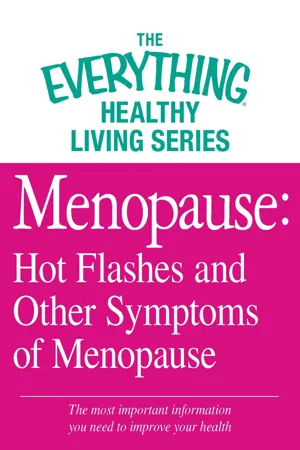
Looking for support during the transition of menopause? The Everything Healthy Living Series is here to help. These concise, thoughtful guides offer the expert advice and the latest medical information you need to manage your pain and lead a healthy life.Inside you'll find expert advice and helpful tips on ways to turn down the heat, hormonal and nonhormonal medications, and mind-body exercises to reduce discomfort. As you experience the hormone swings and changes that accompany menopause, the more you know about what's coming, the better you will be able to take charge of your transition.
Frequently asked questions
Yes, you can cancel anytime from the Subscription tab in your account settings on the Perlego website. Your subscription will stay active until the end of your current billing period. Learn how to cancel your subscription.
No, books cannot be downloaded as external files, such as PDFs, for use outside of Perlego. However, you can download books within the Perlego app for offline reading on mobile or tablet. Learn more here.
Perlego offers two plans: Essential and Complete
- Essential is ideal for learners and professionals who enjoy exploring a wide range of subjects. Access the Essential Library with 800,000+ trusted titles and best-sellers across business, personal growth, and the humanities. Includes unlimited reading time and Standard Read Aloud voice.
- Complete: Perfect for advanced learners and researchers needing full, unrestricted access. Unlock 1.4M+ books across hundreds of subjects, including academic and specialized titles. The Complete Plan also includes advanced features like Premium Read Aloud and Research Assistant.
We are an online textbook subscription service, where you can get access to an entire online library for less than the price of a single book per month. With over 1 million books across 1000+ topics, weâve got you covered! Learn more here.
Look out for the read-aloud symbol on your next book to see if you can listen to it. The read-aloud tool reads text aloud for you, highlighting the text as it is being read. You can pause it, speed it up and slow it down. Learn more here.
Yes! You can use the Perlego app on both iOS or Android devices to read anytime, anywhere â even offline. Perfect for commutes or when youâre on the go.
Please note we cannot support devices running on iOS 13 and Android 7 or earlier. Learn more about using the app.
Yes, you can access Menopause: Hot Flashes and Other Symptoms of Menopause by in PDF and/or ePUB format, as well as other popular books in Medicina & Salud general. We have over one million books available in our catalogue for you to explore.
Information
Topic
MedicinaSubtopic
Salud generalOvercoming Mood Swings, Anxiety, and Depression
Many women experience depression, anxiety, and/or mood swings during perimenopause. Mood disorders can be triggered by many things, and if you suffer from them â at any time during your life â itâs important to understand where these problems come from as well as the best ways to treat them. Through medical treatment, stress management, and smart lifestyle choices, you can learn ways to regain control of your emotional stability.
Menopause and Emotions
Fluctuating hormones can cause emotional shifting. As anyone who has experienced premenstrual swings can understand, the effect of variable hormones on a womanâs emotional stability can be unpredictable and unnerving. Itâs not just that your mood and behavior shift, but itâs how they shift and how fast they shift that can leave you wondering what hit you.
âIâm Feeling Hormonalâ
Women are used to the jokes and comments that people make about âthat time of the month.â Medical professionals are still studying and exploring the many ways hormones affect neurological processes, and in turn how women feel emotionally. It is usually the steroid hormones like estrogen, progesterone, and testosterone that get the attention around reproductive changes like menarche, puberty, and menopause. But there are many other hormones that change during these times and interact with brain functions, and these changes can cause strong emotional and behavior reactions.
Donât Kill the Messengers
Hormones are essentially chemical messengers designed to enter the bloodstream and serve some specific purpose. Since they have many different purposes such as reproduction, growth, or regulating the metabolism, it is not surprising that one of the areas they act on is the brain and its functions. So when one âfamilyâ of hormones changes, as when estrogen begins to decrease, it has a larger effect as other chemical messengers shift to keep things in balance. In the process of all this shifting around, some messages can get a little scrambled. If those scrambled messages alter your neurological processes, you may experience unfamiliar or unwanted emotional states.
Most of these changes are temporary if they are adjustments to your perimenopausal metabolism. But temporary or not, they can be upsetting and stressful if they show up as episodes of sadness, or rage, or even irritability. Some women experience many emotional variations during this phase, and some glide through without noticing much difference at all.
Mood Swings
Researchers believe that the fluctuating levels of estrogen and progesterone many women experience during this time contribute to mood swings and other emotional symptoms, though there are no clear conclusions about how this happens. Doctors know, however, that estrogen is directly related to our bodyâs production of serotonin â an important chemical that works in the brain to regulate moods. As estrogen levels shift, so does the brainâs supply of serotonin â and therefore, moods can shift, as well.
But body chemistry isnât the only thing that can trigger midlife mood decay. Women who are dealing with changing roles at home or at work or changing levels of energy, or who feel less fit or less healthy, may suffer from emotional upheavals and imbalances. Coming to grips with your emotional upsets by recognizing symptoms and tracking them to their source can be a first step toward solving the problem.
Which Comes First?
Just as mood swings in perimenopause can have both physical and emotional consequences, the causes of those mood swings can be both physical and emotional. First, consider that many of the symptoms of perimenopause can cause emotional distress. Hot flashes can lead to sleeplessness, fatigue, irritability, and anxiety. Those factors alone can make you feel angry, isolated, and under siege â and may contribute to occasional moodiness and transient depression. It is sometimes hard to sort out whether your moods swing because of other symptoms, or those symptoms come from your unpredictable reactions.
Tracking Your Mood Swings
Mood shifts are relatively mild changes in mood that can quickly take a woman from feelings of joy to anger, fatigue, or despair. The triggers for these responses can be unpredictable â and sometimes seemingly inconsequential. Perimenopausal women who report mood swings cite a wide range of stimuli for these events. If youâre swinging, you can be moved to tears by a song on the radio or the color of the light as evening falls over your backyard. You can become incredibly angry when a coworker asks for clarification of a point you made in a memo, when children or a partner fail to take care of their household responsibilities, or when you forget to stop and pick up the dry cleaning on your way home. Mood swings can sometimes be no more than a typical response, but more intensely felt.
You may be reacting to some source of irritation, unhappiness, discomfort, fear, love, joy, or longing. As estrogen levels rise and fall, serotonin levels can rise and fall, too, taking your mood right along with them. Mood swings can also be a response to a medical condition or chemical imbalance in your body â one, that might be treatable through counseling, medication, or other therapy. Your mood swings can teach you a lot about who you are, what issues and changes youâre dealing with, and where you want to go during this transition in your life.
You can expect some mood swings in your life, but many women in perimenopause develop mood swings that interfere with their daily living. Frequent or severe mood swings can create problems with family, coworkers, and friends. They can cause missed workdays, discourage participation in social functions or enjoyable activities, or create feelings of alienation, exhaustion, fear, and a lack of control. If mood swings are severe or frequent enough to get in the way of your full â and fulfilling â life, take action to bring them under control.
Looking Stress in the Eye
Stress is a fact of life for everyone, and women approaching the age of menopause certainly arenât immune to its effects. In fact, women in perimenopause may be more susceptible to the health-damaging side effects of stress than they had been previously.
Women in midlife can be faced with career and financial issues, body-image changes, emerging health problems, divorce, widowhood, struggles with teenage children, and increasing responsibilities for aging parents. The added stress of adjusting to hormonal fluctuations, hot flashes, weight gain, or other potential side effects of perimenopause can make the burden of stress even harder to bear.
Some of the most common symptoms of stress include headaches, sleeplessness, indigestion, forgetfulness, an inability to concentrate, and ongoing feelings of anger and unhappiness. Stress can leave you feeling drained of all good feeling, and it can lead to overeating, drinking too much alcohol, or intensifying other unhealthy stress habits such as cigarette smoking. If you experience any of these symptoms of stress, you may have a real, health-threatening problem and can take action to determine its sources and potential solutions. Unless you find ways to eliminate or manage stress, you wonât be successful in combating the mood-related problems you may experience during perimenopause.
Managing Stress
You canât avoid all sources of stress, but you may be able to find workarounds for many of them. If a hectic work and family schedule is depleting your energy and stressing you out, what can you trim from your list of daily activities? Can you ask a partner for help in managing household tasks or running errands? Can you afford to hire a service to do laundry, pick up and deliver dry cleaning, or take over major cleaning jobs around the house? If you have children, can you ask them to step up and take more responsibility for their own needs, or to help out more around the house? If aging parents are presenting increasing demands on your time, can you get any type of community support assistance, such as meal deliveries or the services of a visiting nurse?
Getting a Handle on Work Stressors
Evaluate your job and work habits to try to spot stress fixes there, as well. Can you ask your boss for flexible work times, so you can schedule your commute when traffic is less hectic, or even arrange to work at home one day a week? Can you find someone to carpool with? If you commute by train, can you do some of your work on a laptop computer and save time at the office? If you have problems with a coworker, can you schedule a meeting to try to resolve the issues, or at least to lessen the tension? Can a personal organizer, meeting scheduler program, or other software help you save time and cut down on unnecessary panic and last-minute emergencies?
Once youâve pinpointed and reduced the stressors that you can, find ways to cope with the stress you canât avoid. Exercise regularly, spend time engaged in leisure activities you enjoy, eat a healthy diet, and go easy on your mind and body â donât expect to perform every task perfectly and on time.
The first key to addressing stress is to admit that stress is a real health risk â one you simply cannot overlook. Stress will wear you out, age your body and mind, drain your spirit, and cause lasting health problems. Though you may feel that youâre stuck with the stressful situations you currently endure, you do have options available to you. Talk to your doctor, a therapist, a counselor, a friend, a minister, or a trusted family member, and ask for help in finding ways to manage stress.
Anxiety
Anxiety is a natural, healthy response to certain realities of life â beginning a new job, meeting upcoming deadlines, passing examinations, and so on. But anxiety that interferes with your ability to function throughout your day and th...
Table of contents
- Cover
- Title Page
- Contents
- Introduction
- Coping with Hot Flashes
- The New YouâManaging Physical Changes
- Managing Cognitive and Neurological Changes
- Overcoming Mood Swings, Anxiety, and Depression
- Also Available
- Copyright Page