Winner of the 2020 PROSE Award for Multivolume Reference/Humanities
The Enlightenment led to revised ideas about work together with new social attitudes toward work and workers. Coupled with dynamism in the economy, and the rise of the middling orders, work was more frequently perceived positively, as a commodity and as a source of social respectability. This volume explores the cultural implications of the transition from older systems based on privilege, control and embedded practices to a more open society increasingly based on merit and ability. It examines how guild controls broke down and political and commercial systems loosened. It also considers the theoretical justifications that brought new binding ideas, such as the strengthening of ideology on home, domesticity for the female, and work and politics for the male. North America embodied the extremes of these transitions with free workers able to make their way in a society based on ability and initiative while solidifying the ravages of the slavery system.
A Cultural History of Work in the Age of Enlightenment presents an overview of the period with essays on economies, representations of work, workplaces, work cultures, technology, mobility, society, politics and leisure.
eBook - ePub
A Cultural History of Work in the Age of Enlightenment
- 248 pages
- English
- ePUB (mobile friendly)
- Available on iOS & Android
eBook - ePub
A Cultural History of Work in the Age of Enlightenment
About this book
Information
CHAPTER ONE

The Economy of Work
CARMEN SARASÚA
The eighteenth century was a time of economic prosperity and growth in the western world. European states profited from their colonial empires, developing an intense commercial traffic of slaves, raw materials, and finished goods. Prosperity, however, did not arrive for all, and in fact the majority of the population continued to live at subsistence level, scarcely productive and ignorant of innovations. According to available estimates of gross domestic product, growth during the century was slow and “mainly concentrated in the North Sea area,” with England and the Netherlands at the forefront.1 Even in those countries, innovations and wealth coexisted with increasing inequality and desperate poverty for most.
A main pillar of economic growth was the increase in agricultural output, documented throughout most of the western world. In parts of Europe this occurred in an intensive way, that is, with productivity increases. Output per unit of land and labor increased in what scholars have called the “agricultural revolution”: “The years from c. 1750 to c. 1850 witnessed unprecedented changes in output and productivity in English agriculture, which warrant the appellation ‘revolution’.”2 The Low Countries put the agricultural innovations in practice first during the seventeenth century. A combination of diffusion of new crops of American origin, such as potatoes and corn; of technical innovations in plows, seed drills, and other tools; of institutional changes such as the enclosure of common lands; of new cultivation techniques, such as continuous crop rotation, allowed for an intensification in agricultural production and in livestock farming, which in turn allowed for heavy manuring and more productive lands. Selective breeding programs permitted an increase in the production of meat, wool, and milk, which together with an expansion in demand from the cities made livestock farming increasingly productive.
In other parts of Europe, however, the increase in agricultural output was more limited and occurred in an extensive way. In the Mediterranean countries, environmental conditions prevented any large increase in output, and agriculture continued to center on cereals, vines, and olive trees, with modest increases in crop diversification, including rice, potatoes, flax, hemp, and silk. The Harvest, by Goya, painted in 1787, vividly shows the most important moment of the agricultural year for most peasants in eighteenth-century Europe (Figure. 1.1). Peasants’ lives centered around the harvest, which marked the peak season of labor demand, was the main source of families’ income, and determined marriages and births.
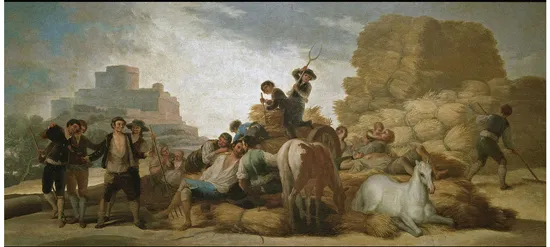
FIGURE 1.1 Francisco de Goya, La era o Verano (The Threshing Ground or Summer), 1786. Madrid, Museo del Prado. Photo: Artepics / Alamy Stock Photo.
In connection with the increasing food supply, the eighteenth century was also a period of demographic transformation. The population of Europe grew from around 110 million to about 190 million. This growth has been explained as a result of the combination of increasing fertility, because women had children earlier, and decreasing mortality. In different ways both fertility and mortality reflected the improvement in living conditions because “marriage was sensitive to economic circumstances.”3 Mortality, on the other hand, was reduced thanks to famines becoming less frequent and plagues less endemic. England was at the forefront of this growth. Following the union with Scotland in 1707, the British population stood at about 6.5 million; a century later it had reached 15.75 million.
Economic prosperity and population growth also occurred in the American colonies, particularly in the coastal areas where a new middle class of merchants, tax collectors, ship builders, and bureaucrats developed. Mexico City grew from 70,000 people in 1753 to 113,000 in 1790, most of them Indians and mestizos. The city of New York expanded from 2,500 in 1740, of which 20 percent were black slaves, to 96,000 in 1810, becoming the leading US city after independence, ahead of Boston and Philadelphia.
The relationship between population growth and food was a concern of eighteenth-century society and the subject of Thomas Robert Malthus’s An Essay on the Principle of Population (1798), one of the first books that can be defined as belonging to the new subject of economics. Malthus argued that an increase in a nation’s food production in fact improved people’s well-being, but the improvement was temporary since it also led to population growth, which in turn restored the original per capita production level. In other words, mankind had a propensity to utilize abundance for population growth rather than for maintaining a high standard of living. The Malthusian trap means that improvements in a society’s standard of living are unsustainable because of the resultant population growth. Writing before the “agricultural revolution,” Malthus further predicted diminishing returns to agriculture because of intensive production. His work was an attempt to justify the British Corn Laws and landlords’ case for an agricultural tariff. He also opposed policies to help the poor, arguing that any mechanism to redistribute rent would have negative consequences for the country’s economy as a whole and for the poorer classes in particular. It shows, in any case, that eighteenth-century Europeans were aware of the changes in population and agricultural production taking place.4
CHANGES IN THE ORGANIZATION OF WORK
The impact of larger agricultural output on the organization of work was intense; family farming was increasingly replaced by a system of capitalist husbandry, which would eventually mean a reduction in the number of small cottagers. Most of these farm workers, now transformed into landless laborers, would have to hire themselves out as day workers, or migrate to the cities, to eventually form part of the industrial labor force ready to work for wages as the only means to sustain themselves. This was not, however, a definitive development and, in the nineteenth century, in certain regions, a process of reruralization took place, when large estates were disentailed and governments sold small plots to new farmers.
Rural manufacturing was the most characteristic form of productive organization in the century. Coined as “proto industrialization” by Franklin Mendels in his study on the Flemish linen industry, and later developed by Peter Kriedte, Hans Medick, and Jürgen Schlumbohm to explain the transition to capitalism, it was defined as the huge rise in manufactures’ output for export markets that took place in the countryside, making it possible for family cottages to complement their income from agricultural labor.5 Decades of research have concluded that most proto industrial regions did not become industrialized; nor has a clear impact on the demographic behavior of the population—that is, earlier marriages, increased fertility, and population growth—as a result of rural industry been found in all cases. Yet, by focusing on the eighteenth century, proto industrial literature has provided us with new and invaluable insights for understanding how “work before the factory” was organized.
Urban growth was another characteristic feature of the period, connected to population growth and the agricultural revolution that allowed more nonagricultural workers to be fed. Capital cities reflected the expanding powers and functions of the state and its bureaucracies, and became the scenes of urban reforms and costly building programs that included not only palaces, parks, and theaters, but also hospitals, bridges, and factories. Urban growth both reflected and fuelled the new employment opportunities that attracted peasants, particularly young girls and boys. The cities that grew fastest were the port cities, with London, already the largest in the western world at the beginning of the century, reaching a population of one million by 1800, followed by Paris with nearly 600,000 inhabitants. Naples, the largest Italian city, had a population of about 320,000. Bristol and Liverpool, in England, and Amsterdam, in the Low Countries, also grew rapidly owing to colonial trade. In 1703, Peter the Great founded Saint Petersburg, moving the Russian capital there to gain a seaport to expand Russian maritime trade. Bordeaux is a good example of a port city that flourished thanks to overseas trade. By the second half of the eighteenth century, it controlled 40 percent of France’s colonial traffic, exporting textiles, re exporting slaves, and importing huge quantities of sugar produced in the West Indies. Figure 1.2 belongs to the series Les ports de France, a collection of eighteen paintings commissioned by Louis XV in 1753 to show off France’s maritime and commercial might.
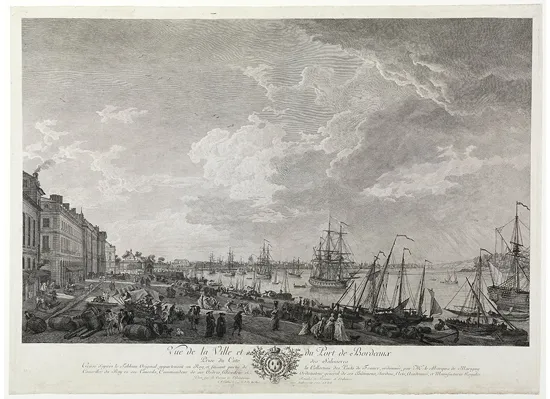
FIGURE 1.2 Joseph Vernet, Vue d’une partie du Port et de la ville de Bordeaux, prise du côté des Salinières, 1759. Paris, Musée National de la Marine.
Whether living conditions were worse or better in the cities than in the countryside is debatable. Certainly, in the eighteenth century an urban penalty existed in Europe, given the unsanitary conditions and lack of proper housing, together with the large numbers of people flocking to the cities. Cities became a trap during times of plague and epidemics, as Daniel Defoe vividly described in A Journal of the Plague Year, having survived the devastating pestilence that afflicted London in 1665.6 City dwellers were particularly vulnerable during times of famine and war, owing to their dependence on food arriving from the countryside. Yet, as we shall see, the “urban factor” was key to economic and social modernization. It is associated with the rise in literacy, the spread of new ideas, the rise of new institutions, and eventually with the birth of democracy; the development of the market economy, both for commodities and for capital and labor; and with the structural change that paved the way for industrialization.
An INDUSTRIOUS REVOLUTION?
In recent years, research has focused on the role that the mobilization of labor had on the century's dynamism. The old paradigms that explained the industrialization and nineteenth-century economic growth as a supply-side phenomenon have been replaced by accounts that focus on demand-side factors. Production, factories, capital, technological innovations, steam, coal, and iron have been replaced by consumption, households, income, tastes, shops, silk, coffee, and tea. Although this interpretation already appeared in Joan Thirsk’s The Development of a Consumer Society in Early Modern England, and is generally inspired by the Keynesian aggregate demand model, Jan de Vries’ model of industrious revolution connected this “consumer revolution” to changes in the supply of labor.7 His theory has had the effect of granting new relevance to the early modern period, as the industrious revolution would have preceded the Industrial Revolution. “In England, but in fact through much North-western Europe and Colonial America, a broad range of households made decisions that increased both the supply of marketed commodities and labor and the demand for goods offered in the marketplace. This combination of changes in household behavior constituted an ‘industrious revolution’.”8 According to de Vries, in the eighteenth-century western world people were working longer, in terms of both more hours per day and more days per year, as well as more years over their life course; this was surely a fundamental factor in accounting for the transformation of western economies and societies.
Although there is now considerable evidence supporting the idea that an intensification of work occurred, at least three important questions remain: whether an increase in aggregate employment actually existed, particularly of women and children, the larger part of the unemployed, or whether those already working simply decided to work longer hours; whether households made decisions based on maximizing their utility function, that is, the consumers’ choice of goods and services that are most preferred; and whether the decision to increase households’ labor supply was driven by the desire to consume more. On the first question, we already have evidence of the central role women and children played in the mobilization of work. In a pioneering work that studied two English localities in the late eighteenth century, Osamu Saito found participation rates of 67.5 percent among married women, and up to 82.1 percent for widowers, all in stocking knitting, lacemaking, strawplaiting, and spinning. “The combined effect of poverty and opportunity provided by the cottage industry,” as well as the preference of merchants for a cheaper labor force that would allow them to maximize their profits, and their desire “to bypass traditional artisan customs and arrangements” account for the huge increase in the employment of women and children in the labor-intensive industries that developed in the eighteenth century, mostly in the countryside but also in urban centers.9
Research in recent years has reconstructed women and men’s participation rates, which was previously seen as impossible owing to a lack of sources for the prestatistical period.10 Sources are being found across Europe that, in fact, allow for a quantification of the women, men, and children in paid work. Women’s participation rates in paid employment were much higher than previously thought, because the sources on which earlier research relied suffered from a huge under-recording of women’s work. For example, in examining the labor market of Torino, Beatrice Zucca compared the number of women declaring they had a job in the 1802 Napoleonic census with the registers of the Ospedale di Carità, the main charitable institution of the city, where around 15,000 people asked for relief in the three decades between 1762 and 1792. Records of charitable institutions are excellent sources for the urban occupational structure, since, because they oversaw charity relief, men’s and women’s work was carefully recorded to evaluate their real needs. According to the Napoleonic census, women’s participation rate in Torino was 33.3 percent, while the hospital’s registers showed 63.2 percent of women had a paid occupation. Even more interestingly, while according to the census married women had a lower participation rate, compared to unmarried women and widows, the hospital’s registers recorded the opposite situation: 73.3 percent of married women had a paid job. Married women’s paid work, in fact, was particularly under-recorded in eighteenth-century sources. Although the notion of the male breadwinner was formally elaborated during the nineteenth century, “comparison between a conventional source (the Napoleonic census) and an alternative source (the registers of the Ospedale di Carità) reveals that the idea of a household economy based on the sole or main breadwinner—male or female—was already well established in the eighteenth century.”11
My own work on inland Spain using the householders’ declarations for the Ensenada cadaster, a large-scale census and statistical investigation conducted in the Cast...
Table of contents
- Cover
- Halftitle Page
- Title Page
- Contents
- List of Figures
- General Editors’ Preface
- Contributors
- Introduction
- 1. The Economy of Work
- 2. Picturing Work
- 3. Work and Workplaces
- 4. Workplace Cultures
- 5. Work, Skill, and Technology
- 6. Work and Mobility
- 7. Work and Society
- 8. The Political Culture of Work
- 9. Work and Leisure
- Notes
- Further Readings
- Index
- Imprint
Trusted by 375,005 students
Access to over 1.5 million titles for a fair monthly price.
Study more efficiently using our study tools.
Frequently asked questions
Yes, you can cancel anytime from the Subscription tab in your account settings on the Perlego website. Your subscription will stay active until the end of your current billing period. Learn how to cancel your subscription
No, books cannot be downloaded as external files, such as PDFs, for use outside of Perlego. However, you can download books within the Perlego app for offline reading on mobile or tablet. Learn how to download books offline
Perlego offers two plans: Essential and Complete
- Essential is ideal for learners and professionals who enjoy exploring a wide range of subjects. Access the Essential Library with 800,000+ trusted titles and best-sellers across business, personal growth, and the humanities. Includes unlimited reading time and Standard Read Aloud voice.
- Complete: Perfect for advanced learners and researchers needing full, unrestricted access. Unlock 1.5M+ books across hundreds of subjects, including academic and specialized titles. The Complete Plan also includes advanced features like Premium Read Aloud and Research Assistant.
We are an online textbook subscription service, where you can get access to an entire online library for less than the price of a single book per month. With over 1.5 million books across 990+ topics, we’ve got you covered! Learn about our mission
Look out for the read-aloud symbol on your next book to see if you can listen to it. The read-aloud tool reads text aloud for you, highlighting the text as it is being read. You can pause it, speed it up and slow it down. Learn more about Read Aloud
Yes! You can use the Perlego app on both iOS and Android devices to read anytime, anywhere — even offline. Perfect for commutes or when you’re on the go.
Please note we cannot support devices running on iOS 13 and Android 7 or earlier. Learn more about using the app
Please note we cannot support devices running on iOS 13 and Android 7 or earlier. Learn more about using the app
Yes, you can access A Cultural History of Work in the Age of Enlightenment by Anne Montenach, Deborah Simonton, Anne Montenach,Deborah Simonton in PDF and/or ePUB format, as well as other popular books in History & Early Modern History. We have over 1.5 million books available in our catalogue for you to explore.