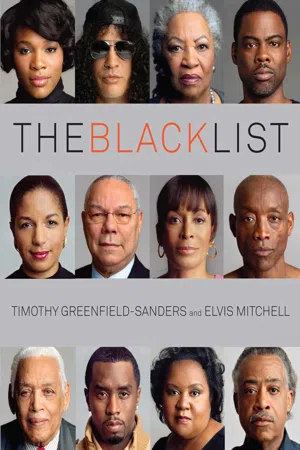
THE BLACK LIST? Isnât the Black List people on a list that donât work anymore? Well, the blacklist essentially is that. When they made this list of people that didnât work in the fifties, they essentially treated them as if they were black. I mean, thatâs pretty much what happened. Weâre gonna treat you like every black person not named Sidney Poitier. Thatâs what happened. You get treated like black people.
Los Angeles, September 12, 2007
Thereâs progress being made. You know, they have two black women on The View now. Thatâs amazing when you really think about it. Because normally, if theyâre casting a movie, and thereâs an ensemble, and letâs just say they cast, you know, Martin Lawrence or Mos Def or somethingâI pretty much know theyâre not gonna hire another black guy. You pretty much know thatâs it in the ensemble. Itâs kind of Rat Pack rules: Sammyâs in, itâs closed. The way I look at the two black women on The View is, they actually hired who they thought were the best people for the job and didnât go, âHey, we already got one black person,â and assume that this one black person would represent, you know, if you get one, you got them all.
Oh, youâre always black; itâs just, what shade of black are you? I donât mean that in an aesthetic way. And thereâs always gonna kind of be an over-reaction one way or the other regarding your presence. I always say thereâs nothing quicker than white praise or white scorn; they come in rapid, and theyâre boffo reactions. Barack Obama, whoâs a great candidate who I actually endorse, says four words at a convention. âHeâs the greatest man of all time!â Not really deserved, right? Michael Vick, same thing: The dog thing is bad, but heâs the devil. I actually saw a guy on TV compare Michael Vick to Mike Tyson goinâ to jail. Mike Tyson raped a woman, you know? Hey, I have a dog too. I have daughters too. Guess what? You wanna rape my dog, go right ahead. Just leave my daughters alone, âcause Iâll kill you. And guess what? Iâve known my dog longer than Iâve known my daughters. You can still rape my dog.
Iâve been very fortunate to have some very nice things said about me. But I donât think thatâs a reflection of the people in the seats. I think I put people in the seats same as Pryor, or Murphy, or whatever, which had nothinâ to do with the critics, for the most part. Iâm sure I probably made more money doing my first studio movie than Eddie Murphy. Am I better than Eddie Murphy? And Dave Chappelle got fifty million to do his sketch show. I had a sketch show a few years before that. Very similar. But, you know, whoeverâs next is always gonna have an easier go at it. Iâve been able to reap the rewards of not only my work, but Richard Pryorâs work, Bill Cosbyâs work, Eddie Murphyâs work.
The black audience is always gonna be skeptical of anything that white people love: âThis canât be that good. White people love it!â In 1996, my first HBO special, thereâs no white people in the audience. I would tour year-round and see no white people. Then, HBO, blah, blah, blah. Now itâs fifty percent, itâs forty percent white. Hereâs a weird story: I was outside the Comedy Store a couple years ago. And this young black girlâshe was probably, you know, twenty-threeâcomes up to me and goes, âSome friends of mine had to drag me to one of your shows. And I thought it was gonna be corny. And it was the best show I ever saw.â And the thing that jumped out at me was, she automatically thought my show wasnât gonna be good. She thought it was gonna be corny.
All the first twenty black baseball players were superstars. The first one hundred. Those years were skewed. When you let Jackie Robinson in baseball, that doesnât mean itâs equal. Baseball, statistically, isnât equal almost until the seventies. And why do I say the seventies? Because thatâs when you started to see bad black baseball players. Equality is not in being great. Great black people have always been compensated. Jack Johnson was the heavyweight champion of the world, Louis Armstrongâthey were compensated for being great. The true equality is the equality to suck like the white man, you know? Thatâs the true equality. I watch the Oscars. OK, these are the people that made the good movies. What about the people that made the bad movies? Thatâs most of the industry. I wanna be like that. Not that I wanna be bad. But I want the license to be bad, and come back and learn. Thatâs really Martin Luther Kingâs dream coming true: guys suckinâ. Thereâs, like, three, four black people in my neighborhood in Alpine. Itâs Gary Sheffield, Patrick Ewing, Mary J. Blige, and me. Hall of Famer, Hall of Famer, Greatest R & B Singer of Our Time, Decent Comedian. Whatâs the white man next to me? This dentist. OK? Thatâs America. Thatâs what America is. He didnât invent anything. Heâs just a dentist. Didnât invent veneers, or bonding, or anything. Just a dentist.
My dad used to say this. You canât beat white people at anything. Never. But you can knock them out. So, like, if you have six, and the white guy has five, he wins. Life is like boxing. And you canât let it go. If youâre black, you canât let it go to the judgesâ decision, âcause youâre gonna lose. No matter how bad you beat this man up. Larry Holmes versus Gerry Cooney is the perfect example of life. Larry Holmes beats the shit out of this guy for thirteen rounds. He knocks him out in the thirteenth round. They had to stop the fight. The man is bloody. Heâs been beaten the whole fight. They go to the judgesâ scorecards, Larry Holmes is losing the fight. If he didnât knock him out, he wouldâve lost the title. And that is essentially the black experience in a nutshell.
If my career had stopped in â96, itâs still such a success story from where I came from. I was so happy to be out of Bed-Stuy. I was so happy to not be a busboy anymore. I was so happy to not be makinâ minimum wage. I was just really happy not being really poor anymore. When I worked at Red Lobster, when I worked at Odd Lots or Alexanderâs or the Daily News, I wasnât working my way through stand-up. That was my life. And I was working with guys that were grown with families, and we were making seven bucks an hour, or something like that.
Bill Cosby paved the way for anybody doinâ somethinâ like Everybody Hates Chris. If thereâs no Fat Albert, thereâs no Everybody Hates Chris. Itâs weird. My daughter Lola actually goes to sleep with a little Bill doll. Thatâs so cool, man. Like, how much I love Cosby, and itâs likeâlike, actually, both my daughters sleep with little Bills. So someday somebodyâll be sleepinâ with little Chris. I have a picture in my office of young Cosby with a fedora and a cigar, as cool as they come. And if you actually read the Richard Pryor book Pryor Convictions, every time Cosby shows up in the book, heâs actually the coolest guy in the Richard Pryor book.
I think Eddie Murphy changed American acting too, a little bit. I just remember the way black guys used to act in movies before 48 Hrs. There was a sidekick way of acting that Murphy didnât incorporate. Itâs hard to explain. Thereâs the Negro Ensemble way of acting. Murph was like one of the first black actors who justâit was kind of Brando, in a sense. Itâs very Brando, because he just acted like a normal person. Itâs really subtle. Eddie Murphy revolutionized acting for black actors. And no one says that. In Beverly Hills Cop, it was just so effortless. Itâs almost not acting. Before that, itâs very earnest: âIâm representing my race!â And Murph kind of just made it, âHey, Iâm Axel. Hereâs my badge. Whatâs goinâ on?â
Thatâs the other great thing about Murphy. Murphy was probably the first comedian to embrace his age. All the other comedians before Murphy, no matter what age they started at, they tried to be older. So they put on a tux or a suit, and they would try to be forty-three years old. They kind of wanted to be in the Rat Pack or somethinâ. Where Murph was like the first guy to just be like, âHey, Iâm really twenty-two. And, you know, Iâm gonna be electrifying at twenty-two.â So Murph was almost like the first rap star, in a sense. Heâs got leather. Itâs very Elvis. Elvis would be the closest thing to that.
I remember I got an offerâand Iâm not gonna say from whoâbut a huge offer to do a show like after Chappelle walked away from his money. Somebody calls me up. âHey, you wanna get a show like that?â Oh, yeah. They offered me a ton of moneyâjust an insane amount; more money than I have. And so, OK; let me watch the Chappelle show. I put in season two and put it on. And I was like, âThereâs no way I will ever do a sketch show again.â It was so funny. The next guy to do a sketch show canât be me; itâs got to be some young kid that doesnât know any better. I think Katt Williams is that guy right now. You know how I always know a comedianâs hot? I go to a family function, and no oneâs asking about me, theyâre asking about the new guy. âYou know Katt Williams? Man, that Katt Williams is funny.â Itâs hot. Now, what you gonna do with the heat? How many pies you gonna cook? If you work hard, you could get ten pies before this ovenâs cold. You could get a lot of pies. But you have got to have them pies ready and shove them in the oven, and soon as theyâre ready, you have got to take them out and put some more pies in there.
See, the thing that black cultureâs missing, itâs not the comedian thing. Somebodyâll be that guy. The real question is âWhen are one of these black girls gonna get their Streisand on?â Streisand wrote and directed, man. Thatâs the real question. When is a black girl gonna get her Streisand on? Stop goinâ to the premieres and gettinâ your picture taken. Really get in there dirty. Youâre all smart. Youâre all smarter than me. I canât wait to see the black woman that really gets her Streisand on. Thatâs gonna be the next level. Thatâs the next Oprah. Thatâs the next Will Smith. The black girl thatâs like, âIâm really about to set it off. Iâm writinâ a movie, Iâm directinâ a movie, Iâm starrinâ in a movie.â I canât wait to meet her. I canât wait to work with her.
GOD BLESS YOU, Ntozake Shange. She is one of those warrior women writers who has cleared a lot of brush and paths, laid a lot of roads for a lot of us. Writers, nonwriters, women, men, colored girls, and others. You gotta understand, when I was coming up awhile ago, people like Nikki Giovanni were sisters that I looked to. âWhen I grow up and become a writer, I want to write with that kind of fire, that kind of brilliance, that kind of unflinching honesty, that kind of bravery. That kind of flair, that kind of music.â Same with Gwendolyn Brooks. It doesnât worry me so much that black folks donât go to the theater maybe as much as they used to, only because I just will continue to write and show the things that I write, and, hopefully, encourage the people in the marketing department to be more effective in getting people into the theater.
Los Angeles, October 23, 2007
A lot of the folks who came to see Topdog/Underdog were African-American kids, young folks. Most of them had never really been to a play before. So that was their first experience in the theater. They didnât know to show up at eight oâclock. They thought, Yo, itâs like a show, I can come at, like, nine, right? And they were coming in with their cell phones on. It was fantastic, because they were learning how to be in the theater. I will continue to create things that will hopefully be o...