Fox and McDonald's Introduction to Fluid Mechanics
- 608 pages
- English
- ePUB (mobile friendly)
- Available on iOS & Android
Fox and McDonald's Introduction to Fluid Mechanics
About this book
Through ten editions, Fox and McDonald's Introduction to Fluid Mechanics has helped students understand the physical concepts, basic principles, and analysis methods of fluid mechanics. This market-leading textbook provides a balanced, systematic approach to mastering critical concepts with the proven Fox-McDonald solution methodology. In-depth yet accessible chapters present governing equations, clearly state assumptions, and relate mathematical results to corresponding physical behavior. Emphasis is placed on the use of control volumes to support a practical, theoretically-inclusive problem-solving approach to the subject.
Each comprehensive chapter includes numerous, easy-to-follow examples that illustrate good solution technique and explain challenging points. A broad range of carefully selected topics describe how to apply the governing equations to various problems and explain physical concepts to enable students to model real-world fluid flow situations. Topics include flow measurement, dimensional analysis and similitude, flow in pipes, ducts, and open channels, fluid machinery, and more. To enhance student learning, the book incorporates numerous pedagogical features including chapter summaries and learning objectives, end-of-chapter problems, useful equations, and design and open-ended problems that encourage students to apply fluid mechanics principles to the design of devices and systems.
Frequently asked questions
- Essential is ideal for learners and professionals who enjoy exploring a wide range of subjects. Access the Essential Library with 800,000+ trusted titles and best-sellers across business, personal growth, and the humanities. Includes unlimited reading time and Standard Read Aloud voice.
- Complete: Perfect for advanced learners and researchers needing full, unrestricted access. Unlock 1.4M+ books across hundreds of subjects, including academic and specialized titles. The Complete Plan also includes advanced features like Premium Read Aloud and Research Assistant.
Please note we cannot support devices running on iOS 13 and Android 7 or earlier. Learn more about using the app.
Information
CHAPTER 1
Introduction
Chapter 1 Problems

Definition of a Fluid: Basic Equations
- 1.1 Describe the conditions for which the following substances can be considered liquids.
Tar Honey Wax Propane Carbon dioxide Sea water Sand Tothpaste - 1.2 Give a word statement of each of the five basic conservation laws stated in Section 1.2 as they apply to a system.
Methods of Analysis
- 1.3 The barrel of a bicycle tire pump becomes quite warm during use. Explain the mechanisms responsible for the temperature increase.
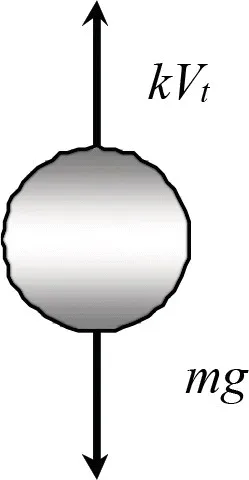
- 1.4 In a pollution control experiment, minute solid particles (typical mass slug) are dropped in air. The terminal speed of the particles is measured to be . The drag of these particles is given by , where is the instantaneous particle speed. Find the value of the constant . Find the time required to reach 99 percent of terminal speed.


Table of contents
- Cover
- Table of Contents
- Preface
- CHAPTER 1: Introduction
- READINGS
- CHAPTER 2: Fundamental Concepts
- READINGS
- CHAPTER 3: Fluid Statics
- READINGS
- CHAPTER 4: Basic Equations in Integral Form for a Control Volume
- READINGS
- CHAPTER 5: Introduction to Differential Analysis of Fluid Motion
- READINGS
- CHAPTER 6: Incompressible Inviscid Flow
- READINGS
- CHAPTER 7: Dimensional Analysis and Similitude
- READINGS
- CHAPTER 8: Internal Incompressible Viscous Flow
- READINGS
- CHAPTER 9: External Incompressible Viscous Flow
- READINGS
- CHAPTER 10: Fluid Machinery
- READINGS
- CHAPTER 11: Flow in Open Channels
- READINGS
- CHAPTER 12: Introduction to Compressible Flow
- READINGS
- APPENDIX A: Fluid Property Data
- APPENDIX B: Videos for Fluid Mechanics
- APPENDIX C: Selected Performance Curves for Pumps and Fans
- APPENDIX D: Flow Functions for Computation of Compressible Flow
- APPENDIX E: Analysis of Experimental Uncertainty
- APPENDIX F: Introduction to Computational Fluid Dynamics
- Index
- End User License Agreement