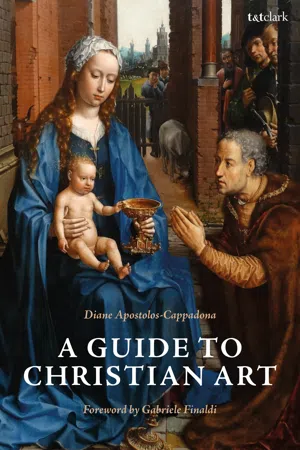
A one-volume introduction to and overview of Christian art, from its earliest history to the present day. Diane Apostolos-Cappadona begins by examining how art and Christianity have intersected throughout history, and charts this tumultuous relationship that has yielded some of the greatest outpourings of human creativity.
To introduce readers to the way a painting can be read Apostolos-Cappadona begins with an analysis of a painting of the Adoration of the Magi, helping readers to see how they can interpret for themselves the signs, symbols and figures that the book covers.
In the more-than 1000 entries that follow Apostolos-Cappadona gives readers an expert overview of all the frequently used symbols and motifs in Christian art as well as the various saints, historical figures, religious events, and biblical scenes most frequently depicted. Readers are introduced to the ways in which religious paintings are often "coded'" such as what a lily means in a picture of Mary, how a goldfinch can be "Christological", or how the presence of an Eagle means it is likely to be a picture of St John. The entries are organized by topic, so that students and beginners can easily find their way to discussion of the themes and motifs they see before them when looking at a painting.
- 304 pages
- English
- ePUB (mobile friendly)
- Available on iOS & Android
eBook - ePub
A Guide to Christian Art
About this book
Information
II
Themes
II.A. Personages
II.A.1. Classical Personages and Metaphors
One of the great gifts of Early Christianity was its ability to relate its message through a series of common metaphors, stories, and symbols familiar to the general populace. These adaptations included the coordination of Classical Greek and Roman myths, narratives, traditions, and imagery so that the past was not erased but expanded by this new religious perspective. One of the earliest of those transformations was that of the Hermes Kriophoros (Criophoros) into the Good Shepherd.
Originally associated with cultic practice, the ancient Greek Hermes Kriophoros was the “ram bearer” whose action of carrying this animal across his shoulders resulted in a solemn sacrifice. As the world of Late Antiquity and Early Christianity was dependent upon agriculture and herding, so references to the figure of a shepherd were not only recognizable but popular. The assimilation then of the figural image of the Hermes Kriophoros into the Early Christian image of the Good Shepherd was a natural progression.
Scriptural references to the Good Shepherd incorporated passages from both the Old and New Testaments as well as the apocryphal Shepherd of Hermas. The motif of the Good Shepherd was a popular image on the frescoes and sarcophagi of both Roman and Christian catacombs. Initially more of a symbolic reference, the image of the Good Shepherd became more of a portrait by the fifth century with the more recognizable facial characteristics associated with Jesus as the Christ as well as his attributes including the halo and regal garments.
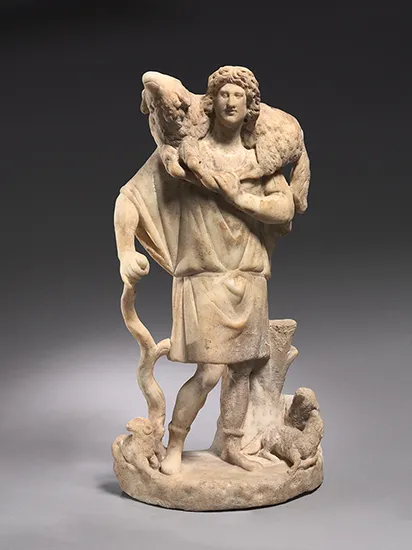
FIGURE 7 The Good Shepherd. 280–290. The Cleveland Museum of Art, Cleveland 1965.241.
Gods and Goddesses
The classical gods and goddesses were personifications of the mythological figures of classical cultures, especially of Greece and Rome. The presentations of these gods and goddesses in human forms in classical literature and art influenced the development of Christian art and legend. The positive attributes or characteristics of these gods and goddesses, particularly of the most powerful ones, were assimilated into the iconographies of Jesus Christ, Mary, and several Christian saints.
Androcles. A legendary foretype for Jerome. Androcles was a runaway Christian slave who sought refuge in a cave. An enraged lion entered the cave and lifted up a paw so that a vicious thorn could be removed. Subsequently captured and condemned to fight a lion in the Roman arena, Androcles found himself before the lion he had rescued. The lion recognized his benefactor, greeted him with affection, and spared his life.
Aphrodite. Greek goddess of love, beauty, and the generative powers of nature who was born of seafoam and carried to land on a seashell. With her earthly lover, Anchises, she conceived Aeneas, the Trojan ancestor of Rome, and was identified as “the Mother of Rome and the Romans.” As a fertility goddess, she was connected visually and literally with the oriental goddess Astarte (Ishtar). The goddess to whom Paris awarded the Golden Apple, Aphrodite was integral to the Trojan War and the downfall of Troy. Incense and flowers were sacrificed to her; the apple, rose, poppy, and myrtle were her botanical attributes. She was also seen with the ram, goat, hare, dove, sparrow, swan, and swallow. In classical Greco-Roman and Renaissance art, Aphrodite was depicted as a beautiful young woman who was either nude or lightly clad and was identified by any of her attributes. Pearls, the tears of the oyster (a sea creature), were sacred to her. As the “Mother of Rome,” a fertility goddess, the temptress who won the Golden Apple, and from her associations with the sea, love, and certain flower and animal symbols, Aphrodite prefigured Mary.
Apollo. Greek god of light, the arts, medicine, pastoral activity, and culture. Identified with Helios, the sun god, Apollo was the brother of Artemis. He had many loves, including the nymph Daphne, who resisted his advances and was turned into a laurel tree by her river-god father to escape Apollo’s clutches. The laurel became sacred to Apollo and the laurel wreath became the sign of the champion of the Pythian Games which were dedicated to Apollo. The unfaithfulness of another love, Coronis, caused him to turn the white feathers of the messenger raven black. In classical Greco-Roman and Renaissance art, Apollo was depicted as a handsome young man, usually nude or lightly draped, and accompanied by one of his many attributes the lyre, serpent, dolphin, bow and arrows, or shepherd’s crook. The laurel and palm trees, along with the grasshopper, mouse, raven, hawk, snake, swan, deer, and wolf, were sacred to Apollo. As both the patron of the arts and pastoral pursuits, he prefigured David and as a healer and the god of light Jesus Christ.
Ares. Greek god of war characterized by courage, endurance, and military cleverness. In classical Greco-Roman and Renaissance art, he was depicted as a muscular, handsome, bearded man who wore armor. His companions included his dog, a boar, or a vulture, and the goddess Aphrodite and their son Eros. He was the classical Greco-Roman foretype for Samson and Christian military saints such as George of Cappadocia and William of Aquitaine.
Artemis. Greek virgin goddess of the moon, the night, and the hunt. Artemis was the guardian and huntress of wild animals and the protectress of youth, particularly maidens. The sister of Apollo, she was associated with other virgin goddesses, including Diana of Ephesus and Astarte. She was attended by virgins who were severely punished if they strayed from their vows of chastity. In classical Greco-Roman and Renaissance art, she was depicted as a beautiful young woman dressed in a short chiton, wearing sandals, carrying a bow and quiver, and with the crescent moon in her hair. Her companions were does and dogs. She was a classical Greco-Roman foretype of Mary, especially through her connection to Diana of Ephesus, and most of her attributes were assimilated into Marian iconography.
Athena. Greek virgin goddess of wisdom, war, and weaving. The protectress of eternal virginity who ruled over the moral and intellectual life of the Greeks, Athena was responsible for inventions and innovations in the arts and sciences. The protectress and defender of Athens, her greatest temple was the Parthenon on the Acropolis. In classical Greco-Roman and Renaissance art, she was depicted as a physically strong woman dressed in a long chiton and a breastplate, her head covered with a helmet, and carrying shield emblazoned with the head of the Medusa. She was accompanied by an owl, the symbol of wisdom, who sat on her arm. She held either a spear as the goddess of war or a distaff as the goddess of weaving and the domestic arts. The olive tree, sea eagle, serpent, and rooster were sacred to Athena. An imposing physical figure, she was the classical Greco-Roman foretype of the heroines and female warrior saints of the Hebraic and Christian traditions. As the embodiment of chastity and the personification of wisdom, she prefigured Mary.
Athletes of God. An Early Christian visual and verbal metaphor derived from the writings of Paul and the early Church Fathers who saw an analogy between the disciplined physical and spiritual training of the Olympian and Pythian athletes and the sufferings of the Early Christian martyrs. In their fatal competition against the gladiators or the lions in the Roman arenas, these Christian “athletes of God” were depicted receiving the laurel wreath of victory, which represented the victory over death, from angels. This image was revived and reinterpreted by Renaissance artists, including Michelangelo.
Atlas. One of the Titan leaders of Greek mythology and condemned to support the heavens on his shoulders by Zeus. In Ovid’s Metamorphoses, Atlas’s refusal of hospitality to Perseus caused the young hero to show Atlas the Medusa’s head, which turned him into stone thus creating the Atlas Mountains in North Africa. The depiction of Atlas as a bent-over muscular male figure with the world on his back was a common sign in medieval and Renaissance art for the earth.
Bacchus. Roman god of wine, personifying the cultivation, and preparation, and bad qualities of wine. In Roman art, Bacchus was depicted as a beautiful youth with flowing curls interwoven with ivy, who wore a panther skin and held grapes in an outstretched hand. As the god of wine, Bacchus and his attributes are classical Greco-Roman foretypes for eucharistic symbolism. Along with other classical mythological figures, he reappeared in Renaissance Christian art.
Centaur. A mythical creature that was half-man and half-horse, symbolizing brute force, savage passions, adultery, heresy, and vengeance. According to legend, a centaur led Anthony the Abbot to Paul the Hermit.
Ceres. An Italian goddess of grain and the harvest. The Romans fused Ceres with the Greek goddess Demeter.
Cupid. Son of Venus and Mars, Roman god of love, and identified with the Greek Eros and the Latin Amor. An impish young male creature, Cupid was notorious for shooting arrows of impassioned love into his unsuspecting victims, who could neither deny or forget the new “object of their affection.” The famous legend of his love affair with Psyche was an allegory of the progress of the perfection of the soul. A popular image in classical Greco-Roman and Renaissance art, Cupid with his bow and arrows represented profane love.
Danae. Only daughter of Acrisius, king of Argos, in Greek mythology. According to an ancient prophesy, her son would bring about the death of Acrisius. In an effort to protect himself, the king had his daughter imprisoned in a bronze tower. Nonetheless, the god Zeus came to her in the form of a shower of gold, and she bore him a son, Perseus. Acrisius locked Danae and her son in a chest which was cast into the sea. After floating to the island of Seriphus, the chest was found by Dictys, a fisherman, who sheltered Danae and Perseus. Dictys’s brother, Polydectes, was of Seriphus. He fell in love with Danae, who spurned his advances. In an attempt to garner her affection, Polydectes sent Perseus to capture the head of the Medusa. When he returned, Perseus recognized that his mother was being harassed, so Perseus displayed the Medusa’s head at a banquet and the king and his companions were immediately turned into stone. Danae was the Greco-Roman mythological foretype for several Old Testament women, including Susanna and Bathsheba. As a symbol of chastity and miraculous conception, Danae was a medieval foretype of the Virgin Annunciate.
Daphne. Mythological huntress who, like the virgin goddess Artemis, rejected all suitors. Apollo fell in love with her, but she sought refuge from his advances by praying to her father, the river god Peneus. Just as Apollo was about to embrace Daphne she was transformed into a laurel tree. Binding his head with laurel leaves, Apollo promised that the laurel would always be green as a sign of his eternal love for Daphne. The laurel wreath became the prize awarded to victors at the Pythian Games in Delphi, which were dedicated to Apollo. The laurel wreath became a symbol of both the champion and victory, and was assimilated into Early Christian art through the writings of those Church Fathers who described the Early Christian martyrs as the Athletes of God.
Demeter. The Greek goddess of the earth, donor of the earth’s abundance, and patroness of agrarian civilizations. The abduction of her daughter, Persephone (or Kore), by Hades, the god of the underworld, was central to the worship of Demeter. In sorrow, Demeter abandoned Mount Olympus and walked the earth in the form of an elderly woman. The earth became bare and humanity was subject to famine and death. Despite all the entreaties by Zeus, Demeter demanded the return of Persephone. Hades agreed on the condition that Persephone spend six months of the year, equal to the number of pomegranate seeds she had eaten in the underworld, with him. This story explained the cyclic patterns of the seasons and the rhythm of the sowing and harvesting of crops. Demeter was a classical Greco-Roman foretype for Mary as both an earth mother and a sorrowing mother. Many of her physical characteristics and attributes were assimilated into the early and Byzantine Christian images of Mary. In classical Greco-Roman and Renaissance art, Demeter was depicted as a mature woman, fully clothed with a veil over her head, and often accompanied by Persephone. Her attributes were sheaves of wheat or corn, or baskets of fruits and flowers, denoting the earth’s abundance and poppies signifying sleep and death.
Diana. Virginal Roman goddess of the moon and the hunt, and the protectress of chastity, women, and childbirth. The twin sister of the sun god, Apollo, Diana’s most celebrated shrine was in Ephesus, which was visited by those who saw her as the Great Mother. She was a foretype of Mary, whose imagery assimilated many of Diana’s attributes, including the crescent moon. The Council of Ephesus (431) decreed Mary as Theotokos (“God-bearer”) and defined her role in the Christian mysteries. The site of this council was carefully selected to signify that Mary fulfilled and superseded the place of the virgin goddess of the moon and the hunt. In Hellenistic, Early Christian, and Renaissance art, Diana was represented as a beautiful young woman clad in a tunic with a crescent moon in her hair who carried a bow and arrow over her shoulder and was accompanied by her faithful dogs.
Dionysus. Greek god of fertility and wine, the patron of choral song and drama, and the youngest of the Olympian gods. As the son of Zeus and the human Semele, Dionysus was the only god to have a human parent. As the male equivalent of Persephone, Dionysus belonged to two worlds earth and underworld and his autumnal sojourn in the underworld was interpreted as a death experience which resulted in resurrection each spring. The rites held to both mourn his symbolic death and celebrate his rebirth were given over to wild revelries led by the maenads and bacchae. With his half-human, half-divine form and his cyclic death and resurrection, Dionysus became a classical Greco-Roman foretype of Jesus Christ. Many of his attributes and physical characteristics were assimilated into the early and Byzantine Christian images of Jesus Christ. In classical Greco-Roman and Renaissance art, Dionysus was portrayed either as an ancient, bearded man or as a youthful, but feminine, male figure whose long hair was crowned by a wreath of grapevines. His attributes included the grapevine, ivy, rose, panther, lion, ox, and dolphin.
Good Shepherd. A popular image from classical Greco-Roman art also identified as the Calf-bearer (or Hermes Kriophoros), it was assimilated into earliest Christian art as a symbol of Jesus Christ as the caretaker of Christian soul and as the shepherd for each of his sheep (Ps.23; Mt. 18:10-14; Lk 15:4-7; Jn 10:1-21). The Good Shepherd and the Resurrection of Lazarus were the two most popular themes in Early Christian art. The motif and symbolism of the bishop as a shepherd derived from the iconography of the Good Shepherd.
Helius (Helios). Greek god of the sun, the brother of the goddess of the dawn and the goddess of the moon. Also identified as Helios, Helius was the god of the flocks. He became conflated with Apollo. Symbolic of the rising sun, both Helius and Apollo were foretypes of Jesus Christ. In classical Greco-Roman and Renaissance art, Helius was depicted as a strong, handsome man with wavy locks of hair and a crown of rays who drove a chariot symbolic of the sun across the sky.
Hera. Queen of the Greek gods and goddesses, the lawful wife of Zeus, and the personification of the feminine aspects of all-natural forces. She was the goddess of woman and childbirth, as well as the protectress of marriage and domestic harmony. Hera was the classical Greco-Roman foretype for both Anne and Mary. In classical Greco-Roman and Renaissance art, Hera was depicted as a large, matronly woman fully clad in soft, flowing garments with a crown or diadem on her head and a scepter in her hand. Her attributes included the cuckoo, crow, peacock, and pomegranate.
Heracles. One of the most popular and illustrious heroes in Greek mythology, famed for his courage and strength and his fortitude through his sufferings. Also identified as Hercules, he completed the Twelve Labors and hundreds of other legendary adventures. In classical Greco-Roman and Renaissance art, Heracles was the ideal of masculine prowess and physical strength with his muscular limbs, curly hair and beard, thick neck, and small head. He was dressed in a lion skin and carried either a bow and arrows or a club. He was the classical Greco-Roman foretype for Samson.
Hermes. Greek god of the flocks, commerce, wealth, rhetorical skill, inventions, and dreams. He was best known as the messenger of the gods and the one who led the dead to the Elysian Fields. In classical Greco-Roman and Renaissance art, Hermes was represented as either a young shepherd with his sheep, a mischievous little imp, or the god of wealth with a lyre for a purse. Most often, Hermes was depicted as a graceful young male figure who wore a winged helmet and sandals, and held the caduceus, a staff entwined with snakes, a...
Table of contents
- Cover
- Halftitle Page
- Title Page
- Dedication Page
- Contents
- List of Illustrations and Credits
- Foreword by Gabriele Finaldi
- Introduction
- I Narratives of Jesus Christ and His Mother, Mary, in Christian Art
- II Themes
- Glossary
- Select Bibliography
- Timeline
- Index
- Imprint
Trusted by 375,005 students
Access to over 1.5 million titles for a fair monthly price.
Study more efficiently using our study tools.
Frequently asked questions
Yes, you can cancel anytime from the Subscription tab in your account settings on the Perlego website. Your subscription will stay active until the end of your current billing period. Learn how to cancel your subscription
No, books cannot be downloaded as external files, such as PDFs, for use outside of Perlego. However, you can download books within the Perlego app for offline reading on mobile or tablet. Learn how to download books offline
Perlego offers two plans: Essential and Complete
- Essential is ideal for learners and professionals who enjoy exploring a wide range of subjects. Access the Essential Library with 800,000+ trusted titles and best-sellers across business, personal growth, and the humanities. Includes unlimited reading time and Standard Read Aloud voice.
- Complete: Perfect for advanced learners and researchers needing full, unrestricted access. Unlock 1.5M+ books across hundreds of subjects, including academic and specialized titles. The Complete Plan also includes advanced features like Premium Read Aloud and Research Assistant.
We are an online textbook subscription service, where you can get access to an entire online library for less than the price of a single book per month. With over 1.5 million books across 990+ topics, we’ve got you covered! Learn about our mission
Look out for the read-aloud symbol on your next book to see if you can listen to it. The read-aloud tool reads text aloud for you, highlighting the text as it is being read. You can pause it, speed it up and slow it down. Learn more about Read Aloud
Yes! You can use the Perlego app on both iOS and Android devices to read anytime, anywhere — even offline. Perfect for commutes or when you’re on the go.
Please note we cannot support devices running on iOS 13 and Android 7 or earlier. Learn more about using the app
Please note we cannot support devices running on iOS 13 and Android 7 or earlier. Learn more about using the app
Yes, you can access A Guide to Christian Art by Diane Apostolos-Cappadona in PDF and/or ePUB format, as well as other popular books in Art & History of Art. We have over 1.5 million books available in our catalogue for you to explore.