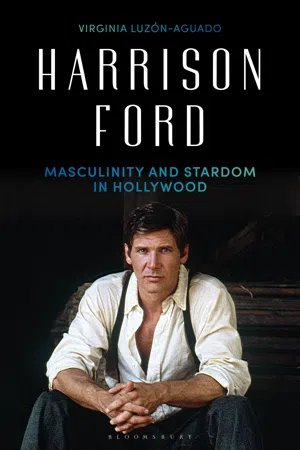
Harrison Ford is known for such iconic roles as Han Solo, Indiana Jones and Rick Deckard - but his career of 50 years (and counting) encompasses a plethora of other thought-provoking roles. His off-screen persona has been no less intriguing. Covering a wide timespan, this book assesses Harrison Ford as 'star' from the difficult Hollywood studio years where he began, his blockbusters of the 1980s, through to the impact of ageist culture on his artistry of recent years.
The author argues that Ford has generally been seen as a potent, irresistible combination of tradition and modernity. He is an actor who both reflects and utilises changing ideas about American masculinity in the context of Hollywood film production: particular male types are revealed as much in his trademark trustworthy hero act as in his more fallible, less conservative and therefore commercially riskier characters. Luzon Aguado explores these particular star identities and every fluctuation in between. She gives due attention to his much-neglected acting abilities while examining the crucial interplay between star persona and the constraints and conventions of genre. Going beyond standard accounts of Ford's production and pinpointing overlooked aspects of his work, and the creation of the star through cultural artefacts like magazine interviews and advertising campaigns, this book reveals the depth and dimensions of the enduring American screen legend that is Harrison Ford.
- 320 pages
- English
- ePUB (mobile friendly)
- Available on iOS & Android
eBook - ePub
About this book
Information
1
Harrison Ford, Masculinity, Stardom
The Development of Masculinity Studies
The rise of Masculinity Studies can be traced back to the 1970s. This novel area of study was initially heralded by anti-sexist men and was clearly influenced by Women’s Studies’ concern with the deconstruction of gender categories. Feminist thought, however, tended to discuss masculinity as a homogeneous identity category with hardly any possibility for variation or contestation.1 Men, it was assumed, did not find the need to question this identity paradigm for they are the prime recipients of what Connell2 has called “the patriarchal dividend,” or “the [social and material] advantage men in general gain from the overall subordination of women.” Nevertheless, some pro-feminist men started to interrogate the paradigm of normative masculinity and it was these men who started to refer to diverse masculinities as their object of study. The result of this shift was the emergence of the more inclusive academic discipline of Gender Studies.
In every culture, there exist certain gender models that are more socially respected than others as they tend to signify power and authority. These models may vary across cultures and over time and therefore are notoriously difficult to define unless one attempts to pin down local or contingent conceptions of the hegemonic or, for the purposes of this analysis, particularly popular media representations of the male at a given time in history. Thus, the work of cultural theorists consists in explaining what a given culture or group has to say about hegemonic models of identity, in whose formation cultural practices and representations have a key role to play. Nonetheless, cultural theorists find and celebrate that their analyses evince a diversity of identity constructions as cultural products do not necessarily offer a seamless identity script to which individuals necessarily conform. Yet, it is evident that their coexistence is far from being a happy one. Contrasting and competing representations do exist, which suggests that identity is far from being seamless or static. Nevertheless, it is possible to talk about hegemonic or dominant discourses on manhood, which seem to hold a firmer grip on the social imagination than others. Still, hegemonic ideologies are not unproblematic and do not remain unchallenged forever. Cultural Studies therefore offers some essential tools for the analysis of the workings of the gender order. It is thanks to the research undertaken within this tradition that the ideology of male power, as well as the different attempts to both uphold and overthrow it, has been most clearly exposed. Agency, however, seems to remain a blind spot within this field. Indeed, according to Grossberg,3 a crucial step forward for the cultural critic is to engage in some kind of political action that will contribute to the dismantling of dominant ideologies.
To a certain extent, the emphasis on collective action characterized the men’s movement’s second wave, which was strongly influenced by the Jungian-based mythopoetic movement led by US poet Robert Bly during the 1980s and early 1990s. Essentially, Bly’s crusade constituted a backlash effort to contain the advances of the feminist movement. Men were no longer considered to be the victims of obsolete patriarchal identity constructions, but of the negative impact that feminism had had on their lives. Although popular for over a decade, the movement seemed to have lost momentum by the turn of the century. However, given its strong investment on US foundational myths and its reverence for traditional male archetypes of the rugged frontiersman type, its enduring impact on the collective imagination should not be underestimated. In this respect, Clatterbaugh has warned that the decline of the movement “may in fact [have resulted] from successful mainstreaming, so that misogyny and anti-feminism have at the same time lost their distinctive organizational forms and their marginality within US society.”4
Still, the libertarian spirit that gave rise to the first wave of the Men’s Movement was not entirely superseded. In fact, it remained very much alive, especially in academia. However, at the beginning of the twenty-first century sociologist Michael Kimmel5 still found it necessary to remind the reader that
Masculinity Studies is not necessarily the reactionary defensive rage of the men’s rights groups, the mythic cross-cultural nostalgia of mythopoetry, not even the theologically informed nostalgic yearning for separate spheres of Promise Keepers. Rather, Masculinity Studies can be informed by a feminist project to interrogate different masculinities, whether real (as in corporeal) or imagined (as in representations and texts).
Thus, one may question whether the postulates of feminism and the pro-feminist men’s movement have successfully reached the mainstream and whether their (limited?) popularity and impact remain firmly within the world of academia for as Whitehead and Barrett6 assert,
despite the evident multiplicity of masculine expression, traditional masculinities and associated values still prevail in most cultural settings. Countless numbers of men still act dominant and “hard,” deny their emotions, resort to violence as a means of self-expression, and seek to validate their masculinity in the public world of work rather than the private world of family and relationships. Moreover, such performances not only often go uncriticized, they are in fact lauded by many, both women and men.
The resurgent popularity of the “strong man” type after the September 11 attacks in the broad media corroborates this point. Still, representations of non-traditional forms of masculinity continue to play a prominent role in the cultural arena. Promoting understanding and encouraging critical consideration of Hollywood products, or any other form of cultural representation, necessarily provide us with a refreshing way of looking at the way things are slowly, but surely and necessarily, changing. It is therefore important to highlight the various ways in which masculine identity is constructed in Hollywood films, as well as the ways in which these constructions may or may not contribute to the perpetuation of hegemonic forms of masculinity. It is by focusing our combined efforts on stressing the significance of the unconventional, as well as the contradictions present in the conventional, and specially by striving to reach the mainstream through our analyses and actions, that the hegemonic masculine norm may be disturbed and, hopefully, superseded.
Masculinity Studies and Contemporary Hollywood Cinema
The study of masculinity in the field of Film Studies is relatively new, as compared to other academic areas, such as sociology. Earlier developments in the sociology of masculinity failed to make an impact on the research on masculinity in film because of their essentially ethnographic focus and extremely factual detail.7 Clearly, films did not easily fit the empirical paradigm of sociological research. In any case, cinema and the media in general are now commonly understood to be a powerful vehicle for socialization, which has brought the study of cinematic representations and sociological research closer than ever. As Kimmel8 claims, “if masculinity is socially constructed, one of the primary elements in that construction is the representations of manhood that we see daily in the mass media.” Still, this should not obscure the fact that the representation of masculinity in Hollywood and the wider media is not without omissions or ambiguities. As Bruzzi9 explains, Hollywood’s own history, or “the recurring narratives that films rather than society have made popular,” does not objectively reflect social history and can indeed go against it. If hegemonic masculinity is constructed through, among other things, representation, any challenges to the gender order will require a critical confrontation with both social reality and cinematic, or media, representations.
On the other hand, the belated development of Masculinity Studies in film may also be attributed to the advance of Gay/Lesbian Studies as an academic discipline.10 Stereotypes were challenged in an attempt to eradicate prejudice against homosexuals. The logical result, however, was that hegemonic forms of (heterosexual) manhood still remained largely unexplored by film critics. The lack of critical questioning of the norm may have cemented the natural, “common-sense” logic of masculinity and reinforced the idea that masculinity was an eternal category that could escape deconstruction.
Finally, the comparatively late development of the study of masculinity in film should also be explained from a different perspective, which cinema shares with other academic disciplines. The critical study of gender in film was inaugurated by an interest in the representation of women or in the contribution of women to the art as actors, directors, scriptwriters, etc. It was during this stage that Laura Mulvey’s11 article “Visual Pleasure and Narrative Cinema,” which was to have a major impact on film criticism during the next decade and beyond, was published. Put very briefly, Mulvey’s main thesis was that, within classical narrative cinema, women were invariably represented as passive objects of visual, or erotic, pleasure displayed for the enjoyment of the male protagonist and, by extension, the male viewer. In a way, it was the sheer influence of the Mulveyan paradigm, which established the figure of woman as the cinematic spectacle and thus encouraged a focus on the representation of the female, which once again delayed the development of Masculinity Studies within the broader area of Film Studies.
This development was representative of the broader tendency within Gender Studies. However, this paradigm changed to a significant extent with the publication of Steve Neale’s equally influential article “Masculinity as Spectacle: Reflections on Men and Mainstream Cinema” in 1983.12 Neale’s radically new vision stressed that certain portrayals of the male in classical Hollywood cinema called into question Mulvey’s theory as to the binary logic of patriarchal representations and patterns of identification. For Neale, who sought to expand on, rather than refute, Mulvey’s either/or argument, it was also possible for the male to be read as an erotic object to be contemplated, whether by the female or the male character or spectator. From Neale’s perspective, desire and identification could be mobilized from and in multiple directions.
When the male body is put on display in Hollywood cinema, a woman (much less frequently a gay man) is normally made to be the bearer of the diegetic look, thereby providing an alibi for male objectification and dispelling any fears of homoeroticism for male viewers who are not, in general terms, understood to identify with the female in the narrative.13 This contrasts with the traditional position allocated to the female within the narrative, whose objectification is often “without alibi, overt and even blatant.”14 The logical conclusion to be drawn is that classical Hollywood cinema provides an essentially masculine experience, with iconic “exceptions” such as the on-screen treatment of Rudolph Valentino15 and the various male stars discussed by Steve Cohan.16 Nonetheless, the social changes brought about by feminism ever since the 1960s started to translate to the screen more and more frequently, as evidenced by the treatment of such “stunning” male stars as Robert Redford, among other popular male stars (see Figures 1 and 2).
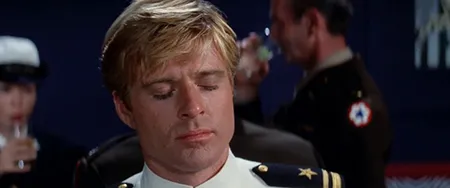
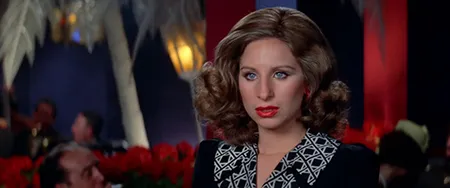
Figure 1 and 2 Katie Morosky (Barbra Streisand) gazes at her object of desire in The Way We Were (1973). The Way We Were (produced by Richard Roth, Ray Stark, 1973).
In more recent times, Hollywood cinema has continued to provide more and more sexualized images of beautiful male bodies. During the 1990s, superstar Brad P...
Table of contents
- Cover
- Halftitle
- Title Page
- Dedication
- Contents
- List of Figures
- Acknowledgments
- Introduction
- 1 Harrison Ford, Masculinity, Stardom
- 2 Harrison Ford, Hollywood’s Self-Made Man
- 3 Harrison Ford and Male Individualism in Hollywood
- 4 Harrison Ford, Hollywood’s Favorite Father
- 5 Harrison Ford and Aging Masculinity in Hollywood
- Conclusion
- Films Cited
- Works Cited
- Index
- Imprint
Trusted by 375,005 students
Access to over 1.5 million titles for a fair monthly price.
Study more efficiently using our study tools.
Frequently asked questions
Yes, you can cancel anytime from the Subscription tab in your account settings on the Perlego website. Your subscription will stay active until the end of your current billing period. Learn how to cancel your subscription
No, books cannot be downloaded as external files, such as PDFs, for use outside of Perlego. However, you can download books within the Perlego app for offline reading on mobile or tablet. Learn how to download books offline
Perlego offers two plans: Essential and Complete
- Essential is ideal for learners and professionals who enjoy exploring a wide range of subjects. Access the Essential Library with 800,000+ trusted titles and best-sellers across business, personal growth, and the humanities. Includes unlimited reading time and Standard Read Aloud voice.
- Complete: Perfect for advanced learners and researchers needing full, unrestricted access. Unlock 1.5M+ books across hundreds of subjects, including academic and specialized titles. The Complete Plan also includes advanced features like Premium Read Aloud and Research Assistant.
We are an online textbook subscription service, where you can get access to an entire online library for less than the price of a single book per month. With over 1.5 million books across 990+ topics, we’ve got you covered! Learn about our mission
Look out for the read-aloud symbol on your next book to see if you can listen to it. The read-aloud tool reads text aloud for you, highlighting the text as it is being read. You can pause it, speed it up and slow it down. Learn more about Read Aloud
Yes! You can use the Perlego app on both iOS and Android devices to read anytime, anywhere — even offline. Perfect for commutes or when you’re on the go.
Please note we cannot support devices running on iOS 13 and Android 7 or earlier. Learn more about using the app
Please note we cannot support devices running on iOS 13 and Android 7 or earlier. Learn more about using the app
Yes, you can access Harrison Ford by Virginia Luzón-Aguado in PDF and/or ePUB format, as well as other popular books in Media & Performing Arts & Film & Video. We have over 1.5 million books available in our catalogue for you to explore.