This book is available to read until 23rd December, 2025
- 192 pages
- English
- ePUB (mobile friendly)
- Available on iOS & Android
eBook - ePub
Available until 23 Dec |Learn more
About this book
Sunday worship, baptisms, weddings and funerals are the shop window of the church and there is nothing more important for mission than getting them right. How do we help congregations and occasional visitors encounter God through them? This practical guide draws upon the treasury of the church's tradition and experience to establish good practice
Frequently asked questions
Yes, you can cancel anytime from the Subscription tab in your account settings on the Perlego website. Your subscription will stay active until the end of your current billing period. Learn how to cancel your subscription.
At the moment all of our mobile-responsive ePub books are available to download via the app. Most of our PDFs are also available to download and we're working on making the final remaining ones downloadable now. Learn more here.
Perlego offers two plans: Essential and Complete
- Essential is ideal for learners and professionals who enjoy exploring a wide range of subjects. Access the Essential Library with 800,000+ trusted titles and best-sellers across business, personal growth, and the humanities. Includes unlimited reading time and Standard Read Aloud voice.
- Complete: Perfect for advanced learners and researchers needing full, unrestricted access. Unlock 1.4M+ books across hundreds of subjects, including academic and specialized titles. The Complete Plan also includes advanced features like Premium Read Aloud and Research Assistant.
We are an online textbook subscription service, where you can get access to an entire online library for less than the price of a single book per month. With over 1 million books across 1000+ topics, we’ve got you covered! Learn more here.
Look out for the read-aloud symbol on your next book to see if you can listen to it. The read-aloud tool reads text aloud for you, highlighting the text as it is being read. You can pause it, speed it up and slow it down. Learn more here.
Yes! You can use the Perlego app on both iOS or Android devices to read anytime, anywhere — even offline. Perfect for commutes or when you’re on the go.
Please note we cannot support devices running on iOS 13 and Android 7 or earlier. Learn more about using the app.
Please note we cannot support devices running on iOS 13 and Android 7 or earlier. Learn more about using the app.
Yes, you can access The Good Worship Guide by Robert Atwell in PDF and/or ePUB format, as well as other popular books in Theology & Religion & Christianity. We have over one million books available in our catalogue for you to explore.
Information
1. WORSHIP MATTERS
Worship is the submission of all our nature to God. It is the quickening of conscience by his holiness; the nourishment of mind with his truth; the purifying of imagination by his beauty; the opening of the heart to his love; the surrender of will to his purpose – and all of this gathered up in adoration, the most selfless emotion of which our nature is capable, and therefore the chief remedy for that self-centredness which is our original sin and the source of all actual sin.
William Temple (1881–1944)
Worship Today
If you will, you can become all flame.
The Sayings of the Desert Fathers, 4th century
Alan Bennett, that shrewd observer of the eccentricities of the clergy, describes attending a friend’s memorial service and becoming increasingly irritated by the priest. He apologized to the congregation for being in church; and then announced that, although there would have to be a prayer during the proceedings, people should treat it ‘more as an opportunity for personal reflection’. Whenever the word ‘worship’ pops up in conversation, it is often embarrassing moments such as these that people rehearse. Why have so many clergy lost confidence in their core business?
Talk of ‘church’ and most people instinctively think of a building, whether an imposing red-brick Victorian pile on a street corner or a little medieval church tucked down a quiet country lane. In the New Testament the word refers not to a building at all, but to people. Ecclesia literally means ‘called out’. God calls men and women into a community of faith to be witnesses to Christ’s resurrection. The church is to be a sacrament of God’s unconditional love: an outward and visible sign of his presence among us.
God wants us to make a difference in the world, but first he needs to make a difference to us. When we gather for worship it is more than a meeting of volunteers who are working together for a worthy cause. As Jesus reminds us, it is not we who have chosen him, but he who has chosen us (John 15.16). In worship, as in the rest of our lives, we are responding to God’s call. In words of the First Letter of Peter, ‘Like living stones, let yourselves be built into a spiritual house, to be a holy priesthood, to offer spiritual sacrifices acceptable to God through Jesus Christ’ (1 Peter 2.5). We are invited to co-operate with God in the construction of a living edifice which is nothing less than the Body of Christ in the world. And Sunday, the Christian Sabbath commemorating Christ’s resurrection, is the supreme time for being shaped by God’s Spirit to this end.
In his monastic Rule St Benedict gives priority to prayer because in worship we encounter God for ourselves and are transformed. He urges his monks ‘to prefer nothing to the love of Christ’. He calls prayer the opus dei, the work of God. Prayer is not about persuading God to do what we want. We are making ourselves available to God. Prayer is God’s forgiving, healing, reconciling work in us through which we become alert to the Holy Spirit’s leading. Which is why we need to give to it our best energy and for that, says Benedict, ‘heart and mind need to be in harmony’. God wants us to be alive with his life, burning with the transformative power of the Holy Spirit. In the words of one of the early Desert Fathers, ‘If you will, you can become all flame.’ When our worship is centred on Christ a contemplative quality emerges which is profound. Like a stone thrown into a pond, which goes deep before its ripples disturb the surface, the grace of God reaches deep places and we are changed.
Sadly, the experience of worship can be in sharp contrast to this ideal. If the readings from scripture are inaudible, the sermon banal, intercessions poorly prepared, and the music group or organist embarrassing, we should not be surprised when people undervalue church. Without warmth or welcome the liturgy soon feels tired and routine. Without an opportunity for reflection or silence there is little chance of a contemplative dimension emerging. Matters are made worse if those leading worship lose their way in the service or lard the liturgy with inappropriate matiness. None of us can get it right all the time, but we will be justly criticized if we fail to prepare properly or if we lead a service in a slovenly manner. Whatever our churchmanship, whether the style of a congregation’s worship is traditional or contemporary, whether we are leading Choral Evensong or praising God in Hillsong Music, we should aspire to excellence. Nothing else will do.
Caffè latte religion
A major high street coffee shop chain commissioned research into its customer base. Researchers came up with four things, each characterized by a ‘C’, which their customers valued. Predictably people wanted decent coffee. But they also wanted to drink it in surroundings that were clean, comfortable and contemporary. The trouble with some of our churches is that they are dirty, uncomfortable and old-fashioned. Many of our buildings are not fit for purpose. They are poorly lit and ill-equipped, with facilities that are badly in need of updating. Many young parents are happy to take their toddlers to the supermarket or to the library, but don’t want their babies crawling around under a dark pew. If they migrate to the crèche with their toddlers, too often what they encounter is a dank ill-lit room with few facilities, cut off from the rest of the church. The home team do not always see this, confusing the smell of damp hassocks with the odour of sanctity. They are puzzled why many young professionals, armed with their Sunday papers, prefer sipping a latte in comfort to drinking lukewarm brown liquid from a cracked cup at the back of a draughty church.
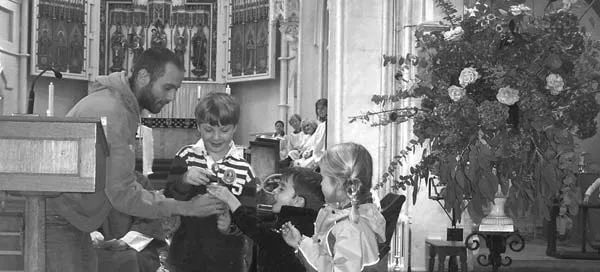
Admittedly, this is a suburban middle-class take on church. Inner city parishes and rural churches have their own challenges to negotiate. But whether we worship in the town or country, all of us are influenced by our surroundings. The decoration and feel of a church matter. It is sacred space and it should speak of the beauty and holiness of God. Gloomy and uncared for churches do not advance the kingdom of heaven. With imagination and style, however, they can be brought to life and become signs of the enduring power of the Gospel. Good lighting, sensitive liturgical re-ordering, improved seating, toilets and a decent sound system may not convert the world, but they do put out a strong signal that a church is cared for and (most important of all) that the worship of God matters. Clergy often fall into the trap of speaking negatively about their buildings, but they can be an asset in the mission of God.
Church statistics reveal the aging profile of many congregations and the worrying absence of children and young families in some parishes. But there is huge pressure on families today. Time is at a premium in households with two hard-working parents, and church can find itself in competition with sport, weekend shopping, and visits to grandma. Securing the interest of boys is a particular challenge. That said, even busy young families can find time to do the things that really matter to them, and there are plenty of churches that are bucking the trend and doing imaginative work with children and young people.
What militates against attracting young families is often a mismatch of style and expectations. Ask parents what ‘works’ for them in terms of church and the majority will state a preference for a worship style that is warm and engaging, informal but organized. Too often what they encounter is not organized informality, but disorganized formality. However, being informal and being casual are different things. If the worship of God doesn’t matter to the minister, why should it matter to his or her congregation? Worship that is lack-lustre is unlikely to deepen anyone’s spirituality.
Patterns of church-going
‘Remember the Sabbath day, and keep it holy’ (Exodus 20.8). The deregulation of shopping on Sunday has also had a profound impact on patterns of church-going and has broken down, probably irretrievably, the traditional association of religion and the rhythm of daily life. The fact that our shopping malls have arcades resembling the nave and transepts of cathedrals, and that supermarkets have aisles and sometimes even a crèche, has not escaped the attention of the sociologists. Unconsciously, many people import the expectations of consumers into their worship, shopping around local churches until they find what suits, sometimes more interested in what they can get out of a service than in what they can contribute to the life of the church. Personal choice has moved centre stage. The sociologist, Grace Davie, has observed that nowadays many people go to church to fulfil a particular rather than a general need in their life, and carry on going as long as it meets that need, but that’s where their commitment ends. She says that as a generation we have moved ‘from an understanding of religion as a form of obligation and towards an increasing emphasis on consumption’.1
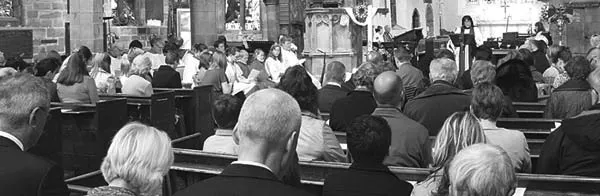
Fifty years ago most committed Anglicans went to church twice on a Sunday. Depending on a person’s churchmanship, that might mean attending variously 8 o’clock Holy Communion, Matins, Parish Communion or High Mass; and Evensong (with or without a twenty-minute sermon) in the evening. It is often said that evening worship in the Church of England was killed off in the 1960s by the BBC costume drama, ‘The Forsyte Saga’, which was broadcast on Sunday evenings. Whether or not that is true, by the end of the Swinging Sixties in most parishes the pattern of church-going had become focused on Sunday mornings.
Today Sunday observance has been eroded to such a point that many now feel it sufficient to tip up at church once a fortnight or even once every three weeks. Many Anglicans would be offended if their commitment were questioned. For a younger generation duty and obligation do not exercise the pull they did for our grandparents. Robert Wuthnow says, ‘Young adults are no longer born into faith communities that embrace them fully and command their allegiance over a lifetime. It becomes necessary to shop for a place of worship, rather than simply inheriting the congregation in which a person was raised.’2 Religion has become something we do in our spare time, a leisure activity that competes for our attention. Worship has evolved into an optional extra. The majority of the population still claim to believe in God, but fewer exhibit a desire to belong to the church.
Economists tell us that we are richer per head of the population than we have ever been in the West. Affluence has opened up a wealth of possibilities, with cheap flights to exotic destinations and weekends chilling out in the countryside. Increasing mobility means that many middle-class families regularly decamp for school term breaks. Some even go abroad at Christmas, which was unheard of a generation ago. Poorer parishes in industrial heartlands have also been affected by changing patterns of church-going. Whit Walks, with Sunday Schools and brass bands parading through the parishes, were once a highlight of the year. Today Sunday Schools are a shadow of their former selves. Whitsun has not be...
Table of contents
- Copyright information
- Contents
- List of Illustrations
- About this Book
- Part 1
- 1. WORSHIP MATTERS
- Worship Today
- Mission-Shaped Worship
- Reclaiming Spirituality for God
- Part 2
- 2. THE CONTEXT WE SET
- Coming to Worship
- Worship Audit
- Part 3
- 3. BRINGING TEXTS TO LIFE
- Holy Communion according to the Book of Common Prayer
- Holy Communion (Order One) according to Common Worship
- All-Age Services
- Evensong
- Baptisms
- Confirmation
- Weddings
- Funerals
- Leading Public Worship: A beginner’s guide for lay people
- Leading Public Worship: Processions and protocols
- Part 4
- 4. ENRICHING THE CHRISTIAN YEAR
- Advent Wreath
- Posada
- Christingle
- Christmas
- Candlemas
- Ash Wednesday
- Palm Sunday
- Maundy Thursday
- Easter Vigil
- Rogationtide
- Lammastide
- All Saints and All Souls
- Part 5
- 5. BEHIND THE SCENES
- The Sacristan or Verger
- Communion Vessels
- Bread and Wine
- Altar Linen and Frontals
- Liturgical Colours
- Candles
- Incense
- Sanctuary Bells
- Holy Oils
- Statues and Icons
- 6. GLOSSARY
- Resources
- Advertisement
- Acknowledgements