55 proven tools and techniques to help team leaders and project managers improve team performance in a complex environment. The book also provides an introduction to the concept of team coaching as a distinct management activity.
eBook - ePub
The Team Coaching Toolkit
55 Tools and Techniques for Building Brilliant Teams
- 200 pages
- English
- ePUB (mobile friendly)
- Available on iOS & Android
eBook - ePub
About this book
Information
Topic
CommerceSubtopic
Mentorat et coaching
The tools set out on the following pages are designed around the model of team coaching explained in chapter 3. They broadly follow the sequence set out in the diagram below, in that the Assess and Set-up tools are usually used at the beginning of the team’s life cycle whilst the other tools are probably more useful once the team has become established. However, do not feel tied to this structure as you are likely to find that some tools will work at earlier or later stages than the position that I have allocated them in the model.
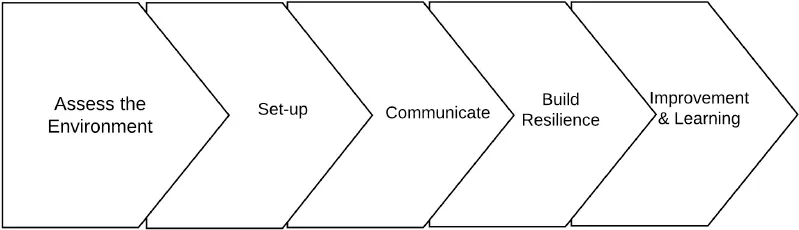
Figure 2 – Team coaching model
The tools are arranged as follows:
Tools 1 to 9 Tools for assessing the team’s environment
Tools 10 to 20 Tools for setting up an effective team
Tools 21 to 31 Tools for improving communication
Tools 32 to 38 Tools for building team resilience
Tools 39 to 45 Tools for improvement and team learning
The tools provide a structure around which to stimulate discussion that will engage the team leading to commitment, focus and increasing levels of trust. The tools are therefore designed to provide you with a range of mechanisms to help you work more effectively with your team. They are nevertheless skeletal structures which lack the context of your specific circumstances. It is for you to decide how to adapt each tool to suit your team’s needs.
CHAPTER 4
TOOLS FOR ASSESSING THE TEAM’S ENVIRONMENT
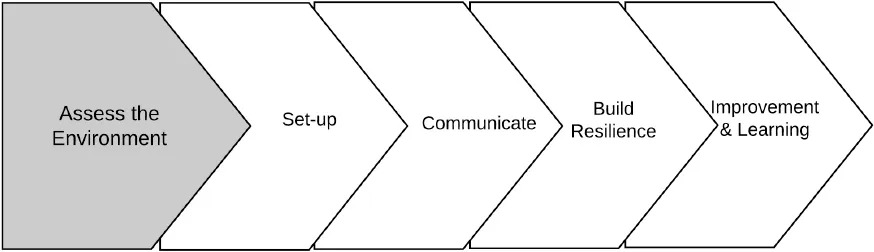
Figure 2A – Team coaching model: Assess the environment
Tool 1 Complex or simply complicated
Tool 2 Assess the project environment
Tool 3 Articulating stakeholder paradoxes
Tool 4 The ‘cup of tea meeting’
Tool 5 Acknowledging cultural diversity
Tool 6 Dangerous assumptions and leaps of faith
Tool 7 Roles not jobs
Tool 8 Force field analysis
Tool 9 Surviving the storming stage
TOOL 1 – IS YOUR PROJECT COMPLEX OR SIMPLY COMPLICATED?
PURPOSE
• To make the team and/or the project sponsor aware of the degree of complexity of the project.
• To increase awareness of the need to work collaboratively.
Time required: 15–30 minutes.
THE THEORY
A common reason for project failure is the mistaken assumption that traditional transactional mechanisms and behaviours, which may work on a complicated project, will also achieve the desired outcome on a complex project.
The research on effective teams highlights the need for teams to adopt collaborative working methods when a project becomes complex. There are many ways of trying to define the distinction between complicated and complex but, to avoid getting lost in the semantics of language, table 4 below allows the team to quickly work out whether the problem/project requires a collaborative approach.
THE TOOL
Step 1. Print off a copy of the table for each member of the team, or download it from the website www.teamcoachingtoolkit.com/toolkit/project-complex-simply-complicated/
Step 2. Ask each person to independently rate the project/problem. This should take no more than five minutes.
Step 3. Draw up a three column by six row blank table on a flip chart and work down the table asking each member to say where they think the project sits against each of the criteria.
Step 4. Assess the results and start a discussion as to what the practical difference between complicated and complex means for your project.
| Simple | Complicated | Complex |
| We have done this before and we know exactly what to do | We have done something similar before so we have some idea as to what to do | We have never done this before and need to work out a completely new solution |
| We only need to consult with one key stakeholder | We need to consult with two key stakeholders | We need to consult with three or more key stakeholders |
| There is no real time pressure to complete the task | There is a moderate degree of urgency to complete the task | Completing the task is business critical and has a high degree of urgency |
| The people needed to work on this task are all based in one location | The people needed to work on this task are based in two different locations | The people needed to work on this task are based in three or more different locations |
| The task requires limited specialist technical input | The task requires specialist input from up to three technical specialists | The task requires specialist input from up to four or more technical specialists |
Table 4 – Complicated or complex
OTHER THOUGHTS
The point of this tool is to start a discussion about complexity, the challenges it throws up and the dangers of relying on transactional thinking. It may be helpful to read Technique 10 on ‘Developing your maturity in complexity’. Table 4 is a very simple table but each of the points ties back to studies on complex working. Try to avoid getting caught up in points of technical detail. The tool is designed to promote a discussion rather than to establish some form of empirical assessment.
TOOL 2 – ASSESS THE PROJECT ENVIRONMENT
PURPOSE
• To ensure that you, your team and the project sponsor go into the project with a clear and realistic view of the challenges ahead.
• To help you think about the broader systemic issues which will affect your project.
Time required: 60–120 minutes (depending upon the complexity of the project).
THE THEORY
No project exists in isolation from its environment. Success or failure is fundamentally affected by the extent to which the various systemic factors support or impede the success of the project. Systemic factors are those circumstances that can be directly influenced by the project sponsors and stakeholders. They are systemic in that they are based on organizational rather than personal drivers. These factors will differ with every project and so some thought is required to work out just what the critical variables might be.
It is not unusual for a project manager/team leader to find themselves sitting in front of the project sponsor after the project has started, arguing that problems have occurred due to forces outside of the team’s control. This is an uncomfortable discussion because our explanations now come across as excuses. It therefore makes sense to take a pro-active approach to the potential challenge of a difficult project environment.
THE TOOL
Step 1. Organize a ‘systemic review’ session as early as possible in the project timeline. This will ideally involve the sponsor and a few members of the team, but it can be as few as two of you if that is appropriate.
Step 2. Pick out the key systemic variables you believe will impact on the project. These will vary according to the nature of the project and the culture of the organizations involved. Some of the more common systemic variables are set out in figure 4.
Step 3. Draw a horizontal line on a flip chart (or even just a piece of paper if there are just tw...
Table of contents
- Cover Page
- Title Page
- Copyright Page
- Dedication
- Contents
- Illustrations
- How To Use This Book
- SECTION ONE – The Theory
- SECTION TWO – Team Coaching Techniques
- SECTION THREE – Team Coaching Tools
- SECTION FOUR – What next?
- References
Trusted by 375,005 students
Access to over 1.5 million titles for a fair monthly price.
Study more efficiently using our study tools.
Frequently asked questions
Yes, you can cancel anytime from the Subscription tab in your account settings on the Perlego website. Your subscription will stay active until the end of your current billing period. Learn how to cancel your subscription
No, books cannot be downloaded as external files, such as PDFs, for use outside of Perlego. However, you can download books within the Perlego app for offline reading on mobile or tablet. Learn how to download books offline
Perlego offers two plans: Essential and Complete
- Essential is ideal for learners and professionals who enjoy exploring a wide range of subjects. Access the Essential Library with 800,000+ trusted titles and best-sellers across business, personal growth, and the humanities. Includes unlimited reading time and Standard Read Aloud voice.
- Complete: Perfect for advanced learners and researchers needing full, unrestricted access. Unlock 1.5M+ books across hundreds of subjects, including academic and specialized titles. The Complete Plan also includes advanced features like Premium Read Aloud and Research Assistant.
We are an online textbook subscription service, where you can get access to an entire online library for less than the price of a single book per month. With over 1.5 million books across 990+ topics, we’ve got you covered! Learn about our mission
Look out for the read-aloud symbol on your next book to see if you can listen to it. The read-aloud tool reads text aloud for you, highlighting the text as it is being read. You can pause it, speed it up and slow it down. Learn more about Read Aloud
Yes! You can use the Perlego app on both iOS and Android devices to read anytime, anywhere — even offline. Perfect for commutes or when you’re on the go.
Please note we cannot support devices running on iOS 13 and Android 7 or earlier. Learn more about using the app
Please note we cannot support devices running on iOS 13 and Android 7 or earlier. Learn more about using the app
Yes, you can access The Team Coaching Toolkit by Tony Llewellyn in PDF and/or ePUB format, as well as other popular books in Commerce & Mentorat et coaching. We have over 1.5 million books available in our catalogue for you to explore.