In the established tradition of the Clinical Success series, this succinct and easy-to-read book provides practitioners with a solid foundation for daily clinical use of the Invisalign system. The author introduces the reader to essentials of Invisalign treatment, from the basic biomechanics of thermoformed plastic aligners to the the Clin-Check 3D simulation treatment planning software, which allows the clinician to program in advance the velocity and direction of tooth movements; amount and frequency of force; anchorage; and available space necessary for the planned movements. Clinical results of various treatment types are shown using Invisalign system alone and in conjunction with other orthodontic treatments. This book is ideal for any orthodontist who wants to use the Invisalign system to achieve an optimal treatment outcome.
- 138 pages
- English
- ePUB (mobile friendly)
- Available on iOS & Android
eBook - ePub
Clinical Success in Invisalign Orthodontic Treatment
About this book
Information
Topic
MedicineSubtopic
OrthodonticsThe Invisalign Concept |  |
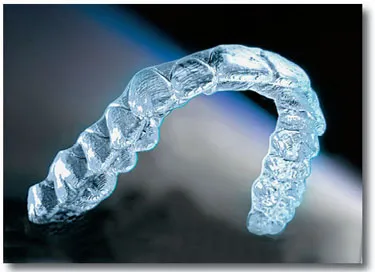
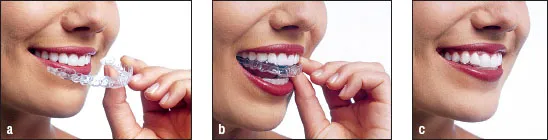
Fig 1-1 (a to c) Aligners are easy to insert, comfortable, and minimally visible.
What Is Invisalign?
• Invisalign is a minimally visible method for moving teeth without band, wire, or bracket.
• Invisalign therapy consists of a series of clear aligners that are worn to gradually move teeth (Fig 1-1).
• An Invisalign aligner is a custom-made, removable, comfortable dental retainer made from thermoformed medical polycarbonate, which is inert and compatible with human saliva. (See following section for details on thermoforming.)
• Each aligner is worn approximately 22 hours a day over a 2-week period for a total of over 300 hours. This leaves 2 hours a day for eating and toothbrushing.
• Aligners are replaced every other week on average to allow for gentle tooth movement over time according to the clinician’s diagnosis and treatment plan.
• Treatment duration, which can range from 3 to 30 months, and cost depend on the extent of tooth malpositioning and malocclusion.
The Science of Invisalign Aligners: Thermoforming
Thermoforming is the art of shaping thermoplastic materials with heat. Chemically, plastics consist of polymers that are made up of numerous monomers, which are organic molecules with nuclei that contain one carbon atom. Examples of natural polymers include proteins, rubber, collagen, and cellulose. The behavior of plastics mostly depends on the type of structure developed by polymerization of constituent monomers. To optimize their behavior, additives can be used to modify physical and chemical properties, and reinforcements can be added to modify mechanical properties.
In orthodontics, plastic materials in the form of soft, resilient round or square sheets (Fig 1-2) possessing excellent modeling properties are often used. These materials are inert, unaltered by saliva, and resistant to daily cleaning detergents. In addition, they are transparent, nontoxic, odorless, and tasteless.
Scheu et al proposed the first thermoforming machine to synthesize orthodontic appliances in 1966. Currently, two types of thermoforming machines, the Ministar and Biostar (Scheu Dental) (Fig 1-3), are available. Based on the principles of Scheu et al, Align Technology developed a large-scale, custom-made thermoforming system, which continues to undergo development and improvement (Fig 1-4).
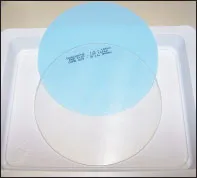
Fig 1-2 Thermoformable plastic sheets used clinically.
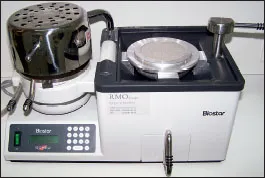
Fig 1-3 Biostar series IV.
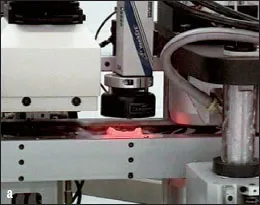
Fig 1-4a Thermoforming.
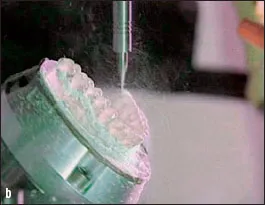
Fig 1-4b Automated sculptor of aligners.
Development of Align Technology
Design for the thermoforming system began in April 1997 when two MBA students from Stanford University, Zia Chishti and Kelsey Wirth, with the aid of a computer specialist, founded Align Technology in a garage in Palo Alto, California.
Chishti, who had suffered a relapse of mandibular incisor crowding after undergoing fixed orthodontic treatment, was required to wear a retainer to realign his mandibular anterior teeth. Disappointed by the relative slowness and limited progress of the relapse correction, Chishti conceived a revolutionary treatment concept: moving teeth with multiple appliances, whereby each tooth movement would be progressively conceptualized in three dimensions and virtually simulated by computer-assisted design software.
Appliances would be mechanically fabricated under computer control through a stereolithographic process to create resin models for each stage of desired tooth movement. These models would then be combined with thermoformed polycarbonate sheets, which would allow for mass-produced, custom-made aligners for orthodontic treatment.
This new concept for orthodontic treatment combined orthodontic principles of tooth movement, 21st century three-dimensional (3D) computer-aided design/computer-assisted manufacture (CAD/CAM) technology, and computer-assisted, mass-prototyping industrial processes, ultimately leading to the development of the Align Technology company and the current Invisalign treatment concept and techniques.
This new system gained clearance from the Food and Drug Administration in 1998. It was presented at the American Association of Orthodontists conference in 1999 and arrived in Europe in 2001. By broadening the range of applications, Invisalign has introduced a new method of orthodontic therapy.
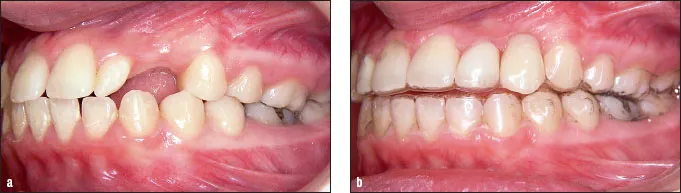
Fig 1-5 When a tooth is missing (a), a pontic can be incorporated into the aligner (b).
Table of contents
- Cover
- Title Page
- Copyright Page
- Table of Contents
- Acknowledgements
- Preface
- 1. The Invisalign Concept
- 2. Biomechanics of Orthodontic Aligners
- 3. Clinical Records
- 4. Diagnosis and Treatment Plan
- 5. Treatment Strategies
- 6. Indications and Contraindications
- Bibliography
Trusted by 375,005 students
Access to over 1.5 million titles for a fair monthly price.
Study more efficiently using our study tools.
Frequently asked questions
Yes, you can cancel anytime from the Subscription tab in your account settings on the Perlego website. Your subscription will stay active until the end of your current billing period. Learn how to cancel your subscription
No, books cannot be downloaded as external files, such as PDFs, for use outside of Perlego. However, you can download books within the Perlego app for offline reading on mobile or tablet. Learn how to download books offline
Perlego offers two plans: Essential and Complete
- Essential is ideal for learners and professionals who enjoy exploring a wide range of subjects. Access the Essential Library with 800,000+ trusted titles and best-sellers across business, personal growth, and the humanities. Includes unlimited reading time and Standard Read Aloud voice.
- Complete: Perfect for advanced learners and researchers needing full, unrestricted access. Unlock 1.5M+ books across hundreds of subjects, including academic and specialized titles. The Complete Plan also includes advanced features like Premium Read Aloud and Research Assistant.
We are an online textbook subscription service, where you can get access to an entire online library for less than the price of a single book per month. With over 1.5 million books across 990+ topics, we’ve got you covered! Learn about our mission
Look out for the read-aloud symbol on your next book to see if you can listen to it. The read-aloud tool reads text aloud for you, highlighting the text as it is being read. You can pause it, speed it up and slow it down. Learn more about Read Aloud
Yes! You can use the Perlego app on both iOS and Android devices to read anytime, anywhere — even offline. Perfect for commutes or when you’re on the go.
Please note we cannot support devices running on iOS 13 and Android 7 or earlier. Learn more about using the app
Please note we cannot support devices running on iOS 13 and Android 7 or earlier. Learn more about using the app
Yes, you can access Clinical Success in Invisalign Orthodontic Treatment by Richard Bouchez in PDF and/or ePUB format, as well as other popular books in Medicine & Orthodontics. We have over 1.5 million books available in our catalogue for you to explore.