eBook - ePub
Building a Multimodal Future
Connecting Real Estate Development and Transportation Demand Management to Ease Gridlock
- 85 pages
- English
- ePUB (mobile friendly)
- Available on iOS & Android
eBook - ePub
Building a Multimodal Future
Connecting Real Estate Development and Transportation Demand Management to Ease Gridlock
About this book
Whether you are a developer, planner, or property owner, if concerns about traffic impacts of proposed development are a challenge, this book offers solutions. Learn about best practices in transportation demand management and make the case by showing how ten communities across the nation implemented these policies and got results.
Information
Topic
ArchitectureSubtopic
Urban Planning & LandscapingCHAPTER 1
Introduction
Across the United States, many communities share a common desire to encourage more dense and mixed-use development. One of the greatest challenges many of them face in getting that kind of development approved is combatting the perception that mixed-use higher densities lead to more cars and traffic congestion.
The communities examined in this book have looked to transportation demand management (TDM) to combat that perception and created policies to do so in a variety of ways. No two of the communities examined applied the exact same solutions to implement their TDM policies. However, when it comes to creating TDM policy, common decision points exist at which critical questions need to be addressed.
This book is intended to provide other communities seeking to develop TDM policies with a framework to address these questions, as well as best practices after which to model those policies.
The Opportunity
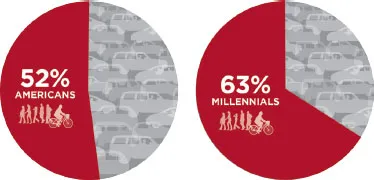
The Urban Land Institute’s report America in 2015 found that, in the United States, “just over half of all Americans (52 percent) and 63 percent of millennials would like to live in a place where they do not need to use a car very often.”1
In addition to responding to current market conditions, practitioners across professional planning disciplines generally acknowledge that designing communities and their land uses around the automobile is not in their long-term best interests.
Even the Texas Transportation Institute (TTI), which has traditionally focused on roadway infrastructure enhancements as the solution to traffic congestion, stated in its Mobility Investment Priorities publication that “Land uses must be considered at all levels, including smart growth planning for communities in suburban areas, rural areas, and even central business districts.”2 The TTI publication goes on to describe how better land use decisions can help with the following:
- Reduce the number of single-occupancy vehicles on major freeways and highways through adequate land use;
- Enhance the quality of life and create a sense of community through good design;
- Create safer, more walkable environments by planning land uses and transportation together; and
- Boost the local economy by designing local and regional land uses with accessibility in mind, thereby creating more opportunities for access to jobs and services.
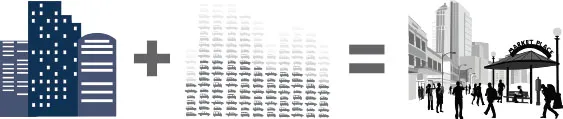
In response to these market trends, many communities across the country are using planning solutions and tools (such as comprehensive plans, zoning regulations, site plan ordinances, and street design standards) to make their communities less automobile-dependent. These planning solutions encourage a mix of land uses, increase development density, and encourage non-auto-focused design, among other strategies.
The Challenge
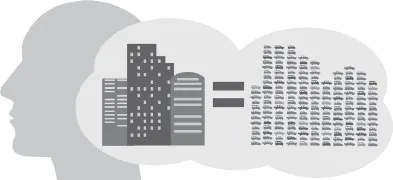
The planning response to transform auto-oriented communities into less auto-dependent ones is not without challenges. One of the greatest challenges suburban auto-oriented communities face is combatting the perception that mixed-use higher densities bring more people—and with them more cars and more traffic congestion.
Another challenge is that creating these non-auto-focused environments takes time. However, communities often seek more immediate results. Last, just because non-auto-focused infrastructure gets built, does not mean that people are going to take full advantage of it.
The Solution
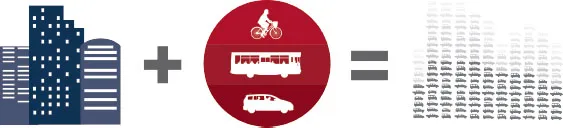
To overcome these concerns, many communities have looked to TDM as a solution. Unlike traditional transportation solutions that focus on providing infrastructure as a solution to mobility, TDM focuses on potential users of the existing transportation system and encourages them to behave in a way that is most effective in maximizing it. Typically, this is done by making travelers aware of their options and encouraging them to travel in a desired way through incentives and penalties.
What Is TDM?
The Federal Highway Administration defines TDM as:
Programs, projects, or activities that provide travelers, regardless of whether they drive alone, with travel choices, such as work location, route, time of travel and mode. In the broadest sense, demand management is defined as providing travelers with effective choices to improve travel reliability.3
When communities adopt a TDM policy for new development, they can leverage the permitting or rezoning process to require new developments to provide TDM. In turn, developments reduce their impact on the transportation network while overcoming community concerns about increased density and traffic congestion. TDM policies also catalyze creation of new mobility solutions and allow developments to better leverage existing transportation infrastructure.
Some example strategies that developments implement to fulfill TDM policy objectives may include the following:
- Charging for on-site parking;
- Providing transit subsidies;
- Marketing of transportation options; and
- Providing site-specific non-automobile transportation services.
Many communities tie a TDM policy to financial incentives to encourage participation. Those incentives can come in the form of opportunities for developers to increase their revenue or reduce their costs.
Increased revenue-generating opportunities include increased density, greater flexibility with land uses, and less stringent setbacks.

Incentives that can reduce development costs include those illustrated here:

These are benefits that can be achieved before delivery of a building. Additional benefits accrue from implementing TDM strategies at buildings as they are attracting and retaining tenants. Initially many developers and property managers view the implementation of their TDM strategies as a necessary evil to fulfill their end of the deal to receive the aforementioned incentives. However, after they deliver TDM strategies to their tenants, developers and property managers almost always experience the gratification of tenant appreciation for these transportation-related amenities.

How to Effectively Deliver the Solution
As noted by TTI, the biggest obstacle to implementing a TDM policy is that it “must overcome political pressure from both public and private sources. Cities … must consider whether these measures should be compulsory or voluntary and then agree on appropriate methods of enforcement for companies and developers that refuse to comply.”4
This toolkit is designed to help communities address these considerations, as well as many others, through a clear and simple process. The process builds on findings from research completed on 10 communities of varying sizes and conditions throughout the United States that have designed and implemented their own TDM policies. The findings are more than just a technical analysis of the aspects of each community’s TDM policy: they take into consideration the experience and perspectives of the local government employees that manage them and the developers who are required to comply with them. Many of these communities are in regions where development pressure and traffic congestion levels are very high and where TDM policies are more common and experience a higher level of acceptance.
The lessons learned from local government employees and developers in these regions are intended to help other communities determine how they should structure their TDM policies. Recommendations are included on what communities should adopt and avoid in their TDM policies to overcome political pressure as well as ensure they are effective at achieving their desired outcome.
CHAPTER 2
What Is a TDM Policy?
A TDM policy can be used by a community as part of the development process to ensure that new developments reduce their impact on the transportation network and increase the use of non...
Table of contents
- Cover
- Copyright
- Acknowledgments
- About the Authors
- Contents
- Chapter 1. Introduction
- Chapter 2. What Is a TDM Policy?
- Chapter 3. A Review of TDM Policies
- Chapter 4. What Best Practices Should Be Considered When Crafting a TDM Policy?
- Chapter 5. Steps for Establishing a TDM Policy in Your Community
- Chapter 6. Detailed Case Studies of TDM Policy by Jurisdiction
- Chapter 7. Conclusion
- Notes
- Contributors
- Bibliography
Trusted by 375,005 students
Access to over 1.5 million titles for a fair monthly price.
Study more efficiently using our study tools.
Frequently asked questions
Yes, you can cancel anytime from the Subscription tab in your account settings on the Perlego website. Your subscription will stay active until the end of your current billing period. Learn how to cancel your subscription
No, books cannot be downloaded as external files, such as PDFs, for use outside of Perlego. However, you can download books within the Perlego app for offline reading on mobile or tablet. Learn how to download books offline
Perlego offers two plans: Essential and Complete
- Essential is ideal for learners and professionals who enjoy exploring a wide range of subjects. Access the Essential Library with 800,000+ trusted titles and best-sellers across business, personal growth, and the humanities. Includes unlimited reading time and Standard Read Aloud voice.
- Complete: Perfect for advanced learners and researchers needing full, unrestricted access. Unlock 1.5M+ books across hundreds of subjects, including academic and specialized titles. The Complete Plan also includes advanced features like Premium Read Aloud and Research Assistant.
We are an online textbook subscription service, where you can get access to an entire online library for less than the price of a single book per month. With over 1.5 million books across 990+ topics, we’ve got you covered! Learn about our mission
Look out for the read-aloud symbol on your next book to see if you can listen to it. The read-aloud tool reads text aloud for you, highlighting the text as it is being read. You can pause it, speed it up and slow it down. Learn more about Read Aloud
Yes! You can use the Perlego app on both iOS and Android devices to read anytime, anywhere — even offline. Perfect for commutes or when you’re on the go.
Please note we cannot support devices running on iOS 13 and Android 7 or earlier. Learn more about using the app
Please note we cannot support devices running on iOS 13 and Android 7 or earlier. Learn more about using the app
Yes, you can access Building a Multimodal Future by Justin B. Schor,Federico Tallis in PDF and/or ePUB format, as well as other popular books in Architecture & Urban Planning & Landscaping. We have over 1.5 million books available in our catalogue for you to explore.